Venezuela: Searching for Life Amid the Rubble
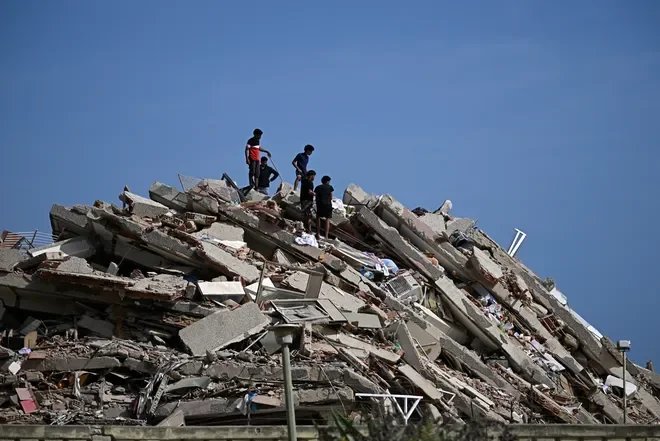
People Searching Through Earthquake Rubble in Venezuela
“We are definitely in God’s hands” — and the people of Venezuela are proving it, stone by stone.”
Isabella García-Ramos Herrera - A Venezuelan in the diaspora asks: where is God in the rubble today?
On Wednesday, June 24, 2026, shortly after 6:00 p.m. Caracas time, Venezuela was struck by two earthquakes: one measuring 7.1 on the Richter scale and the next measuring 7.5, occurring 39 seconds apart. Scientists call this a "seismic doublet." These are two of the strongest earthquakes to hit Venezuela in over a hundred years.
My family is in Venezuela. They're all okay. But not every Venezuelan can say the same. When I spoke with my parents right after it happened, my father — still in shock — told me: "Isa, the worst of it was the helplessness. Feeling like there was absolutely nothing I could do. You know me — you know I don't freeze up when I'm scared — but yesterday the only thing I could do was hold your mother, cover her with my body as best I could under the doorframe, and think that we weren't going to survive to tell the story. In the middle of the tremor, I was overcome with sadness and rage at the thought of dying, because I realized I would never see you or your brother again. I told myself, 'It's over for us here…' And yet, here we are. We are definitely in God's hands." I should mention that my father is not a believer — or at least, that's what he told me the last time I asked.
In these past hours, the awareness of our fragility has come over us. We've come face to face with our true condition: the nothingness that we are. And the most urgent question has surfaced in everyone. On whom — or what — do we depend? What, or who, sustains us?
The reaction of the Venezuelan people is unanimous. Everyone — inside the country and in the diaspora, in interviews and on social media — has echoed my father's exact words: "We are definitely in God's hands." But people have taken those words in opposite directions.
For some, they are the greatest consolation. For others, they are a sign of the deepest loneliness.
Because for all of us — both those who feel consoled and those who feel alone — a second question has also surfaced: "Where is God today in Venezuela?" Day and night, we have looked for Him everywhere we could think of.
We looked for Him on social media and in phone calls to the people we love.
But we realized that to find Him, we have to pass through a great deal of pain. Every photo and every video on social media is worse than the one before. Some people answer our calls. Others don't. The search for specific faces begins. Citizens themselves — seeing that law enforcement, the national police, the army, are nowhere to be found — have organized to search with whatever resources they have.
In less than twenty-four hours, citizens had already built two websites where people can enter information about the missing. Social media is full of photos of those who haven't been found yet. When we see someone's update — "He's been found! He's okay!" or "We managed to locate her; she's in the hospital" — we breathe again as if we had a close connection to that person. In a sense, we do.
To find God, we also have to endure the silence. The silence of those who wait on social media, checking every two minutes for the message that their loved one has been found. Against all odds, all that grows is the hope that they are alive. It is also the silence of rescue workers amid the rubble, waiting to hear a knock, a cry rising up through the stones, telling them that someone beneath the debris is still alive. It is the silence of those waiting for the tolls and the figures — knowing these aren't just numbers but real lives — and we rebel against estimates because we need, as our Cervantes Prize laureate Rafael Cadenas would say, "terrifying exactness." We cannot work from assumptions, not when reality is this urgent. It is the silence of those far away, those who have to go back to their routines as if nothing is happening, when in fact something enormous is happening. Another blow is being dealt to a nation already devastated. We are realizing, once again, that even though they drove us out of the country, they couldn't take away the country we carry inside us.
Because yes — there is an entire country, beneath the rubble, crying out as never before. Crying out that yes, we have found them: Venezuela and God. And we found them right there, among the cracks. God is in the rubble.
He is in those firefighters, rescue workers, and paramedics working side by side with ordinary people. People are moving stones and clearing rubble with bare hands and with shovels brought from their homes. Firefighters are asking for tools because the devastation is so massive they don't have the right equipment — yet they have the urgency and the will to save lives. Some of those pulled from the rubble, finding themselves more or less unharmed, stay behind to help pull others out from that very spot — the place where they themselves were trapped just minutes before. Children have been brought out in groups of three. Newborns have crawled out of the rubble. Women have given birth in the ruins, with no medical assistance beyond what could be found on the spot.
He is in those civilians who put everything they have — and then some — at the service of others. Influencers using their platforms to post lists of the injured, the located, and the missing. Taxi drivers giving free rides to get people to hospitals. Civil engineers recording videos to explain which cracks are dangerous and teach people how to spot them in their own homes, while teams of experts conduct free inspections to determine whether it's safe to stay or better to leave. There's the mayor who is keeping the city's parks open so that those who have lost their homes can sleep there. Here is one of the many stories I saw on social media:
"I just got back from the pharmacy. There was a young man buying 5 bottles of rubbing alcohol, 5 of hydrogen peroxide, 10 packs of ibuprofen, and 6 five-liter bottles of water. He was about to take them to a collection center. He didn't have enough money. Those of us in the pharmacy pooled our money to help him pay, and the clerks gave the young man 10 boxes of bandages for free. This is Venezuela."
To find God, we also have to wrestle with the question of whether anyone can hold all this pain — or whether it's better to sweep it under the rug. That's the question we ask ourselves, those of us far away, when we have to head to work. How do you get anything done at the office when your mind is somewhere else? Am I a worse employee because I can't concentrate today? Does my worth really depend only on what I can accomplish, when what I'd rather do is be there with a shovel in my hands, clearing the rubble? Are work and life out here vanity of vanities, or are they a chance to discover how to feel close to home even when we're far away? And God shows up in that pain, in that helplessness, because only He is capable of answering this question. He answers through concrete acts of presence. Through non-Venezuelans who ask us how we're holding up. Through the diaspora organizing collection centers and sending basic necessities to Venezuela by every means possible. But isn't that very feeling of being lions in a cage a golden opportunity to discover just how deeply Venezuela touches us — to the point of wanting to drop everything and go searching for life amid the rubble?
I said at the beginning that the awareness of our fragility has come over us in these hours. The realization of our true condition: the nothingness that we are. And the most powerful question has surfaced in everyone. On whom — or what — do we depend? What, or who, sustains us? And when the question about God — and where He has hidden Himself — leapt into each of us, and we went out to look for Him, I believe we all took it as a given that we would find Him. In the most desolate landscape, it can seem to us that He has abandoned us — for how could a good God ever allow all this to happen? And yet it is precisely in that desolation that we feel most urgently the need for Him to appear.
We need Him to appear in that deafening silence just as much as we need that voice we're waiting for from the other end of the phone or from under the stones — a sign of life. We need Him to appear with the same force as a name moving from the list of the missing to the list of the found; only then can we say, the way we do when that person gets in touch: "He's here, he's here." We need Him to appear the way rescue workers need volunteers and volunteers need someone to guide them in their desire to help — because we demand of God that if He exists, He not stand idly by, just as we cannot stay still ourselves.
We need Him to appear in the midst of suffering, like the tears that flow from all of us, because in weeping — paradoxically — we feel most like ourselves. It almost makes us proud to feel this sorrow. Because sorrow becomes a sign of love. Only those who love suffer. And those who have lost a family member know this well. They mourn death, which seems the most final thing of all; they mourn the loss with the hope that the loved one will reappear, even when everything seems to point the other way, because love knows no interruptions and even less an ending. Love can only exist within a continuum that is the origin of each of our lives. We do not stop loving someone when they have died. I would say we almost love them more. Just as we love those who have gone missing with greater intensity and urgency. That love is our greatest act of rebellion against death, against the end for which we were not made.
Where we most want to see God in Venezuela is in the cracks and beneath the rubble — not to bury our hopes with Him there, but so that He might draw them out from where they are buried, just as we want to pull our loved ones free.
In the grave, we seek life. And we can seek it there only because we have found it there before, against all odds. It has already appeared there. And it keeps happening. And it will happen again.
-
Venezuela: buscando la vida entre los escombros
Isabella García-Ramos Herrera
El miércoles 24 de junio de 2026, poco después de las 18:00 (hora de Caracas), Venezuela fue sacudida por dos terremotos: uno de magnitud 7,1 en la escala Richter y el siguiente de magnitud 7,5, ocurridos con 39 segundos de diferencia. Los científicos llaman a esto una «dupleta sísmica». Se trata de dos de los sismos más fuertes que han golpeado Venezuela en más de cien años.
Mi familia está en Venezuela. Todos están bien. Pero no todos los venezolanos pueden decir lo mismo. Cuando hablé con mis padres justo después de que ocurriera, mi padre — todavía en shock — me dijo: "Isa, lo peor de todo fue la impotencia. Sentir que no había absolutamente nada que pudiera hacer. Tú me conoces, sabes que yo no me paralizo ante el miedo, pero ayer lo único que pude hacer fue abrazar a tu madre, cubrirla con mi cuerpo como pude bajo el marco de la puerta y pensar que no íbamos a sobrevivir para contarlo. En medio del temblor, me llenó de tristeza y rabia pensar que iba a morir, porque me di cuenta de que nunca más vería ni a ti ni a tu hermano. Me dije: 'Aquí se acabó todo…' Y sin embargo, aquí estamos. Estamos definitivamente en manos de Dios." Debo aclarar que mi padre no es creyente — o al menos eso decía la última vez que se lo pregunté.
En estas horas nos ha asaltado la conciencia de nuestra fragilidad. Hemos tomado conciencia de nuestra verdadera condición: la nada que somos. Y en todos ha emergido la pregunta más poderosa. ¿De quién o de qué dependemos? ¿Qué o quién nos sostiene?
La reacción del pueblo venezolano es unánime. Todos — tanto en el país como en el exterior, en entrevistas o en las redes sociales — han repetido las mismas palabras de mi padre: "Estamos definitivamente en manos de Dios." Pero esas palabras han sido leídas en clave positiva y negativa.
Para algunos, es el mayor consuelo. Para otros, es señal de la más profunda soledad.
Porque a todos nosotros — tanto a quienes se sienten consolados como a quienes se sienten solos — también les ha surgido una segunda pregunta: "¿Dónde está Dios hoy en Venezuela?" Noche y día Lo hemos buscado en todos los lugares que se nos ocurrieron.
Lo buscamos en las redes sociales y en las llamadas a nuestros seres queridos.
Pero nos dimos cuenta de que, para encontrarlo, hay que atravesar mucho dolor. Cada foto y cada video en las redes es peor que el anterior. Algunos nos responden el teléfono. Otros no. Comienza la búsqueda de esos rostros concretos. Los propios ciudadanos, al ver que las fuerzas del orden — la policía nacional, el ejército — no aparecen, se han organizado para buscar con sus propios medios.
En menos de veinticuatro horas, los ciudadanos ya habían creado dos sitios web donde se pueden ingresar datos de personas desaparecidas. Las redes están llenas de fotos de quienes aún no han sido encontrados. Cuando leemos la actualización de alguien — "¡Lo encontraron! ¡Está bien!", "Logramos localizarla, está en el hospital" — respiramos aliviados como si nosotros también tuviéramos un vínculo estrecho con esa persona. En cierto modo, así es.
Para encontrar a Dios, también hay que soportar el silencio. El silencio de quienes esperan en las redes, revisando cada dos minutos el mensaje de que su ser querido ha sido encontrado. Y crece, contra todo pronóstico, solo la esperanza de que esté vivo. Es también el silencio de los rescatistas entre los escombros, esperando escuchar un golpe, un grito que emerja de entre las piedras y les diga que ahí, bajo los escombros, hay alguien todavía vivo. Es el silencio de quienes esperan los balances y las cifras, sabiendo que no son solo números sino vidas concretas, y nos rebelamos ante las estimaciones porque necesitamos, como diría nuestro Premio Cervantes Rafael Cadenas, «exactitudes aterradoras». No podemos trabajar con suposiciones, no cuando la realidad es tan urgente. Es el silencio de quienes están lejos, de quienes deben retomar la rutina como si nada estuviera pasando, cuando en realidad sí está pasando, y está pasando a lo grande. Está ocurriendo otro golpe a una nación que ya estaba devastada. Nos damos cuenta una vez más de que, aunque nos sacaron del país, no nos pudieron quitar el país que llevamos dentro.
Porque sí, hay un país entero, bajo los escombros, gritando como nunca antes. Gritando que sí, los hemos encontrado: a Venezuela y a Dios. Y que los encontramos ahí mismo, entre las grietas. Dios está entre los escombros.
Está en esos bomberos, rescatistas y paramédicos que trabajan codo a codo con la gente. La gente está moviendo piedras y removiendo escombros con las manos desnudas y con palas que traen de sus casas. Los bomberos piden herramientas porque la devastación es tal que no cuentan con el equipamiento necesario, pero tienen la urgencia y la voluntad de salvar vidas. Algunos de los rescatados, al verse más o menos ilesos, se quedan para ayudar a sacar a otros justo de donde ellos mismos estaban minutos antes. Han sacado niños en grupos de tres. Hay recién nacidos que salen gateando de entre los escombros. Mujeres que han dado a luz en medio de las ruinas, sin más asistencia médica que la disponible en el lugar.
Está en esos civiles que ponen todo lo que tienen — y más — al servicio de los demás. Influencers que usan sus redes para publicar listas de heridos localizados y desaparecidos. Taxistas que no cobran las carreras para llevar a la gente a los hospitales. Ingenieros civiles que graban videos para explicar cuáles grietas son peligrosas y enseñar a la gente a identificarlas en sus propias casas, mientras equipos de expertos realizan inspecciones y evaluaciones gratuitas de viviendas para determinar si es seguro quedarse o mejor evacuar. Está ese alcalde que mantiene abiertos los parques del municipio para que quienes perdieron su hogar puedan dormir ahí. Les comparto uno de los tantos relatos que vi en las redes:
"Acabo de volver de la farmacia. Había un chico que estaba comprando 5 frascos de alcohol, 5 de agua oxigenada, 10 cajas de ibuprofeno y 6 botellas de agua de 5 litros. Iba a llevarlos a un centro de acopio. No tenía suficiente dinero. Hicimos una vaca entre los que estábamos en la farmacia para que pudiera pagar, y los empleados le regalaron al chico 10 cajas de vendas. Esto es Venezuela."
Para encontrar a Dios también hay que enfrentarse a la pregunta de si alguien puede cargar con todo este dolor, o si es mejor esconderlo bajo la alfombra. Eso nos preguntamos los que estamos lejos cuando tenemos que salir a trabajar. ¿Cómo se hace algo en la oficina cuando la cabeza está en otro lado? ¿Soy peor empleada porque hoy no puedo concentrarme? ¿Mi valor depende realmente solo de lo que logro hacer, cuando lo que quiero es estar allá con una pala en la mano moviendo escombros? ¿El trabajo y la vida afuera son vanidad de vanidades, o son la oportunidad de descubrir cómo sentirnos cerca de casa aunque estemos lejos? Y Dios aparece en ese dolor, en esa impotencia, porque solo Él está a la altura de responder a esta pregunta. Y responde con presencias concretas. Con personas no venezolanas que nos preguntan cómo estamos. Con la diáspora que se organiza para armar centros de acopio y enviar a Venezuela, de todas las formas posibles, artículos de primera necesidad. Pero ¿acaso ese sentirse leones en una jaula no es la oportunidad de oro para descubrir cuánto nos toca Venezuela en lo profundo, hasta el punto de querer dejarlo todo e ir a buscar una vida entre los escombros?
Decía al principio que la conciencia de nuestra fragilidad nos ha asaltado en estas horas. La toma de conciencia de nuestra verdadera condición: la nada que somos. Y ha emergido en todos la pregunta más poderosa. ¿De quién o de qué dependemos? ¿Qué o quién nos sostiene? Y cuando en cada uno saltó la pregunta sobre Dios y dónde se ha escondido, y salimos a buscarlo, creo que todos dimos por sentado que Lo íbamos a encontrar. En el panorama más desolador podría parecernos que nos ha abandonado — ¿cómo podría un Dios bueno permitir que ocurra todo esto? Y sin embargo, es precisamente en esa desolación donde sentimos con más urgencia la necesidad de que Él aparezca.
Necesitamos que Él aparezca en ese silencio ensordecedor, tanto como necesitamos esa voz que esperamos al otro lado del teléfono o de entre las piedras, como señal de vida. Necesitamos que aparezca con la misma fuerza de un nombre que pasa de la lista de desaparecidos a la de encontrados; solo entonces podremos decir, como cuando esa persona da señales de vida: "Está, está aquí." Necesitamos que aparezca como los rescatistas necesitan voluntarios y los voluntarios necesitan a alguien que los guíe en su deseo de ayudar, porque le exigimos a Dios que, si existe, no se quede de brazos cruzados, así como nosotros tampoco podemos quedarnos quietos. Necesitamos que aparezca en medio del sufrimiento, como las lágrimas que brotan de todos nosotros, porque en el llanto — paradójicamente — nos sentimos más nosotros mismos. Casi nos enorgullece sentirnos adoloridos. Porque el dolor se convierte en señal de amor. Solo quien ama sufre. Y esto lo saben bien quienes tienen un familiar desaparecido o fallecido. Lloran la muerte, que parece ser lo más definitivo, lloran la pérdida con la esperanza de que reaparezca, aunque todo parezca indicar lo contrario, porque el amor no conoce interrupciones y mucho menos finales. El amor solo sabe existir en un continuum que es el origen de cada una de nuestras vidas. No se deja de amar a alguien cuando ha muerto. Diría que, casi, se le ama más. Así como se ama con mayor intensidad y urgencia a quien ha desaparecido. Ese amor es nuestra mayor rebelión contra la muerte, contra el final para el que no fuimos hechos.
Donde más deseamos ver a Dios en Venezuela es entre las grietas y bajo los escombros, pero no para sepultar con Él nuestras esperanzas, sino precisamente para que Él las saque de donde están enterradas, así como nosotros queremos sacar a nuestros seres queridos.
En la tumba, buscamos la vida. Y podemos buscarla ahí solo porque ya ha ocurrido antes que la encontráramos ahí, contra todo pronóstico. Ya apareció ahí. Y sigue ocurriendo. Y volverá a ocurrir.
-
Venezuela : chercher la vie sous les décombres
Isabella García-Ramos Herrera
Le mercredi 24 juin 2026, peu après 18h00 (heure de Caracas), le Venezuela a été frappé par deux séismes : l'un de magnitude 7,1 sur l'échelle de Richter, l'autre de magnitude 7,5, survenus à 39 secondes d'intervalle. Les scientifiques appellent cela une « doublet sismique ». Ce sont deux des séismes les plus puissants à avoir touché le Venezuela en plus d'un siècle.
Ma famille est au Venezuela. Ils vont tous bien. Mais tous les Vénézuéliens ne peuvent pas en dire autant. Quand j'ai parlé à mes parents juste après, mon père — encore sous le choc — m'a dit : « Isa, le pire dans tout ça, c'était l'impuissance. Sentir qu'il n'y avait absolument rien que je puisse faire. Tu me connais — tu sais que je ne me fige pas face à la peur — mais hier la seule chose que j'ai pu faire, c'est serrer ta mère dans mes bras, la couvrir de mon corps du mieux possible sous le linteau de la porte, et penser que nous n'allions pas survivre pour raconter l'histoire. Au milieu de la secousse, j'ai été envahi par la tristesse et la colère à l'idée de mourir, parce que j'ai réalisé que je ne reverrais jamais ni toi ni ton frère. Je me suis dit : "C'est fini pour nous ici…" Et pourtant, nous voilà. Nous sommes définitivement entre les mains de Dieu. » Je dois préciser que mon père n'est pas croyant — du moins, c'est ce qu'il disait la dernière fois que je le lui ai demandé.
Ces dernières heures, la conscience de notre fragilité s'est imposée à nous. Nous avons pris acte de notre condition véritable : le néant que nous sommes. Et la question la plus puissante a jailli en chacun de nous. De qui — ou de quoi — dépendons-nous ? Qui, ou quoi, nous soutient ?
La réaction du peuple vénézuélien est unanime. Tous — au pays comme en diaspora, dans les interviews ou sur les réseaux sociaux — ont repris les mots exacts de mon père : « Nous sommes définitivement entre les mains de Dieu. » Mais ces mots ont été reçus de deux façons opposées.
Pour certains, c'est la plus grande consolation. Pour d'autres, c'est le signe de la solitude la plus profonde.
Parce que pour nous tous — ceux qui se sentent consolés comme ceux qui se sentent seuls — une deuxième question a également surgi : « Où est Dieu aujourd'hui au Venezuela ? » Nuit et jour, nous L'avons cherché partout où l'idée nous en venait.
Nous L'avons cherché sur les réseaux sociaux et dans les appels à ceux que nous aimons.
Mais nous avons compris que pour Le trouver, il faut traverser beaucoup de douleur. Chaque photo, chaque vidéo sur les réseaux est pire que la précédente. Certains décrochent quand on appelle. D'autres non. La recherche de ces visages précis commence. Les citoyens eux-mêmes — constatant que les forces de l'ordre, la police nationale, l'armée, sont introuvables — se sont organisés pour chercher avec leurs propres moyens.
En moins de vingt-quatre heures, des citoyens avaient déjà créé deux sites web où l'on peut entrer les informations sur les personnes disparues. Les réseaux sont remplis de photos de ceux qui n'ont pas encore été retrouvés. Quand on lit la mise à jour de quelqu'un — « Il a été retrouvé ! Il va bien ! » ou « Nous avons réussi à la localiser ; elle est à l'hôpital » — on respire de nouveau comme si nous avions, nous aussi, un lien étroit avec cette personne. D'une certaine façon, c'est le cas.
Pour trouver Dieu, il faut aussi endurer le silence. Le silence de ceux qui attendent sur les réseaux, vérifiant toutes les deux minutes si le message annonçant que leur proche a été retrouvé est arrivé. Et contre toute attente, seul grandit l'espoir qu'il soit en vie. C'est aussi le silence des sauveteurs dans les décombres, qui attendent d'entendre un coup, un cri s'élevant des pierres, leur indiquant que là, sous les gravats, quelqu'un est encore vivant. C'est le silence de ceux qui attendent les bilans et les chiffres — sachant que ce ne sont pas seulement des nombres mais des vies réelles — et nous nous rebellons contre les estimations parce que nous avons besoin, comme le dirait notre lauréat du Prix Cervantes Rafael Cadenas, d'« exactitudes terrifiantes ». Nous ne pouvons pas travailler sur la base de suppositions, pas quand la réalité est aussi urgente. C'est le silence de ceux qui sont loin, qui doivent reprendre leur routine comme si rien ne se passait, alors qu'il se passe quelque chose — et quelque chose d'immense. Un nouveau coup est porté à une nation déjà dévastée. Nous réalisons, une fois de plus, que même s'ils nous ont chassés du pays, ils n'ont pas réussi à nous arracher le pays que nous portons en nous.
Car oui — il y a tout un pays, sous les décombres, qui crie comme jamais auparavant. Qui crie que oui, nous les avons trouvés : le Venezuela et Dieu. Et que nous les avons trouvés là même, dans les fissures. Dieu est dans les décombres.
Il est dans ces pompiers, sauveteurs et ambulanciers qui travaillent côte à côte avec les gens ordinaires. Les gens déplacent des pierres et dégagent les décombres à mains nues et avec des pelles apportées de chez eux. Les pompiers réclament des outils parce que la dévastation est telle qu'ils n'ont pas l'équipement nécessaire — mais ils ont l'urgence et la volonté de sauver des vies. Certains de ceux qui ont été extraits des décombres, se trouvant plus ou moins indemnes, restent pour aider à en sortir d'autres, depuis l'endroit même où ils étaient piégés quelques minutes plus tôt. Des enfants ont été sortis par groupes de trois. Des nouveau-nés ont rampé hors des décombres. Des femmes ont accouché dans les ruines, sans autre assistance médicale que ce qui était disponible sur place.
Il est dans ces civils qui mettent tout ce qu'ils ont — et plus encore — au service des autres. Des influenceurs qui utilisent leurs plateformes pour publier des listes de blessés localisés et de personnes disparues. Des chauffeurs de taxi qui offrent leurs courses pour conduire les gens à l'hôpital. Des ingénieurs civils qui enregistrent des vidéos pour expliquer quelles fissures sont dangereuses et apprendre aux gens à les repérer dans leurs maisons, pendant que des équipes d'experts effectuent des inspections gratuites pour déterminer s'il est prudent de rester ou préférable d'évacuer. Il y a ce maire qui garde les parcs de la ville ouverts pour que ceux qui ont perdu leur logement puissent y dormir. Voici l'un des nombreux témoignages que j'ai vus sur les réseaux :
« Je viens de rentrer de la pharmacie. Il y avait un jeune homme qui achetait 5 flacons d'alcool à 90°, 5 d'eau oxygénée, 10 boîtes d'ibuprofène et 6 bouteilles d'eau de 5 litres. Il allait les apporter à un centre de collecte. Il n'avait pas assez d'argent. Nous avons fait une cagnotte entre ceux d'entre nous qui étions dans la pharmacie pour l'aider à payer, et les employés ont offert au jeune homme 10 boîtes de pansements. C'est le Venezuela. »
Pour trouver Dieu, il faut aussi affronter la question de savoir si quelqu'un peut accueillir toute cette douleur — ou s'il vaut mieux la balayer sous le tapis. C'est ce que nous nous demandons, ceux d'entre nous qui sommes loin, quand nous devons partir travailler. Comment faire quoi que ce soit au bureau quand la tête est ailleurs ? Suis-je une moins bonne employée parce que je n'arrive pas à me concentrer aujourd'hui ? Ma valeur dépend-elle vraiment seulement de ce que je peux accomplir, quand ce que je voudrais c'est être là-bas avec une pelle, à dégager les décombres ? Le travail et la vie d'ici sont-ils vanité des vanités, ou sont-ils l'occasion de découvrir comment se sentir proche de chez soi même quand on est loin ? Et Dieu apparaît dans cette douleur, dans cette impuissance, parce que Lui seul est capable de répondre à cette question. Il répond par des présences concrètes. Par des non-Vénézuéliens qui nous demandent comment nous allons. Par la diaspora qui s'organise pour monter des centres de collecte et envoyer des produits de première nécessité au Venezuela par tous les moyens possibles. Mais n'est-ce pas précisément ce sentiment d'être des lions en cage qui est l'occasion en or de découvrir à quel point le Venezuela nous touche — au point de vouloir tout laisser tomber et aller chercher une vie dans les décombres ?
Je disais au début que la conscience de notre fragilité s'est imposée à nous en ces heures. La prise de conscience de notre condition véritable : le néant que nous sommes. Et la question la plus puissante a jailli en chacun. De qui — ou de quoi — dépendons-nous ? Qui, ou quoi, nous soutient ? Et quand la question sur Dieu — et où Il s'est caché — a jailli en chacun d'entre nous, et que nous sommes partis Le chercher, je crois que nous avons tous tenu pour acquis que nous Le trouverions. Dans le paysage le plus désolé, il peut nous sembler qu'Il nous a abandonnés — car comment un Dieu bon pourrait-Il jamais permettre que tout cela arrive ? Et pourtant, c'est précisément dans cette désolation que nous ressentons avec le plus d'urgence le besoin qu'Il apparaisse.
Nous avons besoin qu'Il apparaisse dans ce silence assourdissant, autant que nous avons besoin de cette voix que nous attendons de l'autre côté du téléphone ou de sous les pierres — signe de vie. Nous avons besoin qu'Il apparaisse avec la même force qu'un nom passant de la liste des disparus à celle des retrouvés ; seulement alors pourrons-nous dire, comme quand cette personne donne signe de vie : « Il est là, il est là. » Nous avons besoin qu'Il apparaisse comme les sauveteurs ont besoin de volontaires et les volontaires ont besoin de quelqu'un pour les guider dans leur désir d'aider — parce que nous exigeons de Dieu que, s'Il existe, Il ne reste pas les bras croisés, tout comme nous-mêmes ne pouvons pas rester immobiles. Nous avons besoin qu'Il apparaisse au milieu de la souffrance, comme les larmes qui jaillissent de nous tous, parce que dans les pleurs — paradoxalement — nous nous sentons le plus nous-mêmes. Cela nous rend presque fiers de ressentir ce chagrin. Parce que la douleur devient signe d'amour. Seuls ceux qui aiment souffrent. Et ceux qui ont perdu un proche le savent bien. Ils pleurent la mort, qui semble être la chose la plus définitive ; ils pleurent la perte avec l'espoir que le disparu réapparaisse, même quand tout semble indiquer le contraire, parce que l'amour ne connaît ni interruptions ni fins. L'amour ne sait exister que dans un continuum qui est l'origine de chacune de nos vies. On ne cesse pas d'aimer quelqu'un quand il est mort. Je dirais même qu'on l'aime davantage. Tout comme on aime avec plus d'intensité et d'urgence ceux qui ont disparu. Cet amour est notre plus grande rébellion contre la mort, contre la fin pour laquelle nous n'avons pas été faits.
L'endroit où nous désirons le plus voir Dieu au Venezuela, c'est dans les fissures et sous les décombres — non pour y enfouir nos espoirs avec Lui, mais précisément pour qu'Il les en tire, comme nous voulons tirer nos proches de là où ils sont enfouis.
Dans la tombe, nous cherchons la vie. Et nous pouvons la chercher là seulement parce que nous l'y avons déjà trouvée, contre toute attente. Elle est déjà apparue là. Et cela continue. Et cela se reproduira encore.
-
Venezuela: cercare la vita tra le macerie
Isabella García-Ramos Herrera
Mercoledì 24 giugno 2026, poco dopo le 18:00 (ora di Caracas), il Venezuela è stato scosso da due terremoti: uno di magnitudo 7.1 sulla scala Richter e il successivo di magnitudo 7.5, a distanza di 39 secondi l'uno dall'altro. È ciò che gli scienziati chiamano una «doppietta sismica». Si tratta di due dei terremoti più forti che abbiano colpito il Venezuela in oltre cento anni.
La mia famiglia è in Venezuela. Stanno tutti bene. Ma non tutti i venezuelani possono dire lo stesso. Quando ho parlato con i miei genitori subito dopo l'accaduto, mio padre, ancora sotto shock, mi ha detto: «Isa, la cosa peggiore di tutte è stata l'impotenza. È stato sentire di non poter fare assolutamente nulla. Tu mi conosci, sai che di fronte alla paura non mi paralizzo, ma ieri l'unica cosa che ho potuto fare è stata abbracciare tua madre, coprirla con il mio corpo come ho potuto sotto lo stipite della porta e pensare che non saremmo sopravvissuti per raccontarlo. Nel bel mezzo della scossa, mi sono riempito di tristezza e rabbia al pensiero che sarei morto, perché mi sono reso conto che non avrei più rivisto né te né tuo fratello. Mi sono detto: "È finita qui…". E, invece, eccoci qui. Siamo decisamente nelle mani di Dio». Va precisato che mio padre non è credente, o almeno così diceva l'ultima volta che gliel'ho chiesto.
In queste ore ci ha assalito la consapevolezza della nostra fragilità. Ci siamo resi conto della nostra vera condizione: il nulla che siamo. E in tutti è emersa la domanda più potente. Da chi o da cosa dipendiamo? Cosa o chi ci sostiene?
La reazione del popolo venezuelano è unanime. Tutti, sia nel Paese che all'estero, nelle interviste o sui social, hanno ripetuto le stesse parole di mio padre: «Siamo decisamente nelle mani di Dio». Ma queste parole sono state interpretate in modo positivo e negativo.
Per alcuni è la più grande consolazione. Per altri è il segno della più profonda solitudine.
Perché a tutti noi — sia a chi si sente consolato sia a chi si sente solo — è sorta anche una seconda domanda: «Dov'è Dio oggi in Venezuela?». Notte e giorno Lo abbiamo cercato ovunque ci venisse in mente.
Lo abbiamo cercato sui social, nelle telefonate ai nostri cari.
Ma ci siamo resi conto che, per trovarLo, bisogna attraversare molto dolore. Ogni foto e ogni video sui social è peggiore del precedente. Alcuni ci rispondono al telefono. Altri no. Inizia la ricerca di quei volti concreti. Gli stessi cittadini, vedendo che le forze dell'ordine — polizia nazionale, esercito — non si fanno vedere, si sono organizzati per cercare con i propri mezzi.
I cittadini, in meno di 24 ore, avevano già creato due siti web in cui è possibile inserire i dati delle persone scomparse. I social sono pieni di foto di coloro che non sono ancora stati ritrovati. Quando leggiamo l'aggiornamento di qualcuno — «È stato ritrovato! Sta bene!», «Siamo riusciti a localizzarlo, è in ospedale» — riprendiamo fiato come se anche noi avessimo un legame stretto con quella persona. In un certo senso, è proprio così.
Per ritrovare Dio, dobbiamo sopportare anche il silenzio. Il silenzio di chi sui social aspetta, controllando ogni due minuti, il messaggio che la persona cara è stata ritrovata. E cresce, contro ogni previsione, solo il desiderio che sia viva. È anche il silenzio dei soccorritori tra le macerie, in attesa di sentire un colpo, un grido, che emerga tra le pietre, che dica loro che lì, sotto le macerie, c'è qualcuno ancora vivo. È il silenzio di chi aspetta i bilanci, le cifre, sapendo che non sono solo numeri, ma vite concrete, e ci ribelliamo alle stime perché abbiamo bisogno, come direbbe il nostro Premio Cervantes, Rafael Cadenas, di «esattezze terrificanti». Non possiamo lavorare per ipotesi, non quando la realtà è così urgente. È il silenzio di chi è lontano, di chi deve riprendere la routine come se nulla fosse, quando invece sta succedendo, e sta succedendo molto. Sta succedendo un altro colpo a una nazione che era già devastata. Sta succedendo che ci rendiamo conto ancora una volta che, anche se ci hanno cacciato dal Paese, non ci hanno tolto il Paese che portiamo dentro.
Perché sì, c'è un intero Paese, sotto le macerie, che sta gridando come mai prima d'ora. Gridando che sì, li abbiamo trovati, il Venezuela e Dio. E che li abbiamo trovati proprio lì, tra le crepe. Dio è tra le macerie.
È in quei vigili del fuoco, soccorritori e paramedici che lavorano fianco a fianco con la gente. La gente sta spostando pietre e rimuovendo le macerie a mani nude e con le pale che portano dalle loro case. I vigili del fuoco chiedono attrezzi perché la devastazione è tale che non dispongono delle attrezzature necessarie, ma hanno l'urgenza e la volontà di salvare vite umane. Alcuni di coloro che vengono estratti dalle macerie, vedendosi più o meno illesi, rimangono per aiutare a tirare fuori altri proprio da lì, da dove si trovavano loro stessi pochi minuti prima. Hanno tirato fuori bambini anche a gruppi di tre. Ci sono neonati che escono gattonando dalle macerie. Donne che hanno partorito tra le rovine, senza altra assistenza medica se non quella disponibile sul posto.
È in quei civili che mettono tutto ciò che hanno, e anche di più, a disposizione degli altri. Influencer che usano i propri social per pubblicare elenchi di feriti localizzati e dispersi. Tassisti che non fanno pagare le corse per portare le persone negli ospedali. Ingegneri civili che registrano video per spiegare quali sono le crepe pericolose e insegnare alla gente a individuarle nelle proprie case, mentre squadre di esperti effettuano analisi e valutazioni gratuite delle abitazioni per stabilire se sia possibile rimanere o se sia meglio evacuare. C'è quel sindaco che tiene aperti i parchi del comune affinché chi ha perso la propria casa possa dormirvi. Vi riporto uno dei tanti aneddoti che ho visto sui social:
«Sono appena tornato dalla farmacia. C'era un ragazzo che stava comprando 5 flaconi di alcol, 5 di acqua ossigenata, 10 confezioni di ibuprofene e 6 bottiglie d'acqua da 5 litri ciascuna. Stava per portarle a un centro di raccolta. Non aveva abbastanza soldi. Abbiamo fatto una colletta tra noi che eravamo in farmacia per permettergli di pagare e i commessi hanno regalato al ragazzo 10 scatole di bende. Questo è il Venezuela».
Per trovare Dio bisogna anche affrontare la domanda se qualcuno possa accogliere tutto questo dolore, o se sia meglio nasconderlo sotto il tappeto. È quello che ci chiediamo noi che siamo lontani quando dobbiamo uscire per andare al lavoro. Come si fa a fare qualcosa in ufficio quando abbiamo la testa altrove? Sono una dipendente peggiore perché oggi non riesco a concentrarmi? Il mio valore dipende davvero solo da ciò che riesco a fare, quando invece vorrei essere lì con una pala in mano a spostare le macerie? Il lavoro e la vita là fuori sono vanità delle vanità o sono l'occasione per scoprire come sentirci vicini a casa, anche se siamo lontani? E Dio appare in quel dolore, in quell'impotenza, perché solo Lui è all'altezza di rispondere a questa domanda. E risponde con presenze concrete. Con persone non venezuelane che ci chiedono come stiamo. Con la diaspora che si organizza per allestire centri di raccolta e inviare in Venezuela, in ogni modo possibile, generi di prima necessità. Ma proprio quel sentirsi leoni in gabbia non è forse l'occasione d'oro per scoprire quanto il Venezuela ci tocchi nel profondo, al punto da voler lasciare tutto e andare a cercare una vita tra le macerie?
Dicevo all'inizio che in queste ore ci ha assalito la nostra fragilità. La presa di coscienza della nostra vera condizione: il nulla che siamo. Ed è emersa, in tutti, la domanda più potente. Da chi o da cosa dipendiamo? Cosa o chi ci sostiene? E quando in ognuno è balzata la domanda su Dio e su dove si sia nascosto, e siamo usciti a cercarLo, credo che tutti abbiamo dato per scontato il fatto che Lo avremmo trovato. Nel panorama più desolante ci potrebbe sembrare che ci abbia abbandonati, perché un Dio buono come potrebbe mai permettere che accada tutto questo? Eppure, è proprio in quella desolazione che sentiamo più urgentemente il bisogno che Lui appaia.
Abbiamo bisogno che Lui appaia in quel silenzio assordante, tanto quanto quella voce che aspettiamo dall'altra parte del telefono o sotto le pietre, come segno di vita. Abbiamo bisogno che appaia con la stessa forza di un nome che passa dalla lista dei dispersi a quella dei ritrovati; solo allora potremo dire, come quando quella persona si fa viva: «C'è, è qui». Abbiamo bisogno che appaia come i soccorritori hanno bisogno di volontari e i volontari hanno bisogno di qualcuno che li guidi nel loro desiderio di soccorrere, perché esigiamo da Dio che, se c'è, non se ne stia con le mani in mano, così come nemmeno noi possiamo restare immobili. Abbiamo bisogno che appaia in mezzo alla sofferenza, come le lacrime che sgorgano da tutti noi, perché nel pianto, paradossalmente, ci sentiamo più noi stessi. Quasi ci rende orgogliosi sentirci addolorati. Perché il dolore diventa segno d'amore. Solo chi ama soffre. E questo lo sanno bene coloro che hanno un familiare scomparso o defunto. Piangono la morte che sembra essere la cosa più definitiva, piangono la perdita con la speranza che riappaia, anche se tutto sembra indicare il contrario, perché l'amore non conosce interruzioni e tanto meno finali. L'amore sa esistere solo in un continuum che è l'origine di ciascuna delle nostre vite. Non si smette di amare qualcuno quando è morto. Direi che, quasi, lo si ama di più. Così come si ama con maggiore intensità e urgenza chi è scomparso. Quell'amore è la nostra massima ribellione contro la morte, contro la fine per la quale non siamo fatti.
Dove più desideriamo vedere Dio in Venezuela è tra le fessure e sotto le macerie, ma non per seppellire con Lui le nostre speranze, bensì proprio affinché Lui le tragga fuori da dove sono sepolte, così come noi vogliamo tirare fuori i nostri cari.
Nella tomba, cerchiamo la vita. E possiamo cercarla lì solo perché è già successo in passato che l'abbiamo trovata lì, contro ogni previsione. È già apparsa lì. E continua ad accadere. E accadrà di nuovo.