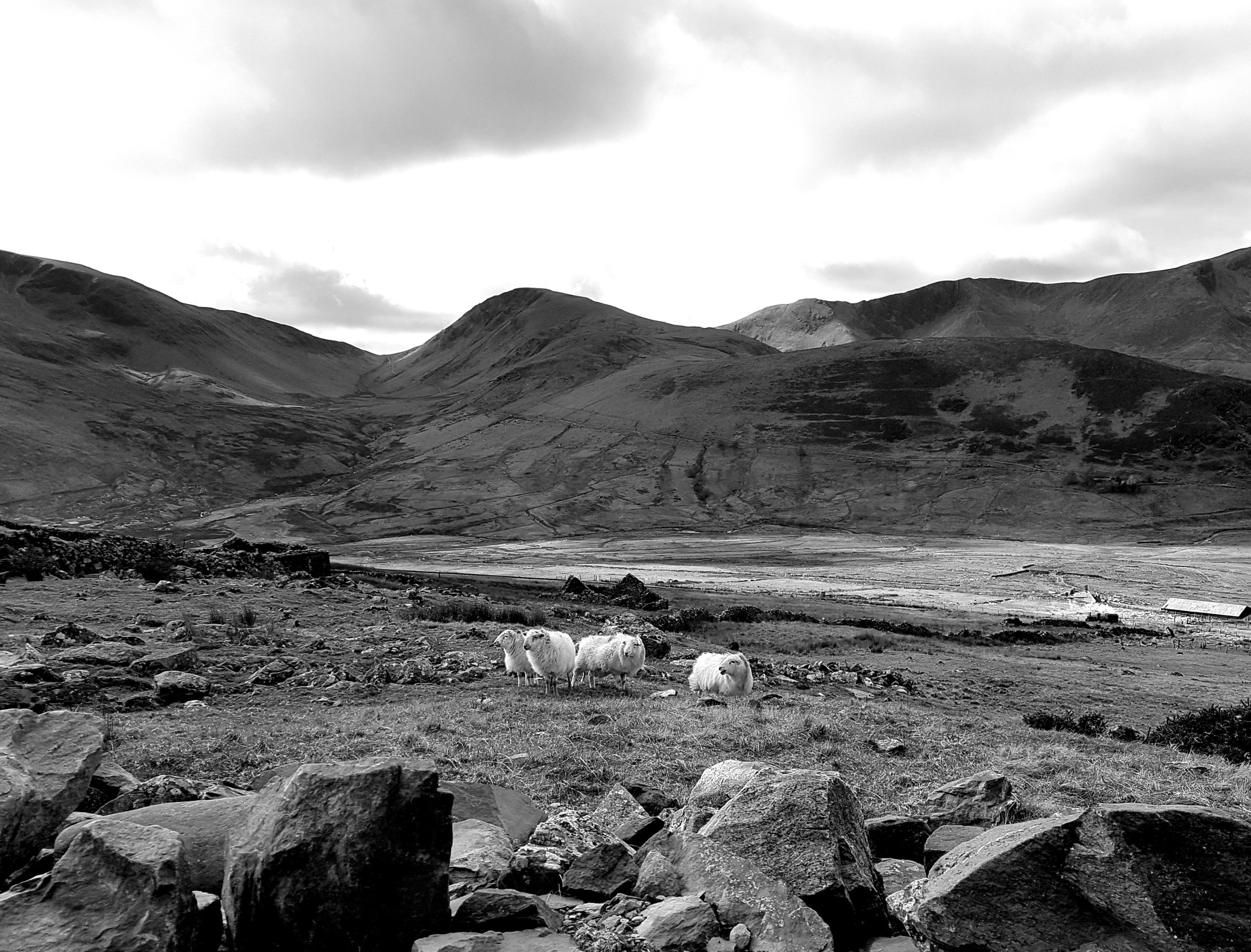
Sheep in a mountain valley in Snowdonia, Wales (photo by Peter Chiykowski on Unsplash)
“So we can look at our loneliness, even when we are surrounded by friends, not as a defect, a snag to get past with some more absorbing activity, but as the condition for settling for nothing less than his companionship.”
Simone Riva - Why do we feel lonely even among friends? Because the Shepherd is seeking us.
Christ is the King who seeks us out. He calls us by name, he waits for the burning core of who we are, and he cares about every part of us. We have to let ourselves be found.
“I myself will look after and tend my sheep” (Ez 34:11). Some things can't be delegated. No one else can do them in our place. We have to put ourselves on the line, take a risk, give it a try. The prophet Ezekiel, passing on God's own words, reveals that the first one who will not delegate is God himself. In the humanity of the Son, he will show what it means to look after and tend his sheep. Christ himself, the Good Shepherd, said it plainly: “The Son of Man has come to seek and to save what was lost” (Lk 19:10).
But how does this “search” happen? How can we recognize its signs in our everyday experience? Over the years, some of these signs have often been labeled “maladies of the human.” The label left room for a suspicion to settle in: that we have been abandoned rather than sought.
Loneliness is a striking example. It's very hard to find anyone with the courage to look at it for what it is. But one day last week, in class, a boy asked: “Why do I sometimes feel lonely even when I’m with my friends?” His question is like a quiet echo, and it has something to say. Emily Dickinson grasped this with rare insight: “There is a solitude of space / A solitude of sea / A solitude of death, but these / Society shall be / Compared with that profounder site / That polar privacy / A soul admitted to itself— / Finite infinity” (J1695; The Complete Poems of Emily Dickinson, ed. Thomas H. Johnson, Little, Brown, 1960).
There is in us an irreducible demand not to vanish into things. We are made by One who doesn't want us to be ghosts of ourselves, but present to the present. He comes to seek us out one by one, calls us by name, and cares about every part of us. This is another unmistakable sign of how he acts. Only he can give us the daring to linger before our own soul, before the burning core of who we are. We often can hardly bear it, yet it is the Creator's most wondrous work.
That Christ is King of the Universe, as the liturgy celebrates him on this last Sunday before Advent, becomes clearer, then, not when he triumphs but when he seeks us out. For him there is no true victory without us. His seeking has all the marks of a courtship, one that reawakens the “finite infinity” each of us is.
So we can look at our loneliness, even when we are surrounded by friends, not as a defect, a snag to get past with some more absorbing activity, but as the condition for settling for nothing less than his companionship. It is real, very real, so real that it takes on the likeness of the least of these, the simplest, the neediest, as today’s Gospel reminds us.
How much time we waste in the exhausting race to get our lives in order, to look the way others want us to look, to measure up to the world's standards. And how simple it would be instead to let ourselves be sought and found, like the lost sheep by its shepherd. That would give him the chance, at last, to tend his flock and make sure no one is missing. If his seeking happens in us, then there is no better time than the week before Advent to ask what has become of our desire to be found.
-
Il Dio che non si stanca di cercarci
Simone Riva
Cristo è il Re che ci cerca. Ci chiama per nome, attende il punto infuocato della nostra persona ed ha a cuore tutto di noi. Dobbiamo lasciarci trovare
“Io stesso cercherò le mie pecore e le passerò in rassegna” (Ez 34,11). Ci sono cose che non si possono delegare, incaricando altri di farle al nostro posto. Occorre giocarsi in prima persona, rischiare, fare un tentativo. Il profeta Ezechiele, riportando le parole di Dio, ci rivela che il primo a non delegare è proprio Lui, che, nell’umanità del Figlio, mostrerà cosa vuol dire cercare le sue pecore e passarle in rassegna. Lo stesso Cristo, il buon Pastore, l’ha detto espressamente: “Il Figlio dell’uomo è venuto per cercare e salvare ciò che era perduto” (Lc 19,10).
Ma come avviene questa “ricerca”? Come è possibile riconoscerne i tratti nella nostra quotidiana esperienza? Nel corso degli anni alcuni di questi tratti sono stati spesso definiti come delle “malattie dell’umano”, tanto da lasciare lo spazio perché si insediasse il sospetto di essere abbandonati, anziché cercati.
Un esempio clamoroso è la solitudine. Difficilissimo trovare qualcuno che abbia il coraggio di guardarla per quello che è, ma un giorno della scorsa settimana, in classe, è arrivata la domanda di un ragazzo: “Perché a volte mi sento solo anche se sono con gli amici?”. È come un silenzioso ritorno, il suo, che ha qualcosa da comunicare. Emily Dickinson l’aveva intuito in modo straordinario: “Ha una sua solitudine lo spazio, solitudine il mare e solitudine la morte – eppure tutte queste son folla in confronto a quel punto più profondo, segretezza polare, che è un’anima al cospetto di se stessa – infinità finita” (da Tutte le poesie, trad. M. Bulgheroni, Mondadori, 1997).
C’è in noi un’irriducibile domanda a non scomparire dentro le cose, fatti come siamo da Uno che non ci vuole fantasmi di noi stessi, ma presenti al presente. Viene a cercarci uno per uno, ci chiama per nome, ha a cuore tutto di noi, e questo è un altro inconfondibile tratto del suo agire. Solo lui può darci l’ardire di sostare davanti alla nostra anima, al punto infuocato della nostra persona, che spesso mal sopportiamo, e che invece è l’opera più stupenda del Creatore.
Che Cristo sia il Re dell’universo, come la Liturgia lo celebra in questa ultima domenica prima dell’Avvento, è dunque più evidente non quando trionfa, ma quando ci cerca, perché non c’è vera vittoria per lui senza di noi. Il suo cercare ha tutti i connotati di un corteggiamento che va a ridestare quella “infinità finita” che è ciascuno di noi.
Possiamo così guardare il nostro sentirci soli, anche se in mezzo a molti amici, non come un difetto, un intoppo da superare con qualche attività più coinvolgente, ma come la condizione per non accontentarci di niente di meno che la sua compagnia, reale, molto reale, tanto da prendere le sembianze del più piccolo, del più semplice, del più bisognoso, come richiama il Vangelo odierno.
Quanto tempo perdiamo, spesso, nell’estenuante corsa a sistemarci, a voler apparire come gli altri ci vogliono, a rientrare negli standard del mondo. E quanto semplice sarebbe, invece, lasciarsi cercare e trovare come il pastore fa con la pecora smarrita, dandogli così la possibilità di passare finalmente in rassegna il gregge verificando che non manchi nessuno. Se, dunque, è in noi che avviene il suo cercare, non c’è occasione migliore della settimana che precede l’Avvento per verificare che fine ha fatto il nostro desiderio di essere trovati.
-
El Dios que no se cansa de buscarnos
Simone Riva
Cristo es el Rey que nos busca. Nos llama por nuestro nombre, espera ese punto ardiente de nuestro ser y se preocupa por todo lo que somos. Debemos dejarnos encontrar
«Yo mismo buscaré a mis ovejas y las examinaré» (Ez 34,11). Hay cosas que no se pueden delegar, encargando a otros que las hagan en nuestro lugar. Hay que implicarse en primera persona, arriesgarse, intentarlo. El profeta Ezequiel, al transmitir las palabras de Dios, nos revela que el primero en no delegar es precisamente Él, quien, en la humanidad del Hijo, mostrará lo que significa buscar a sus ovejas y examinarlas una por una. El mismo Cristo, el Buen Pastor, lo dijo expresamente: «El Hijo del hombre ha venido a buscar y a salvar lo que estaba perdido» (Lc 19,10).
Pero, ¿cómo se lleva a cabo esta «búsqueda»? ¿Cómo es posible reconocer sus rasgos en nuestra experiencia cotidiana? A lo largo de los años, algunos de estos rasgos se han definido a menudo como «enfermedades del ser humano», hasta el punto de dejar espacio para que se instalara la sospecha de estar abandonados, en lugar de buscados.
Un ejemplo llamativo es la soledad. Es muy difícil encontrar a alguien que tenga el valor de mirarla tal y como es, pero un día de la semana pasada, en clase, surgió la pregunta de un chico: «¿Por qué a veces me siento solo aunque esté con mis amigos?». Es como un retorno silencioso, el suyo, que tiene algo que comunicar. Emily Dickinson lo había intuido de manera extraordinaria: «El espacio tiene su propia soledad, el mar tiene su soledad y la muerte tiene su soledad; y, sin embargo, todas ellas son una multitud en comparación con ese punto más profundo, ese secreto polar, que es un alma ante sí misma: infinitud finita» (de Todas las poesías, trad. M. Bulgheroni, Mondadori, 1997).
Hay en nosotros una pregunta irreducible para no desaparecer en el interior de las cosas, ya que hemos sido creados por Uno que no quiere que seamos fantasmas de nosotros mismos, sino que estemos presentes en el presente. Viene a buscarnos uno por uno, nos llama por nuestro nombre, se preocupa por todo lo que somos, y este es otro rasgo inconfundible de su actuar. Solo Él puede darnos el valor de detenernos ante nuestra alma, ante el punto ardiente de nuestra persona, que a menudo soportamos a duras penas, y que, en cambio, es la obra más maravillosa del Creador.
Que Cristo sea el Rey del universo, tal y como lo celebra la liturgia en este último domingo antes de Adviento, resulta, por tanto, más evidente no cuando triunfa, sino cuando nos busca, porque para él no hay verdadera victoria sin nosotros. Su búsqueda tiene todas las características de un cortejo que viene a despertar esa «infinidad finita» que es cada uno de nosotros.
Así, podemos considerar nuestro sentimiento de soledad —aunque estemos rodeados de muchos amigos— no como un defecto, un obstáculo que superar con alguna actividad más absorbente, sino como la condición para no conformarnos con nada menos que su compañía, real, muy real, hasta el punto de adoptar las apariencias del más pequeño, del más sencillo, del más necesitado, como nos recuerda el Evangelio de hoy.
Cuánto tiempo perdemos, a menudo, en la agotadora carrera por encajar, por querer parecer como los demás nos quieren, por ajustarnos a los estándares del mundo. Y qué sencillo sería, en cambio, dejarnos buscar y encontrar como hace el pastor con la oveja descarriada, dándole así la posibilidad de pasar por fin revista al rebaño y comprobar que no falte nadie. Si, pues, es en nosotros donde tiene lugar su búsqueda, no hay mejor ocasión que la semana que precede al Adviento para comprobar qué ha sido de nuestro deseo de ser encontrados.
-
Le Dieu qui ne se lasse pas de nous chercher
Simone Riva
Le Christ est le Roi qui nous cherche. Il nous appelle par notre nom, il attend le cœur brûlant de notre être et il a à cœur tout ce qui nous concerne. Nous devons nous laisser trouver
« Moi-même, je chercherai mes brebis et je les passerai en revue » (Ez 34,11). Il y a des choses qu’on ne peut pas déléguer, en chargeant d’autres de les faire à notre place. Il faut s’impliquer personnellement, prendre des risques, tenter sa chance. Le prophète Ézéchiel, en rapportant les paroles de Dieu, nous révèle que le premier à ne pas déléguer, c’est justement Lui, qui, dans l’humanité du Fils, montrera ce que signifie chercher ses brebis et les passer en revue. Le Christ lui-même, le Bon Pasteur, l’a dit expressément : « Le Fils de l’homme est venu chercher et sauver ce qui était perdu » (Lc 19, 10).
Mais comment s’opère cette « recherche » ? Comment est-il possible d’en reconnaître les traits dans notre expérience quotidienne ? Au fil des ans, certains de ces traits ont souvent été qualifiés de « maux de l’humain », au point de laisser place au soupçon d’être abandonnés, plutôt que recherchés.
La solitude en est un exemple frappant. Il est extrêmement difficile de trouver quelqu’un qui ait le courage de la regarder telle qu’elle est, mais un jour de la semaine dernière, en classe, un garçon a posé la question suivante : « Pourquoi est-ce que je me sens parfois seul même quand je suis avec mes amis ? ». C’est comme un retour silencieux, le sien, qui a quelque chose à communiquer. Emily Dickinson l’avait pressenti de manière extraordinaire : « L’espace a sa solitude, la mer a sa solitude et la mort a sa solitude – et pourtant, toutes celles-ci ne sont qu’une foule comparées à ce point plus profond, ce secret polaire, qu’est une âme face à elle-même – l’infini fini » (extrait de Toutes les poésies, trad. M. Bulgheroni, Mondadori, 1997).
Il y a en nous une exigence irréductible de ne pas disparaître au sein des choses, puisque nous avons été créés par Celui qui ne veut pas de nous comme des fantômes de nous-mêmes, mais bien présents dans le présent. Il vient nous chercher un par un, il nous appelle par notre nom, il a à cœur tout ce qui nous concerne, et c’est là un autre trait indéniable de son action. Lui seul peut nous donner l’audace de nous arrêter devant notre âme, ce point brûlant de notre personne, que nous supportons souvent mal, et qui est pourtant l’œuvre la plus merveilleuse du Créateur.
Que le Christ soit le Roi de l’univers, comme la liturgie le célèbre en ce dernier dimanche avant l’Avent, est donc plus évident non pas lorsqu’il triomphe, mais lorsqu’il nous cherche, car il n’y a pas de véritable victoire pour lui sans nous. Sa quête revêt toutes les caractéristiques d’une cour qui vient réveiller cette « infinité finie » qu’est chacun de nous.
Nous pouvons ainsi considérer notre sentiment de solitude, même au milieu de nombreux amis, non pas comme un défaut, un obstacle à surmonter par une activité plus captivante, mais comme la condition pour ne pas nous contenter de rien de moins que sa compagnie, réelle, bien réelle, au point de prendre les traits du plus petit, du plus simple, du plus démuni, comme le rappelle l’Évangile d’aujourd’hui.
Combien de temps perdons-nous, souvent, dans cette course épuisante pour nous adapter, pour vouloir apparaître tels que les autres nous veulent, pour nous conformer aux normes du monde. Et pourtant, comme ce serait simple de se laisser chercher et trouver, à l’image du berger qui part à la recherche de la brebis égarée, lui donnant ainsi la possibilité de passer enfin en revue son troupeau pour s’assurer qu’il ne manque personne. Si, donc, c’est en nous qu’opère sa recherche, il n’y a pas de meilleure occasion que la semaine précédant l’Avent pour vérifier ce qu’est devenu notre désir d’être trouvés.