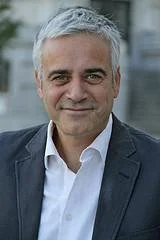
What if there are shop windows in my own life that I’m the one breaking?” — Giulio Pasi
Photo: Jilbert Ebrahimi / Unsplash
“Perhaps this is the only thing I really have to say about those squares: they can’t be seen from the outside. I’m in there too—we all are—with our broken windows and our desire still intact, waiting for someone who isn’t afraid to take it seriously.”
Giulio Pasi - Professor at Sciences Po
More than politics, what is surfacing in the squares these days—filled with young people from across half of Europe—is an existential malaise: a life that seems to offer nothing worth striving for or loving. But don’t we adults, too, join some demonstration every day without knowing what we’re looking for?
The demonstrations and clashes of recent weeks have affected me. First, financially: the plane tickets I’d bought to fly to Paris to teach were nonrefundable. But mostly because, amid all the noise of news and commentary, I couldn’t find anything that helped me make sense of what was happening.
A Book, and Something That Didn’t Add Up
It’s not that there was any shortage of lucid analysis. Quite the opposite: some pieces struck me because they made arguments I couldn’t have made myself.
Mind you, I have something to say too. With a dear colleague and friend, I’m writing a book about what we’ve decided to call a “catastrophe”: an extractive economic system so pervasive and so taken for granted that it keeps us from seeing the assumptions underneath it, the ones that need rethinking. We start with an analysis of attention capitalism, take on markets that treat price as the only signal, and propose a “dual signal”: price paired with a second signal that makes visible what price fails to capture—what economists, with a certain detachment, call “externalities.”
To get there, we wade into the technical world of private and public accounting and, drawing on work done recently within international institutions, sketch new line items for corporate and government balance sheets. That inevitably calls for institutional adjustments: new responsibilities, new decision-making processes, and new incentives. The subject can be dry at times, I admit. But it is precisely there, between one line item and the next, that what truly matters gets decided.
I was convinced that if I looked closely at the socioeconomic roots of the protests sweeping through several European countries, I would find the ideal testing ground for the proposal we’re finalizing: the streets as a laboratory, the book as the key to reading them.
Yet the more I read and tried to work out an interpretation, the more a sense of unease grew in me, as if something were missing. So, as I often do, I started jotting down a few thoughts, drawing on other people’s articles and on some older, classic reading.
Reading events through the book’s framework, I saw what didn’t add up. In those squares, there was something more than social tension and economic injustice. Many of the young people who took to the streets don’t seem to have expressed any political awareness or revolutionary spirit through their actions, which were at times reckless and destructive. They look instead like young people who, amid protests over the cost of living, schools, housing, or transportation, found an outlet for their anger, their boredom, and above all an existential unease: a life that seems to offer them nothing worth building, striving for, and, in the end, loving.
Let’s be clear: seeing this in no way erases the problem of an economy that kills, as Pope Francis put it, or of unjust power relations that must be exposed, “at the root of poverty and inequality,” as Leo XIV recently reiterated. At the risk of sounding presumptuous, this is a concern I know from the inside: it’s the daily bread of my work.
But seeing that there is a deeper dimension—triggered, perhaps, by economic strain, but above all existential—made my whole capacity for theoretical proposals look insufficient. Not useless, but incomplete, as if something were missing that could truly speak to those young people. Speak to them convincingly when they know little or nothing about economic theory.
Comments Written from a Balcony
That feeling sharpened as I read the commentary on the protests. With few exceptions, it struck me as intelligent and deadly boring in equal measure, and some of it was frankly unbearable. Not because the analysis was wrong—it was often right—but because it was written from a balcony. Each writer looked down on the square from the heights of their expertise, pinpointed the problems to solve, and handed them off to someone else: the young people, families, schools, the government. Real concerns, certainly, but difficulties the writers didn’t seem to be living through. They had already solved them, or so they implied. The facts made it into the article; the writer’s perspective came out untouched.
Even those who addressed the role of us adults did so, it seemed to me, with the detachment of someone who sees everything clearly and already has the answer in hand. Yet when it came time to spell it out, they fell back on phrases as vague as the students’ demands—“we need an educational pact,” “we must network,” “more solidarity”—or on solutions imposed from above that at best treat the symptoms and leave the underlying problem untouched: “more discipline,” “more sacrifice,” “more guidance.” Those last ones disturb me most. Behind the concerned tone lies the idea that someone already knows where a young person should go and therefore feels entitled to lead them there. As if the point were to reach safe harbor rather than learn to navigate rough water. Anyone who cares about a young person’s freedom—and their own—should feel a chill at these ideas. It’s a suffocating paternalism, all the more unbearable the more it passes itself off as understanding. And if I recognize it so clearly, it’s because I know the tone well: it’s the one I risk slipping into every time I step up to the podium.
The Windows I Break
While writing the book, I often asked myself what we’re really looking for when we choose, buy, and work. And why do we keep making decisions as if price could tell us everything, even though we know full well it can’t? Thinking over the events of recent days, I found myself asking a similar question, this time aimed at myself. That was precisely what had been missing from the pieces I’d read.
I was thinking about the ones who smashed everything without any real political motive, driven by boredom and restlessness. What if there are shop windows in my life that I’m the one breaking? Not with a fire extinguisher, of course. But I shatter them every time uncertainty gets the better of me. A child won’t obey. A mechanic swears he’s fixed the car. Recognition at work is slow in coming. So I grab the first answer that comes along and carry it home like a trophy. And how many times do I start the day in a fury born of boredom or fear? The email dashed off and sent too soon. The hurtful reply to one of my kids when the day didn’t go my way. The time spent scrolling a screen to “unwind.” The pointless purchase that promises to fill a void for an hour.
The same question came back as I thought about those who took to the streets more peacefully, with some political awareness but vague demands. What if I, too, take part in things without fully realizing it, driven by vague and partial ideas?
I walk into a classroom or an office convinced I already know how things will go. I get swept up in talk about this summer’s heat. Furthermore, I find myself at a dinner I never really decided to attend. Aren’t I, too, joining some demonstration every day without the slightest idea of what I’m looking for?
And how often do I indulge in sweeping criticism of an institution, a colleague, or a system without ever questioning its foundations or exposing the misunderstandings I help reinforce? I criticize the careerist colleague without realizing that the evaluation system rewards exactly that behavior. I complain that a public program fails because it’s underfunded without asking what it measures and so what it ends up rewarding. Likewise, I get frustrated with slow bureaucracy without seeing that an organization that judges people for not making mistakes will always breed caution, never initiative.
As I explored these questions, I came to an uncomfortable realization: whatever drove those young people isn’t so different from what so frequently drives me. I say this without giving in to the self-destructive empathy of those who, to avoid judging, end up justifying everything. But I also refuse to join the self-righteous moralists who have demanded exemplary punishment—and to whom many governments have responded with hastily cobbled-together fixes: more deterrence, harsher penalties, and a few platforms shut down.
Little by little, the confusion I felt before the protests across half of Europe, along with my irritation at so much commentary even more intelligent than mine, gave way to a simple realization. I, before anyone else, need to become aware of what happens to my desire when I step into everyday life: how I shrink it, trade it away, settle for the first thing I find, and then consider the matter closed. First and foremost, I need to understand where that fear comes from—the fear that creeps in between me and what I desire—and the uncertainty about the outcome that ends up making me doubt the desire itself. And first and foremost, I have to discover what can tear me away from what someone, many years ago, called the “bankruptcy of the human.”
A Journey That Begins with Me
So it has become a little clearer to me why the violence and despair in those squares concern me personally. Not because I know how to fix them, but because they make me feel, more urgently, the need for a human journey: one that can piece back together what I have fragmented and delegated and take back my freedom, my reason, and my affection.
A journey that can give back the judgment I’ve handed over to algorithms in exchange for truths that are merely plausible. Or to people only too happy to offer me truths backed by nothing but the speaker’s authority. Truths I don’t discover through my commitment. They ask nothing of me, and for that very reason they bind me to nothing. And finally, a journey that can restore to my desire its dignity as an ally of life, instead of treating it as a strange curse working against it.
Lately, plenty of people have pointed out this need to the young people who ended up on the front pages: they need a path, an education, someone to guide them, a place to find themselves. These suggestions are often sincere, sometimes less so, but they end up serving mostly to set the people offering them on a pedestal of moral superiority, despite the thoughtful tone and the customary mea culpa. Almost no one, though, has said that this journey concerns, firstly, the one doing the writing—partly because we educate through who we are, not through wise speeches or the influence we think we have over the young.
The journey ahead of these young people is the journey ahead of me. In fact, it lies ahead of me before it lies ahead of them. And, as for them, it’s this journey that makes me truly young, whatever my age, my titles, or the maturity I sometimes think I’ve secured once and for all. Perhaps this is the only thing I really have to say about those squares: they can’t be seen from the outside. I’m in there too—we all are—with our broken windows and our desire still intact, waiting for someone who isn’t afraid to take it seriously. The author has not reviewed the translation performed by the editorial team at
Source: www.paginasdigital.com