Humanity Is Always Possible
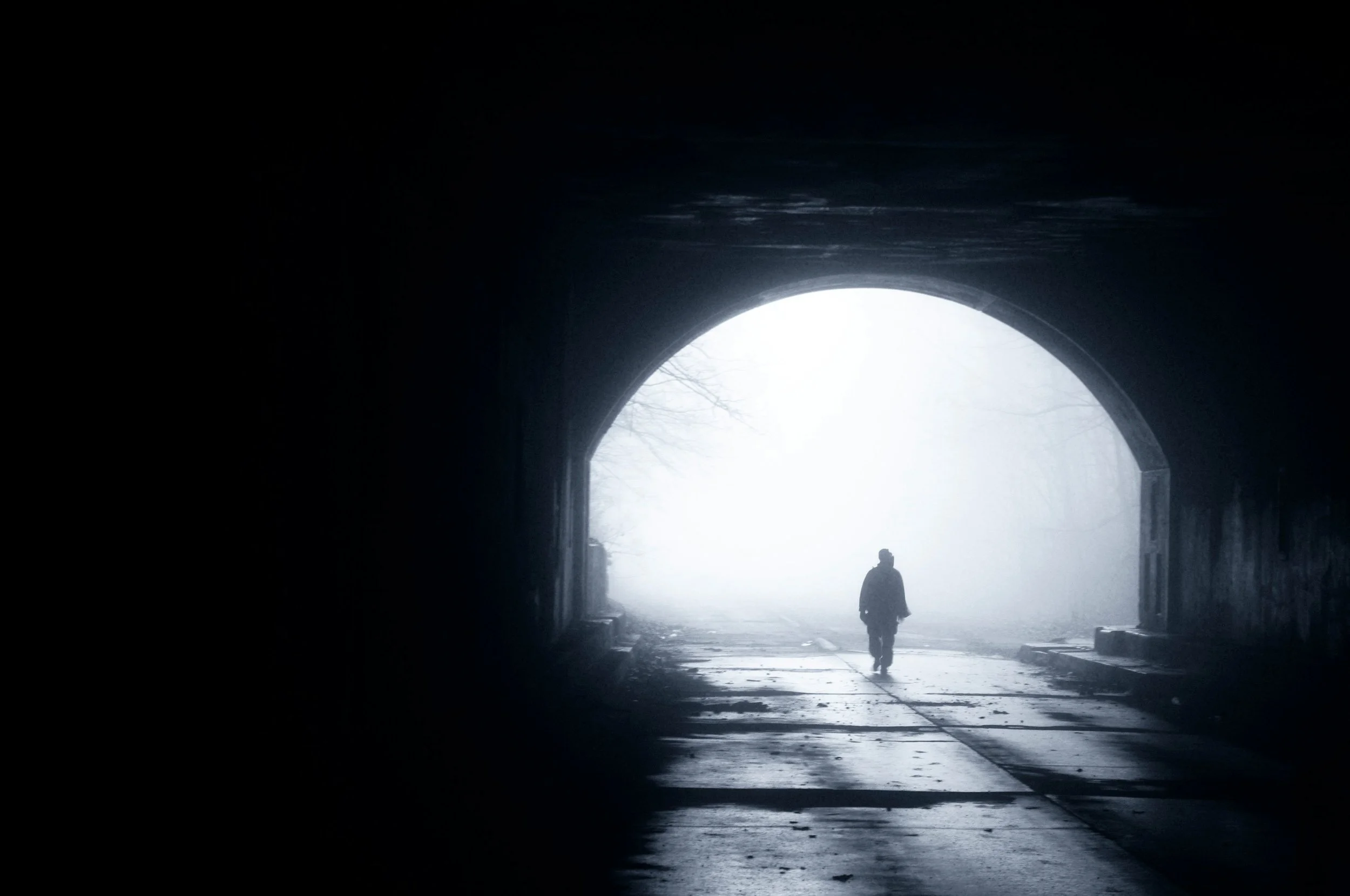
A striking black-and-white image featuring a lone silhouette walking along a reflective path from the deep shadows of an arched concrete tunnel toward an opening filled with bright, diffused, foggy light.
“Authority leaves room for the other and helps them grow, whereas power that becomes domination crushes the person. You can always say no; you can always assert the humanity that is about to be denied you.”
Fernando De Haro - Marta Cartabia - Humanity is always possible.
Last July in La Thuile, in the Italian Alps, Marta Cartabia — former president of the Italian Constitutional Court and former Minister of Justice — sat down with the Spanish journalist Fernando de Haro, director of paginasdigital.com. The conversation became a reflection on the “culture of power” we live in, on the limits of power, on the power of human limitation, and on the resistance of freedom, which is always possible. The text keeps the character of a spoken dialogue; the written version has been edited only as much as readability required.
Fernando de Haro
How do we live? How do we live in such a way that the intuition, the certainty of the infinite value of the mystery of my I, stays alive and is not smothered by a lack of contact with reality? How do we live in a world where freedom is a scarcer and scarcer commodity? How do we live in a world where the culture of power is this strong? That is what we are here to talk about.
With us is Marta Cartabia, former president of the Constitutional Court and former Minister of Justice. She is well known, in Spain and internationally, for her commitment to democracy. A few months ago I was in northern Nigeria shooting a documentary, and I interviewed many women who had been abducted by Boko Haram, a jihadist group. It was a searing experience: I listened to twenty abducted women who had suffered every kind of violence. It is one instance of what the Pope describes in his encyclical: the culture of power. Pope Leo writes, “The culture of power is a culture in which the availability of means and the capacity to dominate set the agenda and the criteria for decisions.” This is not only geopolitics; it reaches into our everyday lives. Through my work as a journalist I try to do exactly that: to tell these stories. Marta’s work is constitutional, and it takes her around the world to examine the troubles of democracy. So the first question is this: the people sitting in front of us right now are neither journalists nor constitutional scholars, so why should they care about any of this? Why does it matter?
Marta Cartabia
When I got here, someone told me about the question you have been asking yourselves: How do we live? A question asked not in the abstract, but with the full weight of a life’s wounds. With life’s own emergencies burning in front of us, why spend an afternoon thinking about power and about what is happening in the world?
We are living through a genuine turning point in history. A few years ago the situation was completely different: we did not live in a world where a new war breaks out every minute. We did not live in a time when one day a president wakes up and decides to buy a country, the next day wants to buy another, then invades a third, and in the meantime topples a head of state. What we face every day is a way of exercising power that, for someone in my line of work, is disorienting and unsettling. The world order we inherited, the one we have lived inside of, looks irreparably overturned. But why should that interest us?
For one thing, the fact that the Pope himself is worried about it is already a sign that there may be a reason to pay attention. Magnifica Humanitas is about artificial intelligence, true, but it is also, at length, about the “culture of power” that dominates our moment. The Pope’s attention to the culture of power, and his insistence on it, suggests to me that understanding the context we are in helps us understand ourselves. We are steeped in a mentality that works its way into us without our noticing, because what happens on the big screen of geopolitics hits us square on. Think about it: the first big news of this era, the first signs of the great upheavals — February 24, 2022 (the attack on Ukraine), October 7, 2023 (the Hamas attack in Israel, then the reprisals in Gaza) — shook us at the time, some of us to the core. Today we open the paper and barely look up. A strike on Iran, peace with Iran, another strike tomorrow; Hormuz opens, Hormuz closes. By now it is background noise that no longer interests us, no longer touches us. Does that strike you as normal? Does it seem normal that events like the ones Fernando describes, Boko Haram, made the news years ago and today do not even reach the front page? These are extremely grave facts, and history will record the 73,000 dead in Gaza, the 20,000 Ukrainian civilians killed, the deported Ukrainian children, everything happening in the world. In other words, the first sign that all of this is getting to us is that we have grown jaded. War, conflict, force as the ordinary currency between states — all of it has been normalized. And we are living through an earthquake: even if the drones are not falling on our heads, we still see the aftershocks, and we will see more of them. For now maybe it is only the price of gas, but where does this overturning of the world order lead? Taking the measure of it is first of all a matter of realism, because sooner or later, one way or another, it will reach us where we live.
Faced with this habit of letting the surrounding mentality soak into us, Giussani spoke of the “Chernobyl effect,” because the transformation of your I happens without your noticing, without your perceiving that you are getting sick, while day by day you fade a little more. And are we not fading a little in front of the gravity of what is happening in the world? Pasolini called it “the great cultural homogenization”: you never notice it, but you build a picture of life out of whatever is in the air, in the media, in public talk. One of the experiences that marked me most in recent years was my visit to Platform 21 with Liliana Segre. Platform 21 is the track at Milan’s central station from which the trains left for Auschwitz. She had a single word set at the entrance in enormous letters: indifference. Because in the end, she says, what happened — and we know how much it outrages us, how unbearable it still is to think back on it — was able to happen because of the indifference in which the whole thing unfolded. Yes, there were masterminds; there is a handful of tyrants, as the Pope said at one point; but there is also a great deal of getting used to it, a great deal of indifference. Arendt said that “the ideal subjects are not those who are ideologically convinced, but those who can no longer distinguish good from evil,” the ones who let things slide off them, who are no longer even wounded by the facts in front of them, because that is just how the world goes.
So the first answer, in my view, is that this “culture of power” the Pope talks about is the culture we are steeped in. It is the culture that not only lets the gravity of what happens in the world wash over us, which we watch almost from a distance, but that also becomes, in a way, our own way of handling things. The “culture of power,” which shows itself flagrantly in wars, in polarization, in the spread of violence, “penetrates society, altering relationships and behaviors” (Magnifica Humanitas, 185, 188). Those with more means — economic, technological, more power, more authority — tend to dominate, crushing the other. Humanity slides toward a violent culture of power made of threats, of fear, of the appetite for possession, of hegemonic ambition, of abuse, of permanent and pervasive conflict. Aggression, anxiety, fear, insecurity are the symptoms: when you are up against a powerful external power, a sense of helplessness sets in, and it generates anxiety, but also a great deal of anger and resentment. Let us stop for a second and consider how present that helplessness is in our daily relationships, a feeling that immediately makes you want to dump your anger, your resentment, your aggression on someone else: at work, in the family, even with strangers. In my view, you can see it any day of the week. My job keeps me close to the news. The crime stories in Italy lately are striking for the sheer uncontrolled aggression they reveal: a jeweler who answers a robbery with two killings and a third attempt is not first of all a political problem about self-defense — I have no wish whatsoever to open that debate here — it is a cultural problem. What kind of anger is that? Doesn’t the fact itself strike you as enormous? Or take one that drew less attention: in Sardinia, a young man goes and kills a man in cold blood because the man had been in a motorcycle accident with his sister, because nobody touches his sister, and so he kills him. And so on: every day the papers linger over stories like these. I am not trying to sort out who is right and who is wrong here. What seems important to me instead is the escalation of violence we are living in. Faced with these facts, maybe we should stop long enough to realize that if we do not recognize the climate of violence around us, that way of living will infect us and become the way we act.
But there is a second reason it matters to talk about what surrounds us, and it is the reason that interests me more. Sometimes we feel a detachment from what is happening — in Ukraine, in Iran — partly because underneath we are thinking, “We would never act that way.” In other words, that is what people with power do. Not us; we are different. Or else we feel helpless: these are events we experience as far away, enormous, out of scale, remote from the concerns of our daily lives. So let me tell you something from experience. At certain points in my life I have found myself in the control room, that is, working inside institutions: at the Constitutional Court, at the Ministry of Justice, and now at the Venice Commission. I can tell you that what struck me most in those experiences is that the dynamic by which you handle “power,” the thing we picture when we say the word, is no different from the dynamic by which you handle everyday relationships in your family, with your students, with your next-door neighbor. The dynamic is exactly the same. The effects are different, because you are holding something that amplifies your attitude and because the result is always public. But how you are and how you make your decisions never changes. Whether it is a decision of national or international weight, a condo association matter, where and how to go on vacation, or how to run a choir and the singing in a community, the dynamic is the same. Why is that? I happened to read a passage in the last few weeks that makes a very true and very basic observation: “The people who start wars have the same nature we do, they have the same problems we do. Whether we quarrel with the people closest to us or make war on each other” — maybe over some trivial argument where we cannot even explain ourselves and we go for each other’s throats — “it is for the same reason that, when you hold power, you try to fulfill yourself by invading a country or throwing the international scene into chaos, because at the origin of war there is a war we are waging inside ourselves.” For me it is literally like that. Those are Fr. Julián Carrón’s words: whether the stakes are large or small, whether it is the fate of the world, of your country, of Europe, or of your family, your friends, your community, it makes no difference, the dynamic is the same. If there is a dissatisfaction, a frustration, a lack you want to fill by your own means and with your own power, what you produce is the destruction of everything around you. Only if we find something that gives us peace inside, something that lets us live in a certain serenity no matter what happens, does it stop mattering whether you are insulted or not, attacked or not, backed by your friends or left on your own: it does not matter, if you are at peace with yourself. Only then, when you handle somewhat more powerful tools, are you not destructive; instead, ironically, you try to build, to ring whatever bells can still be rung, as Leonard Cohen reminds us. That is, to do what you can to put together a fragment of civilization where people can be better off. But the dynamic is identical.
Fernando de Haro
Listening to you, I was thinking that when I try to understand a war, being able to go there myself helps enormously. Having the keys to geopolitics is better still. But for some time now what I have found is that you understand a war if you take the point of view of the human heart. The fear, the sense of injustice suffered, the cycle of injustice suffered, the desire to settle the score that turns into violence. And in that sense I recognize myself completely in what you are saying.
Marta Cartabia
I think your observation is exactly right, and in my view, at the origin of war, that is, when you and I attack the other, there is always a dehumanization. Hatred does not see the other’s face. The enemy is not the person you look in the eye, not the mother who lost her child, not the person who is afraid; the enemy is an abstraction, the product of turning someone into a thing. So if you do not let yourself take in the human atmosphere a conflict gives off, even war turns into a big political game. You can understand a war only by putting yourself in the place of the others and recovering the full humanity of the people caught in it.
Fernando de Haro
On indifference, I think it is worth pausing, because that too is surely an effect of power. I am talking about the distance between the I and the facts. Let me tell you my experience. When I go into conflict zones I am very involved emotionally. I am there to see, say, what organized crime does to life in Mexico, and when I come back I react with an emotion that keeps me following the news from the places I have been. But over time the reaction weakens. If it all comes down to an impression, you find that power makes you forget the facts you had in front of your own eyes. That force, that way power operates, strikes me as an invitation not to have an experience. Power invites you not to have an experience. In what sense? Not to judge. I like this, I don’t like that, this is terrible — but if you do not judge, if you do not take the impact of the facts, nothing takes root in you. And this question of experience seems to me very important for telling authority and power apart. In this global crisis, plenty of people are claiming not the power of someone elected president, but power over conscience, power over persons. In fact, we were talking earlier about someone who says to you, “I will answer your question about how to live.” The dynamic of identity movements looks to me driven by that impulse. In your view, what are the criteria for distinguishing authority from power? And why does it matter, nationally, internationally, personally, to be able to judge authority and power?
Marta Cartabia
I have little of my own to add here, except what I learned in settings exactly like these: power and authority look like the same thing, in the sense that someone makes decisions that then affect everyone. But power that becomes domination, that is, a decision that crushes the person, is a power that does not reckon with the freedom of the other. Authority, on the other hand — we have heard this a million times, and still it bears repeating — has augere at its etymological root: it makes the other grow. Authority leaves room for the other and makes him grow. And that is not only about the life of communities, about schools and other educational settings. It holds in the places of power too, including political power. I think one of the finest things I got to do during my time at the Ministry was to set up the framework for restorative justice in Italy, something I believe in deeply, still unfinished, still being implemented, but not stalled. Why do I remember that one? Because it did not come out of my head, and it was not a decision I imposed. I simply discovered what restorative justice was through the experience of my friends Adolfo Ceretti, Claudia Mazzucato, Agnese Moro, and Franco Bonisoli. I saw the difference it could make in people’s lives. I learned from what already existed, and the moment I had the chance I said to myself, “Well, maybe we can do something to back this thing that started from the ground up and make it an opportunity for everyone.” For me that is what power is for: spotting the experiences that work, backing them, moving them forward, and putting the means in place so they can last. That said, when you hold public office you obviously use power too, in the sense that at that point I could bring a bill to Parliament, count on the parties’ consensus, and so on. It is not that power in itself is a bad thing. But it is one thing to use power so that the people in front of you can flourish, and another to use a power that oppresses, that crushes. Criminal law is probably where the difference shows most clearly: punitive power that only represses, that answers even very grave acts with repression alone, is a power that has to be used to stop an imminent danger, but if it stops there it does nobody any good. Locking up the people who committed the crime gives society nothing but momentary relief unless it comes with a path that lets the person who commits crimes really choose a different life. That is especially true with the young. The policies being pushed right now aim to use repressive power ever more harshly. All of it will be wasted unless it comes with a path that lets these kids see something else, imagine a different future for themselves. Repression will not get us far even by its own measure, which is greater security. If prison is not an occasion for change, these kids will sit there two months, two years, and then, once they are out, they will go back to doing what they did before, or worse. With young people it is obvious that locking them up is not enough. What Fr. Claudio Burgio does with his kids, on the other hand, seems to me to show exactly this difference between power and authority.
On one side there is power as a way of forcing: I stop you from doing certain things. With prison you go all the way to restricting physical freedom, which is the strongest form power takes. On the other side there is an authority that bets on their freedom, that stands next to these kids, that looks for new languages to reach them, that gets them studying or offers them a job, that proposes a path where they come to see what they did, with nothing papered over, and that at the same time gives them another chance. It is a completely different world. I have drawn these examples from my institutional experience, but every one of us can verify this distinction between power and authority. Over my working life, I remember that with some people work meant absorbing a string of orders and abuses of power; with others, even when there were constraints to respect and demands that made me do things I would rather not have done, it made me grow. I think that holds in every environment, in every setting. Go talk to a priest who tells you, “Ah, but you were wrong to do that,” and then to another who takes your human point of view seriously and helps you take a step forward. In other words, I think each of us, thinking hard about our relationships with a figure of authority, can tell where power smothers freedom and where, instead, it makes us grow. One small note, Fernando: to my surprise, though it is not really much of a surprise, this idea of power-as-domination is very popular; in the end, people like it. Why? That popularity raises a pile of questions for me. How is it possible not to rebel against a form of power that keeps getting more oppressive? At work, in any field, in the family, in personal relationships.
Fernando de Haro
When it happens to me, it is out of a lack of self-esteem.
Marta Cartabia
Exactly. Freedom, in the end, takes effort. That is what makes this proliferation of forms of power possible: in the end you hand your problems to someone else so you can set down your own responsibility. It is as if we said, “Sure, go ahead, you take care of it; I’ll just do as I’m told.” Power spreads because an attitude spreads: expecting nothing of yourself. Rereading chapter 8 of At the Origin of the Christian Claim, the part about the value of the person that Jesus reveals, a value rooted in a direct and irreducible relationship with the Mystery, I thought of Dostoevsky’s legend of the Grand Inquisitor. Jesus comes back to earth in Seville in 1600 and is exiled by the Grand Inquisitor because he has come to disturb the work of the Church. Why does he disturb it? Because he holds man in such esteem that he believes in his freedom. At a certain point the Inquisitor says, “In giving him freedom, you demanded too much of man. If you had esteemed man less, you would have demanded less. Man is weak and cowardly; he does not want freedom. He wants to live in peace.” The Inquisitor drives Jesus out because he would reawaken man’s freedom and desire for happiness: “If anyone deserves our stake more than all the rest, it is You, because You have come to disturb us.” In the end there is no stake, but Jesus is driven out: “Go, and never come back, never again.”
Whoever esteems the person believes in freedom. Think of how we behave with our children. If I look at my son and say, “Choose your own road, whatever it turns out to be,” I can do that because I know he will find his road. If I do not esteem him, if I am afraid, if I am anxious, then I hand him instructions: “Do this, do that, do this, do that; better do this, better do that.” And he will grow up very weak.
Fernando de Haro
You were talking about the virtuous use of power and the abuse of power. Which brings us to limits. Constitutions are limits on power. Why does it matter that power have limits?
Marta Cartabia
Because we are human beings.
Fernando de Haro
But look at the whole international trend in democracy, where someone reaches office and says, “I won the election; all the power is mine.” That is the first question: the limit of power. Then comes the power of the limit. You were speaking about the value of the individual, of the person. Magnifica Humanitas made a strong impression on me where the Pope treats the limit in a positive sense, where he says that every life is marked by crises but that we can live better not by getting around the limit but through it. He sees the limit as the place where the human shows its full force. On one side we need a limit for power; on the other we have the force of the human as a limited being.
Marta Cartabia
So there are two questions, and they are obviously tied tightly together. On the first, in my view, this loss of the sense of the limit is what marks our time. At least from where I sit, watching how the structures of power get organized. Constitutional law studies the structures of power and their limits. A short explanation is in order here. When the constitutions were all rewritten after the Second World War, when the European Union, the Council of Europe, the European Convention on Human Rights, the Universal Declaration of Human Rights, everything that framed the world we have lived in until now, came into being, one concern dominated, and it came straight out of what had just happened; we hardly need to review what the two world wars and the totalitarian regimes had been. The dominant concern was to build structures of power that were limited enough, because people saw clearly the risk that power, placed in human hands, becomes an instrument of abuse. There is a magnificent testimony from one of the protagonists — we jump to a later period, but the dynamic is the same as postwar Europe’s — when South Africa came out of apartheid. One of the witnesses is Albie Sachs, who later became a constitutional judge; he is white, and he was a freedom fighter. At a certain point they understood they were about to take over the whole country, and he had to stand up at his party’s congress and explain why he wanted a Constitution that would impose limits on the people who were going to exercise power, starting with the recognition of the rights of the person, inviolable by any power whatsoever.
He says he was very tense, because of course, after years of repression, the Black population is tempted to take power in order to assert itself, to take revenge. A humanly understandable reaction, all the more since Black South Africans had suffered a great deal of abuse, to put it mildly. And still Albie Sachs won everyone over when he presented his draft Constitution in these terms: “We have seen what power does not only to those in the minority, but also to those who hold it. We want limits on power to protect ourselves from ourselves, because we know we are not immune to the risk of abusing it.” This is a man who paid a high price: exile, prison, an attack in which he lost an arm and an eye. And there too, when he was attacked, his comrades in the party came to him and said, “Albie, don’t worry, we will avenge you,” and he answered, “How are you going to avenge me? Do you think I fought and went through all this to create a South Africa of men and women without arms and without eyes? You will not avenge me. We fought not for power but for freedom.” That is the spirit in which our constitutions were written, in which Europe was founded. No more absolute powers. Even though the sovereign today is the people, wearing the face of the citizen, and no longer a sovereign in ermine holding a scepter, the people cannot exercise absolute power, because in a free country, in a democracy, there is never an absolute lord. Our Constitution says so in its very first line: “Italy is a democratic republic; sovereignty” — a strong word, because it evokes absolute power — “belongs to the people, who exercise it in the forms and within the limits of the Constitution.” What is missing today in the crises of democracies, and it is the same cause that led to the wars, is a total intolerance of the idea of a limit. Democracy gets reduced to a popular rubber stamp for whoever is governing. Exactly as you put it, Fernando: “The people chose me, so from now on I call the shots.” Yet at the origin of our constitutions the sense of the limit was so clear that it produced new legal structures: rigid constitutions, constitutional courts, and a whole set of guardrails, independent bodies meant to guarantee that the people holding power govern within limits.
Notice that the word limit is not a synonym for obstacle. Over the course of history it became not only the limes that marks the border but also the fortified road you can walk in safety. So much so that there are limits even on popular mandates: why can’t we re-elect the president of Catalonia, or of Lombardy, for the twentieth time?
Because power decays, because we are human beings, because we are not omnipotent, and because something on this score has been lost in our culture.
Fernando de Haro
Maybe this sensibility that has lost the need to limit power has to do with a lack of self-esteem, including toward our own limits.
Marta Cartabia
Yes, I think we suffer from an inability to see what the limit can produce, to see that it is inside the limit that something new can be born. As the Pope says in Magnifica Humanitas, the limit tends to get treated as a defect to be corrected. In my view we do not fully believe that the limit is our road. Deep down, we think that without limits we would be happier. Why, on the contrary, is it true that the limit can be the crack where an unexpected light gets in? When a project of yours fails, when you become aware of the disproportion between the task handed to you and your capacities, when you know your strength is what it is, something happens that gets lost in the moments when you are very sure of yourself. (Fragility lives in us right alongside presumption: the Albie Sachses and the Trumps, so to speak. We are inhabited by contradictory characters.) But when we really feel our helplessness, something happens that would not happen otherwise: the heart and the mind open. You see roads, possibilities, ways through, people to talk to, allies you would not otherwise see. When you are very sure of yourself, you keep repeating yourself. When you are in a position of weakness, you look like a child, don’t you? Last week we read the passage about King Solomon. He was a boy when they put him on the throne of Israel, and before him the great King David had reigned. What a sense of disproportion! And in that situation God asks him, “What do you want?” And he answers, “A docile heart.” But what would we ask of a God who came to visit us? Probably to take our limits away, to give us a little more strength, a little more health, to remove a problem, to settle a work question about a child, to fix a hard situation. But when would we ever ask for “a docile heart”?
Let me put it in secular terms, with an image that lodged itself in my mind. I don’t know how many of you saw the film Hamnet, which I think is one of the most powerful in a long time. The story in Hamnet turns decisively at the moment when Agnes does not want to go to London to see her husband’s play; she is hesitating, torn, angry, furious, grieving, wrecked. She turns to her brother and asks, “What am I supposed to do?” And he answers, “Our mother only ever told us one thing: always keep your heart open.” That is where the film changes course completely, because she is the one who changes. For me that is the crux: I have seen horizons open that I would never have imagined in my life, and only in the moments when the heart really opened, this heart that always tends to close in on itself a little. Hamnet uses the word heart the way Solomon does. Benedict XVI commented on the episode of Solomon by observing that a docile heart is an open reason. Reason and affection: an open attitude. The heart is certainly not only emotion, but it is also more than rationalist reason; it is exactly the attitude of the person, it is affectivity and reason, the whole person put into a state of waiting. To me that is the exact opposite of the use of power that crushes. Let me use another image I am fond of, one that has kept me company: Creon in Antigone. He refuses burial to Antigone’s brother because he is a traitor, but the whole people, after she has broken the law in the name of a higher law, tries to convince him not to kill her. The last attempt comes from his son Haemon, who says to Creon, “Allow yourself to change your mind. Even the reeds at the river’s edge hold on if they bend; if they push back, they break.” That, to me, is the real question of the force of the limit: underneath it all we are tense, rigid in our ways, until something really forces us to say, “No, here I truly need it.”
Fernando de Haro
And that is where the power of need appears. It seems we are nearing the end, but there is a central question here about the moment we are living. On one side there is the whole crisis, and we see things that are truly foreign to us; on the other side, all this need, all this desire, is surfacing. In Spain it is very present, above all in the secular world, where people talk openly about the need for meaning; in a way the secular world is more religious than the religious world. I love the way the heart comes through in the lyrics of Rosalía’s latest album, Lux, a very powerful cry that says, “Love me.” There is all that force emerging in the middle of this crisis, from a heart that is clear about its own need. I began with the story of those women from Boko Haram. One interview stayed with me: a girl abducted when she was seven. At first she would not speak, and it took us two days to do the interview. I asked her, “Why did you run away?” “Because they wanted to marry me off. And that life was not a real life, it was not a life for me; I had to run.” What a heart. And what an immense desire in a little girl who spent ten years in a Quranic school. When power throws its weight around, she says, “No, I would rather risk my life than do what power orders me to do.” Six of them ran; four made it, two died. I don’t know whether I am overreaching by trying to find something positive in it. What do you think?
Marta Cartabia
That account is arresting. If we do not go that far, in my opinion, we stay in abstractions. What you say about that girl is arresting, all the more because Boko Haram does not exactly have, how should I put it, a gentle way of persuading anyone of the goodness of Islam. And still this little girl, on whom violence was worked, more by brainwashing than by physical repression, manages to say, “This is not a life for me, I would rather run,” risking everything. It reminds me powerfully of an episode Liliana Segre has told publicly, from when she was thirteen. She was at Auschwitz, but she got there near the end, when the Allies were closing in. At that point the Nazis decided to move the Jews from Auschwitz to another camp, on a very long march that was meant to be a death march, and the whole way Liliana had an SS commander beside her who abused her and beat her. Picture that moment: with the Nazis feeling cornered, it was even worse. They reached the new camp, and the Allies already held it. So the SS commander, in a last move to save himself, took off his uniform and threw his weapons on the ground. And Liliana Segre says, “It lasted a fraction of a second, but I was tempted to pick up that weapon and shoot him. I did not do it, and that is the moment I became the free woman I am today.” For me that is where the extraordinary character of the human sits: you can be under the most hateful power, and I do not think anyone can imagine worse than Boko Haram or the SS, and your humanity still has the possibility of betting on freedom and being human, or else of becoming like them. We sang “La nuova Auschwitz,” by Chieffo, a little while ago. It is something nobody can ever take from you, and something only you can put at stake. It belongs to the human possibility of the person, to the responsibility of the person, always and in every circumstance. You can always say no. You can always affirm a humanity that is about to be denied you. This whole discussion of power, if it did not arrive here, would be, in my opinion, simply a death sentence for us. Are we sunk in a system, destined to conform? We are not. I do not know the name of that young Nigerian woman, but let us keep the stories of these two women in our hearts, as traveling companions.
Fernando de Haro
The girl’s name is Maria. We began by saying that we wanted to ask the question seriously: How do we live? It seems to me that after listening to Marta we should not rush to answer it. We need to live with the question, because our freedom is at stake, our life is at stake, the possibility of meeting a gaze that opens a road toward freedom is at stake.
-
L’umanità sempre possibile
Fernando de Haro,Marta Cartabia
13.08.2026
Lo scorso luglio a La Thuile, nelle Alpi italiane, si è svolta una conversazione tra Marta Cartabia, ex presidente della Corte costituzionale italiana ed ex ministro della Giustizia, e il giornalista spagnolo Fernando de Haro, direttore di www.paginasdigital.com. L'incontro ha offerto una riflessione sulla "cultura del potere" in cui viviamo, sui limiti del potere, sul potere del limite umano e sulla resistenza della libertà, che è sempre possibile. Il testo mantiene lo stile tipico di un dialogo orale. Nella versione scritta sono state apportate le modifiche necessarie per renderlo più leggibile.
Fernando de Haro
Come si fa a vivere? Come si fa a vivere in modo tale che l’intuizione, la certezza del valore infinito del mistero del mio io, sia presente e non venga soffocata dalla mancanza di contatto con la realtà? Come si fa a vivere in un mondo in cui la libertà è un bene sempre più scarso? Come si fa a vivere in un mondo nel quale la cultura del potere è molto potente? Di questo parleremo in questo incontro. È con noi Marta Cartabia, ex presidente della Corte costituzionale ed ex ministro della Giustizia. È un personaggio molto conosciuto anche in Spagna e a livello internazionale per il suo lavoro a favore della democrazia. Qualche mese fa sono stato nel Nord della Nigeria per fare un documentario e ho fatto tante interviste a donne rapite da Boko Haram, un gruppo jihadista. È stato un momento forte perché ho sentito venti donne rapite, che avevano subito ogni tipo di violenza. Questo è un esempio di quello che il Papa dice nella sua enciclica: la cultura della potenza. Papa Leone dice: “La cultura della potenza è una cultura nella quale la disponibilità di mezzi e la capacità di dominare dettano l’agenda e il criterio della decisione”. Questa non è solo geopolitica, ma ha a che fare con la nostra vita. Con il mio lavoro da giornalista provo a fare questo: raccontare questo. Marta, invece, ha un lavoro di stampo più costituzionale e gira per il mondo analizzando i problemi della democrazia. La prima domanda è: le persone che abbiamo davanti in questo momento non fanno i giornalisti né i costituzionalisti, perché allora devono essere interessate a questi temi? Perché è importante?
Marta Cartabia
Quando sono arrivata qui, mi è stato raccontato della domanda che vi siete fatti: come si fa a vivere? Una domanda posta non in modo astratto, ma con tutta la drammaticità delle ferite di una vita. Di fronte alle urgenze della vita che bruciano, perché dobbiamo dedicare un pomeriggio a ragionare della questione del potere e di quello che succede nel mondo?
Stiamo davvero attraversando un cambiamento d’epoca. Fino a pochi anni fa il contesto era molto diverso: non vivevamo in un mondo in cui ogni minuto scoppia una nuova guerra. Non vivevamo in un tempo in cui un giorno si alza un presidente e decide di comprarsi uno stato, e domani ne vuole comprare un altro, poi ne invade un terzo e nel mentre butta giù un capo di stato. Quello che abbiamo sotto gli occhi tutti i giorni è un modo di esercitare il potere che, per uno che fa il mio mestiere, disorienta e sconvolge. Cioè, l’ordine mondiale che abbiamo ereditato e in mezzo al quale abbiamo vissuto sembra irrimediabilmente travolto. Ma perché ci dovrebbe interessare questo?
Da una parte, il fatto che se ne occupi anche il Papa già è un segnale che forse qualche motivo di interesse c’è, perché nell’enciclica Magnifica Humanitas è vero che si parla di intelligenza artificiale, ma è anche vero che si parla moltissimo della “cultura della potenza” che domina il nostro tempo. L’attenzione e l’insistenza del Papa sulla “cultura della potenza” suggerisce, a mio parere, che capire il contesto in cui siamo ci serve per capire noi stessi. Siamo immersi in una mentalità che, senza che ce ne accorgiamo, ci penetra. Perché quello che accade sul grande schermo della geopolitica ce lo ritroviamo addosso. Provate a pensare: le prime grosse notizie che sentivamo, i primi segnali dei grandi cambiamenti di quest’epoca, come il 24 febbraio 2022 (l’attacco all’Ucraina), il 7 ottobre 2023 (quello che è stato il grande attacco di Hamas in Israele e poi la ritorsione a Gaza), lì per lì ci avevano veramente scosso — anche molto — emotivamente. Adesso apriamo i giornali e quasi non ci facciamo caso. Attacco all’Iran, pace con l’Iran, domani un nuovo attacco; apre lo stretto di Hormuz, chiude Hormuz. Ormai è quasi un rumore di sottofondo che non ci interessa più, non ci colpisce più. Ma vi sembra normale? Vi sembra normale che, per esempio, vicende come quelle di Boko Haram, di cui ci parla Fernando, si sentivano anni fa e adesso non fanno nemmeno più notizia? Eppure sono fatti gravissimi e la storia racconterà dei 73.000 morti a Gaza, dei 20.000 ucraini civili uccisi, dei bambini ucraini deportati e di tutto quello che sta succedendo nel mondo. Cioè, che ci sia qualcosa che ci sta intaccando si capisce innanzitutto dal fatto che siamo un po’ assuefatti. La guerra, il conflitto, l’uso della forza come modalità di rapporto fra stati si sono normalizzati. Eppure, stiamo attraversando veramente un terremoto, nel senso che anche se a noi non cadono sulla testa i droni, ne vediamo comunque le ricadute e ne vedremo ancor più; magari forse a noi oggi tocca soltanto l’aumento del prezzo della benzina, ma dove porterà questo cambio di ordine mondiale? La consapevolezza della portata di questo sconvolgimento è anzitutto un problema di realismo, perché prima o poi, in qualche modo ci toccherà da vicino.
Rispetto a questo abituarsi a essere penetrati dalla mentalità in cui siamo immersi, Giussani parlava di “effetto Chernobyl”, perché la trasformazione del tuo io accade senza che te ne accorgi, senza percepire che ti stai ammalando, ma intanto ti spegni ogni giorno un po’ di più. E noi, non ci stiamo forse un po’ spegnendo di fronte alla gravità di quello che succede nel mondo? Pasolini la chiamava “la grande omologazione culturale”, per cui non ti accorgi neanche, ma ti formi un’immagine di vita che è quella che respiri nell’aria, nei media, nei discorsi pubblici. Ricordo una tra le esperienze che più mi ha colpita negli ultimi anni, ed è stata la visita al “Binario 21” con Liliana Segre. Il “Binario 21” è quello da cui dalla stazione centrale di Milano partivano i treni per Auschwitz. Lei ha fatto mettere un’enorme scritta a caratteri cubitali all’ingresso con la parola “indifferenza”, perché lei dice che alla fine quello che è successo — e lo sappiamo quanto ci indigna e quanto ancora ci risulta ributtante ripensare a quegli eventi — è potuto succedere per l’indifferenza in cui si è svolto tutto. Certo, c’erano delle menti, c’è un manipolo di tiranni, ha detto a un certo punto il Papa, ma poi c’è tanta assuefazione, tanta indifferenza. La Arendt diceva che “i sudditi ideali non sono quelli ideologicamente convinti, ma quelli che non distinguono più il bene dal male”, cioè quelli che si lasciano scorrere addosso le cose e che non si fanno nemmeno più ferire dai fatti che accadono, perché così va il mondo.
Allora, secondo me, la prima risposta è che questa “cultura della potenza” di cui parla il Papa è la cultura in cui noi siamo immersi. È la cultura che non soltanto ci fa scivolare addosso la gravità di quello che sta accadendo nel mondo, che guardiamo quasi con distacco, ma diventa anche un po’ un nostro modo di rapportarci. La “cultura della potenza” che si manifesta clamorosamente nelle guerre, nelle polarizzazioni e nel dilagare della violenza “penetra nella società, modifica relazioni e comportamenti” (Magnifica Humanitas, 185, 188). Chi ha più mezzi — economici, tecnologici, di potere e di autorità — tende a dominare, schiacciando l’altro. L’umanità sta scivolando nella cultura violenta della potenza, fatta di minaccia, paura, desiderio di possesso, ambizioni egemoniche, abusi e conflitti permanenti e pervasivi. Aggressività, ansia, paura, insicurezza ne sono il sintomo: perché quando hai un potere forte fuori, subentra un senso di impotenza che ti genera ansia, ma anche tantissima rabbia e risentimento. Facciamo un attimo di pausa e pensiamo a quanto è presente nei nostri rapporti quotidiani questo senso di impotenza che genera immediatamente la voglia di scaricare rabbia, risentimento e aggressività verso gli altri: sul lavoro, nei rapporti in famiglia e anche nel rapporto con gli estranei. A mio parere, questa è una cifra che nella quotidianità si vede. Io per mestiere sto un po’ attenta ai fatti di cronaca. I fatti di cronaca degli ultimi tempi in Italia sono abbastanza impressionanti per l’aggressività incontrollata che raccontano: che un gioielliere reagisca a una rapina con un duplice omicidio, e un terzo tentato omicidio, non è anzitutto un problema politico sulla legittima difesa — non mi interessa affatto aprire qui un dibattito su questo — è un problema culturale. Che rabbia esprime? Non vi sembra di per sé un fatto enorme? Oppure un fatto che è passato meno osservato: in Sardegna un ragazzo va e ammazza un uomo a freddo perché aveva fatto un incidente in moto con sua sorella, perché sua sorella non bisognava toccarla e così lo ammazza, e così via: ogni giorno la cronaca si sofferma su fatti così. Non mi interessa qui stabilire le ragioni e i torti. Mi sembra invece importante notare questa escalation di violenza in cui siamo immersi. Di fronte a questi fatti forse dobbiamo fermarci un attimo per renderci conto che se noi non diventiamo consapevoli del clima di violenza che ci sovrasta, questo stile ci contagerà e diventerà il nostro modo di agire.
Ma c’è una seconda ragione per cui parlare di ciò che abbiamo intorno è importante ed è una ragione che a me interessa di più. Certe volte noi sentiamo un senso di distacco dai fatti che accadono, l’Ucraina, l’Iran, eccetera, un po’ perché in fondo in fondo pensiamo: “ma noi non agiremmo così”. Cioè quelle sono le azioni tipiche che compie chi ha il potere. Noi no, noi siamo diversi. Oppure ci sentiamo impotenti, sono fatti che percepiamo distanti, giganteschi, fuori misura e lontani dalle preoccupazioni della nostra quotidianità. Allora, permettetemi di condividere questa esperienza. A me è capitato di trovarmi in certe fasi della vita nella “stanza dei bottoni”, cioè di lavorare nelle istituzioni: alla Corte costituzionale, al Ministero della giustizia, e ora alla Commissione di Venezia. Vi posso assicurare che la cosa che più mi ha impressionato di queste esperienze è che la dinamica con cui maneggi il potere “potere”, quello che noi ci rappresentiamo come tale, non è diversa da quella con cui ti accosti ai rapporti quotidiani in famiglia, coi tuoi studenti, piuttosto che col vicino di casa. La dinamica è esattamente la stessa. Gli effetti sono diversi, perché hai tra le mani qualcosa che amplifica l’effetto del tuo atteggiamento e l’esito è sempre in pubblico. Ma il come sei e il come decidi è sempre lo stesso. Che sia una decisione di rilievo nazionale o internazionale, o una questione di condominio, o la decisione sul dove e come fare la gita in vacanza, come gestire il coro e i canti in una comunità, la dinamica è la stessa. Perché succede questo? Mi è capitato di leggere un passo proprio nelle ultime settimane che secondo me fa una osservazione verissima e fondamentale: “Le persone che scatenano le guerre hanno la nostra stessa natura, hanno gli stessi nostri problemi. Se litighiamo con le persone vicine o se ci facciamo la guerra fra di noi”, magari per una discussione banale in cui non riusciamo neanche a spiegarci e ci saltiamo in testa, “è per lo stesso motivo per cui uno quando ha il potere cerca la sua pienezza invadendo un paese o creando lo scompiglio a livello internazionale perché all’origine della guerra c’è una guerra che combattiamo dentro di noi”. Per me è letteralmente così. Queste sono parole di don Julián Carrón: che la posta in gioco sia grande o piccola, che sia il destino del mondo, del tuo paese, dell’Europa o della tua famiglia, dei tuoi amici, della tua comunità, quello che volete, la dinamica è la stessa. Se c’è un’insoddisfazione, se c’è una frustrazione, se c’è un senso di mancanza che tu vuoi riempire con i tuoi mezzi e con il tuo potere, l’effetto che produci è di distruggere tutto ciò che c’è intorno a te. Soltanto se noi troviamo qualcosa che pacifica noi stessi, che ci fa vivere con un sottofondo di tranquillità, qualunque cosa succeda, allora poi poco cambia se ti insultano, o non ti insultano, ti attaccano, o non ti attaccano, se ti supportano gli amici, o sei lasciato solo: poco importa, se tu sei pacificato. Solo in quel caso, quando maneggi degli strumenti un pochino più potenti, non sei distruttivo, ma provi ironicamente a costruire, a far suonare le campane che possono continuare a suonare, come ci ricorda Leonard Cohen. Cioè a fare quello che puoi per mettere insieme un pezzo di civiltà dove la gente possa star meglio, ma la dinamica è identica.
Fernando de Haro
Mentre ti ascoltavo, pensavo che quando io tento di capire una guerra, se ho la possibilità di andare sul posto è un grande aiuto. Se puoi avere le chiavi della geopolitica, meglio. Ma da un po’ di tempo a questa parte quello che ho visto è che si capisce una guerra se si ha la prospettiva del cuore umano. Il senso di paura, il senso di ingiustizia sofferta, il ciclo di ingiustizia sofferta, il desiderio di riparazione che diventa violenza. E in questo senso mi riconosco assolutamente in questa questione.
Marta Cartabia
Secondo me questa tua osservazione è verissima e a mio parere alla fine, all’origine della guerra, cioè quando io, tu aggrediamo l’altro, c’è sempre una disumanizzazione. L’odio non vede il volto dell’altro. Il nemico non è quella persona che guardi negli occhi, non è la madre che ha perso il bambino, non è la persona che ha paura, ma è un soggetto astratto, frutto di un processo di cosificazione. Quindi se tu non respiri l’atmosfera umana che si determina in un conflitto, anche la guerra diventa un giocone politico. Ma una guerra si capisce solo se ti immedesimi e se recuperi tutta l’umanità dei singoli che sono coinvolti.
Fernando de Haro
Sulla questione della indifferenza mi sembra che sia interessante fermarsi un attimo perché sicuramente anche questo è un effetto del potere. Mi riferisco a questa distanza tra l’io e i fatti. Io racconto la mia esperienza. Quando vado in posti di conflitto sono affettivamente molto implicato. Sono lì a vedere, per esempio, l’impatto della criminalità organizzata sulla vita in Messico e quando ritorno reagisco con un affetto che accoglie con grande interesse le notizie sui posti in cui sono stato, ma con il tempo questa reazione si indebolisce. Se tutto è ridotto a un’impressione, vedi che il potere ti fa dimenticare i fatti che hai avuto di fronte agli occhi. Mi sembra che questa forza, questo modo di agire del potere sia un invito a non fare esperienza. Il potere ti invita a non fare esperienza. In che senso? A non giudicare. Mi piace, non mi piace, è tremendo, ma se non dai un giudizio, e non hai l’impatto dei fatti non rimane nel tuo io. E mi sembra che questa questione dell’esperienza sia molto importante nella distinzione fra autorità e potere. In questa situazione di crisi mondiale in tanti rivendicano non il potere di uno che viene eletto perché è presidente, ma il potere sulla coscienza, il potere sulle persone. Anzi, prima parlavamo di uno che ti dice: “Io ti risolvo la domanda su come si fa a vivere”. La dinamica dei movimenti identitari mi sembra che abbia questa pulsione. Quali pensi che siano i criteri per distinguere l’autorità dal potere? E perché è importante a livello nazionale, internazionale e personale avere la capacità di giudicare autorità e potere?
Marta Cartabia
Qui non è che io abbia qualche cosa di mio personale da aggiungere se non quello che ho imparato proprio in contesti come questi e cioè che il potere e l’autorità sembrano la stessa cosa, nel senso che c’è qualcuno che prende decisioni che poi riguardano tutti. Ma il potere che diventa dominio, cioè una decisione che schiaccia la persona, è un potere che non tiene conto della libertà dell’altro. Mentre l’autorità — l’abbiamo sentito un milione di volte, ma non si può non ripetere — ha dentro nella radice etimologica il verbo augere, cioè fa crescere l’altro. L’autorità lascia spazio all’altro e lo fa crescere. E questo non riguarda soltanto la vita delle comunità, la vita nelle scuole e di altri contesti educativi. Vale anche nei luoghi del potere anche politico. Io credo che una delle cose più belle che mi è capitato di fare durante il periodo del Ministero è stato quello di aver messo in piedi la struttura della giustizia riparativa in Italia, in cui credo moltissimo e che è tuttora incompiuta, ancora in una fase di attuazione, però non si è fermata. Ma perché ricordo questa iniziativa? Perché non è qualcosa nata dalla mia testa e dalla mia imposizione. Ho soltanto visto che cos’era la giustizia riparativa nelle esperienze dei miei amici Adolfo Ceretti, Claudia Mazzucato, Agnese Moro, Franco Bonisoli. Ho visto come poteva incidere nella vita delle persone. Ho imparato dalle realtà che c’erano e nel momento in cui ne ho avuta la possibilità ho detto: “Beh, ma forse possiamo fare qualcosa per sostenere questa iniziativa nata dal basso e renderla un’occasione per tutti”. Per me il senso del potere è questo, cioè vedere dove ci sono delle esperienze virtuose e sostenerle e farle camminare e mettere a disposizione i mezzi perché possano andare avanti. Detto questo, è chiaro che quando si ha una responsabilità pubblica si usa anche il potere, nel senso che in quel momento lì potevo presentare una legge in Parlamento, potevo contare sul consenso dei partiti, eccetera eccetera. Non è che il potere di per sé sia una cosa cattiva. Ma un conto è usare il potere per far fiorire chi hai davanti e un conto è l’uso del potere che opprime, che schiaccia. Forse il campo penale è quello in cui questa differenza si vede di più: il potere punitivo che semplicemente reprime, che semplicemente usa la repressione per contrastare fatti pur gravissimi, è un potere che di per sé deve essere utilizzato per fermare un pericolo che sta succedendo, ma se si ferma lì non fa bene a nessuno. Rinchiudere chi ha commesso un reato può dare solo un sollievo momentaneo alla società, se non è accompagnato da un percorso che consenta a chi commette reati di poter davvero scegliere una vita diversa. Questo accade soprattutto con i giovani. Le politiche che si stanno facendo in questo momento sono delle politiche che hanno in mente di usare il potere repressivo in modo sempre più severo. Ma tutto questo sarà inutile se non sarà accompagnato da un percorso che permetta a questi ragazzi di vedere qualcosa di diverso, di vedere un futuro diverso per sé. La repressione servirà a poco anche rispetto alla finalità, che ci si prefigge, che è quella di garantire maggiore sicurezza. Se il carcere non è un’occasione di cambiamento, quei ragazzi staranno in galera per 2 mesi, 2 anni, e poi, quando torneranno fuori, cominceranno a fare come prima o peggio di prima. Con i giovani è evidentissimo che non basta la reclusione! Invece, quello che fa don Claudio Burgio con i suoi ragazzi è l’esempio, secondo me, di questa distinzione tra potere e autorità. Da un lato c’è il potere come modo di esercitare una coazione: ti impedisco di fare delle cose. Con il carcere arrivi fino al punto di coartare la libertà fisica che è il modo più forte con cui si può esprimere il potere. Dall’altra, c’è un’autorità che scommette sulla loro libertà, sta accanto a questi ragazzi, cerca nuovi linguaggi per comunicare con loro, li fa studiare o offre un lavoro, propone un percorso in cui si rendono conto di quello che hanno fatto, senza sconti, ma allo stesso tempo rilancia. È un mondo completamente diverso. Ho fatto questi esempi tratti dall’esperienza istituzionale che ho fatto, però questa distinzione tra il potere e l’autorità, ciascuno di noi la può verificare. Nel mio percorso professionale ho in mente che lavorare con alcuni voleva dire subire una serie di indicazioni o di prevaricazioni; con altri, invece, anche quando c’erano vincoli da rispettare e anche richieste che magari mi costringevano a fare delle cose che non erano quelle che volevo fare, mi faceva crescere. Io credo che questo valga in tutti gli ambienti, in tutte le realtà. Vai a parlare da un prete che ti dice “Ah, ma hai fatto male a fare questa cosa” e quell’altro che invece capisce qual è il tuo punto umano e ti aiuta a fare un passo avanti. Cioè io credo che ciascuno di noi, se pensa bene a dei rapporti con un’autorità, capisce dove c’è un potere che schiaccia la libertà e invece quello che ti fa crescere. Con un’annotazione, Fernando: con mia sorpresa — ma non è tanto una grande sorpresa — questa idea del potere-dominio è molto popolare, alla fine piace. Perché? Questa popolarità mi fa nascere un sacco di interrogativi. Come è possibile che uno non si ribelli di fronte a una forma di potere sempre più oppressiva? Può essere sul lavoro, in qualunque ambito, in famiglia, nei rapporti personali.
Fernando de Haro
Quando accade a me è per una mancanza di stima a me stesso.
Marta Cartabia
Esattamente. La libertà alla fine è faticosa. Perciò è possibile questo dilagare delle forme di potere perché alla fine uno delega ad altri la soluzione dei problemi per esonerarsi dalle proprie responsabilità. È come se dicessimo a noi stessi: “Ma sì, ma dai, pensaci tu, io eseguo”. Dilaga il potere perché dilaga un atteggiamento senza aspettative verso sé stessi. Rileggendo il capitolo 8 de All’origine una pretesa cristiana, laddove parla del valore della persona che Gesù svela e che si radica nell’irriducibile rapporto diretto con il mistero, mi è tornata alla mente la leggenda del grande inquisitore di Dostoevskij. Gesù torna sulla terra a Siviglia nel 1600 e viene esiliato dal grande inquisitore perché è venuto a disturbare il lavoro della Chiesa. Perché disturba? Perché ha una tale stima nell’uomo da credere nella sua libertà. A un certo punto l’Inquisitore dice: “Dandogli la libertà hai preteso troppo dall’uomo. Se avessi avuto meno stima dell’uomo avresti preteso meno. L’uomo è debole e vile, non vuole la libertà. Vuole vivere tranquillo”. L’Inquisitore caccia Gesù perché avrebbe risvegliato la libertà e il desiderio di felicità dell’uomo: “Se c’è qualcuno che più di tutti merita il nostro rogo, quello sei Tu, perché sei venuto a disturbarci”. Alla fine, il rogo non c’è ma Gesù viene cacciato: “Vattene e non tornare mai più, mai più”.
Crede nella libertà chi ha stima della persona. Pensiamo a come ci comportiamo con i nostri figli. Se io guardo mio figlio e gli dico: “Scegli tu la tua strada, qualunque essa sia”, lo posso fare perché so che troverà la sua strada. Se io non lo stimo, se ho paura, se sono in ansia, allora gli do istruzioni: “Fai così, fai cosà, fai così, fai cosà, è meglio far questo, è meglio far quell’altro” e crescerà molto debole.
Fernando de Haro
Parlavi dell’uso virtuoso del potere e dell’abuso di potere. Dunque, arriviamo alla questione dei limiti. Le costituzioni sono limiti al potere. Perché è importante che il potere abbia limiti?
Marta Cartabia
Perché siamo esseri umani.
Fernando de Haro
Ma vediamo tutta una tendenza internazionale della democrazia dove uno arriva al governo e dice: “Sì, io ho vinto le elezioni, tutto il potere è per me”. Questa è la prima questione, il limite al potere. Dopo c’è il potere del limite: tu parlavi del valore del singolo, del valore della persona. A me ha impressionato moltissimo dell’enciclica Magnifica Humanitas quando il Papa parla del limite in un senso positivo, quando dice che tutta la vita è segnata da crisi ma possiamo vivere meglio non lasciando da parte il limite ma attraverso il limite. Fa una valutazione del limite come il luogo dove l’umano si esprime con tutta la sua forza. Da un lato abbiamo bisogno del limite per il potere e dall’altro lato abbiamo la forza dell’umano come limitato.
Marta Cartabia
Allora, le domande sono due, ma evidentemente sono molto collegate. Sul primo punto, secondo me, questo venir meno del senso del limite è quello che caratterizza la nostra epoca. Almeno, visto dal mio punto di vista, che è l’osservatorio di chi guarda come vengono organizzate le strutture del potere. Il diritto costituzionale studia le strutture del potere e i suoi limiti. Qui occorre una piccola spiegazione. Quando dopo la Seconda guerra mondiale vengono riscritte tutte le costituzioni, nasce l’Unione Europea, il Consiglio d’Europa, la Convenzione Europea dei Diritti dell’uomo, la Dichiarazione Universale dei Diritti dell’Uomo e tutto quello che ha strutturato il mondo in cui noi abbiamo vissuto fino ad adesso, c’era una preoccupazione dominante proprio per quello che era venuto prima — e non abbiamo bisogno di ricordare che cos’erano state le due guerre mondiali e i totalitarismi. La preoccupazione dominante era di creare delle strutture del potere adeguatamente limitate, perché era chiara la consapevolezza del rischio che il potere, dato in mano a un essere umano, potesse diventare uno strumento di abuso. C’è una testimonianza bellissima di uno dei protagonisti — ci spostiamo in un’epoca successiva, ma è la stessa dinamica dell’Europa del secondo dopoguerra — quando il Sudafrica esce dall’apartheid. Uno dei testimoni è Albie Sachs, che poi è diventato un giudice costituzionale; è un bianco ed era un freedom fighter. Loro a un certo punto capiscono che stanno per avere in mano tutto il Paese e lui deve andare davanti al Congresso del suo partito a spiegare perché vuole fare una Costituzione che metta dei limiti a chi eserciterà il potere, soprattutto attraverso il riconoscimento dei diritti della persona, inviolabili da parte di qualunque potere. Lui racconta che era molto teso, perché ovviamente dopo anni di repressione la popolazione nera ha la tentazione di prendere il potere per farsi valere, per una rivalsa. Una reazione umanamente comprensibile, anche perché i neri avevano subito non poche prevaricazioni, per usare un eufemismo. Eppure, Albie Sachs trova il consenso di tutti quando presenta il suo progetto di Costituzione in questi termini: “Noi abbiamo visto che cosa fa il potere non soltanto a chi è in minoranza, ma a chi detiene il potere. Noi vogliamo dei limiti al potere per proteggerci da noi stessi, perché sappiamo di non essere esenti dal rischio di abusarne”. Questo è un uomo che ha pagato caro: esilio, prigione, un attentato in cui ha perso un braccio e un occhio. E anche lì, quando lui subisce l’attentato, i suoi compagni di partito vanno da lui e gli dicono: “Albie, non ti preoccupare, noi ti vendicheremo”, lui reagisce: “Come mi vendicherete? Pensate che ho combattuto e ho patito tutto questo per creare un Sudafrica di uomini e di donne senza braccia e senza occhi? Voi non mi vendicherete. Noi abbiamo combattuto non per il potere, ma per la libertà”. Allora, questa era la mentalità con cui sono state scritte le nostre costituzioni, con cui è stata fondata l’Europa. Non più poteri assoluti. Anche se il sovrano oggi è il popolo e ha le sembianze del cittadino, e non è più il sovrano con l’ermellino e lo scettro, non può esercitare un potere assoluto, perché in un paese libero, in una democrazia non c’è mai un signore assoluto. La nostra Costituzione lo dice nella prima riga: “L’Italia è una repubblica democratica, la sovranità — che è una parola grossa, perché ti fa pensare a un potere assoluto — appartiene al popolo, che la esercita nelle forme, nei limiti della Costituzione”. Quello che sta saltando nelle crisi delle democrazie oggi — e che poi è la stessa matrice che ha portato alle guerre — è che c’è una totale insofferenza al senso del limite. La democrazia viene ridotta a una investitura popolare di chi è al governo. Proprio come hai detto tu, Fernando: “Mi ha scelto il popolo, ora decido io come devono essere fatte le cose”. Ma all’origine delle nostre costituzioni, invece, era talmente chiaro il senso del limite che nascono anche nuove strutture giuridiche: le costituzioni rigide, le Corti costituzionali, e tutta una serie di presidi, di organi indipendenti per assicurare che chi è al potere possa governare dentro degli argini.
Guardate che la parola limite non è sinonimo di ostacolo. La parola limite è una parola che nel corso dello sviluppo storico è diventata, oltre al limes che segna il confine, anche la strada fortificata su cui si può camminare sicuri. Tanto è vero che ci sono i limiti anche ai mandati popolari: perché non dovremmo poter rieleggere per la ventesima volta il governatore della Catalogna piuttosto che della Lombardia? Perché il potere si deteriora, perché noi siamo esseri umani, non siamo onnipotenti e qui qualcosa si è smarrito nella nostra cultura.
Fernando de Haro
Forse questa sensibilità che ha perso il bisogno di limitare il potere ha a che vedere con una mancanza della stima per noi stessi, anche con i nostri limiti.
Marta Cartabia
Sì, secondo me soffriamo di una incapacità di vedere che cosa può produrre il limite, di vedere che è dentro il limite che può nascere qualcosa di nuovo. Come dice il Papa nella Magnifica Humanitas, il limite tende ad essere letto come un difetto da correggere. Secondo me noi non crediamo fino in fondo che il limite sia la nostra strada. In fondo se fossimo senza limiti saremmo più contenti. Perché, invece, è vero che il limite davvero può essere quella fessura da cui passa una luce inaspettata? Quando un tuo progetto non ti riesce, quando sei consapevole della sproporzione del compito che ti è dato rispetto alle tue capacità, quando sai che le tue forze sono quel che sono, accade qualcosa che invece si perde nei momenti in cui sei molto self-confident (in fondo dentro di noi abitano tanto la fragilità quanto la presunzione: tanto gli Albie Sachs quanto i Trump, per dirla così. Siamo un po’ abitati da personaggi contraddittori). Ma quando avvertiamo veramente un’impotenza, lì accade qualcosa che non accadrebbe diversamente ed è l’apertura del cuore e della mente: cioè vedi strade, possibilità, vie, interlocutori, alleati, che altrimenti non vedresti. Quando sei molto sicuro di te, ripeti te stesso. Mentre quando sei in una posizione di debolezza sembri un bambino, no? La settimana scorsa c’era la lettura di re Salomone. Lui è un ragazzino quando lo mettono sul trono di Israele e prima di lui aveva regnato il grande re Davide. Chissà che senso di sproporzione! Ecco, in questa situazione Dio gli chiede: “Che cosa desideri?” E lui risponde: “Un cuore docile”. Ma noi cosa chiederemmo a un Dio che venisse a visitarci? Forse gli chiederemmo di toglierci i limiti, di darci un po’ più di forza, di darci un po’ più di salute, di toglierci un problema, di risolvere una questione di lavoro di un figlio, di risolvere una situazione difficile. Ma quando mai chiederemmo “un cuore docile”?
Diciamola laicamente, in un’immagine che a me si è scolpita nella testa. Non so chi di voi abbia visto il film Hamnet, che secondo me è uno dei più potenti di quest’ultimo periodo. La vicenda narrata in Hamnet ha una svolta nel punto in cui Agnes non vuole andare a Londra a vedere lo spettacolo di suo marito, è esitante, combattuta, arrabbiata, furiosa e addolorata e affranta e parla col fratello e gli dice “Ma cosa devo fare?” E lui le dice: “Nostra madre ci ha detto sempre una cosa sola: «Tieni sempre il tuo cuore aperto»”. E lì cambia completamente l’andamento del film, perché cambia lei. Per me questo è un punto cruciale: ho visto veramente aprirsi praterie che non avrei mai immaginato nella mia vita se non nei momenti in cui il cuore si è davvero aperto, questo cuore che tende sempre un po’ a richiudersi su di sé. Hamnet usa la parola “cuore” come la usa Salomone. Benedetto XVI commentava l’episodio di Salomone osservando che il cuore docile è una ragione aperta. Ragione e affezione: una postura aperta. Cuore certamente non è solo emotività, ma è anche di più della ragione razionalista, cioè è proprio la postura della persona, è affettività, ragione, cioè tutta la persona che si mette in attesa. Questo secondo me è esattamente l’opposto dell’uso del potere che schiaccia. Usiamo un’altra immagine che a me è pure cara e mi ha accompagnato molto, che è quella di Creonte nell’Antigone. Lui non vuole far seppellire il fratello di Antigone perché è un traditore, ma tutto il popolo, dopo che lei ha infranto la legge in nome di una legge superiore, prova a convincerlo a non ammazzarla. L’ultimo tentativo è del figlio Emone che si rivolge a Creonte dicendogli: “Concediti di cambiare idea. Anche i giunchi sulla riva del fiume, se si flettono resistono e se oppongono resistenza invece si spezzano”. Questa, secondo me, è la vera questione della forza del limite: cioè in fondo noi siamo tutti tesi, muscolari nelle nostre cose fino a che c’è qualcosa che proprio ci costringe a dire: “No, qui ho proprio bisogno”.
Fernando de Haro
E lì compare il potere del bisogno. Mi sembra che stiamo arrivando alla fine, ma qui c’è una questione centrale del momento che stiamo vivendo. Perché da un lato c’è tutta questa crisi, stiamo vedendo cose che sono realmente estranee, ma dall’altro lato mi sembra che emerga tutto questo bisogno, tutto questo desiderio. Per esempio, in Spagna questo è molto presente soprattutto nel mondo laico, dove si parla apertamente del bisogno di senso, in un certo modo il mondo laico è più religioso del mondo religioso. Per esempio a me piace tantissimo l’espressione del cuore che ha fatto la cantante Rosalía, nei testi del suo ultimo album, Lux, che è un grido potentissimo, chiedendo “amami”, c’è tutta la forza che emerge in mezzo a questa crisi di un cuore che ha una chiarezza del proprio bisogno. Ho cominciato raccontando la storia di quelle donne di Boko Haram. C’è stata un’intervista che per me è stata molto significativa: un’intervista a una ragazza rapita all’età di 7 anni. All’inizio non parlava e per fare l’intervista abbiamo avuto bisogno di due giorni. Le domando: “Ma tu perché sei scappata?”. “Perché volevano farmi sposare. E questa vita non era una vita vera, non era una vita per me, bisogna scappare”. Ma che cuore! E il desiderio enorme di una bambina che ha vissuto 10 anni sotto la scuola coranica. Quando arriva il potere dice: “No, io devo rischiare la mia vita piuttosto che fare quello che mi dice il potere”. Sono scappate in sei, sono arrivate in quattro e due sono morte. Non so se sto esagerando provando a cercare qualcosa di positivo. Cosa ne pensi?
Marta Cartabia
Questo racconto è impressionante. Se non arriviamo fino qui, secondo me, facciamo un discorso astratto. Quello che stai raccontando di questa ragazza è impressionante, anche perché Boko Haram non ha proprio, come dire, una modalità gentile di convincere sulla bontà dell’Islam. Eppure, questa bambina, su cui la violenza è stata esercitata, più ancora che con la repressione fisica, con il lavaggio mentale, riesce nonostante tutto a dire: “Questa non è una vita per me, io piuttosto scappo”, rischiando tutto. A me ricorda moltissimo un episodio che ha raccontato a tutti pubblicamente Liliana Segre di quando lei aveva 13 anni. Lei è stata ad Auschwitz, ma è arrivata nell’ultimo periodo quando poi stavano arrivando gli Alleati. A quel punto i nazisti decidono di spostare gli ebrei da Auschwitz in un altro campo di concentramento, con una lunghissima marcia che doveva essere la marcia della morte e in cui Liliana ha di fianco tutto il tempo un comandante delle SS che la maltratta, la malmena. Immaginatevi in quel momento lì, in cui i nazisti sentivano di essere braccati, era ancor peggio. Arrivano in questo nuovo campo di concentramento ed era già occupato dagli Alleati. Allora questo comandante delle SS, come ultimo gesto per cercare di salvarsi, si toglie la divisa e butta a terra le armi. E la Segre racconta: “È stata una frazione di secondo, ma ho avuto la tentazione di prendere quell’arma e di sparargli. Non l’ho fatto ed è in quel momento che sono diventata la donna libera che sono”. Per me questo è il punto straordinario dell’umano: tu puoi avere addosso il potere più orrendo, perché non credo che si possa immaginare qualcosa di peggio di Boko Haram o delle SS, ma la tua umanità ha sempre una possibilità di giocarsi la libertà e di essere o umana o di diventare come loro: abbiamo cantato prima La nuova Auschwitz, di Chieffo. Questo è qualcosa che nessuno mai ti potrà togliere, ma che solo tu ti puoi giocare. È qualcosa che resta nella possibilità umana del singolo, nella responsabilità del singolo, sempre e comunque. Puoi sempre dire un no, puoi sempre affermare un’umanità che ti sta per essere negata. Tutto il discorso del potere, se non arrivasse a questo punto, secondo me sarebbe semplicemente una condanna a morte per noi. Siamo immersi in un sistema, destinati a omologarci? Non è così! Non so come si chiami questa ragazza nigeriana, ma portiamoci nel cuore gli episodi delle due donne di cui abbiamo raccontato, come compagne di viaggio.
Fernando de Haro
La ragazza si chiama Maria. Siamo partiti dicendo che vogliamo fare seriamente la domanda: “Come si fa a vivere?”. Mi sembra che dopo aver sentito Marta non dobbiamo avere fretta di rispondere a questa domanda. Abbiamo bisogno di vivere con questa domanda perché è in gioco la nostra libertà, è in gioco la nostra vita, è in gioco la possibilità di sorprendere uno sguardo per fare una strada di libertà.
-
La humanidad, siempre posible
Fernando de Haro, Marta Cartabia
13/08/2026
El pasado mes de julio, en La Thuile, en los Alpes italianos, tuvo lugar una conversación entre Marta Cartabia, expresidenta del Tribunal Constitucional italiano y exministra de Justicia, y el periodista español Fernando de Haro, director de www.paginasdigital.com. El encuentro fue una reflexión sobre la «cultura del poder» en la que vivimos, sobre los límites del poder, sobre el poder del límite humano y sobre la resistencia de la libertad, que siempre es posible. El texto mantiene el estilo propio de un diálogo oral; en la versión escrita se han introducido las modificaciones necesarias para facilitar su lectura.
Fernando de Haro
¿Cómo se vive? ¿Cómo se vive de tal manera que la intuición, la certeza del valor infinito del misterio de mi yo, esté presente y no se vea sofocada por la falta de contacto con la realidad? ¿Cómo se vive en un mundo en el que la libertad es un bien cada vez más escaso? ¿Cómo se vive en un mundo en el que la cultura del poder es tan poderosa? De esto vamos a hablar en este encuentro.
Nos acompaña Marta Cartabia, expresidenta del Tribunal Constitucional y exministra de Justicia. Es una figura muy conocida, tanto en España como a nivel internacional, por su labor en favor de la democracia. Hace unos meses estuve en el norte de Nigeria rodando un documental y entrevisté a numerosas mujeres secuestradas por Boko Haram, un grupo yihadista. Fue una experiencia impactante, porque escuché a veinte mujeres secuestradas que habían sufrido todo tipo de violencia. Es un ejemplo de lo que el Papa describe en su encíclica: la cultura del poder. El papa León dice: «La cultura del poder es una cultura en la que la disponibilidad de medios y la capacidad de dominar dictan la agenda y los criterios de decisión». Esto no es solo geopolítica: tiene que ver con nuestra vida diaria. Con mi trabajo de periodista intento hacer precisamente eso: contarlo. El trabajo de Marta es más de carácter constitucional y la lleva a recorrer el mundo analizando los problemas de la democracia. La primera pregunta es esta: las personas que tenemos delante en este momento no son periodistas ni constitucionalistas, así que ¿por qué deberían interesarse por estos temas? ¿Por qué es importante?
Marta Cartabia
Cuando llegué aquí, me contaron la pregunta que os habíais planteado: ¿cómo se vive? Una pregunta formulada no de manera abstracta, sino con todo el dramatismo de las heridas de una vida. Ante las urgencias que nos queman por dentro, ¿por qué dedicar una tarde a reflexionar sobre la cuestión del poder y sobre lo que ocurre en el mundo?
Realmente estamos atravesando un cambio de época. Hasta hace unos años el contexto era muy distinto: no vivíamos en un mundo en el que cada minuto estalla una nueva guerra. No vivíamos en una época en la que un día un presidente se levanta y decide comprarse un Estado, al día siguiente quiere comprar otro, luego invade un tercero y, mientras tanto, derriba a un jefe de Estado. Lo que tenemos ante los ojos cada día es una forma de ejercer el poder que, para alguien de mi oficio, desorienta y consterna. Es decir, el orden mundial que hemos heredado y en medio del cual hemos vivido parece irremediablemente trastocado. Pero ¿por qué debería interesarnos esto?
Por un lado, el hecho de que hasta el Papa se ocupe de ello ya es señal de que quizá haya algún motivo de interés, porque, si bien es cierto que en la encíclica Magnifica Humanitas se habla de inteligencia artificial, también lo es que se habla largamente de la «cultura del poder» que domina nuestra época. La atención y la insistencia del Papa en la «cultura del poder» sugieren, en mi opinión, que comprender el contexto en el que nos encontramos nos sirve para comprendernos a nosotros mismos. Estamos inmersos en una mentalidad que se nos va infiltrando sin que nos demos cuenta, porque lo que ocurre en la gran pantalla de la geopolítica nos golpea de lleno. Pensadlo: las primeras noticias importantes que escuchamos, las primeras señales de los grandes cambios de esta época —el 24 de febrero de 2022 (el ataque a Ucrania), el 7 de octubre de 2023 (el gran ataque de Hamás en Israel y luego la represalia en Gaza)—, en su momento nos sacudieron de verdad, y a algunos hasta lo más hondo. Ahora abrimos los periódicos y casi ni nos damos cuenta. Ataque a Irán, paz con Irán, mañana un nuevo ataque; se abre el estrecho de Ormuz, se cierra Ormuz. A estas alturas es casi un ruido de fondo que ya no nos interesa, que ya no nos impacta. ¿Pero os parece normal? ¿Os parece normal que sucesos como los de Boko Haram, de los que nos habla Fernando, fueran noticia hace años y ahora ni siquiera lleguen a la portada? Y son hechos gravísimos: la historia hablará de los 73 000 muertos en Gaza, de los 20 000 civiles ucranianos asesinados, de los niños ucranianos deportados y de todo lo que está sucediendo en el mundo. Es decir, el primer indicio de que algo nos está afectando es que ya estamos un poco acostumbrados. La guerra, el conflicto, el uso de la fuerza como forma de relación entre Estados se han normalizado. Y, sin embargo, estamos atravesando verdaderamente un terremoto: aunque no nos caigan drones en la cabeza, vemos igualmente sus repercusiones y veremos aún más. Quizá hoy solo nos afecte la subida del precio de la gasolina, pero ¿adónde llevará esta convulsión del orden mundial? Tomar conciencia de su alcance es, ante todo, una cuestión de realismo, porque tarde o temprano, de una manera u otra, nos tocará de cerca.
Frente a esta costumbre de dejar que nos penetre la mentalidad en la que estamos inmersos, Giussani hablaba del «efecto Chernóbil», porque la transformación de tu yo ocurre sin que te des cuenta, sin que percibas que estás enfermando, pero mientras tanto te vas apagando cada día un poco más. ¿Y nosotros no nos estamos apagando un poco ante la gravedad de lo que ocurre en el mundo? Pasolini lo llamaba «la gran homologación cultural»: ni siquiera te das cuenta, pero te vas formando una imagen de la vida que es la que se respira en el aire, en los medios de comunicación, en los discursos públicos. Recuerdo una de las experiencias que más me han impactado en los últimos años: la visita al «Binario 21», el andén 21, con Liliana Segre. Es el andén desde el que partían los trenes hacia Auschwitz desde la estación central de Milán. Ella hizo colocar en la entrada una inscripción en letras gigantes con una sola palabra, «indiferencia», porque dice que, al fin y al cabo, lo que ocurrió —y sabemos lo mucho que nos indigna y lo insoportable que nos sigue resultando recordar aquellos acontecimientos— pudo suceder por la indiferencia en la que todo se desarrolló. Claro que hubo cerebros; hay un puñado de tiranos, dijo en un momento dado el Papa; pero luego hay mucha habituación, mucha indiferencia. Arendt decía que «los súbditos ideales no son los ideológicamente convencidos, sino aquellos que ya no distinguen el bien del mal», es decir, aquellos a los que las cosas les resbalan y que ya ni siquiera se sienten heridos por los hechos que ocurren, porque así es el mundo.
Entonces, en mi opinión, la primera respuesta es que esta «cultura del poder» de la que habla el Papa es la cultura en la que estamos inmersos. Es la cultura que no solo hace que nos resbale la gravedad de lo que está ocurriendo en el mundo, que observamos casi con distanciamiento, sino que además se convierte, en cierta medida, en nuestra forma de relacionarnos. La «cultura del poder», que se manifiesta de forma clamorosa en las guerras, en las polarizaciones y en la propagación de la violencia, «penetra en la sociedad, modifica las relaciones y los comportamientos» (Magnifica Humanitas, 185, 188). Quien dispone de más medios —económicos, tecnológicos, de poder y de autoridad— tiende a dominar, aplastando al otro. La humanidad se está deslizando hacia una cultura violenta del poder, hecha de amenaza, de miedo, de deseo de posesión, de ambiciones hegemónicas, de abusos y de conflictos permanentes y generalizados. La agresividad, la ansiedad, el miedo y la inseguridad son síntomas de ello, porque cuando te enfrentas a un poder fuerte que viene de fuera surge una sensación de impotencia que genera ansiedad, pero también mucha rabia y mucho resentimiento. Hagamos una breve pausa y pensemos hasta qué punto está presente en nuestras relaciones cotidianas esa sensación de impotencia, que enseguida despierta el deseo de descargar la rabia, el resentimiento y la agresividad sobre los demás: en el trabajo, en las relaciones familiares e incluso en el trato con desconocidos. En mi opinión, es un fenómeno que se ve a diario. Por mi profesión presto cierta atención a la actualidad. Los sucesos de los últimos tiempos en Italia son bastante impactantes por la agresividad descontrolada que reflejan: que un joyero responda a un atraco con un doble homicidio y un tercer intento de homicidio no es, ante todo, un problema político de legítima defensa —no me interesa en absoluto abrir aquí ese debate—, sino un problema cultural. ¿Qué rabia expresa eso? ¿No os parece ya de por sí un hecho enorme? O tomad otro que ha pasado más desapercibido: en Cerdeña, un chico va y mata a sangre fría a un hombre porque este había tenido un accidente de moto con su hermana, porque a su hermana no se la toca, y por eso lo mata. Y así sucesivamente: cada día las páginas de sucesos se detienen en hechos como estos. No me interesa aquí establecer quién tiene razón y quién no. Me parece importante, en cambio, señalar esta escalada de violencia en la que estamos inmersos. Ante estos hechos, quizá debamos detenernos un momento para darnos cuenta de que, si no tomamos conciencia del clima de violencia que nos envuelve, ese modo de vivir se nos pegará y se convertirá en nuestra forma de actuar.
Pero hay una segunda razón por la que es importante hablar de lo que nos rodea, y es la razón que más me interesa. A veces sentimos una sensación de distanciamiento respecto a los hechos que ocurren —Ucrania, Irán, etcétera—, en parte porque en el fondo pensamos: «pero nosotros no actuaríamos así». Es decir, esas son las acciones típicas de quienes tienen el poder. Nosotros no, nosotros somos diferentes. O bien nos sentimos impotentes: son hechos que percibimos como lejanos, gigantescos, desmesurados y alejados de las preocupaciones de nuestro día a día. Pues bien, permitidme compartir esta experiencia. En ciertas etapas de mi vida me ha tocado encontrarme en la «sala de mandos», es decir, trabajar en instituciones: en el Tribunal Constitucional, en el Ministerio de Justicia y, ahora, en la Comisión de Venecia. Puedo aseguraros que lo que más me ha impresionado de esas experiencias es que la dinámica con la que se maneja el «poder», ese que nos imaginamos como tal, no se diferencia de aquella con la que afrontas las relaciones cotidianas en la familia, con tus alumnos o incluso con el vecino de al lado. La dinámica es exactamente la misma. Los efectos son distintos, porque tienes entre manos algo que amplifica el efecto de tu actitud y porque el resultado siempre es público. Pero cómo eres y cómo decides es siempre lo mismo. Ya sea una decisión de importancia nacional o internacional, un asunto de la comunidad de propietarios, la decisión sobre dónde y cómo hacer el viaje de vacaciones o cómo gestionar el coro y los cantos en una comunidad, la dinámica es la misma. ¿Por qué ocurre esto? Me ha tocado leer un pasaje precisamente en las últimas semanas que, en mi opinión, hace una observación muy cierta y fundamental: «Las personas que desencadenan las guerras tienen nuestra misma naturaleza, tienen los mismos problemas que nosotros. Si nos peleamos con quienes nos rodean o si nos hacemos la guerra entre nosotros» —quizá por una discusión trivial en la que ni siquiera somos capaces de explicarnos y acabamos saltándonos a la yugular—, «es por la misma razón por la que, cuando alguien tiene el poder, busca su plenitud invadiendo un país o creando el caos a nivel internacional, porque en el origen de la guerra hay una guerra que libramos dentro de nosotros mismos». Para mí es literalmente así. Son palabras de don Julián Carrón: ya sea grande o pequeño lo que está en juego, ya sea el destino del mundo, de tu país, de Europa o el de tu familia, de tus amigos, de tu comunidad, lo que sea, la dinámica es la misma. Si hay insatisfacción, si hay frustración, si hay una sensación de vacío que quieres llenar con tus propios medios y con tu poder, el efecto que produces es destruir todo lo que te rodea. Solo si encontramos algo que nos traiga paz, que nos haga vivir con un trasfondo de tranquilidad pase lo que pase, entonces poco importa que te insulten o no, que te ataquen o no, que tus amigos te apoyen o te dejen solo: poco importa, si estás en paz. Solo en ese caso, cuando manejas herramientas un poco más poderosas, no eres destructivo, sino que, irónicamente, intentas construir, hacer sonar las campanas que todavía pueden sonar, como nos recuerda Leonard Cohen. Es decir, hacer lo que puedas para construir un trozo de civilización donde la gente pueda estar mejor. Pero la dinámica es idéntica.
Fernando de Haro
Mientras te escuchaba pensaba que, cuando intento comprender una guerra, poder ir al lugar supone una gran ayuda. Si además tienes las claves de la geopolítica, mejor. Pero desde hace algún tiempo lo que he observado es que una guerra se entiende si se adopta la perspectiva del corazón humano. La sensación de miedo, la sensación de injusticia sufrida, el ciclo de la injusticia sufrida, el deseo de reparación que se convierte en violencia. Y en este sentido me identifico plenamente con lo que dices.
Marta Cartabia
En mi opinión, tu observación es muy acertada y, en el fondo, en el origen de la guerra —es decir, cuando tú y yo atacamos al otro— siempre hay una deshumanización. El odio no ve el rostro del otro. El enemigo no es esa persona a la que miras a los ojos, no es la madre que ha perdido a su hijo, no es la persona que tiene miedo, sino un sujeto abstracto, fruto de un proceso de cosificación. Por eso, si no te sumerges en la atmósfera humana que se crea en un conflicto, hasta la guerra se convierte en un gran juego político. Una guerra solo se entiende si te pones en el lugar de los otros y si recuperas toda la humanidad de las personas que están involucradas en ella.
Fernando de Haro
En cuanto a la cuestión de la indiferencia, me parece interesante detenernos un momento, porque sin duda también es un efecto del poder. Me refiero a esa distancia entre el yo y los hechos. Os cuento mi experiencia. Cuando voy a lugares en conflicto me siento muy implicado emocionalmente. Estoy allí para ver, por ejemplo, el impacto del crimen organizado en la vida en México y, cuando vuelvo, reacciono con una emoción que me lleva a seguir con mucho interés las noticias sobre los lugares en los que he estado; pero, con el tiempo, esa reacción se va debilitando. Si todo se reduce a una simple impresión, ves que el poder te hace olvidar los hechos que has tenido ante tus ojos. Me parece que esta fuerza, esta forma de actuar del poder, es una invitación a no vivir la experiencia. El poder te invita a no vivir la experiencia. ¿En qué sentido? A no juzgar. Me gusta, no me gusta, es terrible; pero si no emites un juicio y no sientes el impacto de los hechos, eso no arraiga en ti. Y me parece que esta cuestión de la experiencia es muy importante en la distinción entre autoridad y poder. En esta situación de crisis mundial, muchos reclaman no el poder de quien es elegido porque es presidente, sino el poder sobre la conciencia, el poder sobre las personas. De hecho, antes hablábamos de alguien que te dice: «Yo te resuelvo la pregunta de cómo se vive». Me parece que la dinámica de los movimientos identitarios responde a esa pulsión. ¿Cuáles crees que son los criterios para distinguir la autoridad del poder? ¿Y por qué es importante, a nivel nacional, internacional y personal, tener la capacidad de juzgar la autoridad y el poder?
Marta Cartabia
No es que yo tenga nada personal que añadir, salvo lo que he aprendido precisamente en contextos como estos: que el poder y la autoridad parecen lo mismo, en el sentido de que hay alguien que toma decisiones que luego afectan a todos. Pero el poder que se convierte en dominio, es decir, la decisión que aplasta a la persona, es un poder que no tiene en cuenta la libertad del otro. La autoridad, en cambio —lo hemos oído un millón de veces, pero no podemos dejar de repetirlo—, tiene en su raíz etimológica el verbo augere: hace crecer al otro. La autoridad deja espacio al otro y le hace crecer. Y esto no vale solo para la vida de las comunidades, para la vida en las escuelas y otros contextos educativos. Vale también en los ámbitos del poder, incluido el político. Creo que una de las cosas más bonitas que me ha tocado hacer durante mi etapa en el Ministerio fue poner en marcha la estructura de la justicia restaurativa en Italia, en la que creo firmemente y que sigue inconclusa, todavía en fase de implementación, pero que no se ha detenido. ¿Y por qué recuerdo esta iniciativa? Porque no salió de mi cabeza ni fue fruto de una imposición mía. Simplemente vi en qué consistía la justicia restaurativa a través de las experiencias de mis amigos Adolfo Ceretti, Claudia Mazzucato, Agnese Moro y Franco Bonisoli. Vi cómo podía influir en la vida de las personas. Aprendí de las realidades que ya existían y, en cuanto tuve la oportunidad, dije: «Bueno, quizá podamos hacer algo para apoyar esta iniciativa surgida desde la base y convertirla en una oportunidad para todos». Para mí el sentido del poder es este: ver dónde hay experiencias positivas, apoyarlas, hacerlas avanzar y poner a su disposición los medios para que puedan seguir adelante. Dicho esto, está claro que cuando se tiene una responsabilidad pública también se ejerce el poder, en el sentido de que en aquel momento yo podía presentar un proyecto de ley en el Parlamento, podía contar con el consenso de los partidos, etcétera. No es que el poder en sí mismo sea algo malo. Pero una cosa es utilizar el poder para hacer prosperar a quienes tienes delante y otra muy distinta es el uso de un poder que oprime, que aplasta. Quizá el ámbito penal sea aquel en el que más se aprecia esta diferencia: el poder punitivo que simplemente reprime, que se limita a utilizar la represión para hacer frente a hechos que, sin duda, son gravísimos, es un poder que debe utilizarse para detener un peligro inminente, pero que, si se queda ahí, no beneficia a nadie. Encerrar a quien ha cometido un delito no pasa de ser un alivio momentáneo para la sociedad si no va acompañado de un proceso que permita a quienes cometen delitos elegir realmente una vida diferente. Esto ocurre sobre todo con los jóvenes. Las políticas que se están aplicando en este momento tienen como objetivo utilizar el poder represivo de forma cada vez más severa. Pero todo eso será inútil si no va acompañado de un camino que permita a estos jóvenes vislumbrar algo distinto, ver un futuro distinto para sí mismos. La represión servirá de poco incluso para el objetivo que se persigue, que es garantizar una mayor seguridad. Si la cárcel no es una oportunidad para el cambio, esos jóvenes estarán dentro dos meses, dos años y, luego, cuando salgan, volverán a comportarse como antes o incluso peor. ¡Con los jóvenes es evidente que el encarcelamiento no basta! En cambio, lo que hace don Claudio Burgio con sus chicos es, en mi opinión, el ejemplo de esta distinción entre poder y autoridad.
Por un lado está el poder como forma de ejercer coacción: te impido hacer ciertas cosas. Con la cárcel se llega hasta el punto de coartar la libertad física, que es la forma más contundente en que puede expresarse el poder. Por otro lado está la autoridad que apuesta por su libertad, que acompaña a estos jóvenes, que busca nuevos lenguajes para comunicarse con ellos, que les hace estudiar o les ofrece un trabajo, que les propone un camino en el que se den cuenta de lo que han hecho, sin concesiones, pero que al mismo tiempo les da una nueva oportunidad. Es un mundo completamente distinto. He puesto estos ejemplos tomados de mi experiencia institucional, pero esta distinción entre poder y autoridad la puede comprobar cada uno de nosotros. En mi trayectoria profesional recuerdo que trabajar con algunos significaba sufrir una serie de imposiciones o de abusos; con otros, en cambio, incluso cuando había restricciones que respetar y peticiones que quizá me obligaban a hacer cosas que yo no quería hacer, aquello me hacía crecer. Creo que esto vale en todos los entornos, en todas las realidades. Ve a hablar con un sacerdote que te dice: «Ah, pero has hecho mal en hacer esto», y con otro que, en cambio, entiende cuál es tu punto de vista humano y te ayuda a dar un paso adelante. Es decir, creo que cada uno de nosotros, si reflexiona bien sobre sus relaciones con una autoridad, entiende dónde hay un poder que aplasta la libertad y cuál es, en cambio, el que te hace crecer. Y un apunte, Fernando: para mi sorpresa —aunque tampoco es una gran sorpresa—, esta idea del poder-dominio es muy popular; al fin y al cabo, gusta. ¿Por qué? Esa popularidad me suscita un montón de interrogantes. ¿Cómo es posible que uno no se rebele ante una forma de poder cada vez más opresiva? Puede ser en el trabajo, en cualquier ámbito, en la familia, en las relaciones personales.
Fernando de Haro
Cuando me pasa a mí, es por falta de autoestima.
Marta Cartabia
Exactamente. La libertad, al fin y al cabo, cuesta. Por eso pueden extenderse estas formas de poder: porque al final uno delega en otros la solución de los problemas para eximirse de sus propias responsabilidades. Es como si nos dijéramos: «Pero sí, hombre, ocúpate tú, que yo solo obedezco». El poder se extiende porque se extiende una actitud de falta de expectativas hacia uno mismo. Al releer el capítulo 8 de Los orígenes de la pretensión cristiana, donde se habla del valor de la persona que Jesús revela y que se arraiga en la relación directa e irreductible con el Misterio, me vino a la mente la leyenda del Gran Inquisidor de Dostoievski. Jesús regresa a la Tierra, a Sevilla, en el año 1600, y el Gran Inquisidor lo destierra porque ha venido a perturbar la labor de la Iglesia. ¿Por qué perturba? Porque tiene tal estima por el hombre que cree en su libertad. En un momento dado, el Inquisidor dice: «Al darle la libertad, has exigido demasiado al hombre. Si hubieras tenido menos estima por el hombre, habrías exigido menos. El hombre es débil y cobarde, no quiere la libertad. Quiere vivir tranquilo». El Inquisidor expulsa a Jesús porque habría despertado la libertad y el deseo de felicidad del hombre: «Si hay alguien que más que nadie merece nuestra hoguera, ese eres Tú, porque has venido a molestarnos». Al final no hay hoguera, pero Jesús es expulsado: «Vete y no vuelvas nunca más, nunca más».
Cree en la libertad quien tiene estima por la persona. Pensemos en cómo nos comportamos con nuestros hijos. Si miro a mi hijo y le digo: «Elige tú tu camino, sea cual sea», puedo hacerlo porque sé que encontrará su camino. Si no le tengo estima, si tengo miedo, si estoy angustiada, entonces le doy instrucciones: «Haz esto, haz aquello, haz esto, haz aquello; es mejor hacer esto, es mejor hacer aquello». Y crecerá muy débil.
Fernando de Haro
Hablabas del uso virtuoso del poder y del abuso de poder. Llegamos, pues, a la cuestión de los límites. Las constituciones son límites al poder. ¿Por qué es importante que el poder tenga límites?
Marta Cartabia
Porque somos seres humanos.
Fernando de Haro
Pero vemos toda una tendencia internacional en la democracia en la que alguien llega al gobierno y dice: «Sí, he ganado las elecciones, todo el poder es para mí». Esta es la primera cuestión: el límite al poder. Después está el poder del límite. Tú hablabas del valor del individuo, del valor de la persona. Me impresionó muchísimo la encíclica Magnifica Humanitas cuando el Papa habla del límite en sentido positivo, cuando dice que toda la vida está marcada por crisis, pero que podemos vivir mejor no dejando de lado el límite, sino a través del límite. Considera el límite como el lugar donde lo humano se expresa con toda su fuerza. Por un lado necesitamos el límite para el poder y, por otro, tenemos la fuerza de lo humano como ser limitado.
Marta Cartabia
Bueno, hay dos preguntas, pero evidentemente están muy relacionadas. En cuanto a la primera, en mi opinión esta pérdida del sentido del límite es lo que caracteriza a nuestra época. Al menos desde mi punto de vista, que es el de quien observa cómo se organizan las estructuras de poder. El derecho constitucional estudia las estructuras de poder y sus límites. Aquí conviene hacer una pequeña aclaración. Cuando, tras la Segunda Guerra Mundial, se reescribieron todas las constituciones y nacieron la Unión Europea, el Consejo de Europa, el Convenio Europeo de Derechos Humanos, la Declaración Universal de los Derechos Humanos y todo aquello que ha estructurado el mundo en el que hemos vivido hasta ahora, existía una preocupación dominante, precisamente por lo que había sucedido antes —y no hace falta recordar lo que fueron las dos guerras mundiales y los totalitarismos—. La preocupación dominante era crear estructuras de poder debidamente limitadas, porque se tenía muy presente el riesgo de que el poder, puesto en manos de un ser humano, pudiera convertirse en un instrumento de abuso. Hay un testimonio precioso de uno de los protagonistas —nos trasladamos a una época posterior, pero es la misma dinámica de la Europa de posguerra— cuando Sudáfrica sale del apartheid. Uno de los testigos es Albie Sachs, que luego llegó a ser juez constitucional; es blanco y fue un luchador por la libertad. En un momento dado se dieron cuenta de que estaban a punto de tener todo el país en sus manos, y él tuvo que comparecer ante el congreso de su partido para explicar por qué quería elaborar una Constitución que impusiera límites a quienes fueran a ejercer el poder, sobre todo mediante el reconocimiento de los derechos de la persona, inviolables ante cualquier poder.
Cuenta que estaba muy tenso porque, obviamente, tras años de represión, la población negra tenía la tentación de hacerse con el poder para imponerse, para vengarse. Una reacción humanamente comprensible, sobre todo porque los negros habían sufrido no pocas injusticias, por decirlo suavemente. Sin embargo, Albie Sachs consiguió el consenso de todos cuando presentó su proyecto de Constitución en estos términos: «Hemos visto lo que el poder hace no solo a quienes están en minoría, sino también a quienes lo ejercen. Queremos límites al poder para protegernos de nosotros mismos, porque sabemos que no estamos exentos del riesgo de abusar de él». Se trata de un hombre que lo pagó muy caro: exilio, prisión, un atentado en el que perdió un brazo y un ojo. E incluso entonces, cuando sufrió el atentado, sus compañeros de partido acudieron a él y le dijeron: «Albie, no te preocupes, te vengaremos», a lo que él respondió: «¿Cómo me vais a vengar? ¿Creéis que he luchado y he sufrido todo esto para crear una Sudáfrica de hombres y mujeres sin brazos y sin ojos? No me vengaréis. Hemos luchado no por el poder, sino por la libertad». Pues bien, esa fue la mentalidad con la que se redactaron nuestras constituciones, con la que se fundó Europa. Se acabaron los poderes absolutos. Aunque hoy el soberano sea el pueblo y tenga la apariencia del ciudadano, y ya no sea el soberano del armiño y el cetro, no puede ejercer un poder absoluto, porque en un país libre, en una democracia, nunca hay un señor absoluto. Nuestra Constitución lo dice en la primera línea: «Italia es una república democrática; la soberanía —que es una palabra fuerte, porque te hace pensar en un poder absoluto— pertenece al pueblo, que la ejerce en las formas y dentro de los límites de la Constitución». Lo que se está pasando por alto en las crisis de las democracias actuales —y que, al fin y al cabo, es la misma raíz que ha llevado a las guerras— es una intolerancia total hacia el sentido del límite. La democracia se reduce a una investidura popular de quien gobierna, a un cheque en blanco. Tal y como has dicho tú, Fernando: «Me ha elegido el pueblo, ahora mando yo». Pero en los orígenes de nuestras constituciones el sentido del límite estaba tan claro que surgieron incluso nuevas estructuras jurídicas: las constituciones rígidas, los tribunales constitucionales y toda una serie de contrapesos, de órganos independientes, para garantizar que quien está en el poder gobierne dentro de unos límites.
Fijaos en que la palabra «límite» no es sinónimo de «obstáculo». Es un término que, a lo largo del desarrollo histórico, ha pasado a ser, además del limes que marca la frontera, también el camino fortificado por el que se puede caminar con seguridad. Tanto es así que también hay límites a los mandatos populares: ¿por qué no podríamos reelegir por vigésima vez al presidente de Cataluña o al de Lombardía? Porque el poder desgasta, porque somos seres humanos, porque no somos omnipotentes y porque aquí se ha perdido algo en nuestra cultura.
Fernando de Haro
Quizá esta sensibilidad que ha perdido la necesidad de limitar el poder tenga que ver con una falta de estima por nosotros mismos, incluso por nuestros propios límites.
Marta Cartabia
Sí, en mi opinión adolecemos de una incapacidad para ver lo que puede generar el límite, para ver que es dentro del límite donde puede nacer algo nuevo. Como dice el Papa en Magnifica Humanitas, el límite tiende a interpretarse como un defecto que hay que corregir. En mi opinión, no creemos del todo que el límite sea nuestro camino. En el fondo pensamos que, si no tuviéramos límites, seríamos más felices. ¿Por qué, en cambio, es cierto que el límite puede ser realmente esa rendija por la que se cuela una luz inesperada? Cuando un proyecto tuyo no sale bien, cuando eres consciente de la desproporción entre la tarea que se te ha encomendado y tus capacidades, cuando sabes que tus fuerzas son las que son, ocurre algo que, en cambio, se pierde en los momentos en los que tienes mucha confianza en ti mismo. (Al fin y al cabo, en nuestro interior conviven tanto la fragilidad como la presunción: tanto los Albie Sachs como los Trump, por decirlo así. Estamos un poco habitados por personajes contradictorios). Pero cuando sentimos verdaderamente una impotencia, ahí ocurre algo que no ocurriría de otra manera, y es la apertura del corazón y de la mente: ves caminos, posibilidades, vías, interlocutores, aliados que de otro modo no verías. Cuando tienes mucha seguridad en ti mismo, te repites. En cambio, cuando te encuentras en una posición de debilidad, pareces un niño, ¿no? La semana pasada leímos el pasaje del rey Salomón. Era un muchacho cuando lo pusieron en el trono de Israel y, antes que él, había reinado el gran rey David. ¡Qué sensación de desproporción! Pues bien, en esa situación Dios le pregunta: «¿Qué deseas?». Y él responde: «Un corazón dócil». Pero ¿qué le pediríamos nosotros a un Dios que viniera a visitarnos? Quizá le pediríamos que nos quitara las limitaciones, que nos diera un poco más de fuerza, un poco más de salud, que nos quitara un problema, que resolviera un asunto laboral de un hijo, que resolviera una situación difícil. Pero ¿cuándo pediríamos «un corazón dócil»?
Digámoslo de forma laica, con una imagen que se me ha quedado grabada. No sé quién de vosotros ha visto la película Hamnet, que en mi opinión es una de las más impactantes de los últimos tiempos. La historia que cuenta Hamnet da un giro decisivo en el momento en que Agnes no quiere ir a Londres a ver la obra de su marido; está indecisa, en conflicto, enfadada, furiosa, afligida y desconsolada. Habla entonces con su hermano y le dice: «¿Pero qué tengo que hacer?». Y él le responde: «Nuestra madre siempre nos ha dicho una sola cosa: “Mantén siempre tu corazón abierto”». Y ahí cambia por completo el rumbo de la película, porque la que cambia es ella. Para mí este es un punto crucial: he visto abrirse verdaderamente horizontes que nunca habría imaginado en mi vida, y solo en los momentos en que el corazón se ha abierto de verdad, este corazón que siempre tiende un poco a encerrarse en sí mismo. Hamnet utiliza la palabra «corazón» tal y como la utiliza Salomón. Benedicto XVI comentaba el episodio de Salomón señalando que el corazón dócil es una razón abierta. Razón y afecto: una actitud abierta. El corazón, sin duda, no es solo emotividad, pero tampoco es solo la razón racionalista; es, precisamente, la actitud de la persona, es afectividad, razón, es decir, toda la persona que se pone a la espera. En mi opinión, esto es exactamente lo contrario del uso del poder que oprime. Utilicemos otra imagen que también me es muy querida y que me ha acompañado mucho, la de Creonte en Antígona. Él no quiere que entierren al hermano de Antígona porque es un traidor, pero todo el pueblo, después de que ella haya infringido la ley en nombre de una ley superior, intenta convencerlo de que no la mate. El último intento lo hace su hijo Hemón, que se dirige a Creonte diciéndole: «Permítete cambiar de opinión. Hasta los juncos de la orilla del río, si se doblan, resisten; y si oponen resistencia, en cambio, se rompen». Esta es, en mi opinión, la verdadera cuestión de la fuerza del límite: en el fondo, todos estamos tensos, somos rígidos en nuestras cosas, hasta que algo nos obliga a decir: «No, aquí lo necesito de verdad».
Fernando de Haro
Y ahí aparece el poder de la necesidad. Me parece que estamos llegando al final, pero aquí hay una cuestión central del momento que estamos viviendo. Porque, por un lado, está toda esta crisis, estamos viendo cosas que nos resultan realmente ajenas; pero, por otro, me parece que surge toda esta necesidad, todo este deseo. En España, por ejemplo, esto está muy presente sobre todo en el mundo laico, donde se habla abiertamente de la necesidad de sentido; en cierto modo, el mundo laico es más religioso que el mundo religioso. Me encanta, por ejemplo, la expresión del corazón que ha plasmado la cantante Rosalía en las letras de su último álbum, Lux, un grito muy potente en el que pide «ámame»; ahí está toda la fuerza que surge en medio de esta crisis de un corazón que tiene clara su propia necesidad. Empecé contando la historia de aquellas mujeres de Boko Haram. Hubo una entrevista que para mí fue muy significativa: la de una niña secuestrada a los siete años. Al principio no hablaba, y tardamos dos días en hacer la entrevista. Le pregunté: «¿Pero por qué te escapaste?». «Porque querían casarme. Y esa vida no era una vida de verdad, no era una vida para mí; había que escapar». ¡Qué corazón! Y qué enorme deseo el de una niña que ha vivido diez años en una escuela coránica. Cuando el poder se impone, ella dice: «No, prefiero arriesgar mi vida antes que hacer lo que me dice el poder». Se escaparon seis, llegaron cuatro y dos murieron. No sé si estoy exagerando al intentar buscar algo positivo. ¿Qué opinas?
Marta Cartabia
Este relato es impresionante. Si no llegamos hasta aquí, en mi opinión, nos quedamos hablando de forma abstracta. Lo que cuentas sobre esta niña es impresionante, también porque Boko Haram no tiene precisamente, cómo decirlo, una forma amable de convencer de las bondades del islam. Y, sin embargo, esta niña, sobre la que se ha ejercido violencia —más aún con el lavado de cerebro que con la represión física—, consigue, a pesar de todo, decir: «Esta no es una vida para mí, prefiero huir», arriesgándolo todo. A mí me recuerda muchísimo un episodio que Liliana Segre contó públicamente sobre cuando tenía trece años. Ella estuvo en Auschwitz, pero llegó en la última etapa, cuando ya estaban llegando los Aliados. En ese momento los nazis decidieron trasladar a los judíos de Auschwitz a otro campo de concentración mediante una marcha interminable que debía ser la «marcha de la muerte», y en la que Liliana tuvo todo el tiempo a su lado a un comandante de las SS que la maltrataba y la golpeaba. Imaginaos ese momento: los nazis se sentían acorralados y era aún peor. Llegaron a ese nuevo campo de concentración y ya estaba ocupado por los Aliados. Entonces ese comandante de las SS, como último gesto para intentar salvarse, se quitó el uniforme y tiró las armas al suelo. Y Segre cuenta: «Fue una fracción de segundo, pero tuve la tentación de coger esa arma y dispararle. No lo hice, y fue en ese momento cuando me convertí en la mujer libre que soy». Para mí, esto es lo extraordinario del ser humano: puedes verte arrollado por el poder más atroz —porque no creo que se pueda imaginar nada peor que Boko Haram o las SS—, pero tu humanidad siempre tiene la posibilidad de apostar por la libertad y de ser humana, o de convertirse en alguien como ellos. Antes hemos cantado «La nuova Auschwitz», de Chieffo. Es algo que nadie podrá quitarte jamás, pero que solo tú puedes poner en juego. Es algo que reside en la posibilidad humana de cada uno, en la responsabilidad de cada uno, siempre y en cualquier circunstancia. Siempre puedes decir «no», siempre puedes reivindicar una humanidad que están a punto de negarte. Todo el discurso sobre el poder, si no llegara hasta aquí, en mi opinión sería sencillamente una sentencia de muerte para nosotros. ¿Estamos inmersos en un sistema, destinados a homogeneizarnos? ¡No es así! No sé cómo se llama esta chica nigeriana, pero llevemos en el corazón las historias de las dos mujeres de las que hemos hablado, como compañeras de viaje.
Fernando de Haro
La joven se llama María. Empezamos diciendo que queríamos plantearnos en serio la pregunta: «¿Cómo se vive?». Me parece que, después de escuchar a Marta, no debemos precipitarnos a responderla. Necesitamos vivir con esta pregunta, porque está en juego nuestra libertad, está en juego nuestra vida, está en juego la posibilidad de cruzar una mirada que abra un camino hacia la libertad.
-
L’humanité, toujours possible
Fernando de Haro, Marta Cartabia
13 août 2026
En juillet dernier, à La Thuile, dans les Alpes italiennes, s’est tenue une conversation entre Marta Cartabia, ancienne présidente de la Cour constitutionnelle italienne et ancienne ministre de la Justice, et le journaliste espagnol Fernando de Haro, directeur du site www.paginasdigital.com. Cette rencontre a donné lieu à une réflexion sur la « culture du pouvoir » dans laquelle nous vivons, sur les limites du pouvoir, sur le pouvoir de la limite humaine et sur la résistance de la liberté, toujours possible. Le texte conserve le style propre au dialogue oral ; la version écrite n’a fait l’objet que des retouches nécessaires à sa lisibilité.
Fernando de Haro
Comment vivre ? Comment vivre de telle sorte que l’intuition, la certitude de la valeur infinie du mystère de mon moi, reste vivante et ne soit pas étouffée par le manque de contact avec la réalité ? Comment vivre dans un monde où la liberté est un bien de plus en plus rare ? Comment vivre dans un monde où la culture du pouvoir est si puissante ? C’est de cela que nous parlerons au cours de cette rencontre. Nous accueillons Marta Cartabia, ancienne présidente de la Cour constitutionnelle et ancienne ministre de la Justice, personnalité très connue, tant en Espagne qu’à l’échelle internationale, pour son engagement en faveur de la démocratie. Il y a quelques mois, je me suis rendu dans le nord du Nigeria pour réaliser un documentaire et j’y ai mené de nombreux entretiens avec des femmes enlevées par Boko Haram, un groupe djihadiste. Ce fut un moment fort : j’ai écouté vingt femmes qui avaient subi toutes sortes de violences. C’est un exemple de ce que le Pape évoque dans son encyclique : la culture du pouvoir. Le pape Léon écrit : « La culture du pouvoir est une culture dans laquelle la disponibilité des moyens et la capacité à dominer dictent l’ordre du jour et les critères de décision. » Cela ne relève pas seulement de la géopolitique : cela touche notre vie quotidienne. Par mon travail de journaliste, j’essaie de raconter tout cela. Marta, elle, exerce un métier de constitutionnaliste et parcourt le monde pour analyser les problèmes de la démocratie. Première question : les personnes qui se trouvent devant nous ne sont ni journalistes ni constitutionnalistes ; pourquoi devraient-elles s’intéresser à ces thèmes ? Pourquoi est-ce important ?
Marta Cartabia
Quand je suis arrivée ici, on m’a parlé de la question que vous vous êtes posée : comment fait-on pour vivre ? Une question posée non pas de manière abstraite, mais avec toute la gravité des blessures d’une vie. Face aux urgences brûlantes de l’existence, pourquoi consacrer un après-midi à réfléchir au pouvoir et à ce qui se passe dans le monde ?
Nous traversons véritablement un tournant historique. Il y a quelques années encore, le contexte était tout autre : nous ne vivions pas dans un monde où une nouvelle guerre éclate à chaque minute. Nous ne vivions pas à une époque où un président se lève un matin et décide d’acheter un État, où le lendemain il veut en acheter un autre, puis en envahit un troisième et, entre-temps, renverse un chef d’État. Ce à quoi nous sommes confrontés chaque jour, c’est une manière d’exercer le pouvoir qui, pour quelqu’un qui exerce mon métier, désoriente et bouleverse. Autrement dit, l’ordre mondial dont nous avons hérité et au sein duquel nous avons vécu semble irrémédiablement ébranlé. Mais pourquoi cela devrait-il nous intéresser ?
D’une part, le fait que le Pape s’en préoccupe est déjà un signe qu’il y a peut-être une raison de s’y intéresser : dans l’encyclique Magnifica Humanitas, il est certes question d’intelligence artificielle, mais il est tout aussi longuement question de la « culture du pouvoir » qui domine notre époque. L’attention et l’insistance du Pape sur cette « culture du pouvoir » donnent à penser que comprendre le contexte dans lequel nous vivons nous aide à nous comprendre nous-mêmes. Nous baignons dans une mentalité qui, sans que nous nous en rendions compte, s’insinue en nous. Car ce qui se joue sur le grand écran de la géopolitique nous touche de plein fouet. Pensez-y : les premières grandes nouvelles que nous avons entendues, les premiers signes des grands bouleversements de cette époque — le 24 février 2022 (l’attaque contre l’Ukraine), le 7 octobre 2023 (la grande attaque du Hamas en Israël, puis les représailles à Gaza) — nous avaient alors profondément bouleversés sur le plan émotionnel. Aujourd’hui, nous ouvrons les journaux et nous n’y prêtons presque plus attention. Attaque contre l’Iran, paix avec l’Iran, demain une nouvelle attaque ; ouverture du détroit d’Ormuz, fermeture d’Ormuz. Tout cela n’est plus qu’un bruit de fond qui ne nous intéresse plus, qui ne nous atteint plus. Mais cela vous semble-t-il normal ? Vous semble-t-il normal que des événements comme ceux de Boko Haram, dont nous parle Fernando, aient fait la une il y a quelques années et ne fassent même plus l’actualité aujourd’hui ? Ce sont pourtant des faits d’une gravité extrême, et l’histoire retiendra les 73 000 morts de Gaza, les 20 000 civils ukrainiens tués, les enfants ukrainiens déportés et tout ce qui se passe dans le monde. Autrement dit, la première raison pour laquelle tout cela nous concerne, c’est précisément que nous avons cessé d’en être touchés. La guerre, les conflits, le recours à la force comme mode de relation entre les États sont devenus la norme. Et pourtant, nous traversons un véritable séisme : même si les drones ne nous tombent pas sur la tête, nous en voyons les répercussions et nous en verrons bien davantage. Pour l’instant, nous ne subissons peut-être que la hausse du prix de l’essence, mais où mènera ce bouleversement de l’ordre mondial ? Prendre la mesure de ce basculement est d’abord une question de réalisme, car tôt ou tard, d’une manière ou d’une autre, cela nous touchera de près.
Face à cette habitude de nous laisser imprégner par la mentalité ambiante, Giussani parlait d’« effet Tchernobyl » : la transformation de ton moi s’opère sans que tu t’en rendes compte, sans que tu perçoives que tu tombes malade, mais tu t’éteins un peu plus chaque jour. Et nous, ne sommes-nous pas en train de nous éteindre un peu devant la gravité de ce qui se passe dans le monde ? Pasolini appelait cela « la grande homologation culturelle » : on ne s’en aperçoit même pas, mais on se forge une image de la vie qui est celle que l’on respire dans l’air du temps, dans les médias, dans le discours public. Je me souviens de l’une des expériences qui m’ont le plus marquée ces dernières années : ma visite au « Binario 21 » avec Liliana Segre. Le « Binario 21 » est le quai de la gare centrale de Milan d’où partaient les trains pour Auschwitz. Elle a fait graver à l’entrée, en lettres géantes, le mot « indifférence » : car ce qui s’est passé — et nous savons à quel point cela nous révolte, à quel point il nous est encore insupportable d’y repenser — a pu se produire à cause de l’indifférence dans laquelle tout s’est déroulé. Certes, il y avait des cerveaux, il y a une poignée de tyrans, a dit le Pape à un moment donné, mais il y a aussi beaucoup d’accoutumance, beaucoup d’indifférence. Arendt disait : « Les sujets idéaux ne sont pas ceux qui sont idéologiquement convaincus, mais ceux qui ne distinguent plus le bien du mal » — ceux qui laissent tout glisser sur eux, qui ne se laissent même plus blesser par les faits, parce que c’est ainsi que va le monde.
La première réponse, selon moi, est donc que cette « culture du pouvoir » dont parle le Pape est la culture dans laquelle nous baignons. C’est la culture qui non seulement nous fait détourner le regard de la gravité de ce qui se passe dans le monde, que nous observons presque avec détachement, mais qui finit aussi par devenir notre propre manière d’appréhender les choses. La « culture du pouvoir », qui éclate au grand jour dans les guerres, les polarisations et la prolifération de la violence, « pénètre la société, modifie les relations et les comportements » (Magnifica Humanitas, 185, 188). Ceux qui disposent de plus de moyens — économiques, technologiques, de pouvoir et d’autorité — ont tendance à dominer, en écrasant l’autre. L’humanité glisse vers une culture violente du pouvoir, faite de menaces, de peur, de désir de possession, d’ambitions hégémoniques, d’abus et de conflits permanents et omniprésents. L’agressivité, l’anxiété, la peur, l’insécurité en sont les symptômes : car lorsqu’on est confronté à un pouvoir extérieur écrasant, un sentiment d’impuissance s’installe, qui engendre de l’anxiété, mais aussi beaucoup de colère et de ressentiment. Arrêtons-nous un instant et mesurons à quel point ce sentiment d’impuissance est présent dans nos relations quotidiennes, et comme il donne aussitôt envie de déverser sa colère, son ressentiment et son agressivité sur les autres : au travail, dans la famille, et jusque dans nos rapports avec des inconnus. C’est, à mon avis, un phénomène que l’on observe au quotidien. Par métier, je suis d’assez près l’actualité. Les faits divers de ces derniers temps en Italie sont frappants par l’agressivité incontrôlée qu’ils révèlent : qu’un bijoutier réponde à un braquage par un double meurtre et une troisième tentative de meurtre n’est pas d’abord un problème politique de légitime défense — je n’ai aucune envie d’ouvrir ici ce débat —, c’est un problème culturel. Quelle colère cela exprime-t-il ? Cela ne vous semble-t-il pas, en soi, un fait énorme ? Autre exemple, passé plus inaperçu : en Sardaigne, un jeune homme tue un homme de sang-froid parce que celui-ci avait eu un accident de moto avec sa sœur — on ne touche pas à sa sœur —, et ainsi de suite : chaque jour, la rubrique des faits divers regorge d’histoires de ce genre. Je ne cherche pas ici à établir qui a raison et qui a tort. Il me semble en revanche important de souligner cette escalade de violence dans laquelle nous sommes plongés. Devant de tels faits, nous devrions peut-être nous arrêter un instant : si nous ne prenons pas conscience du climat de violence qui nous entoure, cette manière de vivre finira par déteindre sur nous et deviendra notre façon d’agir.
Mais il y a une deuxième raison de parler de ce qui nous entoure, et elle m’intéresse davantage. Nous éprouvons parfois un sentiment de détachement devant les événements — en Ukraine, en Iran, ailleurs —, en partie parce qu’au fond de nous, nous pensons : « Nous, nous n’agirions pas ainsi. » Autrement dit, ce sont là les manières de ceux qui détiennent le pouvoir. Pas les nôtres ; nous sommes différents. Ou bien nous nous sentons impuissants : ces événements nous paraissent lointains, gigantesques, démesurés, étrangers aux préoccupations de notre quotidien. Permettez-moi donc de partager cette expérience. Il m’est arrivé, à certaines étapes de ma vie, de me retrouver dans la « salle des commandes », c’est-à-dire de travailler au sein d’institutions : à la Cour constitutionnelle, au ministère de la Justice, aujourd’hui à la Commission de Venise. Je peux vous assurer que ce qui m’a le plus frappée dans ces expériences, c’est que la dynamique par laquelle on manie le « pouvoir » — celui que nous nous représentons comme tel — n’est pas différente de celle qui régit les relations quotidiennes dans la famille, avec ses étudiants ou avec son voisin de palier. La dynamique est exactement la même. Les effets, eux, diffèrent, parce que vous avez entre les mains quelque chose qui amplifie l’impact de votre attitude et parce que le résultat est toujours public. Mais votre manière d’être et de décider, elle, ne change pas. Qu’il s’agisse d’une décision d’importance nationale ou internationale, d’une question de copropriété, du choix du lieu et des modalités des vacances, ou encore de la conduite d’une chorale et du choix des chants dans une communauté, la dynamique est la même. Pourquoi ? J’ai lu ces dernières semaines un passage qui me paraît d’une justesse fondamentale : « Ceux qui déclenchent les guerres sont de la même pâte que nous, ils ont les mêmes problèmes que nous. Que nous nous disputions avec nos proches ou que nous nous fassions la guerre entre nous » — peut-être à cause d’une broutille où nous n’arrivons même pas à nous expliquer et où nous nous sautons à la gorge —, « c’est pour la même raison que, lorsqu’on détient le pouvoir, on cherche à s’affirmer en envahissant un pays ou en semant le chaos international : à l’origine de la guerre, il y a une guerre que nous menons en nous-mêmes. » Pour moi, c’est littéralement ainsi. Ce sont les paroles de don Julián Carrón : que l’enjeu soit grand ou petit, qu’il s’agisse du destin du monde, de ton pays, de l’Europe, de ta famille, de tes amis ou de ta communauté, peu importe : la dynamique est la même. S’il y a une insatisfaction, une frustration, un manque que tu veux combler par tes propres moyens et par ton pouvoir, l’effet que tu produis est de détruire tout ce qui t’entoure. Ce n’est que si nous trouvons quelque chose qui nous apporte la paix intérieure, qui nous permet de vivre dans la sérénité quoi qu’il arrive, qu’il devient indifférent que l’on t’insulte ou non, que l’on t’attaque ou non, que tes amis te soutiennent ou que tu restes seul : peu importe, si tu es en paix. Alors seulement, quand tu manies des outils un peu plus puissants, tu n’es pas destructeur : tu essaies, non sans ironie, de construire, de « sonner les cloches qui peuvent encore sonner », comme nous le rappelle Leonard Cohen. C’est-à-dire de faire ce que tu peux pour bâtir un fragment de civilisation où les gens se sentent mieux. Mais la dynamique est identique.
Fernando de Haro
En t’écoutant, je me disais que, lorsque j’essaie de comprendre une guerre, pouvoir me rendre sur place m’aide énormément. Maîtriser les clés de la géopolitique, c’est encore mieux. Mais depuis quelque temps, j’ai constaté qu’on ne comprend une guerre qu’en adoptant la perspective du cœur humain : la peur, le sentiment d’injustice subie, l’engrenage de l’injustice subie, le désir de réparation qui se retourne en violence. En ce sens, je me reconnais tout à fait dans ta réflexion.
Marta Cartabia
Ton observation me paraît très juste. Au fond, à l’origine de la guerre — c’est-à-dire au moment où toi et moi attaquons l’autre —, il y a toujours une déshumanisation. La haine ne voit pas le visage de l’autre. L’ennemi n’est pas cette personne que tu regardes dans les yeux, ce n’est pas la mère qui a perdu son enfant, ce n’est pas celui qui a peur : c’est un sujet abstrait, produit d’un processus de réification. Si tu ne te laisses pas atteindre par l’atmosphère humaine qui se dégage d’un conflit, même la guerre devient un grand jeu politique. Or on ne comprend une guerre qu’en se mettant à la place des autres et en retrouvant toute l’humanité de ceux qui y sont impliqués.
Fernando de Haro
Sur l’indifférence, il vaut la peine de s’arrêter un instant, car c’est là aussi, certainement, un effet du pouvoir. Je pense à cette distance entre le « je » et les faits. Je vous raconte mon expérience. Lorsque je me rends dans des zones de conflit, je suis très impliqué émotionnellement. Je vais observer, par exemple, l’impact du crime organisé sur la vie au Mexique ; à mon retour, je réagis avec une émotion qui me fait suivre de très près les nouvelles des lieux où je suis allé. Mais avec le temps, cette réaction s’émousse. Si tout se réduit à une impression passagère, on s’aperçoit que le pouvoir nous fait oublier les faits que nous avons eus sous les yeux. Cette force, cette manière d’agir du pouvoir me semble être une invitation à ne pas vivre d’expérience. Le pouvoir t’invite à ne pas vivre d’expérience. En quel sens ? À ne pas porter de jugement. J’aime, je n’aime pas, c’est terrible : mais si tu ne juges pas et si tu ne te laisses pas frapper par les faits, rien ne reste ancré en toi. Et cette question de l’expérience me paraît décisive pour distinguer l’autorité du pouvoir. Dans cette crise mondiale, nombreux sont ceux qui revendiquent non pas le pouvoir de celui qui est élu président, mais un pouvoir sur les consciences, un pouvoir sur les personnes. Nous parlions d’ailleurs tout à l’heure de quelqu’un qui te dit : « Je vais répondre à ta question sur la manière de vivre. » La dynamique des mouvements identitaires me semble animée par cette pulsion. Selon toi, quels critères permettent de distinguer l’autorité du pouvoir ? Et pourquoi est-il important, aux niveaux national, international et personnel, de savoir juger l’autorité et le pouvoir ?
Marta Cartabia
Je n’ai pas grand-chose à ajouter de personnel, sinon ce que j’ai appris précisément dans ce genre de contextes : le pouvoir et l’autorité semblent une même chose, au sens où quelqu’un prend des décisions qui concernent ensuite tout le monde. Mais le pouvoir qui devient domination — la décision qui écrase la personne — est un pouvoir qui ne tient pas compte de la liberté de l’autre. L’autorité, en revanche — on l’a entendu mille fois, mais on ne peut pas ne pas le répéter —, a pour racine étymologique le verbe augere : elle fait grandir l’autre. L’autorité laisse de la place à l’autre et le fait grandir. Et cela ne vaut pas seulement pour la vie des communautés, pour l’école et les autres lieux éducatifs : cela vaut aussi dans les lieux du pouvoir, y compris politique. L’une des plus belles choses qu’il m’ait été donné de faire pendant mon mandat au ministère a été, je crois, de mettre en place le dispositif de justice restaurative en Italie, auquel je crois fermement : il reste inachevé, toujours en phase de mise en œuvre, mais il n’est pas au point mort. Pourquoi est-ce ce souvenir qui me revient ? Parce que cette initiative n’est pas née de mon esprit ni d’une décision que j’aurais imposée d’en haut. J’ai simplement découvert ce qu’était la justice restaurative à travers les expériences de mes amis Adolfo Ceretti, Claudia Mazzucato, Agnese Moro et Franco Bonisoli. J’ai vu l’impact qu’elle pouvait avoir sur la vie des gens. J’ai appris de ce qui existait déjà sur le terrain et, dès que j’en ai eu l’occasion, je me suis dit : « Nous pouvons peut-être faire quelque chose pour soutenir cette initiative partie de la base et en faire une chance pour tous. » Pour moi, le sens du pouvoir est là : repérer les expériences vertueuses, les soutenir, les faire avancer et mettre à disposition les moyens nécessaires pour qu’elles durent. Cela dit, il est clair que, dans une fonction publique, on use aussi du pouvoir : à ce moment-là, j’ai pu présenter un projet de loi au Parlement, m’appuyer sur l’accord des partis, etc. Ce n’est pas que le pouvoir soit en soi une mauvaise chose. Mais autre chose est d’user du pouvoir pour permettre à ceux qui sont devant soi de s’épanouir, autre chose d’user d’un pouvoir qui opprime et qui écrase. C’est peut-être en matière pénale que la différence saute le plus aux yeux : le pouvoir punitif qui se contente de réprimer, qui n’oppose que la répression à des faits pourtant très graves, est un pouvoir qui doit certes servir à mettre fin à un danger en cours, mais qui, s’il s’arrête là, ne fait de bien à personne. Enfermer ceux qui ont commis un délit n’apporte qu’un soulagement momentané à la société s’il ne s’accompagne pas d’un parcours permettant à ceux qui délinquent de choisir véritablement une autre vie. C’est particulièrement vrai chez les jeunes. Les politiques actuellement mises en œuvre visent à durcir toujours davantage le pouvoir répressif. Mais tout cela restera vain si rien ne permet à ces jeunes de voir autre chose, d’envisager un autre avenir pour eux-mêmes. La répression ne servira pas à grand-chose, même au regard de l’objectif que l’on se fixe, à savoir garantir une plus grande sécurité. Si la prison n’est pas une occasion de changement, ces jeunes y resteront deux mois, deux ans, puis, une fois dehors, ils recommenceront comme avant, voire pire. Avec les jeunes, il est évident que l’incarcération ne suffit pas ! En revanche, ce que fait don Claudio Burgio avec ses jeunes illustre bien, à mon sens, cette distinction entre pouvoir et autorité. D’un côté, le pouvoir comme moyen de contrainte : je t’empêche de faire certaines choses ; avec la prison, on va jusqu’à restreindre la liberté physique, la forme la plus forte d’expression du pouvoir. De l’autre, une autorité qui mise sur leur liberté, qui se tient aux côtés de ces jeunes, qui cherche de nouveaux langages pour leur parler, qui les fait étudier ou leur propose un travail, qui leur offre un parcours où ils prennent conscience de ce qu’ils ont fait, sans rien leur passer, mais qui, en même temps, leur donne une nouvelle chance. C’est un monde complètement différent. J’ai pris ces exemples dans mon expérience institutionnelle, mais cette distinction entre pouvoir et autorité, chacun de nous peut la vérifier. Au fil de mon parcours professionnel, je me souviens que travailler avec certains revenait à subir une série de consignes, voire des abus de pouvoir ; avec d’autres, en revanche, même lorsqu’il y avait des contraintes à respecter et des demandes qui m’obligeaient à faire ce que je n’aurais pas choisi, cela me faisait grandir. Cela vaut, je crois, dans tous les milieux. Allez parler à un prêtre qui vous dit : « Ah, mais tu as eu tort de faire cela », puis à un autre qui, au contraire, comprend votre point de vue humain et vous aide à faire un pas en avant. Chacun de nous, s’il repense bien à ses relations avec une figure d’autorité, voit où est le pouvoir qui étouffe la liberté et où est celui qui nous fait grandir. Une petite remarque, Fernando : à ma grande surprise — et pourtant, au fond, cela n’a rien de surprenant —, cette idée de pouvoir-domination est très populaire ; elle plaît. Pourquoi ? Cette popularité soulève en moi une foule de questions. Comment est-il possible de ne pas se rebeller devant un pouvoir de plus en plus oppressant ? Au travail, dans n’importe quel domaine, en famille ou dans les relations personnelles.
Fernando de Haro
Quand cela m’arrive, c’est par manque d’estime de soi.
Marta Cartabia
Exactement. La liberté, au bout du compte, coûte. C’est ce qui rend possible cette prolifération des formes de pouvoir : on délègue à d’autres la solution des problèmes pour se décharger de ses propres responsabilités. Comme si l’on se disait : « Mais oui, vas-y, occupe-t’en, moi je n’ai qu’à obéir. » Le pouvoir fait tache d’huile parce que se répand une attitude d’absence d’attente envers soi-même. En relisant le chapitre 8 de À l’origine de la prétention chrétienne, là où il est question de la valeur de la personne que Jésus révèle et qui s’enracine dans le rapport direct et irréductible avec le mystère, la légende du Grand Inquisiteur de Dostoïevski m’est revenue à l’esprit. Jésus revient sur terre à Séville, au XVIe siècle, et le Grand Inquisiteur le chasse parce qu’il est venu déranger l’œuvre de l’Église. En quoi dérange-t-il ? Parce qu’il a une telle estime de l’homme qu’il croit en sa liberté. À un moment, l’Inquisiteur lui dit : « En lui donnant la liberté, tu as trop exigé de l’homme. Si tu avais eu moins d’estime pour lui, tu aurais moins exigé. L’homme est faible et lâche : il ne veut pas de la liberté, il veut vivre tranquille. » L’Inquisiteur chasse Jésus parce qu’il aurait réveillé la liberté et le désir de bonheur de l’homme : « S’il est quelqu’un qui mérite plus que tout notre bûcher, c’est bien Toi, car tu es venu nous déranger. » Finalement, il n’y a pas de bûcher, mais Jésus est chassé : « Va-t’en et ne reviens plus jamais, plus jamais. »
Celui qui a de l’estime pour la personne croit en la liberté. Pensons à la façon dont nous nous comportons avec nos enfants. Si je regarde mon fils et lui dis : « Choisis toi-même ton chemin, quel qu’il soit », je peux le faire parce que je sais qu’il trouvera sa voie. Si je ne l’estime pas, si j’ai peur, si je suis inquiète, alors je lui donne des consignes : « Fais ceci, fais cela, il vaut mieux ceci, il vaut mieux cela » — et il grandira très fragile.
Fernando de Haro
Tu parlais de l’usage vertueux du pouvoir et de l’abus de pouvoir. Nous en arrivons donc à la question des limites. Les constitutions sont des limites au pouvoir. Pourquoi est-il important que le pouvoir ait des limites ?
Marta Cartabia
Parce que nous sommes des êtres humains.
Fernando de Haro
Mais regardons cette tendance internationale où quelqu’un arrive au gouvernement et déclare : « J’ai remporté les élections, donc tout le pouvoir m’appartient. » Voilà la première question : la limite du pouvoir. Vient ensuite le pouvoir de la limite. Tu parlais de la valeur de l’individu, de la valeur de la personne. J’ai été très impressionné par l’encyclique Magnifica Humanitas lorsque le Pape aborde la limite dans un sens positif, lorsqu’il dit que toute vie est marquée par des crises, mais que nous pouvons mieux vivre non pas en écartant la limite, mais à travers elle. Il considère la limite comme le lieu où l’humain s’exprime de toute sa force. D’un côté, nous avons besoin de limites pour le pouvoir ; de l’autre, nous avons la force de l’humain en tant qu’être limité.
Marta Cartabia
Il y a donc deux questions, manifestement liées. Sur la première, cette perte du sens de la limite est, à mon avis, ce qui caractérise notre époque. Du moins de mon point de vue, celui de l’observateur qui examine comment s’organisent les structures du pouvoir : le droit constitutionnel étudie les structures du pouvoir et leurs limites. Une précision s’impose ici. Après la Seconde Guerre mondiale, toutes les constitutions ont été réécrites ; l’Union européenne, le Conseil de l’Europe, la Convention européenne des droits de l’homme et la Déclaration universelle des droits de l’homme ont vu le jour, et avec eux tout ce qui a structuré le monde dans lequel nous avons vécu jusqu’ici. Une préoccupation dominait alors, née précisément de ce qui venait de se produire — inutile de rappeler ce qu’avaient été les deux guerres mondiales et les totalitarismes : créer des structures de pouvoir suffisamment limitées, parce qu’on avait clairement conscience du risque que le pouvoir, confié à un être humain, devienne un instrument d’abus. Il existe un magnifique témoignage de l’un des protagonistes — nous changeons d’époque, mais la dynamique est la même qu’en Europe au sortir de la guerre — au moment où l’Afrique du Sud sort de l’apartheid. Ce témoin, Albie Sachs, devenu ensuite juge constitutionnel, était un Blanc engagé dans la lutte pour la liberté. À un certain moment, ils ont compris qu’ils étaient sur le point de prendre le contrôle de tout le pays, et il a dû se présenter devant le congrès de son parti pour expliquer pourquoi il souhaitait une Constitution qui impose des limites à ceux qui exerceraient le pouvoir, notamment par la reconnaissance de droits de la personne inviolables par quelque pouvoir que ce soit. Il raconte qu’il était très tendu : après des années de répression, la population noire était bien sûr tentée de prendre le pouvoir pour s’affirmer, pour se venger — réaction humainement compréhensible, tant les Noirs avaient subi d’abus, pour employer un euphémisme. Et pourtant, Albie Sachs emporte l’adhésion de tous lorsqu’il présente son projet de Constitution en ces termes : « Nous avons vu ce que le pouvoir fait non seulement à ceux qui sont en minorité, mais aussi à ceux qui le détiennent. Nous voulons des limites au pouvoir pour nous protéger de nous-mêmes, car nous savons que nous ne sommes pas à l’abri de la tentation d’en abuser. » C’est un homme qui a payé le prix fort : l’exil, la prison, un attentat où il a perdu un bras et un œil. Là encore, après l’attentat, ses camarades de parti sont venus lui dire : « Albie, ne t’inquiète pas, nous te vengerons. » Et lui de répondre : « Comment allez-vous me venger ? Croyez-vous que j’aie combattu et enduré tout cela pour créer une Afrique du Sud d’hommes et de femmes sans bras et sans yeux ? Vous ne me vengerez pas. Nous nous sommes battus non pour le pouvoir, mais pour la liberté. » C’est donc dans cet état d’esprit que nos constitutions ont été rédigées et que l’Europe a été fondée. Finis les pouvoirs absolus. Aujourd’hui, le souverain, c’est le peuple : il a les traits du citoyen et non plus ceux du monarque en hermine tenant le sceptre. Mais il ne peut pas pour autant exercer un pouvoir absolu, car dans un pays libre, dans une démocratie, il n’y a jamais de maître absolu. Notre Constitution l’affirme dès la première ligne : « L’Italie est une république démocratique ; la souveraineté — mot puissant, car il évoque un pouvoir absolu — appartient au peuple, qui l’exerce dans les formes et les limites de la Constitution. » Ce qui fait défaut aujourd’hui dans les crises des démocraties — et c’est d’ailleurs la même cause qui a conduit aux guerres —, c’est toute tolérance à l’idée de limite. La démocratie se réduit à une investiture populaire de ceux qui gouvernent. Exactement comme tu l’as dit, Fernando : « C’est le peuple qui m’a choisi, c’est donc moi qui décide désormais de la marche des choses. » Or, à l’origine de nos constitutions, le sens de la limite était si vif qu’il a donné naissance à des structures juridiques inédites : constitutions rigides, Cours constitutionnelles, et toute une série de contre-pouvoirs et d’organes indépendants chargés de garantir que ceux qui détiennent le pouvoir gouvernent dans le respect de certaines limites.
Notez bien que le mot « limite » n’est pas synonyme d’obstacle. Au fil de l’histoire, il a désigné non seulement le limes qui marque la frontière, mais aussi la route fortifiée sur laquelle on peut marcher en sûreté. À tel point qu’il existe même des limites aux mandats reçus du peuple : pourquoi ne peut-on pas réélire vingt fois de suite le président de la Lombardie ou celui de la Catalogne ? Parce que le pouvoir finit par user celui qui l’exerce, parce que nous sommes des êtres humains, que nous ne sommes pas tout-puissants — et que, sur ce point, quelque chose s’est perdu dans notre culture.
Fernando de Haro
Peut-être cette insensibilité, qui ne perçoit plus la nécessité de limiter le pouvoir, tient-elle à un manque d’estime de soi, y compris à l’égard de nos propres limites.
Marta Cartabia
Oui, je crois que nous souffrons d’une incapacité à voir ce que la limite peut produire, à voir que c’est au sein de la limite que du nouveau peut naître. Comme le dit le Pape dans Magnifica Humanitas, on a tendance à percevoir la limite comme un défaut à corriger. Nous ne croyons pas vraiment, à mon avis, que la limite soit notre chemin. Au fond, nous nous disons que sans limites nous serions plus heureux. Pourquoi, au contraire, est-il vrai que la limite peut être cette fissure par laquelle passe une lumière inattendue ? Quand un de tes projets échoue, quand tu prends conscience de la disproportion entre la tâche qui t’est confiée et tes capacités, quand tu sais que tes forces sont ce qu’elles sont, il se passe quelque chose qui, au contraire, se perd dans les moments où tu es très sûr de toi. (Au fond, la fragilité et la présomption cohabitent en nous : il y a en nous des Albie Sachs et des Trump, si l’on peut dire. Nous sommes habités par des personnages contradictoires.) Mais lorsque nous éprouvons véritablement notre impuissance, alors se produit ce qui ne se produirait pas autrement : l’ouverture du cœur et de l’esprit. Tu vois des chemins, des possibilités, des interlocuteurs, des alliés que tu ne verrais pas autrement. Quand on est très sûr de soi, on tourne en rond. Alors qu’en position de faiblesse, on redevient comme un enfant, n’est-ce pas ? La semaine dernière, nous avons lu le passage sur le roi Salomon. C’était un jeune garçon lorsqu’on l’a placé sur le trône d’Israël, et avant lui avait régné le grand roi David. Quel sentiment de disproportion ! Or, dans cette situation, Dieu lui demande : « Que désires-tu ? » Et il répond : « Un cœur docile. » Mais nous, que demanderions-nous à un Dieu qui viendrait nous rendre visite ? Sans doute de nous débarrasser de nos limites, de nous donner un peu plus de force, un peu plus de santé, de nous ôter un problème, de régler une question professionnelle, un souci avec un enfant, une situation difficile. Mais nous viendrait-il seulement à l’idée de demander « un cœur docile » ?
Disons-le de manière profane, à travers une image qui s’est gravée dans mon esprit. Je ne sais pas qui, parmi vous, a vu le film Hamnet, l’un des plus puissants de ces derniers temps, à mon avis. L’histoire prend un tournant décisif au moment où Agnès ne veut pas aller à Londres voir le spectacle de son mari : elle est hésitante, tiraillée, en colère, furieuse, accablée, anéantie. Elle parle à son frère et lui dit : « Mais que dois-je faire ? » Et lui répond : « Notre mère ne nous a jamais dit qu’une chose : “Garde toujours ton cœur ouvert.” » C’est là que le cours du film change du tout au tout, parce que c’est elle qui change. Pour moi, c’est un point crucial : je n’ai vraiment vu s’ouvrir des horizons que je n’aurais jamais imaginés qu’aux moments où mon cœur s’est véritablement ouvert — ce cœur qui a toujours un peu tendance à se refermer sur lui-même. Hamnet emploie le mot « cœur » comme le fait Salomon. Benoît XVI commentait l’épisode de Salomon en observant qu’un cœur docile est une raison ouverte. Raison et affection : une attitude ouverte. Le cœur n’est certes pas seulement l’émotion, mais il est aussi plus que la raison rationaliste : c’est précisément l’attitude de la personne, l’affectivité et la raison, c’est-à-dire la personne tout entière qui se met en attente. C’est exactement le contraire, à mon sens, de l’usage du pouvoir qui écrase. Prenons une autre image qui m’est chère et qui m’a beaucoup accompagnée, celle de Créon dans Antigone. Il refuse de faire enterrer le frère d’Antigone parce que c’est un traître ; mais tout le peuple, après qu’elle a enfreint la loi au nom d’une loi supérieure, tente de le convaincre de ne pas la tuer. La dernière tentative vient de son fils Hémon, qui s’adresse à Créon en ces termes : « Permets-toi de changer d’avis. Les roseaux au bord du fleuve, s’ils plient, ne rompent pas ; s’ils résistent, ils se brisent. » Voilà, selon moi, la vraie question de la force de la limite : au fond, nous sommes tous tendus, raidis dans nos manières d’être, jusqu’à ce que quelque chose nous oblige vraiment à dire : « Non, là, j’ai vraiment besoin. »
Fernando de Haro
Et c’est là qu’apparaît le pouvoir du besoin. Il me semble que nous arrivons à la fin, mais il y a là une question centrale pour le moment que nous vivons. Car d’un côté il y a toute cette crise, nous voyons des choses qui nous sont vraiment étrangères ; mais de l’autre, il me semble qu’émergent ce besoin, ce désir. En Espagne, par exemple, c’est très présent surtout dans le monde non croyant, où l’on parle ouvertement du besoin de sens ; d’une certaine manière, le monde non croyant est plus religieux que le monde religieux. J’aime énormément, par exemple, l’expression du cœur dont témoigne la chanteuse Rosalía dans les paroles de son dernier album, Lux : un cri très puissant, qui demande « aime-moi ». On y retrouve toute la force qui émerge au milieu de cette crise, celle d’un cœur qui voit clairement son propre besoin. J’ai commencé en racontant l’histoire de ces femmes de Boko Haram. Un entretien m’a particulièrement marqué : celui d’une jeune fille enlevée à l’âge de sept ans. Au début, elle ne parlait pas, et il nous a fallu deux jours pour mener cet entretien à bien. Je lui ai demandé : « Mais pourquoi t’es-tu enfuie ? » « Parce qu’ils voulaient me marier. Et cette vie n’était pas une vraie vie, ce n’était pas une vie pour moi : il fallait s’enfuir. » Quel cœur ! Et quel désir immense chez cette petite fille qui a passé dix ans dans une école coranique. Quand le pouvoir s’impose, elle dit : « Non, je préfère risquer ma vie plutôt que de faire ce que le pouvoir m’ordonne. » Elles se sont enfuies à six, elles sont arrivées à quatre : deux sont mortes. Je ne sais pas si j’exagère en cherchant quelque chose de positif. Qu’en penses-tu ?
Marta Cartabia
Ce récit est saisissant. Si nous n’allons pas jusque-là, nous en restons, à mon avis, au discours abstrait. Ce que tu racontes de cette jeune fille est bouleversant, d’autant que Boko Haram n’a pas vraiment, comment dire, une manière douce de convaincre de la bonté de l’islam. Et pourtant, cette petite fille, sur qui la violence s’est exercée par le lavage de cerveau plus encore que par la contrainte physique, parvient malgré tout à dire : « Ce n’est pas une vie pour moi, je préfère m’enfuir », en risquant tout. Cela me rappelle beaucoup un épisode que Liliana Segre a raconté publiquement, alors qu’elle avait treize ans. Elle a été déportée à Auschwitz, mais elle y est arrivée vers la fin, alors que les Alliés approchaient. Les nazis ont alors décidé de transférer les Juifs d’Auschwitz vers un autre camp, au cours d’une très longue marche qui devait être une marche de la mort et pendant laquelle Liliana eut constamment à ses côtés un commandant SS qui la maltraitait et la rouait de coups. Imaginez : à ce moment-là, les nazis se sentaient acculés, et c’était encore pire. Ils sont arrivés dans ce nouveau camp, déjà occupé par les Alliés. Alors ce commandant SS, dans un dernier geste pour tenter de sauver sa peau, a retiré son uniforme et jeté ses armes à terre. Et Liliana Segre raconte : « Cela n’a duré qu’une fraction de seconde, mais j’ai eu la tentation de prendre cette arme et de lui tirer dessus. Je ne l’ai pas fait, et c’est à ce moment-là que je suis devenue la femme libre que je suis aujourd’hui. » Pour moi, c’est là que réside l’extraordinaire de l’humain : tu peux être écrasé par le pouvoir le plus odieux — car je ne crois pas qu’on puisse imaginer pire que Boko Haram ou les SS —, mais ton humanité garde toujours la possibilité de miser sur la liberté et de rester humaine, ou bien de devenir comme eux : nous avons chanté tout à l’heure La nuova Auschwitz, de Chieffo. C’est quelque chose que personne ne pourra jamais t’enlever, mais que toi seul peux mettre en jeu. Cela relève de la possibilité humaine de chacun, de la responsabilité de chacun, toujours et en toutes circonstances. Tu peux toujours dire non, tu peux toujours affirmer une humanité que l’on est sur le point de te refuser. Tout ce discours sur le pouvoir, s’il n’aboutissait pas là, ne serait à mon avis qu’une condamnation à mort pour nous. Sommes-nous plongés dans un système, condamnés à nous conformer ? Non ! Je ne sais pas comment s’appelle cette jeune Nigériane, mais gardons dans notre cœur les histoires de ces deux femmes comme des compagnes de voyage.
Fernando de Haro
La jeune fille s’appelle Maria. Nous avons commencé en disant que nous voulions poser sérieusement la question : « Comment fait-on pour vivre ? » Après avoir écouté Marta, il me semble que nous ne devons pas nous précipiter pour y répondre. Nous avons besoin de vivre avec cette question, car notre liberté est en jeu, notre vie est en jeu, et avec elles la possibilité de croiser un regard qui ouvre un chemin vers la liberté.