The Church is now a beacon.” — Olivier Roy
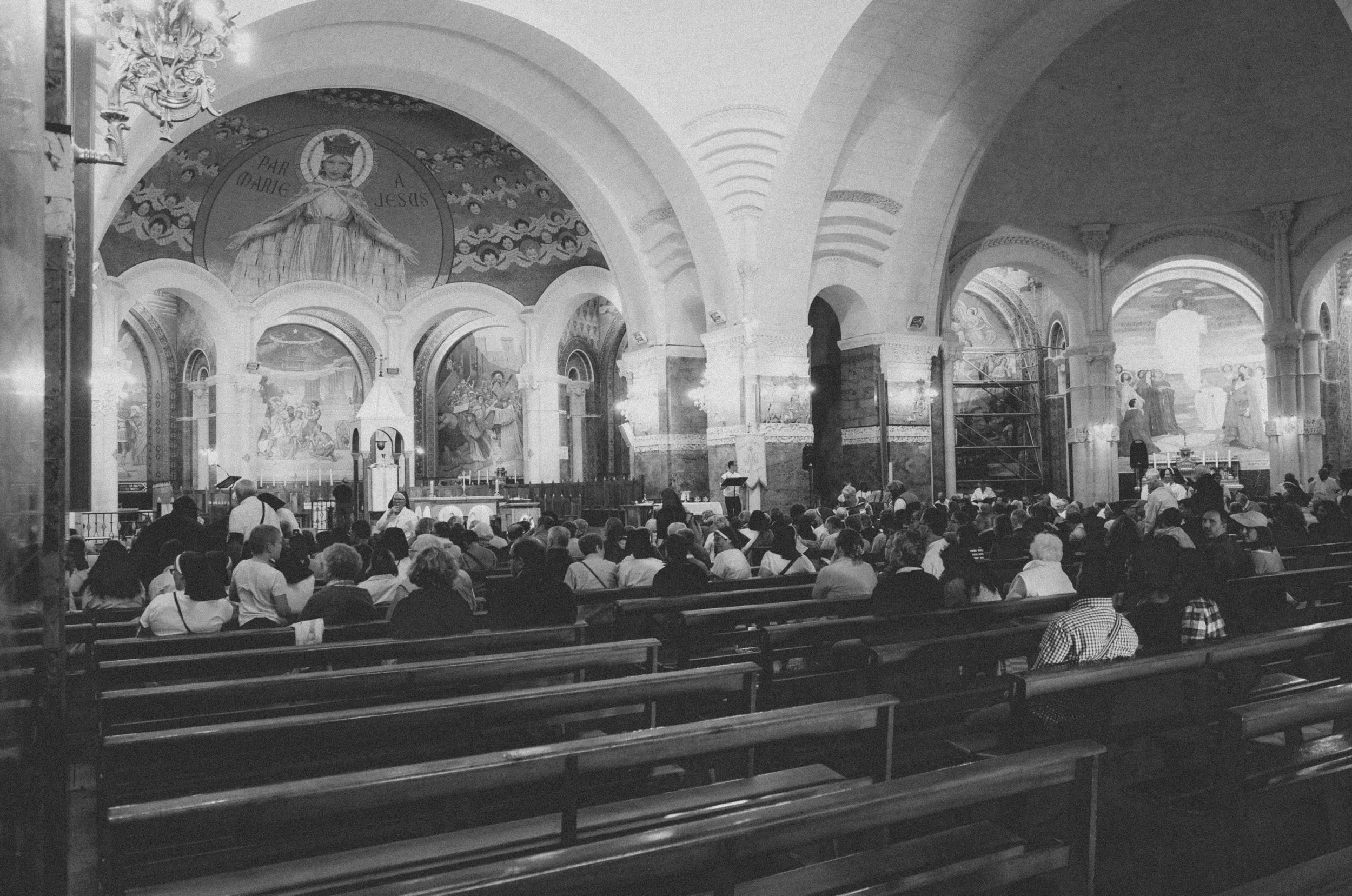
Photo: Yohann Libot on UnsplashRosary Basilica, Lourdes: Worshippers Beneath the Mosaic of Mary.
“The Church is now a beacon. This doesn’t necessarily mean people will convert or return to the faith. But there is a need for a beacon in a world dominated by Big Tech.”
Fernando De Haro - Change Only Happens If People’s Real Lives Change”: An Interview with Olivier Roy.
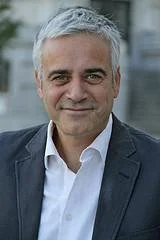
Olivier Roy gave an interview to Páginas Digital (www.paginasdigital.com) and Jusur a few days after Pope Leo XIV’s visit to France and the protests that shook the country. The French thinker—a specialist in Islam, an expert on the Middle East, and a tireless traveler—has broadened his field of study lately. He now reflects on the anthropological crisis in which we are immersed: a loss of contact with reality, individualism, and a lack of ties to the local community. It is a world in which religions tend to become expressions of “holy ignorance.” Secularization has meant that, in numerous instances, religion is no longer a source of knowledge or culture.
Olivier Roy delivering the lecture “Europe, Religion, Integration” at Boston University. Photo: Center for the Study of Europe, Boston University (CC BY-SA 2.0), via Wikimedia Commons.
I spoke with Roy about his latest book, L’impossible contre-révolution culturelle (The Impossible Cultural Counterrevolution; Éditions du Seuil, 2026), which focuses on populist movements seeking to take control of culture through a hegemonic project aimed at restoring the past. In our conversation, he denounced the emergence of a new traditionalist Christianity, disconnected from real life: a movement that seeks to occupy public space using methods similar to those promoted by the Marxist thinker Antonio Gramsci and by proponents of “woke” ideology. The goal is to achieve cultural hegemony through politics. Roy highlighted the weakness of this project, which often amounts to nothing more than the imposition of a system of symbols: identity markers disconnected from people’s real lives.
You have devoted your latest book, L’impossible contre-révolution culturelle, to the cultural counterrevolution. What do you mean by this expression?
Populist parties everywhere—both in the United States and in Europe—are trying to seize power in the realms of culture and the arts. They believe that culture is in the hands of progressives and the left, and that they must reclaim it. This means regaining control of universities, the media, opera, and cinema.
Why do you argue that this cultural counterrevolution is doomed to fail?
Because you cannot define a culture or a cultural space without a society behind it. You need people who believe in that culture and take pleasure in it. Culture doesn’t exist in a vacuum; it’s tied to real life. When people read novels, they tend to identify with the characters and project themselves into the story. The counterrevolution doesn’t speak to people’s lives. It has no impact on society.
The problem with populists is that they want to restore what they call a “traditional society” that no longer exists. They want to return to Western Christian society and to a traditional folk culture that has disappeared. When, for example, they try to revive the old peasant culture—folk music, traditional dress, village festivals and fairs, pilgrimages, and the like—the result looks like an entertainment product; it has nothing to do with people’s real lives. A century ago, a sailors’ pilgrimage in Brittany made sense because sailors spent six months at sea under very harsh conditions. Many of them died or drowned, so those who came home had stories to tell. They had something to say to God—to thank Him, for example, for still being alive—and they had dead to bury and loved ones to honor. This type of traditional pilgrimage was tied to people’s real lives, both socially and in terms of their work. Today, that connection is gone. So you have a pilgrimage with a priest in traditional ceremonial vestments. You have a farmer—supposedly a farmer—in traditional folk costume, when nobody wears that kind of clothing anymore. It’s pure spectacle. And there’s beer and music. It’s a phenomenon that has nothing to do with what I call anthropology or with real society. From this perspective, populists are merely part of the “society of the spectacle,” to borrow Guy Debord’s phrase—the society of show and entertainment—which is the very thing they criticize. Traditionalists want to return to Western Christian society. The problem is that the society they dream of no longer exists.
You argue that the counterrevolution cannot be built on a Christian society that does not exist. Why do you say it no longer exists?
There are several reasons. One is that religious practice is declining everywhere. This is true even in the United States, where there is still a solid religious base, such as the evangelicals. In Europe, that religious base has disappeared. People who attend Mass at least once a month account for about 5 percent of the population. In Italy, it’s about 10 percent. Few practicing Christians remain, and even the elements of Christian culture are gone. Values are one example: the idea of the traditional wife and the traditional family, the concept of good and evil, the idea that one should not have sexual relations outside marriage—these have disappeared entirely. It’s not just a matter of faith. It’s also a matter of culture.
Today’s European culture is not a secularized Christian culture. It is something entirely different. Several popes have made this clear, saying that the dominant culture in Europe is pagan—not merely secular. That is why religion is declining. And religious communities—we still have Catholics, Protestants, Jews, and Muslims—are rebuilding themselves on the margins of the dominant culture. They feel like a minority—and they are. If we truly want to restore Christianity, we must restore a Christian anthropology: for example, the traditional Christian family and the moral values governing sexual life. And what we see is that people—including populists—are, in fact, totally immersed in contemporary hedonistic culture. They no longer live according to traditional family models. Just think of the leaders of populist parties. None of them—including, of course, the women—live according to the model of the traditional Christian family: Marine Le Pen, Giorgia Meloni, and so on. Not to mention Donald Trump. The only way to recover that traditional Christian culture is through a kind of reenactment. People portray traditional society in shows, in movies, and in a sort of “Christian Disneyland.” That does exist. But I’ll say it again: it has nothing to do with people’s real lives.
Is that why you use the expression “Christian signage”? What do you mean by that?
Neoreactionary intellectuals are pushing to put Christian symbols and signs everywhere. For example, they put up crosses at crossroads in the countryside. Priests wear the traditional black cassock of seventy years ago. They display images of the Virgin Mary. They rename streets after traditional Catholic leaders or saints. They’re trying to re-territorialize Christianity, but they aren’t building new churches, because they don’t need to. They already have plenty of old churches. They’re trying to turn those back into real churches, with people in the pews. And they are organizing local pilgrimages that, in some cases, actually existed a hundred years ago and later died out. So they walk the streets in traditional clothing, singing psalms and hymns, blessing everyone, and carrying flags bearing traditional Christian symbols. It’s quite a spectacle.
This kind of culture bears a strong resemblance to “woke” culture. Symbols that do not align with one’s faith are destroyed and replaced with new symbols meant to represent the world as one sees it.
(Editor’s note: The term “woke” refers to an ideology without clearly defined boundaries, associated with postmodern thinkers who criticize the ideas of the Enlightenment and who emphasize issues of identity and gender. Some left-wing thinkers criticize it for promoting symbolic politics rather than social change.)
“Woke” culture and traditionalism behave in the same way: they seek safe spaces, ban certain words, and are prescriptive.
This equation of “woke” culture with traditionalist culture is one of the book’s most provocative claims. It is a very bold assertion: on the face of it, these are two opposing positions.
Their values are opposed, but the way they express those values is very similar. Both “woke” culture and traditionalism are prescriptive. In both cases, signs, statues, plays, speeches, and publications that do not align with one’s worldview must be eliminated. Rules must be imposed on people: “Don’t say this; say that.” One must be very strict about how one expresses oneself. The “woke” movement, of course, bans certain terms. But ultra-Catholics fight blasphemy, which is the same thing. Certain terms must not be used when speaking of the Virgin Mary or Christ. “Bad” terms are prohibited and erased. It’s very, very similar.
Another similarity is the drive to create safe spaces—places to be with like-minded people—and then to ask the law to protect those spaces, believing you have the right to expel people or events that disrupt their homogeneity. There are some very conservative Catholics who try to create neighborhoods around certain shrines and churches, where people are supposed to live according to Christian norms. And one way to maintain that safe space, for example, is to ring church bells all day long to drive away people who aren’t Christian and can’t stand the sound. As a result, legal disputes are becoming more and more frequent. “Woke” culture and traditionalism have opposing values, but the way they express them is very similar.
I was in Paris during the pope’s visit; there were crowds in the streets and at the celebrations. Do you think there is a religious revival in France—or in Europe more broadly?
All the statistics indicate that fewer and fewer people are attending Mass. And, at least so far, fewer and fewer young people are entering Catholic seminaries to become priests. We’ll see what happens in the future. The trend is toward secularization. That said, there is a certain revival. We’re seeing a massive drop in infant baptisms. At the same time, we’re seeing an increase in the number of young adults—between the ages of seventeen and twenty—who are asking to be baptized. These two phenomena are linked: if more people are asking to be baptized, it’s because fewer people are being baptized at birth. The number of catechumens and newly baptized adults doesn’t make up for the decline in the “cultural baptism” that existed before.
But the major difference is that these catechumens, as the Church calls them, do not socialize within the parish. They are not “territorially rooted,” nor are they part of an existing traditional Christian parish. A territorial parish includes all kinds of people from different social classes. Your neighbor may never go to church. So, by definition, it’s a diverse environment. What new converts tend to do now is live in new communities where they interact only with one another—virtual communities on the internet, for example. They form groups of new Christians who talk about what it means to be one. TikTok preachers, who are very influential and attract many new converts, never actually get to know the people they are converting. They have no real social relationship with them. They offer no “customer service,” so to speak. These new communities are often virtual, or at least extraterritorial, disconnected from real human experience and real society.
All of this poses a major challenge for the Catholic Church, which is a territorial church. From the very beginning, it has sought—except for monks and nuns, of course—not necessarily to control civil society, but to be rooted in it. The core of the Catholic Church, however, is not in the monasteries; it is in the territorial parishes. So the challenge is to integrate these new converts into social life—into real life. But apparently, that is not what interests them. In a sense, most catechumens are drawn to the idea of self-fulfillment, of attaining a certain personal spirituality. It’s not about putting oneself at the service of others. The Church tries to guide them toward charity and community service, but this is not what primarily motivates the new converts. They have spiritual needs, but those needs are not rooted in the social dimension.
You describe the strategy of a traditionalist Christianity that dreams of hegemony. Their position contradicts Church doctrine. This dream of hegemony is at odds with what the Second Vatican Council affirmed in its Declaration on Religious Freedom, Dignitatis Humanae: “The truth cannot impose itself except by virtue of its truth.”
I fully agree. Many theologians and philosophers deeply aligned with the thought of Thomas Aquinas and with twentieth-century humanism and personalism do not conceive of their influence as hegemony but as a way to unite people for the common good. This is precisely the opposite of what the traditionalists say: the Church speaks of the common good and seeks compromise. Traditionalists have borrowed the concept of hegemony from Gramsci, which is a bit curious, since it means drawing inspiration from a Marxist philosopher. He’s a good philosopher, but he’s a Marxist philosopher.
Catholic traditionalists embrace the Marxist idea of hegemonic control over society.
It’s a contradiction for traditionalists to adopt the mindset of a communist philosopher.
After World War II, the dominant political philosophies were liberalism and communism, and traditionalists found in Gramsci an explanation for why the left is hegemonic. Why, if you’re a filmmaker, are all your films liberal or left-wing? Why do novelists tend to be left-wing? Why are most philosophers left-wing? Even though the political majority is on the right, the left occupies the cultural sphere. So this is a challenge for them, and they told themselves: “We must do the same. We are a minority in political terms, and if we fight only on the political front, we won’t succeed. First we must conquer the cultural sphere: gain influence in universities, the arts, and schools, but also in museums and the entertainment world.”
They believe they must conquer the entire cultural sphere—I use the term “cultural” in its broadest sense—without firing a shot, simply by creating a new philosophy and promoting new artists. That’s why, for example, they adore Pier Paolo Pasolini: he’s a complex figure, but he has many ideas that suit the right. They select certain artists, journalists, and novelists who can advance this cultural conquest. Presently, for example, they’re using the novelist Michel Houellebecq. They’ve launched a series of think tanks to train journalists and intellectuals. Their thinking is that, if they manage to make inroads into the cultural sphere, they’ll eventually win politically—which was exactly Gramsci’s idea.
You cannot win politically without social support and without having taken control of the cultural and intellectual sphere. And this is where, in my view, the new reactionaries fall short. According to Gramsci, cultural change is a consequence of social change, of the emergence of new social groups. For example, the middle classes of the early twentieth century drove the expansion of schools and the educational system, and the new intellectual bourgeoisie transformed the cultural sphere. That is why teachers today are usually on the left—unlike at the beginning of the twentieth century. The new middle classes expressed themselves culturally as bourgeois but as liberal bourgeois. There was also the rise of the working class. The working class, too, had a cultural impact. The unions sought to create a “people’s university” to train their leaders, educate workers, and develop a working-class culture, as they did in Great Britain. That was Gramsci’s way of thinking.
The problem the far-right faces now is that the new social classes do not support it. It does not enjoy the backing of new segments of the population. It wants to return to a situation that existed in the nineteenth century. It lacks social support.
At the beginning of the twentieth century, the various revolutionary movements—including fascism—looked to the future. They were utopian. They wanted to create a new society. Fascism and the Futurist movement were modernist; they wanted to change things. And at times, there was a kind of cross-pollination between the right-wing and left-wing avant-gardes, both in France and in Italy. But now no one is utopian anymore—not even the left. We no longer have utopias. What we have everywhere is nostalgia. The right, of course, is all about nostalgia. What prevails is a hedonistic view of life. People want a pleasant life and want to defend that lifestyle. “Lifestyle” is a key word today. People are no longer driven by grand ideals of courage, sacrifice, or giving one’s life for one’s country. All that no longer makes sense. What’s very fascinating is that populists aren’t militarized anymore. They used to be; they were militarized by definition. But today’s populists don’t oppose cuts to the defense budget. They’re pacifists. They just want to have a good life. That’s all. And they aren’t stupid.
We live a compartmentalized, individualized, and globalized social life, and this is reflected in culture.
Is this why you speak of an “anthropological crisis”? What do you mean by that expression?
Every society is based on social relationships: the family, of course, social classes, and groups of all kinds. All societies have an anthropology, from the most primitive to the most modern. Every society produces some kind of culture. What I call “anthropological culture” is the culture we share without realizing it. This doesn’t mean we all have the same values or the same ideas, but that we share something implicit. The best example is language. In a society, people share a language; you can be a fascist or a communist—or anything else—but you share the same language. You can try to use different words, but you still convey something implicit.
Every society is supposed to rest on an implicit anthropology. But things have changed. Since the 1960s, we’ve seen a crisis in the very concept of anthropology. There is no longer any link between society and territory. We are globalized. Neoliberalism has destroyed the economic fabric of every society. Your position in society is no longer defined by your place in the economic system or by your job. Work no longer fosters social relationships, and this is something new. In the past, even slaves had their own way of speaking, their own way of expressing themselves; they had a culture. They had something in common, and they knew it. All that is over. The working class no longer exists. What we have is an individualization of society and what I call the “virtualization of society.” Your primary relationships with others take place on the internet, in cyberspace—no longer with your neighbor. You don’t walk down the street to buy food; you order it online. You never meet the people who prepare your food. There’s never a conversation.
We live a compartmentalized, individualized, and globalized social life, and this is reflected in culture. We are part of a global culture. You can form a manga fan group with people from Japan, California, and so on. If you’re part of that group, you talk only about manga and never actually meet those people. The world is segmented, and because of this, we’re facing a crisis in the very concept of anthropology and culture. Anthropological culture is a way of life that reflects how you understand your relationships with others. What we have now is an “artificialization” and a “derealization” of social contacts.
And in this situation, the power of Big Tech is on the rise.
Exactly. One characteristic of [that power] is that it does everything possible to keep people from reconnecting with the places where they live. Big Tech does not recognize national laws. The debate over copyright isn’t just about money; it has to do with the destruction of real cultures. Once all the books in the world, in every language, are fed into artificial intelligence, there is no longer any local culture. There is no longer a Japanese culture or a French culture. We are facing the final stage of derealization, deterritorialization, and, by definition, individualization.
We stand alone before artificial intelligence. And the extraordinary thing is that when you speak with an AI, the machine adopts your way of speaking, as if it were your alter ego. There is a narcissistic approach to AI that contributes to the destruction of social bonds and social life.
The student protests of recent weeks are an expression of the need to reclaim social bonds.
What is the best relationship between abstract universal values and particular cultures?
That’s a good question. What we’re witnessing is the transformation of Western culture into a global culture. English—or what I call “Globish”—is the language of international culture. Does this mean that American culture is now the global culture? Or, on the contrary, that there is no longer an American culture?
There is now only a global culture, and people are adapting to it rapidly. And what about non-Western cultures? Can we say, for example, that in India there is a Hindu culture that is restructuring itself and still retains a distinct identity? That is what Prime Minister Narendra Modi is trying to do: create a relatively Hindu culture associated with a territory, a nation, and a state that ignores or expels other cultures. Is it working, or is Modi actually destroying traditional Hindu culture? That’s a good question. Can Hindus identify with this kind of neo-Hinduism?
The Hindutva movement, on which Modi relies, is a political movement that exploits Hinduism just as Islamism exploits Islam.
Yes, yes, it’s a political movement. It’s a cultural counterrevolution. Can it work? Consider the caste system associated with traditional Hinduism: how can Modi restore it? You cannot impose or legalize caste boundaries, especially where people vote. So what he’s doing is reconstructing Hinduism without Hindu anthropology. He’s turning Hinduism into a kind of spectacle. We’re seeing the same thing in the Arab world. Arabic, as a language, is getting a new lease on life. The paradox is that, following the crisis of pan-Arabism and pan-Islamism and the rise of the Muslim world, Modern Standard Arabic—derived from Classical Arabic—is now in widespread use among young people from Morocco all the way to the Gulf states. This is very intriguing. They read the same books, listen to the same singers, watch the same movies, and share a network that works very well. Even more interesting, there is a new flowering of Arabic literature. Is this the first phase of the globalization of Arabic—which would mean the end of local Arab cultures—or is it, on the contrary, an expression of a region’s resistance to globalization? I don’t know. We’ll see.
The same thing is happening in Latin America. Are languages becoming homogenized, or are they a form of resistance? Is Spanish a form of resistance to the cultural conquest of the English-speaking world? Or are we, in fact, witnessing the birth of something new? I don’t know. What I do know is that human beings are social beings, and this derealization of social bonds has negative consequences for society.
There is a grassroots movement pushing back against this derealization. A recent example is what happened in France: the uprising of young people between the ages of fourteen and eighteen. They protested for entirely valid reasons. The education system is in crisis: classrooms are too hot in the summer and too cold in the winter, and classes are overcrowded. Teachers don’t always show up. There are many real problems. But some people are asking, why did this movement start four weeks ago and not a year ago? It coincided with the decision by the government and Parliament to ban smartphones in schools. So, overnight, students could no longer use their smartphones, not even in class. And suddenly, they had to talk to the person sitting next to them. Maybe it’s pure coincidence, a fluke—I don’t know. But it’s very fascinating. When people have trouble accessing the virtual world, they return to the real world—that is, to the people around them.
You have written extensively about the relationship between religion and culture. Do you believe a reinterpretation of Islam is emerging in Europe right now?
What we have is a cultural divide between Muslims in Europe and those in their countries of origin. It’s not across the board. Many imams from Morocco and Turkey have trouble connecting with young people. Second- and third-generation Muslims don’t like imams who come from the same rural areas their parents and grandparents came from. There’s a problem with cultural transmission. What impact does this have on religion? One can, for example, try to keep religion on the margins of culture, as Salafism does. Or one can try to reconnect religion to culture—in this case, Western culture. Some argue that we need a French Islam or a European Islam that takes secularization and the Enlightenment into account. This is the position of many intellectuals. Others say, “We must simply maintain religion as a system of norms. We must not re-culturalize religion.” This is primarily the Salafi argument: let’s turn Islam into a normative system. And then there are those who take a spiritual approach, who argue that we must reflect on the meaning of the message and not try to apply the religious system. So there are various currents.
Morocco and Turkey are trying to keep second- and third-generation immigrants connected to their countries of origin. It isn’t working very well. Interestingly, Turkey, for example, recruits second- and third-generation Turkish immigrants living in Europe. It trains them in Islam in Turkey and sends them back to Europe as imams.
The problem, once again, is that Western culture is in crisis. The idea is that Muslims should adapt to Western culture—but which culture? What do you mean by “Western culture”? It’s very complex.
We need to rebuild social bonds from the ground up. It’s almost a neighborhood issue. And the Church is a beacon.
Everything has changed; we no longer have a point of reference. In the midst of this anthropological crisis, what do you think is the best way to live? What does a good life look like?
Social bonds must be rebuilt from the ground up. It’s almost a neighborhood issue, I’d say. People want to have a social life; they want to protest. Many protests today are neither ideological nor political. People protest when plans are made to run a major highway through their land in rural areas. They protest when they don’t have the means to educate their children. There’s a massive outcry over the housing crisis. If you want to have a social life, you must first and foremost have a place to live. It’s that simple. We’re seeing people protest over very concrete issues tied to how to lead a social life in their communities.
Through this local mobilization, a new way of building community is emerging. It’s very fragile, because it’s often tied to a single issue, and it’s difficult to expand these connections into a true community. But the will to do so is there. And what we’re seeing is that governments are cracking down on it. They’re sending in the police. And new local leaders are emerging who are trying to resist. Paradoxically, there’s another very fascinating aspect: the Catholic Church in Europe is increasingly becoming a place of resistance to desocialization. The last two popes are very popular among nonbelievers. Why? Because they speak of spirituality rather than rules. Francis and Leo have put charitable values ahead of rules. They have opposed Trump and the MAGA movement and served as an independent voice on nuclear issues, war, and the environment. The Church is now a beacon. This doesn’t necessarily mean people will convert or return to the faith. But there is a need for a beacon in a world dominated by Big Tech.