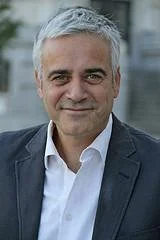
“The two cities express the inner attitude of every human being toward the realities of life. The City of God is not a political program.”
Antonio R. Rubio Plo - Augustine, Power, and the Hour of Conscience.
Leo XIV has placed St. Augustine at the center of his vision of peace. In his first address to the diplomatic corps, he drew on The City of God to remind his audience that force will never substitute for justice.
Peace is one of the defining themes of Leo XIV’s pontificate—and will almost certainly remain so. He will always be remembered for his defense of “an unarmed and disarming peace.” But peace cannot be a wish or an aspiration. If it is not just, it is not peace. For this reason, I urge a careful reading of the Pope’s first address to the diplomatic corps (January 9, 2026), in which—alongside a survey of the world’s major armed conflicts—he turned, as he often does, to St. Augustine and specifically to The City of God.
As I began reading the address, I recalled that some textbooks on the history of political ideas speak of “political Augustinianism.” But this so-called Augustinianism has little to do with the thought of the great bishop. It is a medieval theory that defended the supreme authority of the Church even in temporal affairs. Its legacy was a political theology that has survived to the present day. I suspect its advocates never paid much attention to the parable of the wheat and the weeds (Mt 13:24–30)—to the plain assertion that both grow together, so that pulling up the weeds risks destroying the wheat. That observation should weigh heavily in our polarized societies, where international politics is all too often subordinated to domestic calculation.
The City of God, as Leo XIV explains, was in a sense a response to those who—in the wake of the catastrophic events of 410 AD, when Alaric’s Visigoths sacked Rome—claimed that the God of the Christians had proved incapable of defending the so-called Eternal City. The disappointment ran deep: Christianity had enjoyed freedom for a century and had become the imperial religion. This is likely where the idea first took root—later revived during the Enlightenment by the historian Edward Gibbon—that the fall of the Roman Empire was a consequence of embracing Christianity. A century after Gibbon, Nietzsche would have put it no differently when he described Christianity as a religion of the weak.
The theologization of politics—or, if you prefer, the politicization of religion—is at bottom a reaction to the image of Christianity as a weak religion. Weakness is something power cannot afford. So it champions a “strong” Christianity: an earthly embodiment of a vigorous City of God confronting the earthly city led by Satan. St. Augustine said that second city was defined by self-love, a thirst for power, and worldly glory. But its supposed adversary—the city of “strong” Christianity—would not be so different. In reality, it would be a kingdom of the “pure” and the “saints,” ready to take up arms against the earthly city. Its argument, typically, is that it is defending Western or Christian civilization—which, for some, are synonymous. But this city of the “good” tends to forget that our passage through the world is temporary. A city founded on power that calls itself Christian yet forgets the human condition will sooner or later slide into state idolatry.
On the contrary, Leo XIV reminds us that St. Augustine affirms the two cities will coexist throughout the ages. They are not something external to us; rather, they “express the inner attitude of every human being toward the realities of life and human events.” We cannot dissolve our presence in external events, for “each of us is a protagonist and responsible for history.” The Christian must live and participate in the temporal city, but “his heart and mind must be directed toward the heavenly homeland.” The City of God, then, is not a political program. It cannot give rise to a false representation of history.
In the current epochal shift—to which Pope Francis referred and which Leo XIV continues to invoke—we are witnessing a crisis of multilateralism and the exaltation of force, accompanied by a bellicose fervor and the conviction that peace achieved through arms is more effective than peace achieved through justice. Some even believe this mentality contributes to the building of the City of God, but this political messianism can only bring grave consequences. Law and justice are openly despised as instruments of peace. The only peace accepted is that of the victors—both externally and internally. The space for cooperation among states is destroyed. International law is dismissed as a set of abstract and hypocritical rules. Those who think this way tend to disregard the rule of law at home as well, even though, in Leo XIV’s words, it is “the foundation of peaceful social coexistence.”
In his address, the pontiff also spoke of the importance of dialogue—historically present in the Roman forum or the medieval town square. Yet Leo XIV acknowledges that dialogue is becoming more difficult because “the meaning of words is increasingly vague” and language has become a tool for striking and deceiving adversaries. There is an Orwellian language adapted to ideologies, and one of its consequences, as the pontiff rightly notes, is the restriction of fundamental human rights such as conscientious objection and religious freedom.
One conclusion—though certainly not the only one—to draw from this address is that we are facing the hour of conscience, for conscience has always been the enemy of every tyrannical regime. A rightly formed conscience cannot agree with a world divided between “good” and “bad” people. That was not the thought of St. Augustine.