No Hidden Agenda
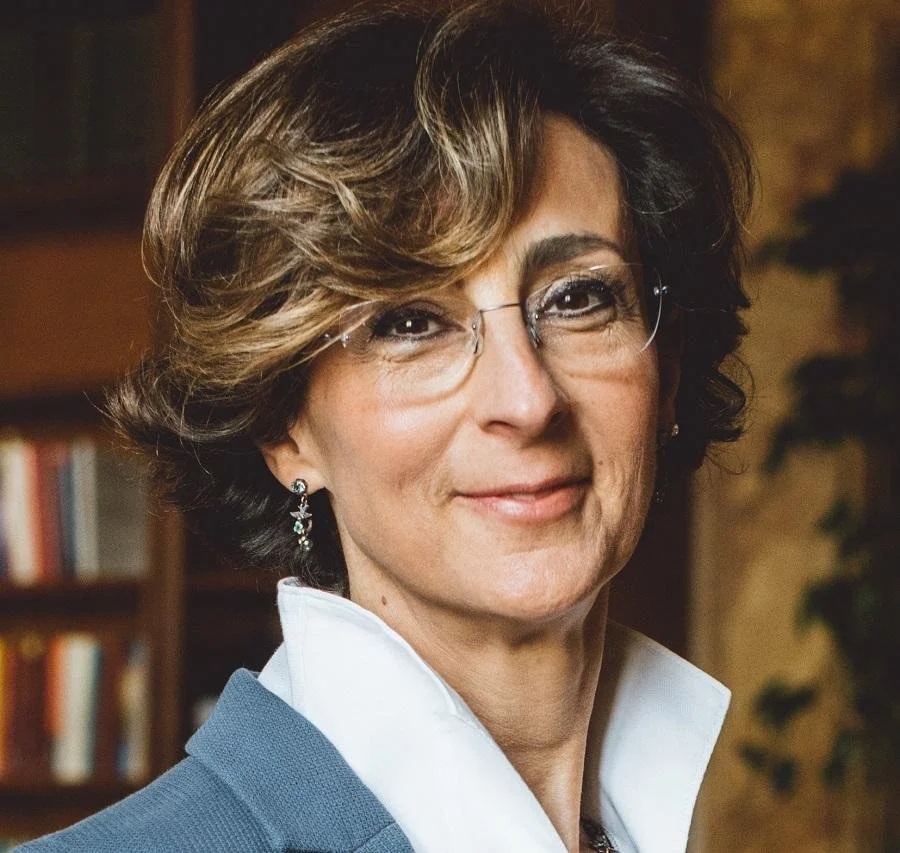
Marta Cartabia and Public Responsibility
“Compromise is a beautiful word: it means promising together.”
Marta Cartabia - No Hidden Agenda: Faith, Freedom, and the Art of Political Compromise
Speech delivered at the presentation of the Nicolaus Copernicus “Fides et Ratio” Award (Nagroda Mikołaja Kopernika Fides et Ratio), an international prize awarded in the city of Toruń, Poland.
Marta Cartabia is one of Italy's most distinguished jurists — the first woman ever to lead the Italian Constitutional Court — and she has deep, longstanding ties to New York, having served as an inaugural fellow at NYU Law and returned there multiple times as a lecturer and commencement speaker.
Here at epochalchange.org we are proud to publish her speech, transcribed, translated and edited by the editorial team. The translation has not been revised by the author.
Throughout my career, especially since I have held public office, I have been asked quite frequently: “But what does it mean for a Catholic to live out their faith in public life? How do you live out your faith in your work?”
I can understand where that question comes from.
I began my public engagement at the start of the new century, just as the great secularization of the Old World was rising to the surface, at times in rather aggressive forms. One need only recall the tone of the debate over “Europe’s Christian roots”—a theme particularly dear to St. John Paul II—within the broader discussion of the European Constitution. Professor Weiler and Hanna Suchocka are eyewitnesses to that debate and to the intransigent positions of certain leaders.
At the time, Professor Weiler was writing his book—recently republished—on Christian Europe, in which he denounced a widespread “Christianophobia” (now “Christ-amnesia”) and a hostility toward any religious phenomenon, rooted in a misunderstood laïcité, primarily of French origin.
Being Catholic and professing one’s faith in public was a source of embarrassment back then. And Weiler urged us not to be marrani—not to retreat into the private sphere, not to hide.
It is understandable, then, that in such a context one might ask: What does it mean to play a public role as a believer?
But that question concealed an ambiguity. It has always struck me that, depending on who was asking, a second, implicit question lay beneath it:
— If a conservative posed it, what they really meant was: How do you uphold Christian values—above all the protection of life and the family—in such a hostile world? Since I am a lawyer, the real question was: Have you managed to defend our laws on abortion, end-of-life issues, the family, and so on?
— If the person was progressive, the implicit question was: Have you managed to do anything for the vulnerable, the poorest, and above all immigrants—and for the broader causes of social justice and solidarity?
— Then there were the enthusiasts for subsidiarity and the third sector: What have you done to implement the principle of subsidiarity, defend local autonomy, and promote private schools?
— More rarely, the implicit question concerned religious freedom—which seems to me a central issue, and which surfaced above all in the controversies over religious symbols. But there, Professor Weiler shouldered the burden for everyone and set all of Europe straight with a twenty-minute argument before the European Court of Human Rights. Seeing is believing. It is still available on YouTube. An unparalleled lesson.
Let me be clear: the main question—what it means to be a Christian in public today—is more than interesting. But the secondary questions implied by it have always left me perplexed, for two fundamental reasons.
The first: it is as if they rested on the assumption that a Catholic who enters public life must arrive with a predetermined agenda to carry out. Forgive the slightly irreverent comparison, but something similar happens when I am asked: What does it mean to be a woman on the Constitutional Court? What does it mean to be a woman at the Ministry of Justice? The implication is: What have you done for women’s rights? What have you done for the family and minors? What have you done against gender-based violence?
The fact is that when you take on a public commitment, you agree to shoulder the challenges of history—and history questions you on a thousand fronts. To give just a few examples from my own experience, you find yourself having to reduce the time it takes for justice to be served, ensure the separation of politics and the judiciary, rule on an electoral law, decide on vaccination mandates in the midst of a pandemic, make the prison system function, and overhaul the laws on drug trafficking, on the use of assets seized from the mafia, and on the use of technology and artificial intelligence in the judicial system—and so on. Rarely do the issues you face fall within the “Catholic agenda” (or the “women’s agenda”). So what? What does a believer have to say about issues that lie outside the Catholic agenda?
The first thing my public engagement taught me was to let myself be challenged by the questions of history—both within and beyond the Catholic agenda. If it is true—and it is—that the heart of Christianity is the Incarnation within human history, then everything belonging to the history of humanity challenges and concerns us. “Homo sum, humani nihil a me alienum puto”—“Nothing human is alien to me,” as Terence said.
Indeed, perhaps the most interesting questions are precisely those for which you have no ready-made answer to fall back on. The most beautiful and rewarding adventure is the one born of new challenges that demand a creative response—uncharted territory, a bit like Pope Leo’s encyclical Magnifica Humanitas, which opens a reflection on the problems of our time: peace and war, and above all artificial intelligence.
The second reason these implicit questions mislead is that they imply that faith—and the Church’s social doctrine—is a “handbook of precepts,” ready to be applied, and that the task of a woman of faith in politics is to implement those precepts. This perspective is both unrealistic and undesirable.
Unrealistic, because we have to face the fact that in today’s society we are a minority. And when you hold public office, you must reckon with the “limits of what is possible.” On the Constitutional Court, I had to reach decisions alongside fourteen other judges and make arguments that were convincing and acceptable to all of them. In government it was more complex still, because I served in a government of national unity, backed by both the far right and the far left; to get reforms approved, I had to win over every side—otherwise they would not have voted for them in parliament.
But the prospect of imposing one’s own preconceived solutions, even if it were possible, would still not be desirable—because it would fail to honor the necessary “distinction between the ecclesial community and the political community” and the “autonomy of earthly affairs,” set out as early as the Second Vatican Council and firmly and extensively reaffirmed in the latest encyclical (Magnifica Humanitas, paras. 21–24). Social doctrine, as Pope Leo says, is not “a repertoire of technical solutions,” nor “an economic or political model” that replaces the political responsibility of individuals and institutions.
In my public service, I have come to love and appreciate the distinction between the City of God and the City of Man—and the inevitable imperfection of human laws. The great Catholic statesmen who founded the Italian Republic understood this clearly.
I have always been struck by Alcide De Gasperi’s decision not to bow to the demands of the Church hierarchy of the day, which pressed to write the principle of the indissolubility of marriage into the new Republican Constitution. If ever there was a man of authentic faith and loyal devotion to the Church, it was De Gasperi. If ever there was a man who believed deeply in the value of marriage, it was De Gasperi. Yet De Gasperi abhorred—as he writes in the letters to his wife from captivity—the idea of imposing by force of law what must instead be offered to the free consent of the person. His love of freedom shines through poetically in every line he writes to his beloved wife.
Years ago, I found it liberating to hear the words of Pope Benedict XVI—always careful, in his political speeches (well worth rediscovering), to distinguish between the work of man and the work of God, and to extol the value of compromise in human affairs. Speaking of the responsibility of believers in politics, he says:
“Moralism that seeks to accomplish God’s work on its own is not moral. What is moral, however, is the loyalty that accepts human measures and, within those measures, carries out the work of man. It is not the absence of all compromise, but compromise itself that is the true morality of political activity.”
On compromise, Amos Oz says in his Tübingen Lecture: “In my world, the word compromise is synonymous with life. And where there is life, there are compromises. The opposite of compromise is not integrity, nor idealism, nor even determination or devotion. The opposite of compromise is fanaticism, death.”
Compromise is a beautiful word: it means promising together. It presupposes listening to the other, opening one’s mind and heart. And often—believe me—I have watched innovative, creative solutions sprout precisely from the necessity of proceeding by compromise. The openness to gather the fragments of truth that emerge from listening to the other is generative: it sparks new solutions and moves history forward. The refusal to compromise denies the very existence of the other; it is a form of violence, and it tends to destroy.
In the field of justice—the arena of my daily work—intransigence, rigidity, and maximalism end up negating the very thing they claim to serve. “Let justice be done, though the world perish,” the Romans used to say. But is the destruction of the world really what we mean to achieve through our “administration of justice”? “Without the prospect of a beyond, justice is impossible,” writes Fr. Luigi Giussani in The Religious Sense.
To accept that human affairs are always marked by imperfection—by a crack, by a wound, by the magnificent and wounded humanity of which Leo XIV speaks in his encyclical—is not to settle for mediocrity. It is to act in full awareness of one’s own limits, of the limits of circumstances, and of the inescapable need for a further step.
The awareness of the imperfection of the City of Man calls for constant reconstruction—a continual adaptation to changing circumstances, a continual regeneration of the work already accomplished—much as Nehemiah rebuilds the walls of Jerusalem in the image with which Pope Leo describes the Christian’s presence in history:
“After the Babylonian exile, a portion of the people returned to Jerusalem, but the city lay in ruins, its walls had collapsed, and its gates were burned. Nehemiah, a Jew in the service of the Persian king Artaxerxes, received news of the disastrous state of the city of his fathers. Before taking action, he fasts, prays, and intercedes for the people; then he asks the king for permission to return to Jerusalem, and upon arriving, he silently surveys the destroyed sites. He does not impose solutions from above. He summons the families, entrusts each with a section of wall to rebuild, listens to their fears, coordinates their efforts, and confronts opposition. The story shows how the city is reborn not through the initiative of a single person, but through the shared responsibility of the entire people: priests, artisans, heads of households, women, and young people. It is a work that places God at the center and rebuilds bonds even before the stones. Ancient Jerusalem thus rediscovers a common language, not that of uniformity, but that of communion: the harmony that arises when everyone takes on their own part and the entire people recognize that their strength comes from the Lord” (par. 8, Magnifica Humanitas).
This evocative image of the great rebuilding needs no commentary—least of all in a time like ours, marked by destruction, as in Babylon.
Allow me to close with one final passage. What lets us accept an imperfect solution—a compromise we know full well falls short of our ideals? It is the awareness that our task is not to pronounce the final word on human history, that none of us is the master of history.
Let me put it in the words of St. Ambrose, patron of my city, the great bishop of Milan—an important official and governor of the Roman Empire, who knew well the dynamics of power and its effects on the human heart: “Quam multos dominos habet qui unum refugerit!”—“How many masters has the one who has fled the one Lord!”
To enter public life with a predetermined agenda is to hand oneself over to an idol. To enter it knowing that none of us is master of history brings freedom—freedom from one’s own successes, from the constraints of power, from the triumph of one’s own projects, even from one’s own ideals, which so often reach us filtered through partial and subjective images. Being a believer in the public square does not mean imposing “a Catholic agenda” on everyone.
The finest compliment I received, at the end of an exhausting mediation—one needed to push through certain indispensable reforms of the Italian justice system—came from political figures who, faced with yet another “compromise” on the floor of the chamber, exclaimed: “Honestly, Minister Cartabia, you have no hidden agenda—you only want to do what is good for the country!”
Free of our own plans—free to heed the promptings of history.
“The Christian carries a life within his own life, walks among men with a secret in his heart. He leaves it, he finds it again. And he meets many men who belong to this life, even if they do not recognize themselves in the Christian name” (Emmanuel Mounier, 1933).
-
Senza agenda predeterminata: la bellezza del compromesso
Marta CartabiaNel corso della mia carriera, soprattutto da quando ho rivestito un incarico pubblico, mi è capitato abbastanza frequentemente che mi rivolgessero la domanda: «ma che cosa significa per un cattolico vivere la fede nella vita pubblica?» «come vivi la tua fede nel tuo lavoro?»
Posso capire l’origine di quella domanda.
Ho iniziato il mio impegno pubblico all’inizio del nuovo secolo, proprio nel momento in cui la grande secolarizzazione del vecchio continente veniva a galla, anche in forme piuttosto aggressive. Basti ricordare i toni del dibattito sulle “radici cristiane dell’Europa” — tema carissimo soprattutto a san Giovanni Paolo II — nell’ambito della grande discussione sulla Costituzione europea. Il professor Weiler e Hanna Suchocka sono testimoni oculari di quel dibattito e delle posizioni intransigenti di alcuni leader.
Il professor Weiler scriveva allora il suo libro, appena ripubblicato, su L’Europa cristiana, in cui denunciava una diffusa “cristofobia” ora “cristoamnesia”, e una ostilità verso ogni fenomeno religioso, derivante da una mal intesa laïcité, di matrice francese soprattutto.
Essere cattolici e professare la propria fede in pubblico era motivo di imbarazzo, all’epoca.
E Weiler ci spronava a non essere “marrani”, a non ritrarci in una dimensione privata, a non nasconderci.
Si capisce, dunque, che in un contesto così ci si possa chiedere: cosa vuol dire svolgere un ruolo pubblico da credente?
Ma quella domanda nascondeva un’ambiguità, a mio parere.
Mi ha sempre colpito che a seconda di chi poneva la domanda, c’era sempre una implicita seconda domanda sottintesa:
— Se a porre l’interrogativo era una persona di orientamento conservatore, sotto sotto intendeva chiedere: come fai a garantire i valori cristiani, soprattutto la tutela della vita e della famiglia in un mondo così ostile? Poiché sono una giurista, la domanda mirava a chiedere: sei riuscita a difendere le nostre leggi su aborto, fine vita, famiglia ecc.?
— Se era una persona di orientamento progressista, il quesito implicito era: sei riuscita a fare qualcosa per i deboli, per le persone più povere e soprattutto gli immigrati, e sugli altri temi della giustizia sociale e della solidarietà?
— Poi c’era il filone dei patiti della sussidiarietà e del terzo settore: cosa hai fatto per attuare il principio di sussidiarietà, difendere le autonomie locali, valorizzare la scuola privata?
— Più raramente, la domanda implicita era sulla libertà di religione, che invero a me pare un tema centrale ed è emerso soprattutto nelle controversie in tema di simboli religiosi — ma lì il professor Weiler si è preso sulle spalle il carico per tutti e ha sistemato tutta l’Europa con 20 minuti di arringa davanti alla Corte europea dei diritti dell’uomo. Vedere per credere. È ancora disponibile su YouTube. Una lezione insuperata.
Intendiamoci: la domanda principale — cosa significa essere cristiani in pubblico, oggi — è più che interessante. Ma le domande di secondo livello, sottintese a quella principale, mi hanno sempre lasciata perplessa per due ragioni fondamentali.
La prima. È come se muovessero dal presupposto che il cattolico che si impegna in pubblico debba avere una agenda predeterminata da eseguire.
Perdonate il paragone poco rispettoso, ma c’è qualcosa di simile quando mi chiedono: cosa vuol dire essere donna alla Corte costituzionale? Cosa vuol dire essere donna al Ministero della giustizia? L’implicito è: che cosa hai fatto per i diritti delle donne? Che cosa hai fatto per la famiglia e i minori? Che cosa hai fatto contro la violenza di genere?
Il fatto è che quando assumi un impegno pubblico accetti di raccogliere le sfide della storia e la storia ti interroga su mille fronti: ti trovi a occuparti — per fare qualche esempio dalla mia esperienza — di dover ridurre i tempi della giustizia, di assicurare la separazione tra politica e potere giudiziario, di giudicare una legge elettorale, di pronunciarti su obblighi di vaccinazione in piena pandemia, di far funzionare il sistema penitenziario, di rifare la legge sul traffico di stupefacenti, sull’uso dei beni sequestrati alla mafia, sull’uso della tecnologia e dell’intelligenza artificiale nella funzione giudiziaria, e così via… Raramente i temi che ti investono rientrano nell'”agenda cattolica” (o nell'”agenda donna”). E dunque? Cosa ha da dire un credente sui temi che non rientrano nell’agenda cattolica?
La prima cosa che mi ha insegnato il mio impegno pubblico è stato lasciarmi provocare dalle domande della storia — dentro e fuori il perimetro dell’agenda cattolica. Se è vero, come è vero, che il cuore della cristianità è l’incarnazione nella storia umana, tutto ciò che appartiene alla storia dell’umanità ci interroga e ci interessa.
«Homo sum, humani nihil a me alienum puto»: «nulla che sia umano mi è estraneo», diceva Terenzio.
Anzi, forse gli aspetti più interessanti sono quelli in cui non c’è già una risposta precostituita alla quale pensi di poter attingere. L’avventura più bella e gustosa è quella che proviene dalle sfide nuove, che chiedono una risposta creativa. I terreni inesplorati: un po’ come l’enciclica di papa Leone Magnifica Humanitas, che apre una riflessione sui problemi del nostro tempo, pace e guerra, e soprattutto intelligenza artificiale.
La seconda ragione per cui quelle domande implicite sono fuorvianti è che esse sottintendono l’idea che la fede — e la dottrina sociale della Chiesa — siano un “prontuario di precetti”, pronti per essere applicati e che il compito di una donna di fede in politica sia di dare attuazione a quei precetti.
Questa prospettiva è irrealistica e non desiderabile.
Irrealistica, perché bisogna fare i conti con il fatto che nella società contemporanea siamo una minoranza. E quando hai una responsabilità pubblica devi fare i conti con il “limite del possibile”. Quando ero alla Corte costituzionale dovevo prendere le decisioni con altri 14 giudici costituzionali e portare argomenti convincenti e accettabili per tutti. Al Governo era ancora più complesso, perché ero parte di un governo di unità nazionale, sostenuto dall’estrema destra e dall’estrema sinistra, e per far approvare le riforme occorreva convincerli tutti, altrimenti non avrebbero votato in parlamento.
Ma quella prospettiva di imporre le proprie soluzioni precostituite, quand’anche fosse possibile, non sarebbe nemmeno desiderabile perché non terrebbe conto della necessaria “distinzione tra comunità ecclesiale e comunità politica” e la necessaria “autonomia delle cose terrene”, chiarita sin dal Concilio Vaticano II e ribadita fermamente e ampiamente nell’ultima enciclica (Magnifica Humanitas, parr. 21-24). La dottrina sociale non è “un repertorio di soluzioni tecniche”, e neppure “un modello economico o politico” che si sostituisce alla responsabilità politica dei singoli e delle istituzioni, dice papa Leone.
Nel mio impegno pubblico ho imparato ad amare e ad apprezzare la distinzione tra la città di Dio e la città dell’uomo, e l’inevitabile imperfezione delle leggi umane.
I grandi politici cattolici che hanno fondato la repubblica italiana lo sapevano chiaramente: mi ha sempre colpito la scelta di Alcide De Gasperi di non assecondare la richiesta delle gerarchie ecclesiastiche dell’epoca, che insistevano per introdurre nella nuova Costituzione repubblicana il principio di indissolubilità del matrimonio. Se c’era un uomo di fede autentica e di leale fedeltà alla Chiesa questo era De Gasperi. Se c’era un uomo che credeva profondamente nel valore del matrimonio questo era De Gasperi. Ma De Gasperi aveva orrore — come scrive nelle lettere a sua moglie dalla prigionia — all’idea di imporre con la forza della legge ciò che deve essere offerto alla libera adesione della persona. L’amore per la libertà emerge poeticamente in ogni riga che scrive alla sua amatissima moglie.
Anni fa fu per me liberante ascoltare le parole di papa Benedetto XVI nei suoi discorsi politici, che sarebbero da riscoprire, sempre attento a distinguere l’opera dell’uomo e l’opera di Dio, ed esaltare il valore del compromesso nelle cose umane. Parlando della responsabilità dei credenti in politica dice:
«Non è morale il moralismo che intende realizzare da sé le cose di Dio. Lo è invece la lealtà che accetta le misure dell’uomo e compie, entro queste misure, l’opera dell’uomo. Non l’assenza di ogni compromesso, ma il compromesso stesso è la vera morale dell’attività politica».
A proposito del compromesso Amos Oz dice nella sua Tübingen Lecture: «Nel mio mondo la parola compromesso è sinonimo di vita. E dove c’è vita ci sono compromessi. Il contrario di compromesso non è integrità e nemmeno idealismo e nemmeno determinazione o devozione. Il contrario di compromesso è fanatismo, morte».
Il compromesso è una parola bella: significa promettere insieme. Presuppone l’ascolto dell’altro, l’apertura della mente e del cuore. E spesso, credetemi, ho visto germogliare risposte innovative e creative proprio dalla necessità di procedere per compromessi.
L’apertura a raccogliere i frammenti di verità che emergono dall’ascolto dell’altro è generativa, suscita nuove soluzioni, muove la storia.
L’indisponibilità al compromesso nega l’esistenza dell’altro, è violenza e tende a distruggere.
Nel campo della giustizia, che è il mio campo di quotidiano impegno, l’intransigenza, il rigore, il massimalismo portano alla negazione di ciò che dovrebbero ottenere. Fiat iustitia et pereat mundus, dicevano i romani. Ma è la distruzione del mondo ciò che vogliamo conseguire con il nostro “fare giustizia”?
«Senza la prospettiva di un oltre, la giustizia è impossibile» — dice don Luigi Giussani nel Senso religioso.
Accettare che le cose umane siano sempre contrassegnate da un’imperfezione, da una crepa, da una ferita — umanità magnifica e ferita, dice Leone XIV nell’enciclica — non equivale ad accontentarsi della mediocrità, ma operare con la consapevolezza del proprio limite, del limite delle circostanze e della ineliminabile necessità di un passo ulteriore.
La consapevolezza dell’imperfezione della città dell’uomo chiama una continua ricostruzione, un continuo adeguamento alle circostanze che mutano, una continua rigenerazione dell’opera compiuta, proprio come Neemia descrive la ricostruzione delle mura di Gerusalemme, secondo l’immagine con cui papa Leone descrive la presenza del cristiano nella storia:
«Dopo l’esilio babilonese, una parte del popolo è tornata a Gerusalemme, ma la città è ancora in rovina, le mura sono crollate e le porte bruciate. Neemia, un ebreo al servizio del re persiano Artaserse, riceve la notizia dello stato disastroso della città dei padri. Prima di agire, digiuna, prega, intercede per il popolo; poi chiede al re il permesso di tornare a Gerusalemme e, giunto sul posto, esamina in silenzio i luoghi distrutti. Non impone soluzioni dall’alto. Convoca le famiglie, affida a ciascuna un tratto di muro da ricostruire, ascolta le paure, coordina gli sforzi, fronteggia le opposizioni. Il racconto mostra come la città rinasca non grazie all’iniziativa di una singola persona, ma attraverso la responsabilità condivisa di tutto il popolo: sacerdoti, artigiani, capifamiglia, donne e giovani. È un’opera che ha Dio al centro e ricostruisce i legami prima ancora che le pietre. L’antica Gerusalemme ritrova così una lingua comune, non quella dell’uniformità, ma quella della comunione: l’armonia che nasce quando ciascuno si assume la propria parte e tutto il popolo riconosce che la sua forza viene dal Signore» (par. 8, Magnifica Humanitas).
Non serve commentare questa immagine della grande ricostruzione così evocativa, specie in un tempo come il nostro segnato dalla distruzione, come a Babilonia.
Permettetemi di concludere con un ultimo passaggio: che cosa ci permette di accettare una soluzione imperfetta, di compromesso e che ben sappiamo non corrispondere ai nostri ideali?
È la consapevolezza che il nostro compito non è dire una parola definitiva sulla storia umana, che nessuno di noi è padrone della storia. Lasciatemelo dire con le parole di sant’Ambrogio, patrono della mia città, grande vescovo di Milano, importante funzionario e governatore dell’Impero romano, che bene conosceva le dinamiche del potere e i suoi effetti sul cuore umano.
Quam multos dominos habet qui unum refugerit!
Quanto padroni hanno coloro che rifiutano l’unico signore.
Entrare nella vita pubblica con una agenda predeterminata significa consegnarsi a un idolo. Entrarci con la consapevolezza che nessuno di noi è padrone della storia dona libertà dai propri successi, dai vincoli del potere, dalla riuscita dei propri progetti, persino dai propri ideali, che spesso sono filtrati da immagini parziali e soggettive.
Essere credente nella sfera pubblica non significa imporre a tutti “una agenda cattolica”. Il più bel complimento che mi hanno fatto alla fine di una estenuante mediazione, necessaria per realizzare alcune indispensabili riforme della giustizia in Italia, è venuto da alcuni attori politici che, di fronte all’ennesimo “compromesso” nel mezzo dell’aula parlamentare hanno esclamato: «ma davvero Ministra Cartabia lei non ha una agenda nascosta e vuole solo portare a termine ciò che è utile per il paese!»
Liberi dai nostri stessi progetti, per raccogliere i suggerimenti della storia.
«Il cristiano porta una vita dentro la propria vita, cammina tra gli uomini con un segreto nel cuore. Lo lascia, lo ritrova. E incontra molti uomini che appartengono a questa vita, anche se non si riconoscono nel nome cristiano» (Emmanuel Mounier, 1933).
-
Sin una agenda predeterminada: la belleza del compromiso
Marta Cartabialo largo de mi carrera, sobre todo desde que ocupo un cargo público, me ha ocurrido con bastante frecuencia que me plantearan la pregunta: «Pero ¿qué significa para un católico vivir la fe en la vida pública?», «¿cómo vives tu fe en tu trabajo?».
Puedo entender el origen de esa pregunta.
Comencé mi compromiso público a principios del nuevo siglo, justo en el momento en que la gran secularización del viejo continente salía a la luz, incluso de formas bastante agresivas. Basta recordar el tono del debate sobre las «raíces cristianas de Europa» —un tema muy querido sobre todo por san Juan Pablo II— en el marco de la gran discusión sobre la Constitución europea. El profesor Weiler y Hanna Suchocka son testigos de primera mano de ese debate y de las posiciones intransigentes de algunos líderes.
El profesor Weiler escribía entonces su libro, recién reeditado, Una Europa cristiana, en el que denunciaba una extendida «cristofobia» —ahora «cristoamnesia»— y una hostilidad hacia todo fenómeno religioso, derivada de una laïcité mal entendida, de matriz sobre todo francesa.
En aquella época, ser católico y profesar la propia fe en público era motivo de vergüenza. Y Weiler nos animaba a no ser «marranos», a no replegarnos a una dimensión privada, a no escondernos. Se entiende, pues, que en un contexto así uno pueda preguntarse: ¿qué significa desempeñar un papel público como creyente?
Pero esa pregunta ocultaba una ambigüedad, en mi opinión. Siempre me llamó la atención que, dependiendo de quién planteara la pregunta, hubiese otra segunda pregunta implícita:
— Si quien planteaba la pregunta era una persona de orientación conservadora, en el fondo lo que quería preguntar era: ¿cómo garantizas los valores cristianos, sobre todo la protección de la vida y la familia, en un mundo tan hostil? Como soy jurista, la pregunta tenía como objetivo averiguar: ¿has logrado defender nuestras leyes sobre el aborto, el final de la vida, la familia, etc.?
— Si se trataba de una persona de orientación progresista, la pregunta implícita era: ¿has conseguido hacer algo por los más débiles, por las personas más pobres y, sobre todo, por los inmigrantes, y en otros temas de justicia social y solidaridad?
— Luego estaba el grupo de los entusiastas de la subsidiariedad y del tercer sector: ¿qué has hecho para aplicar el principio de subsidiariedad, defender la autonomía local y promover la escuela privada?
— Más raramente, la pregunta implícita versaba sobre la libertad religiosa, que considero un tema central y que ha surgido sobre todo en controversias en torno a los símbolos religiosos. Pero ahí el profesor Weiler asumió la carga por todos y la resolvió ante toda Europa con un discurso de veinte minutos ante el Tribunal Europeo de Derechos Humanos. Hay que verlo para creerlo. Todavía está disponible en YouTube. Una lección insuperable.
Entendámonos bien: la pregunta principal —qué significa ser cristiano en público hoy en día— es interesante por sí sola. Pero las preguntas de segundo nivel, subyacentes a la principal, siempre me han dejado perpleja por dos razones fundamentales.
La primera: es como si partieran del supuesto de que el católico que adquiere un compromiso público debe tener una agenda predeterminada que cumplir.
Perdonen la comparación poco respetuosa, pero hay algo similar cuando me preguntan: ¿Qué significa ser mujer en el Tribunal Constitucional? ¿Qué significa ser mujer en el Ministerio de Justicia? Lo implícito es: ¿qué has hecho por los derechos de las mujeres? ¿Qué has hecho por la familia y los menores? ¿Qué has hecho contra la violencia de género?
La realidad es que, cuando asumes un compromiso público, aceptas afrontar los retos de la historia, y la historia te interroga en mil frentes: tu obligación es ocuparte de —por poner algunos ejemplos de mi experiencia— reducir los plazos de la justicia, garantizar la separación entre la política y el poder judicial, juzgar una ley electoral, pronunciarte sobre la obligación de vacunarse en plena pandemia, hacer funcionar el sistema penitenciario, reformar la ley sobre el tráfico de estupefacientes, sobre el uso de los bienes incautados a la mafia, sobre el uso de la tecnología y la inteligencia artificial en la función judicial, y así sucesivamente… Rara vez los temas que te ocupan entran en la «agenda católica» (o en la «agenda de la mujer»). ¿Y entonces? ¿Qué tiene que decir un creyente sobre los temas que no entran en la agenda católica?
Lo primero que aprendí de mi compromiso público fue a dejarme ser interpelada por las cuestiones de la historia, tanto dentro como fuera del perímetro de la agenda católica. Si es cierto, como lo es, que el corazón del cristianismo es la encarnación en la historia humana, todo lo que pertenece a la historia de la humanidad nos interroga y nos interesa.
Homo sum, humani nihil a me alienum puto: «Nada de lo humano me es ajeno», decía Terencio.
Es más, quizá los aspectos más interesantes sean aquellos en los que no hay una respuesta preestablecida a la que poder recurrir. La aventura más bella y gratificante es la que surge de los nuevos retos, que exigen una respuesta creativa. Los terrenos inexplorados: un poco como la encíclica del papa León Magnifica Humanitas, que abre una reflexión sobre los problemas de nuestro tiempo, la paz y la guerra, y sobre todo la inteligencia artificial.
La segunda razón por la que esas preguntas implícitas son engañosas es que dan a entender que la fe —y la doctrina social de la Iglesia— consiste en un «manual de preceptos», listos para ser aplicados, y que la tarea de una mujer de fe en la política es poner en práctica esos preceptos.
Esta perspectiva es poco realista y poco deseable.
Poco realista porque hay que asumir el hecho de que en la sociedad contemporánea somos una minoría. Y cuando se tiene una responsabilidad pública hay que lidiar con el «límite de lo posible». Cuando estaba en el Tribunal Constitucional tenía que tomar decisiones junto con otros catorce jueces constitucionales y presentar argumentos convincentes y aceptables para todos. En el Gobierno era aún más complejo, porque formaba parte de un gobierno de unidad nacional, apoyado por la extrema derecha y la extrema izquierda, y para que se aprobaran las reformas había que convencerlos a todos, de lo contrario no habrían votado en el Parlamento.
Pero además, esa perspectiva de imponer soluciones preconcebidas, aunque fuera posible, tampoco sería deseable, porque no tendría en cuenta la necesaria «distinción entre comunidad eclesial y comunidad política» y la necesaria «autonomía de las cosas terrenales», aclarada ya en el Concilio Vaticano II y reiterada con firmeza y amplitud en la última encíclica (Magnifica Humanitas, párrs. 21-24). La doctrina social no es «un repertorio de soluciones técnicas», ni tampoco «un modelo económico o político» que sustituya a la responsabilidad política de los individuos y de las instituciones, dice el papa León.
De mi compromiso público he aprendido a amar y a apreciar la distinción entre la ciudad de Dios y la ciudad del hombre, y la inevitable imperfección de las leyes humanas.
Los grandes políticos católicos que fundaron la República Italiana ya lo sabían: siempre me ha impresionado la decisión de Alcide De Gasperi de no ceder a la petición de las jerarquías eclesiásticas de la época, que insistían en introducir en la nueva Constitución republicana el principio de la indisolubilidad del matrimonio. Si había un hombre de fe auténtica y de leal fidelidad a la Iglesia, ese era De Gasperi. Si había un hombre que creía profundamente en el valor del matrimonio, ese era De Gasperi. Pero De Gasperi sentía horror —como escribe en las cartas a su esposa desde el cautiverio— ante la idea de imponer por la fuerza de la ley lo que debe ofrecerse a la libre adhesión de la persona. El amor por la libertad emerge poéticamente en cada línea que escribe a su amadísima esposa.
Hace años me resultaba liberador escuchar las palabras del papa Benedicto XVI en sus discursos políticos, que habría que redescubrir, siempre atento a distinguir la obra del hombre de la obra de Dios, y a exaltar el valor del compromiso en las cosas humanas. Hablando de la responsabilidad de los creyentes en la política, dice:
«No es moral el moralismo que pretende llevar a cabo por sí mismo las cosas de Dios. Lo es, en cambio, la lealtad que acepta los límites del hombre y realiza, dentro de esos límites, la obra del hombre. No es la ausencia de todo compromiso, sino el compromiso mismo, la verdadera moral de la actividad política».
A propósito del compromiso, Amos Oz dice en su Tübingen Lecture: «En mi mundo, la palabra compromiso es sinónimo de vida. Y donde hay vida, hay compromisos. Lo contrario del compromiso no es la integridad, ni el idealismo, ni la determinación o la devoción. Lo contrario del compromiso es el fanatismo, la muerte».
«Compromiso» es una palabra hermosa: significa prometer juntos. Supone escuchar al otro, abrir la mente y el corazón. Y a menudo, créanme, he visto brotar respuestas innovadoras y creativas precisamente de la necesidad de avanzar mediante compromisos.
La apertura a recoger fragmentos de verdad que surgen al escuchar al otro es generativa, suscita nuevas soluciones, mueve la historia.
La falta de disposición al compromiso niega la existencia del otro, es violencia y tiende a destruir.
En el ámbito de la justicia, que es mi campo de compromiso cotidiano, la intransigencia, el rigor y el maximalismo conducen a la negación de lo que deberían lograr. Fiat iustitia et pereat mundus: «Hágase justicia, aunque perezca el mundo», decían los romanos. ¿Pero es la destrucción del mundo lo que queremos lograr con nuestro «hacer justicia»?
«Sin la perspectiva de un más allá, la justicia es imposible», dice don Luigi Giussani en El sentido religioso.
Aceptar que las cosas humanas siempre están marcadas por una imperfección, por una grieta, por una herida —«la humanidad magnífica y herida», dice León XIV en la encíclica— no equivale a conformarse con la mediocridad, sino a actuar con la conciencia de los propios límites, los límites de las circunstancias y la necesidad ineludible de dar un paso más.
La conciencia de la imperfección de la ciudad del hombre exige una reconstrucción continua, una adaptación constante a las circunstancias cambiantes, una regeneración permanente de la obra realizada, tal y como Nehemías describe la reconstrucción de los muros de Jerusalén, según la imagen con la que el papa León describe la presencia del cristiano en la historia:
«Tras el exilio babilónico, una parte del pueblo regresó a Jerusalén, pero la ciudad seguía en ruinas, los muros se habían derrumbado y las puertas estaban quemadas. Nehemías, un judío al servicio del rey persa Artajerjes, recibe la noticia del desastroso estado de la ciudad de los padres. Antes de actuar, ayuna, reza, intercede por el pueblo; luego pide al rey permiso para volver a Jerusalén y, una vez allí, examina en silencio los lugares destruidos. No impone soluciones desde arriba. Convoca a las familias, confía a cada una un tramo de muralla que reconstruir, escucha los temores, coordina los esfuerzos, hace frente a las oposiciones. El relato muestra cómo la ciudad renace no gracias a la iniciativa de una sola persona, sino a través de la responsabilidad compartida de todo el pueblo: sacerdotes, artesanos, cabezas de familia, mujeres y jóvenes. Es una obra que tiene a Dios en el centro y reconstruye los lazos incluso antes que las piedras. La antigua Jerusalén recupera así un lenguaje común, no el de la uniformidad, sino el de la comunión: la armonía que nace cuando cada uno asume su parte y todo el pueblo reconoce que su fuerza viene del Señor» (párr. 8, Magnifica Humanitas).
No hace falta comentar esta imagen de la gran reconstrucción, tan evocadora, sobre todo en una época como la nuestra marcada por la destrucción, como en Babilonia.
Quisiera concluir con un último pasaje: ¿qué nos permite aceptar una solución imperfecta, de compromiso, que sabemos que no se ajusta a nuestros ideales?
Es la conciencia de que nuestra tarea no es pronunciar una palabra definitiva sobre la historia humana, que ninguno de nosotros es dueño de la historia. Permítanme decirlo en palabras de san Ambrosio, patrón de mi ciudad, gran obispo de Milán, funcionario y gobernador del Imperio romano, que conocía bien las dinámicas del poder y sus efectos sobre el corazón humano: Quam multos dominos habet qui unum refugerit!: «Cuántos amos tienen aquellos que rechazan al único Señor».
Entrar en la vida pública con una agenda predeterminada significa entregarse a un ídolo. Entrar en ella con la conciencia de que ninguno de nosotros es dueño de la historia nos libera de nuestros propios éxitos, de las ataduras del poder, del éxito de nuestros proyectos, incluso de nuestros ideales, que a menudo están filtrados por imágenes parciales y subjetivas.
Ser creyente en la esfera pública no significa imponer a todos «una agenda católica». El mejor cumplido que me han hecho al final de una agotadora mediación, necesaria para realizar algunas reformas indispensables de la justicia en Italia, vino de algunos actores políticos que, ante el enésimo «compromiso» en medio de la sala parlamentaria, exclamaron: «¡Pero, en verdad, ministra Cartabia, usted no tiene una agenda oculta y solo quiere llevar a cabo lo que es útil para el país!».
Libres de nuestros propios proyectos, para recoger las sugerencias de la historia.
«El cristiano lleva una vida dentro de su propia vida, camina entre los hombres con un secreto en el corazón. Lo deja, lo vuelve a encontrar. Y se encuentra con muchos hombres que pertenecen a esta vida, aunque no se reconozcan en el nombre cristiano» (Emmanuel Mounier, 1933).
-
Sans programme préétabli : la beauté du compromis
Marta Cartabia
Au cours de ma carrière, surtout depuis que j’occupe une fonction publique, on m’a assez souvent posé la question suivante : « Mais que signifie, pour un catholique, vivre sa foi dans la vie publique ? » « Comment vivez-vous votre foi dans votre travail ? »
Je peux comprendre l’origine de cette question.
J’ai commencé mon engagement public au début du nouveau siècle, au moment même où la grande sécularisation du Vieux Continent faisait surface, y compris sous des formes assez agressives.
Il suffit de rappeler le ton du débat sur les « racines chrétiennes de l’Europe » — thème particulièrement cher à saint Jean-Paul II — dans le cadre de la grande discussion sur la Constitution européenne. Le professeur Weiler et Hanna Suchocka sont des témoins oculaires de ce débat et des positions intransigeantes de certains dirigeants.
Le professeur Weiler écrivait alors son livre, qui vient d’être réédité, sur L’Europe chrétienne, dans lequel il dénonçait une « christophobie » généralisée — aujourd’hui qualifiée de « christamnésie » — ainsi qu’une hostilité envers tout phénomène religieux, découlant d’une laïcité mal comprise, d’inspiration principalement française.
Être catholique et professer sa foi en public était source d’embarras, à l’époque.
Et Weiler nous exhortait à ne pas être des « marranes », à ne pas nous replier sur une sphère privée, à ne pas nous cacher.
On comprend donc que, dans un tel contexte, on puisse se demander : qu’est-ce que cela signifie d’assumer un rôle public en tant que croyant ?
Mais cette question recelait, à mon avis, une ambiguïté.
J’ai toujours été frappé par le fait que, selon la personne qui posait la question, il y avait toujours une deuxième question implicite sous-entendue :
— Si la question était posée par une personne d’orientation conservatrice, elle sous-entendait en réalité : comment parviens-tu à garantir les valeurs chrétiennes, notamment la protection de la vie et de la famille, dans un monde aussi hostile ? Comme je suis juriste, la question visait à demander : as-tu réussi à défendre nos lois sur l’avortement, la fin de vie, la famille, etc. ?
— Si c’était une personne de tendance progressiste, la question implicite était : as-tu réussi à faire quelque chose pour les plus démunis, pour les plus pauvres et surtout pour les immigrés, ainsi que sur les autres thèmes de la justice sociale et de la solidarité ?
— Puis il y avait le courant des passionnés de la subsidiarité et du tiers secteur : qu’as-tu fait pour mettre en œuvre le principe de subsidiarité, défendre les autonomies locales, valoriser l’école privée ?
— Plus rarement, la question implicite portait sur la liberté de religion, qui me semble en vérité un thème central et qui est surtout apparue dans les controverses autour des symboles religieux — mais là, le professeur Weiler a pris le relais pour tout le monde et a remis toute l’Europe à l’ordre avec un plaidoyer de 20 minutes devant la Cour européenne des droits de l’homme. Il faut le voir pour le croire. C’est toujours disponible sur YouTube. Une leçon inégalée.
Entendons-nous bien : la question principale — ce que signifie être chrétien en public, aujourd’hui — est plus qu’intéressante. Mais les questions de second ordre, sous-entendues à la question principale, m’ont toujours laissée perplexe pour deux raisons fondamentales.
La première. C’est comme si elles partaient du principe que le catholique qui s’engage en public doit avoir un programme prédéterminé à exécuter.
Pardonnez-moi cette comparaison un peu irrévérencieuse, mais il y a quelque chose de similaire quand on me demande : qu’est-ce que cela signifie d’être une femme à la Cour constitutionnelle ? Qu’est-ce que cela signifie d’être une femme au ministère de la Justice ? Ce qui est sous-entendu, c’est : qu’as-tu fait pour les droits des femmes ? Qu’as-tu fait pour la famille et les mineurs ? Qu’as-tu fait contre la violence de genre ?
Le fait est que lorsque l’on assume un engagement public, on accepte de relever les défis de l’histoire, et l’histoire nous interroge sur mille fronts : on se retrouve à devoir — pour ne citer que quelques exemples tirés de mon expérience — de devoir réduire les délais de justice, d’assurer la séparation entre la politique et le pouvoir judiciaire, de juger une loi électorale, de te prononcer sur les obligations vaccinales en pleine pandémie, de faire fonctionner le système pénitentiaire, de refondre la loi sur le trafic de stupéfiants, sur l’utilisation des biens saisis à la mafia, sur l’utilisation de la technologie et de l’intelligence artificielle dans la fonction judiciaire, et ainsi de suite… Les thèmes qui vous concernent relèvent rarement de l’« agenda catholique » (ou de l’« agenda féminin »). Et alors ? Qu’a à dire un croyant sur les thèmes qui ne relèvent pas de l’agenda catholique ?
La première chose que m’a enseignée mon engagement public, c’est de me laisser interpeller par les questions de l’histoire — à l’intérieur comme à l’extérieur du périmètre de l’agenda catholique. S’il est vrai, comme c’est le cas, que le cœur du christianisme réside dans l’incarnation au sein de l’histoire humaine, tout ce qui relève de l’histoire de l’humanité nous interpelle et nous concerne.
« Homo sum, humani nihil a me alienum puto » : « Rien de ce qui est humain ne m’est étranger », disait Térence.
Au contraire, les aspects les plus intéressants sont peut-être ceux pour lesquels il n’existe pas encore de réponse toute faite à laquelle on pourrait se référer. L’aventure la plus belle et la plus passionnante est celle qui naît des nouveaux défis, qui exigent une réponse créative. Les terrains inexplorés : un peu comme l’encyclique du pape Léon Magnifica Humanitas, qui ouvre une réflexion sur les problèmes de notre temps, la paix et la guerre, et surtout l’intelligence artificielle.
La deuxième raison pour laquelle ces questions implicites sont trompeuses est qu’elles sous-entendent l’idée que la foi — et la doctrine sociale de l’Église — constituent un « recueil de préceptes », prêts à être appliqués, et que la tâche d’une femme de foi en politique consiste à mettre en œuvre ces préceptes.
Cette perspective est irréaliste et indésirable.
Irréaliste, car il faut tenir compte du fait que, dans la société contemporaine, nous sommes une minorité. Et lorsque l’on occupe une fonction publique, il faut composer avec les « limites du possible ». Lorsque je siégeais à la Cour constitutionnelle, je devais prendre des décisions avec 14 autres juges constitutionnels et présenter des arguments convaincants et acceptables pour tous.
Au sein du gouvernement, c’était encore plus complexe, car je faisais partie d’un gouvernement d’union nationale, soutenu par l’extrême droite et l’extrême gauche, et pour faire adopter les réformes, il fallait les convaincre tous, sinon ils n’auraient pas voté au Parlement.
Mais cette perspective d’imposer ses propres solutions toutes faites, même si cela fût possible, ne serait pas non plus souhaitable car elle ne tiendrait pas compte de la nécessaire « distinction entre communauté ecclésiale et communauté politique » et de la nécessaire « autonomie des choses terrestres », clarifiée dès le Concile Vatican II et réaffirmée fermement et largement dans la dernière encyclique (Magnifica Humanitas, paragraphes 21-24). La doctrine sociale n’est pas « un répertoire de solutions techniques », ni même « un modèle économique ou politique » qui se substitue à la responsabilité politique des individus et des institutions, affirme le pape Léon.
Au cours de mon engagement public, j’ai appris à aimer et à apprécier la distinction entre la cité de Dieu et la cité des hommes, ainsi que l’inévitable imperfection des lois humaines.
Les grands hommes politiques catholiques qui ont fondé la République italienne le savaient clairement : j’ai toujours été frappé par le choix d’Alcide De Gasperi de ne pas céder à la demande des hiérarchies ecclésiastiques de l’époque, qui insistaient pour introduire dans la nouvelle Constitution républicaine le principe de l’indissolubilité du mariage. S’il y avait un homme de foi authentique et de loyale fidélité à l’Église, c’était bien De Gasperi.
S’il y avait un homme qui croyait profondément en la valeur du mariage, c’était bien De Gasperi. Mais De Gasperi avait horreur — comme il l’écrit dans les lettres adressées à sa femme depuis sa captivité — de l’idée d’imposer par la force de la loi ce qui doit être offert à la libre adhésion de la personne. L’amour de la liberté transparaît de manière poétique dans chaque ligne qu’il écrit à sa très chère épouse.
Il y a quelques années, j’ai trouvé libérateur d’écouter les paroles du pape Benoît XVI dans ses discours politiques, qu’il faudrait redécouvrir, toujours soucieux de distinguer l’œuvre de l’homme et celle de Dieu, et d’exalter la valeur du compromis dans les affaires humaines. Évoquant la responsabilité des croyants en politique, il dit :
« Le moralisme qui entend réaliser par lui-même les choses de Dieu n’est pas moral. L’est en revanche la loyauté qui accepte les limites de l’homme et accomplit, dans le cadre de ces limites, l’œuvre de l’homme. Ce n’est pas l’absence de tout compromis, mais le compromis lui-même qui est la véritable morale de l’activité politique. »
À propos du compromis, Amos Oz déclare dans sa conférence de Tübingen : « Dans mon univers, le mot compromis est synonyme de vie. Et là où il y a de la vie, il y a des compromis. Le contraire du compromis n’est pas l’intégrité, ni même l’idéalisme, ni la détermination, ni la dévotion. Le contraire du compromis, c’est le fanatisme, la mort ».
Le compromis est un beau mot : il signifie « promettre ensemble ». Il suppose d’écouter l’autre, d’ouvrir son esprit et son cœur. Et souvent, croyez-moi, j’ai vu germer des réponses innovantes et créatives précisément de la nécessité de procéder par compromis.
L’ouverture à recueillir les fragments de vérité qui émergent de l’écoute de l’autre est génératrice, elle suscite de nouvelles solutions, elle fait avancer l’histoire.
Le refus du compromis nie l’existence de l’autre, c’est de la violence et cela tend à détruire.
Dans le domaine de la justice, qui est celui de mon engagement quotidien, l’intransigeance, la rigueur, le maximalisme conduisent à la négation de ce qu’ils devraient obtenir. « Fiat iustitia et pereat mundus », disaient les Romains. Mais est-ce la destruction du monde que nous voulons obtenir par notre « action de justice » ?
« Sans la perspective d’un au-delà, la justice est impossible », dit don Luigi Giussani dans Le Sens religieux.
Accepter que les choses humaines soient toujours marquées par une imperfection, une fissure, une blessure — « humanité magnifique et blessée », dit Léon XIV dans son encyclique — ne revient pas à se contenter de la médiocrité, mais à agir en ayant conscience de ses propres limites, des limites des circonstances et de la nécessité inéluctable d’un pas supplémentaire.
La conscience de l’imperfection de la cité de l’homme appelle une reconstruction permanente, une adaptation constante aux circonstances changeantes, une régénération continue de l’œuvre accomplie, tout comme Néhémie décrit la reconstruction des murs de Jérusalem, selon l’image par laquelle le pape Léon décrit la présence du chrétien dans l’histoire :
« Après l’exil babylonien, une partie du peuple est revenue à Jérusalem, mais la ville est encore en ruines, les murs se sont effondrés et les portes ont été brûlées. Néhémie, un Juif au service du roi perse Artaxerxès, apprend l’état désastreux de la ville de ses pères. Avant d’agir, il jeûne, prie, intercède en faveur du peuple ; puis il demande au roi la permission de retourner à Jérusalem et, une fois sur place, il examine en silence les lieux détruits. Il n’impose pas de solutions venues d’en haut. Il convoque les familles, confie à chacune un tronçon de mur à reconstruire, écoute les craintes, coordonne les efforts, fait face aux oppositions. Le récit montre comment la ville renaît non pas grâce à l’initiative d’une seule personne, mais par la responsabilité partagée de tout le peuple : prêtres, artisans, chefs de famille, femmes et jeunes. C’est une œuvre qui place Dieu au centre et qui reconstruit les liens avant même les pierres. L’ancienne Jérusalem retrouve ainsi un langage commun, non pas celui de l’uniformité, mais celui de la communion : l’harmonie qui naît lorsque chacun assume sa part et que tout le peuple reconnaît que sa force vient du Seigneur » (par. 8, Magnifica Humanitas).
Il n’est pas nécessaire de commenter cette image si évocatrice de la grande reconstruction, surtout à une époque comme la nôtre, marquée par la destruction, comme à Babylone.
Permettez-moi de conclure par un dernier passage : qu’est-ce qui nous permet d’accepter une solution imparfaite, un compromis, dont nous savons bien qu’il ne correspond pas à nos idéaux ?
C’est la conscience que notre tâche n’est pas de prononcer un verdict définitif sur l’histoire humaine, que nul d’entre nous n’est maître de l’histoire.
Permettez-moi de l’exprimer avec les mots de saint Ambroise, patron de ma ville, grand évêque de Milan, haut fonctionnaire et gouverneur de l’Empire romain, qui connaissait bien les dynamiques du pouvoir et ses effets sur le cœur humain.
Quam multos dominos habet qui unum refugerit !
Combien de maîtres ont ceux qui rejettent le seul Seigneur.
Entrer dans la vie publique avec un programme prédéterminé, c’est se livrer à une idole. Y entrer en ayant conscience qu’aucun de nous n’est maître de l’histoire, c’est se libérer de ses propres succès, des contraintes du pouvoir, de la réussite de ses projets, voire de ses idéaux, qui sont souvent filtrés par des images partielles et subjectives.
Être croyant dans la sphère publique ne signifie pas imposer à tous « un programme catholique ». Le plus beau compliment qu’on m’ait fait à l’issue d’une médiation épuisante, nécessaire pour mener à bien certaines réformes indispensables de la justice en Italie, est venu de certains acteurs politiques qui, face à l’énième « compromis » au milieu de l’hémicycle, se sont exclamés : « Mais vraiment, Madame la Ministre Cartabia, vous n’avez pas d’agenda caché et vous voulez seulement mener à bien ce qui est utile pour le pays ! »
Libérés de nos propres projets, pour recueillir les suggestions de l’histoire.
« Le chrétien porte une vie au sein de sa propre vie, il chemine parmi les hommes avec un secret dans le cœur. Il le perd, il le retrouve. Et il rencontre de nombreux hommes qui appartiennent à cette vie, même s’ils ne se reconnaissent pas dans le nom de chrétien » (Emmanuel Mounier, 1933).