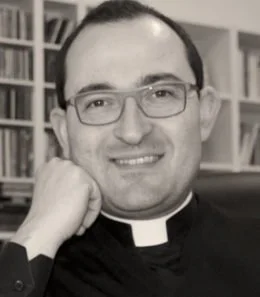
“When everything falls apart and expert theories dissolve in the light of real life, each person is forced to reckon with what truly makes them happy — and what merely breeds a corrosive skepticism about everything.”
Simone Riva - Is the Lord Among Us, Yes or No?
The question that the Jews put to Moses during the Exodus is perhaps more relevant than we might think.
After their liberation from Egypt, the Jews had to contend with a subtler enemy: regret. Moses found himself leading a people who preferred to have everything secured for them under slavery rather than face the risks of freedom, and every hardship became a pretext for complaint: "Why did you bring us up out of Egypt to make us and our children and our livestock die of thirst?" (Ex 17:3).
Moses even came to fear for his own life, watching the anger rise in the eyes of his friends — the same eyes that had been filled with joy as they crossed the Red Sea. The controversy reached its most radical point: "Is the Lord among us or not?"(Ex 17:7).
In recent days, during the blessing of homes in preparation for Easter, something not entirely unlike this happened to me. An orderly, simple family, with a husband who was curious about matters of faith. Over the years, he had attended several meetings with Bible scholars, read various texts, and explored many questions in depth.
He did not want to let the occasion of a priest's visit pass without raising the inconsistencies that had long unsettled him — the gap between what he had been taught as a child and what the experts were now telling him: namely, that Adam and Eve had never existed, that Moses was a legend, that the Annunciation to the Virgin was a literary device, that many of the stories were purely symbolic. Suddenly, with tears in his eyes, he says to me: "I have reached my age without having anything certain to hold on to."
I look at him and ask, "But why do you need something to hold on to? Why don't you just accept things as they are?" And he — already ill, no longer young — replies, "Because I'm not happy that way."
The Jews would probably have answered the same way had Moses asked them, "Why don't you go back to Pharaoh, to your old life, to those orderly and precise days when everyone had their tasks and instructions on how to build?"
When everything falls apart, when the theories of experts dissolve in the light of real life, when life demands real answers, each person is forced to reckon with what truly makes them happy and what merely breeds a corrosive skepticism about everything.
What the then-Cardinal Ratzinger said in one of his homilies at Pentling remains true: "We no longer ask ourselves questions. We are so sure, so satisfied with ourselves that we do not give it any importance. At most, we turn the tables and set ourselves up as judges of God, condemning him for this and that, and for having done everything or almost everything in such a botched way. […] In our time, a new migration from north and south, from east and west, is moving towards him, starting precisely from ancient distances and contrasts. And it becomes clear that, precisely in his failure, he — God seems so powerless in this world! — holds this story in his hands; and that it is precisely through the failures of men that he raises them up again and makes himself present to them once more as hope and light. I think that we too should allow ourselves to be touched by this, so that we may seek him again and go out to meet him as the authentic answer to our questions." (L'Osservatore Romano, December 19, 2015).
Even when we find ourselves facing the radical question of the Israelites — "Is the Lord among us or not?" — we can always begin again from what leaves us unsatisfied, ready to see the One who is able to fill every moment with himself.
-
¿El Señor está entre nosotros, sí o no?
Simone Riva
La pregunta que los judíos le hacen a Moisés durante el éxodo es quizás más actual de lo que pensamos
Tras la liberación de Egipto, los judíos deben enfrentarse a un enemigo más sutil: el arrepentimiento. Moisés se encuentra liderando a un pueblo que prefería tenerlo todo garantizado en la esclavitud, antes que afrontar los riesgos de la libertad, y cada carencia se convierte en una ocasión para quejarse: «¿Por qué nos has sacado de Egipto para que muramos de sed nosotros, nuestros hijos y nuestro ganado?» (Éxodo 17, 3).
Moisés llega incluso a temer por su propia vida, al ver cómo crece la ira en los ojos de sus amigos, los mismos ojos que se llenaron de alegría cuando cruzaron el Mar Rojo. La polémica llega hasta la pregunta radical: «¿Está el Señor entre nosotros, sí o no?» (Éx 17, 7).
En los últimos días, durante la bendición de las casas con motivo de la Pascua, me ocurrió algo similar. Una familia ordenada, sencilla, con un marido curioso por las cosas que tienen que ver con la fe. A lo largo de los años ha participado en varios encuentros con expertos en la Biblia, ha leído varios textos y ha profundizado en muchas cuestiones.
No quiere perder la oportunidad de la presencia del sacerdote para hacerle preguntas sobre varias incongruencias que le han estado molestando durante mucho tiempo debido a la diferencia entre lo que le enseñaron de pequeño y lo que le han dicho los expertos, es decir, que Adán y Eva no existieron, que Moisés no existió, que la anunciación a la Virgen es un recurso literario, que muchos relatos son simbólicos... De repente, con lágrimas en los ojos, me dice: «He llegado a mi edad sin tener nada seguro a lo que aferrarme».
Lo miro y le pregunto: «¿Pero por qué necesita algo a lo que aferrarse? ¿Por qué no se conforma con las cosas tal y como son?». Y él, ya enfermo y no tan joven, responde: «Porque así no soy feliz».
Probablemente los judíos también habrían respondido así si Moisés les hubiera preguntado: «¿Por qué no volvéis con el faraón, a vuestra vida anterior, a los días ordenados y precisos en los que todos tenían su tarea y sus instrucciones sobre cómo construir?».
Cuando todo se derrumba, cuando las teorías de los expertos se desvanecen como la nieve al sol, cuando la vida exige respuestas verdaderas, cada uno puede comprobar hasta qué punto está dispuesto a aceptar el riesgo de la libertad, haciendo cuentas con lo que le hace feliz y lo que solo es capaz de infundir escepticismo sobre todo.
Sigue siendo cierto lo que dijo el entonces cardenal Ratzinger en una de sus homilías pronunciadas en Pentling: «Ya no nos hacemos preguntas sobre nosotros mismos. Estamos tan seguros, tan satisfechos de nosotros mismos que no le damos importancia. A lo sumo, le damos la vuelta a la tortilla y nos erigimos en jueces de Dios, condenándolo por esto y por aquello, y por haberlo hecho todo, o casi todo, de forma tan chapucera. […]
En nuestra época, una nueva migración desde el norte y el sur, desde el este y el oeste, se mueve hacia él, partiendo precisamente de antiguas distancias y contraposiciones. Y se hace evidente que, precisamente en su fracaso, él —¡Dios parece tan impotente en este mundo! —tiene esta historia en sus manos; y que precisamente a través de los fracasos de los hombres los levanta de nuevo y se hace presente de nuevo para ellos como esperanza y como luz. Creo que también nosotros deberíamos dejarnos tocar por esto, para buscarlo de nuevo y salir a su encuentro como la auténtica respuesta a nuestras preguntas» (publicado en L’Osservatore Romano el 19 de diciembre de 2015).
Y si también a nosotros nos surge la pregunta radical de los israelitas: «¿Está el Señor entre nosotros, sí o no?», siempre podemos partir de lo que no nos hace felices, dispuestos a ver al Único capaz de llenar cada instante con su presencia.
-
Il Signore è in mezzo a noi, sì o no?
Simone Riva
La domanda che gli ebrei pongono a Mosè durante l'esodo è forse più attuale di quanto possiamo pensare
Dopo la liberazione dall’Egitto gli ebrei devono fare i conti con un nemico più subdolo: il rimpianto. Mosè si ritrova a condurre un popolo che preferiva avere tutto garantito in schiavitù, piuttosto che affrontare i rischi della libertà e, ogni mancanza, diventa l’occasione per lamentarsi: “Perché ci hai fatto salire dall’Egitto per far morire di sete noi, i nostri figli e il nostro bestiame?” (Es 17, 3).
Mosè arriva a temere persino per la propria vita, vedendo la rabbia montare negli occhi dei suoi amici, gli stessi occhi che si erano riempiti di gioia mentre correvano in mezzo al Mar Rosso.La polemica arriva fino alla domanda radicale: “Il Signore è in mezzo a noi sì o no?” (Es 17, 7).
Nei giorni scorsi, durante la benedizione delle case in vista della Pasqua, mi è capitato qualcosa di simile. Famiglia ordinata, semplice, con un marito curioso delle cose che riguardano la fede. Negli anni ha partecipato a diversi incontri con esperti di Bibbia, letto diversi testi e approfondito molte questioni.
Non vuole perdere l’occasione della presenza del sacerdote per porre delle domande su varie incongruenze che lo assillano da tempo dovute alla differenza tra quello che gli avevano insegnato da piccolo e quello che gli hanno detto gli esperti, che cioè Adamo ed Eva non sono esistiti, che Mosè non è esistito, che l’annunciazione alla Vergine è un espediente letterario, che tanti racconti sono simbolici… a un tratto, con le lacrime agli occhi, mi dice: “Sono arrivato alla mia età senza avere più nulla di certo a cui aggrapparmi”.
Lo guardo e gli chiedo: “Ma lei perché ha bisogno di qualcosa a cui aggrapparsi? Perché non si fa andar bene le cose così come sono?”. E lui, già malato e non più giovanissimo, risponde: “Perché così non sono contento”.
Probabilmente anche gli ebrei avrebbero risposto così se Mosè avesse chiesto loro: “Perché non tornate dal Faraone, alla vita di prima, alle giornate ordinate e precise in cui tutti avevano il loro compito e le istruzioni su come costruire?”.
Quando tutto cade, quando le teorie degli esperti si sciolgono come neve al sole, quando la vita esige delle risposte vere, ciascuno può verificare fino a che punto è disposto ad accettare il rischio della libertà, facendo i conti con ciò che lo rende contento e ciò che è in grado solo di incutere lo scetticismo su tutto.
Rimane sempre vero quello che disse l’allora card. Ratzinger in una delle sue omelie pronunciate a Pentling: “Non ci facciamo più domande su noi stessi. Siamo così sicuri, così soddisfatti di noi stessi da non dargli importanza. Al massimo rigiriamo la frittata e ci ergiamo a giudici di Dio, condannandolo per questo e per quello, e per aver fatto tutto o quasi in modo tanto pasticciato. […]
In questo nostro tempo, una nuova migrazione da nord e da sud, da oriente e da occidente, si muove verso di lui, proprio a partire da antiche distanze e contrapposizioni. E diviene evidente che, proprio nel suo fallimento, egli – Dio sembra essere così impotente in questo mondo! – tiene questa storia nelle sue mani; e che proprio attraverso i fallimenti degli uomini li rialza di nuovo e si fa di nuovo presente a loro come speranza e come luce. Penso che anche noi dovremmo farci toccare da questo, in modo da cercarlo nuovamente e andare incontro a lui come l’autentica risposta alle nostre domande” (pubblicata su L’Osservatore Romano il 19 dicembre 2015).
E qualora anche a noi dovesse sorgere la domanda radicale degli israeliti: Il Signore è in mezzo a noi sì o no?”, possiamo sempre ripartire da ciò che non ci rende contenti, pronti a scorgere l’Unico in grado di riempire di sé ogni istante.
-
Le Seigneur est parmi nous, oui ou non ?
Simone Riva
La question que les Juifs posent à Moïse pendant l'exode est peut-être plus actuelle que nous ne le pensons
Après leur libération d'Égypte, les Juifs doivent faire face à un ennemi plus insidieux : le regret. Moïse se retrouve à diriger un peuple qui préférait avoir tout garanti dans l'esclavage plutôt que d'affronter les risques de la liberté, et chaque manque devient l'occasion de se plaindre : « Pourquoi nous as-tu fait sortir d'Égypte pour nous faire mourir de soif, nous, nos enfants et notre bétail ? » (Ex 17, 3).
Moïse en vient même à craindre pour sa vie, voyant la colère monter dans les yeux de ses amis, ces mêmes yeux qui s'étaient remplis de joie lorsqu'ils couraient au milieu de la mer Rouge. La polémique va jusqu'à la question radicale : « Le Seigneur est-il parmi nous, oui ou non ? » (Ex 17, 7).
Ces derniers jours, lors de la bénédiction des maisons en vue de Pâques, j'ai vécu une expérience similaire. Une famille ordonnée, simple, avec un mari curieux des questions relatives à la foi. Au fil des ans, il a participé à plusieurs rencontres avec des experts de la Bible, lu divers textes et approfondi de nombreuses questions.
Il ne veut pas manquer l'occasion de la présence du prêtre pour poser des questions sur diverses incohérences qui le tourmentent depuis longtemps en raison de la différence entre ce qu'on lui a enseigné quand il était petit et ce que lui ont dit les experts, à savoir qu'Adam et Ève n'ont pas existé, que Moïse n'a pas existé, que l'Annonciation à la Vierge est un artifice littéraire, que de nombreux récits sont symboliques... Soudain, les larmes aux yeux, il me dit : « Je suis arrivé à mon âge sans avoir plus rien de certain à quoi me raccrocher ».
Je le regarde et lui demande : « Mais pourquoi avez-vous besoin de quelque chose à quoi vous raccrocher ? Pourquoi ne pas accepter les choses telles qu'elles sont ? ». Et lui, déjà malade et plus tout jeune, répond : « Parce que je ne suis pas heureux ainsi ».
Les Juifs auraient probablement répondu de la même manière si Moïse leur avait demandé : « Pourquoi ne retournez-vous pas auprès du Pharaon, à votre vie d'avant, à vos journées ordonnées et précises où chacun avait sa tâche et ses instructions sur la manière de construire ? ».
Quand tout s'écroule, quand les théories des experts fondent comme neige au soleil, quand la vie exige des réponses vraies, chacun peut vérifier jusqu'où il est prêt à accepter le risque de la liberté, en faisant le compte de ce qui le rend heureux et de ce qui ne peut qu'inspirer le scepticisme sur tout.
Ce que disait alors le cardinal Ratzinger dans l'une de ses homélies prononcées à Pentling reste toujours vrai : « Nous ne nous posons plus de questions sur nous-mêmes. Nous sommes si sûrs, si satisfaits de nous-mêmes que nous n'y accordons aucune importance. Tout au plus, nous retournons la situation et nous nous érigeons en juges de Dieu, le condamnant pour ceci et pour cela, et pour avoir tout fait, ou presque, de manière si bâclée. […]
À notre époque, une nouvelle migration du nord et du sud, de l'est et de l'ouest, se dirige vers lui, précisément à partir d'anciennes distances et oppositions. Et il devient évident que, précisément dans son échec, lui – Dieu semble si impuissant dans ce monde ! – tient cette histoire entre ses mains ; et que c'est précisément à travers les échecs des hommes qu'il les relève à nouveau et se présente à eux comme espoir et lumière. Je pense que nous aussi, nous devrions nous laisser toucher par cela, afin de le rechercher à nouveau et d'aller à sa rencontre comme la réponse authentique à nos questions » (publié dans L'Osservatore Romano le 19 décembre 2015).
Et si la question radicale des Israélites devait nous venir à l'esprit : « Le Seigneur est-il parmi nous, oui ou non ? », nous pouvons toujours repartir de ce qui ne nous rend pas heureux, prêts à discerner l'Unique capable de remplir chaque instant de sa présence.