The Rest Hidden From the Wise
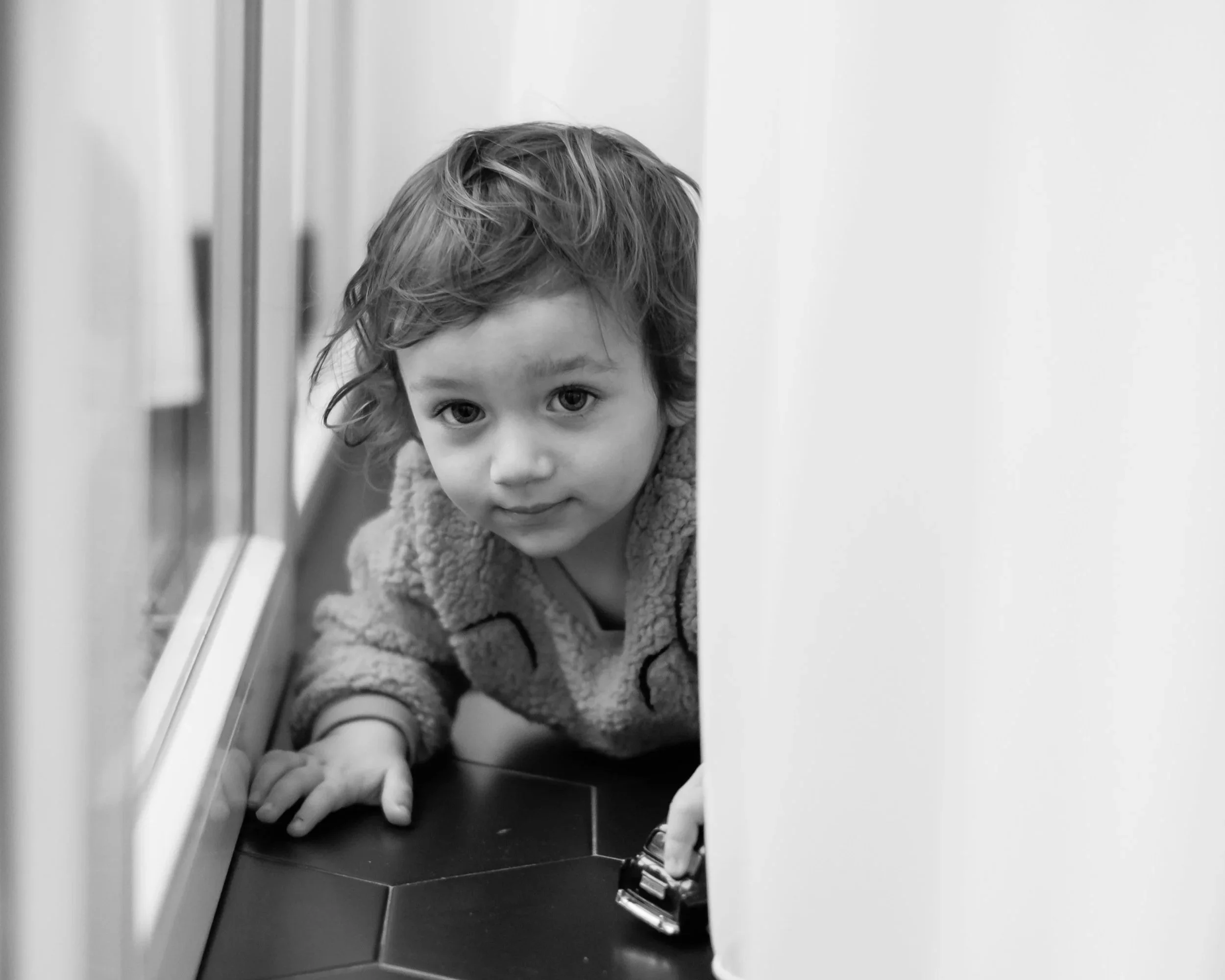
Young child crouching beside a window and looking toward the camera in a black-and-white photograph.
“Only if we become simple and little can we truly find rest for our lives.”
Julián Carrón - In this homily Julián Carrón asks how anyone can rejoice amid the chaos of ordinary life—and why the rest Christ promises is hidden from the wise and revealed to the little ones.
“Rejoice greatly, O daughter of Zion; shout for joy, O daughter of Jerusalem!” I don’t know how that line landed on each of you when you heard it—whether you registered what it actually means. So often, the moment we hear something like this, we want to say: “But how am I supposed to rejoice in the middle of the chaos I’m in, in the middle of the difficulties, in the middle of everything on my mind?” How can anyone rejoice? In life—not in the hyperuranion—in ordinary, everyday life, where we are mired in so many things that shape how we perceive reality, our very way of living.
The prophet Zechariah says: “Behold, your king comes to you.” This call to rejoice, addressed to the “daughter of Zion,” does not rest on her performance, on her ability to climb out of the nightmare, to free herself from everything that troubles her. “Behold, your king comes to you. He is righteous and victorious, humble; he rides on a donkey, on a colt, the foal of a donkey.” It is the power that comes from another that lets us rejoice.
In the Gospel, Jesus brings us to the very heart of the question: how can what the prophet Zechariah says become our own? He himself—it always strikes me to hear this Gospel—marvels at the plan of God, his Father, to the point of praising him: “I give you praise, Father, Lord of heaven and earth, for you have hidden these things from the wise.”
How is it possible? The Mystery, the Father, has hidden it “from the wise and the learned” and revealed it “to the little ones.” Because what He offers the wise is too small! Too little to stake a whole life on. And so we pay Him no attention. We, the learned and the wise, figure that staking everything on something so small can’t be right—it’s not what wise people do, not what intelligent people do, people who take account of all the factors of life.
So who takes it in? Who lets himself be changed? Only the little ones! Only simple people, who open themselves to something else, something different from what the wise imagine—the wise, who think they already know it all. Good heavens! Jesus says: “Yes, Father, for such was your gracious will. Everything has been handed over to me by my Father.” This is why only He can bring us into the mystery of life, because “no one knows the Son except the Father, and no one knows the Father except the Son and anyone to whom the Son chooses to reveal him.”
In these two seemingly enigmatic sentences, He is telling us what the mystery of living is: one—Jesus, who became flesh—is the one who reveals to us that the mystery of life is what He Himself lives, His relationship with the Father. Because “no one knows the Son except the Father, and no one knows the Father except the Son and anyone to whom the Son chooses to reveal him.”
How fortunate we are that He has been given to us! He has revealed it to us! We are here listening to Him, and He reveals it to us again today, whatever situation we find ourselves in: “Come to me.” In case we have not grasped what this relationship He speaks of means: “Come to me, all you who are weary and burdened” by all the heaviness of living, by all your worries, by all the things that crowd your days, “come to me, all you who are weary and burdened [by such a heavy life], and I will give you rest.”
But, as so often happens, we are so “wise” that we think: “Life can’t be this simple! There’s no way I find rest by opening myself to this relationship.” For most people these words come to nothing. Who really believes that someone who opens himself—as He does—to a relationship with the Father can find rest? Unless we have lived them, these words are empty: “Well, they’re beautiful words, good intentions on Jesus’ part… He was Jesus—what else was He going to say? But we poor souls can’t lean on this!” And in fact they get no hold on us, because, having never experienced this rest, we take them for words painted on a wall!
Only the simple, the little ones, can understand them, because they are the ones who—having left the door open to let this light in—perceive that rest in their experience. How true it is that letting His Presence in, the way the little ones and the simple do, refreshes life! “Take my yoke upon you and learn from me, for I am gentle and humble of heart, and you will find [once again] rest for your lives. [For] my yoke is easy and my burden light.”
How many times have we heard this! But how many times, when we are weighed down, do we come back to these words? Who lives by letting Him in like this, who lives lightened of all the weights that so often make life unbearable? We leave not the slightest room for these words to take flesh in us. Because we are too wise, too learned. This method of God is too little for the learned and the wise; it can’t give rest. And we who are wise, deep down, do not believe it.
Instead, in His constant effort, in His never giving up knocking at our door and telling us, “Look, this is for your own good!”, He has given us the Spirit, as we heard in the second reading: “You are not under the dominion of the flesh,” under the dominion of this carnal way of thinking—too human, that only suffocates and gives you no rest. You are under the dominion of the Spirit, because “the Spirit of God dwells in you.” You who are so wise and learned—do you not realize that “if the Spirit of God, who raised Jesus from the dead, dwells in you,” the One who had that power will give life to you as well, “will give life to your mortal bodies through his Spirit who dwells in you.” This is why “brothers, we are debtors not to the flesh”; rather, it is through the Spirit that we can live: “Through the Spirit […] you will live.”
Let us ask the Lord to give us the Spirit who opens our heart, who dismantles our wisdom, and who knocks constantly at our stubbornness, so that we may live. Only if we become simple, little, can we truly find rest for our lives.
14th Sunday in Ordinary Time – Year A - Notes from the homily by Fr. Julián Carrón - July 5, 2026
(First Reading: Zech 9:9–10; Psalm 144 (145); Second Reading: Rom 8:9, 11–13; Gospel: Matt 11:25–30)
-
Il ristoro nascosto ai sapienti.
Julián Carrón
«Esulta grandemente, figlia di Sion, giubila, figlia di Gerusalemme!». Non so che contraccolpo ha avuto ciascuno di voi nel sentire questa frase, se si è reso conto di cosa significa. Tante volte, infatti, appena sentiamo una cosa del genere ci viene da dire: “Ma come posso esultare in mezzo al caos in cui mi trovo, in mezzo alle difficoltà, in mezzo ai pensieri?”. Come si può esultare? Nella vita, non nell’iperuranio, nella vita di tutti i giorni, dove siamo infangati da tante cose che determinano la nostra percezione del reale, il nostro vivere.
Il profeta Zaccaria dice: «Ecco, a te viene il tuo re». Questo invito a esultare, rivolto alla «figlia di Sion», non poggia sulla sua performance, sulla sua capacità di uscire dall’incubo, di liberarsi da ogni cosa che la turba. «Ecco, viene a te il tuo re. Egli è giusto e vittorioso, umile, cavalca un asino, un puledro figlio d’asina». È la potenza che viene da un altro che ci consente di esultare.
Nel Vangelo, Gesù ci introduce al fondo della questione: com’è possibile che quanto dice il profeta Zaccaria diventi nostro? Lui stesso – mi colpisce sempre ascoltare questo Vangelo – si stupisce del disegno di Dio, suo Padre, al punto da rendergli lode: «Ti rendo lode, Padre, Signore del cielo e della terra, perché hai nascosto queste cose ai sapienti».
Come è possibile? Il Mistero, il Padre, lo ha nascosto «ai sapienti e ai dotti» e lo ha rivelato «ai piccoli». Perché quello che Lui dice per i sapienti è troppo piccolo! È troppo poco per poggiarci tutta la vita. E allora, non gli diamo retta. Noi, dotti e sapienti, pensiamo che poggiare tutto su qualcosa di così piccolo non vada bene, non sia da saggi, da persone intelligenti che hanno consapevolezza di tutti i fattori della vita.
Quindi, chi lo accoglie? Chi si lascia cambiare? Solo i piccoli! Solo la gente semplice che si apre a un’altra cosa, diversa da quella che pensano i sapienti, i quali credono di sapere già tutto. Per carità! Gesù dice: «Sì, o Padre, perché così hai deciso nella tua benevolenza. Tutto è stato dato a me dal Padre mio». Per questo, solo Lui può introdurci al mistero della vita, perché «nessuno conosce il Figlio se non il Padre, e nessuno conosce il Padre se non il Figlio e colui al quale il Figlio vorrà rivelarlo».
In queste due frasi, così apparentemente enigmatiche, sta dicendo qual è il mistero del vivere: uno, Gesù, che è diventato carne, è colui che ci rivela che il mistero della vita è quello che Lui vive, è il suo rapporto con il Padre. Perché «nessuno conosce il Figlio se non il Padre, e nessuno conosce il Padre se non il figlio e colui al quale il Figlio vorrà rivelarlo».
Siamo così fortunati che è stato dato a noi! L’ha rivelato a noi! Siamo qui ad ascoltarlo e Lui ce lo rivela ancora oggi, qualsiasi sia la situazione in cui ci troviamo: «Venite a me». Se non abbiamo capito che cosa significa questo rapporto di cui ci parla: «Venite a me, voi tutti che siete stanchi e oppressi» da tutta la pesantezza del vivere, da tutte le preoccupazioni, da tutte le cose che affollano le vostre giornate, «venite a me, voi tutti che siete stanchi e oppressi [da una vita così pesante], e io vi darò ristoro».
Ma, come spesso accade, noi siamo così saggi da pensare: “Non può essere così semplice la vita! Non può essere che io trovi ristoro nell’aprirmi a questo rapporto”. Per la maggior parte delle persone queste parole sono nulla. Chi ci crede che possa trovare ristoro chi si apre, come Lui fa, al rapporto con il Padre? Se non le abbiamo vissute, queste parole sono vuote: “Eh, sono belle parole, buone intenzioni di Gesù... Era Gesù, cosa poteva dire? Ma noi, poveracci, non possiamo poggiare su questo!”. Infatti, non hanno presa su di noi, perché, non avendo fatto esperienza di questo ristoro, pensiamo che siano parole dipinte sul muro!
Possono capirle solo i semplici, i piccoli, perché sono loro che, avendo lasciato la porta aperta per far entrare questa luce, percepiscono nell’esperienza quel ristoro. Quanto è vero che lasciare entrare la sua Presenza, come fanno i piccoli e i semplici, ristora la vita! «Prendete il mio giogo sopra di voi e imparate da me, che sono mite e umile di cuore, e troverete [ancora una volta] ristoro per la vostra vita. [Perché] il mio giogo è dolce e il mio peso leggero».
Quante volte l’abbiamo sentito! Ma quante volte, quando siamo appesantiti, ritorniamo a queste parole? Chi vive lasciandoLo entrare così, chi vive alleggerito da tutti i pesi che rendono la vita tante volte insopportabile? Non lasciamo il minimo spazio affinché queste parole prendano carne in noi. Perché siamo troppo saggi, troppo sapienti. È troppo poco per i dotti e per i sapienti questo metodo di Dio, non può dare ristoro. E noi che siamo saggi, in fondo, non ci crediamo.
Invece, nel Suo tentativo costante, nel Suo non smettere mai di bussare alla nostra porta, dicendoci: “Guarda, che ti conviene!”, ci ha donato lo Spirito, come abbiamo sentito nella seconda lettura: «Voi non siete sotto il dominio della carne», sotto il dominio di questa modalità di pensare carnale, troppo umana, che è solo soffocante, che non vi dà ristoro. Voi siete sotto il dominio dello Spirito, perché «lo Spirito di Dio abita in voi». Voi che siete così saggi e sapienti, non vi rendete conto che «se lo Spirito di Dio, che ha risuscitato Gesù dai morti, abita in voi», Colui che ha avuto questa potenza darà la vita anche a voi, «darà la vita ai vostri corpi mortali per mezzo del suo Spirito che abita in voi». Per questo «fratelli, noi siamo debitori non verso la carne», ma è mediante lo Spirito che possiamo vivere: «Mediante lo Spirito [...] vivrete».
Chiediamo al Signore di darci lo Spirito che apra il nostro cuore, che scardini la nostra saggezza e bussi costantemente alla nostra testardaggine, affinché possiamo vivere. Solo se diventiamo semplici, piccoli, possiamo veramente trovare ristoro per le nostre vite.
XIV Domenica del Tempo Ordinario - Anno A
Appunti dall’omelia di don Julián Carrón
5 luglio 2026
(Prima lettura: Zc 9,9-10; Salmo 144 (145); Seconda lettura: Rm 8,9.11-13; Vangelo: Mt 11,25-30)
-
El consuelo oculto a los sabios.
Julián Carrón
«¡Exulta enormemente, hija de Sión, regocíjate, hija de Jerusalén!». No sé qué reacción ha tenido cada uno de vosotros al escuchar esta frase, si os habéis dado cuenta de lo que significa. De hecho, muchas veces, en cuanto oímos algo así, nos dan ganas de decir: «Pero, ¿cómo voy a regocijarme en medio del caos en el que me encuentro, en medio de las dificultades, en medio de mis pensamientos?». ¿Cómo se puede regocijarse? En la vida, no en el hiperurano, en la vida cotidiana, donde estamos sumidos en tantas cosas que determinan nuestra percepción de la realidad, nuestra forma de vivir.
El profeta Zacarías dice: «He aquí que viene a ti tu rey». Esta invitación a regocijarse, dirigida a la «hija de Sión», no se basa en su rendimiento, en su capacidad para salir de la pesadilla, para liberarse de todo lo que la perturba. «He aquí que viene a ti tu rey. Él es justo y victorioso, humilde, cabalga un asno, un pollino, hijo de una asna». Es el poder que viene de otro el que nos permite regocijarnos.
En el Evangelio, Jesús nos introduce en el meollo de la cuestión: ¿cómo es posible que lo que dice el profeta Zacarías se convierta en algo nuestro? Él mismo —siempre me llama la atención escuchar este Evangelio— se asombra ante el designio de Dios, su Padre, hasta el punto de alabarlo: «Te alabo, Padre, Señor del cielo y de la tierra, porque has ocultado estas cosas a los sabios».
¿Cómo es posible? El Misterio, el Padre, lo ha ocultado «a los sabios y a los doctos» y lo ha revelado «a los pequeños». ¡Porque lo que Él dice a los sabios es demasiado pequeño! Es demasiado poco para basar en ello toda una vida. Y entonces, no le hacemos caso. Nosotros, los eruditos y los sabios, pensamos que basarlo todo en algo tan pequeño no está bien, que no es propio de sabios, de personas inteligentes que son conscientes de todos los factores de la vida.
Entonces, ¿quién lo acoge? ¿Quién se deja transformar? ¡Solo los pequeños! Solo la gente sencilla que se abre a algo diferente de lo que piensan los sabios, que creen saberlo ya todo. ¡Por Dios! Jesús dice: «Sí, oh Padre, porque así lo has decidido en tu benevolencia. Todo me ha sido dado por mi Padre». Por eso, solo Él puede introducirnos en el misterio de la vida, porque «nadie conoce al Hijo sino el Padre, y nadie conoce al Padre sino el Hijo y aquel a quien el Hijo quiera revelárselo».
En estas dos frases, tan aparentemente enigmáticas, nos está diciendo cuál es el misterio de la vida: uno, Jesús, que se hizo carne, es quien nos revela que el misterio de la vida es lo que Él vive, es su relación con el Padre. Porque «nadie conoce al Hijo sino el Padre, y nadie conoce al Padre sino el Hijo y aquel a quien el Hijo quiera revelárselo».
¡Qué afortunados somos de que se nos haya dado! ¡Nos lo ha revelado! Estamos aquí escuchándole y Él nos lo sigue revelando hoy, sea cual sea la situación en la que nos encontremos: «Venid a mí». Si no hemos entendido qué significa esta relación de la que nos habla: «Venid a mí, todos los que estáis cansados y agobiados» por todo el peso de la vida, por todas las preocupaciones, por todas las cosas que abarrotan vuestros días, «venid a mí, todos los que estáis cansados y agobiados [por una vida tan pesada], y yo os daré descanso».
Pero, como suele ocurrir, somos tan «sabios» que pensamos: «¡La vida no puede ser tan sencilla! No puede ser que encuentre descanso al abrirme a esta relación». Para la mayoría de la gente, estas palabras no significan nada. ¿Quién cree que puede encontrar descanso quien se abre, como Él lo hace, a la relación con el Padre? Si no las hemos vivido, estas palabras están vacías: «Bah, son bonitas palabras, buenas intenciones de Jesús… Era Jesús, ¿qué iba a decir? ¡Pero nosotros, pobres de nosotros, no podemos apoyarnos en esto!». De hecho, no nos dicen nada, porque, al no haber experimentado ese descanso, ¡pensamos que son palabras pintadas en la pared!
Solo los sencillos, los pequeños, pueden comprenderlas, porque son ellos quienes, al haber dejado la puerta abierta para que entre esta luz, perciben ese consuelo en la experiencia. ¡Cuán cierto es que dejar entrar su Presencia, como hacen los pequeños y los sencillos, reconforta la vida! «Llevad mi yugo sobre vosotros y aprended de mí, que soy manso y humilde de corazón, y hallaréis [una vez más] descanso para vuestra vida. [Porque] mi yugo es suave y mi carga ligera».
¡Cuántas veces lo hemos oído! Pero, ¿cuántas veces, cuando nos sentimos agobiados, volvemos a estas palabras? ¿Quién vive dejándole entrar así, quién vive aliviado de todas las cargas que tantas veces hacen la vida insoportable? No dejamos el más mínimo espacio para que estas palabras cobren vida en nosotros. Porque somos demasiado sabios, demasiado entendidos. Este método de Dios es demasiado poco para los eruditos y los sabios, no puede dar descanso. Y nosotros, que somos sabios, en el fondo, no nos lo creemos.
En cambio, en Su intento constante, en Su no dejar nunca de llamar a nuestra puerta, diciéndonos: «¡Mira, te conviene!», nos ha donado el Espíritu, como hemos escuchado en la segunda lectura: «Vosotros no estáis bajo el dominio de la carne», bajo el dominio de esa forma de pensar carnal, demasiado humana, que solo es asfixiante, que no os da consuelo. Estáis bajo el dominio del Espíritu, porque «el Espíritu de Dios habita en vosotros». Vosotros, que sois tan sabios y entendidos, no os dais cuenta de que «si el Espíritu de Dios, que resucitó a Jesús de entre los muertos, habita en vosotros», Aquel que ha tenido ese poder también os dará vida a vosotros, «dará vida a vuestros cuerpos mortales por medio de su Espíritu que habita en vosotros». Por eso, «hermanos, no estamos en deuda con la carne», sino que es por medio del Espíritu por lo que podemos vivir: «Por medio del Espíritu [...] viviréis».
Pidamos al Señor que nos dé el Espíritu que abra nuestro corazón, que desmonte nuestra sabiduría y llame constantemente a nuestra obstinación, para que podamos vivir. Solo si nos hacemos sencillos, pequeños, podremos encontrar verdaderamente consuelo para nuestras vidas.
XIV Domingo del Tiempo Ordinario - Año A
Apuntes de la homilía de don Julián Carrón
5 de julio de 2026
(Primera lectura: Zc 9,9-10; Salmo 144 (145); Segunda lectura: Rm 8,9.11-13; Evangelio: Mt 11,25-30)
-
La consolation cachée aux sages.
Julián Carrón
« Réjouis-toi grandement, fille de Sion, exulte, fille de Jérusalem ! ». Je ne sais pas quelle réaction chacun d’entre vous a eue en entendant cette phrase, ni si vous avez pris conscience de ce qu’elle signifie. Souvent, en effet, dès que nous entendons une chose pareille, nous avons envie de dire : « Mais comment puis-je exulter au milieu du chaos dans lequel je me trouve, au milieu des difficultés, au milieu de mes pensées ? ». Comment peut-on exulter ? Dans la vie, pas dans l’hyperuranion, dans la vie de tous les jours, où nous sommes enlisés dans tant de choses qui déterminent notre perception du réel, notre façon de vivre.
Le prophète Zacharie dit : « Voici, ton roi vient à toi ». Cette invitation à exulter, adressée à la « fille de Sion », ne repose pas sur ses performances, ni sur sa capacité à sortir du cauchemar, à se libérer de tout ce qui la trouble. « Voici, ton roi vient à toi. Il est juste et victorieux, humble, il chevauche un âne, un ânon, fils d’une ânesse ». C’est la puissance qui vient d’un autre qui nous permet de nous réjouir.
Dans l’Évangile, Jésus nous plonge au cœur de la question : comment est-il possible que ce que dit le prophète Zacharie devienne nôtre ? Lui-même – cela me frappe toujours d’entendre cet Évangile – s’émerveille devant le dessein de Dieu, son Père, au point de lui rendre louange : « Je te rends gloire, Père, Seigneur du ciel et de la terre, car tu as caché ces choses aux sages ».
Comment est-ce possible ? Le Mystère, le Père, l’a caché « aux sages et aux savants » et l’a révélé « aux petits ». Car ce qu’Il dit aux sages est trop petit ! C’est trop peu pour y fonder toute une vie. Et alors, nous ne l’écoutons pas. Nous, les savants et les sages, nous pensons que fonder tout sur quelque chose d’aussi petit n’est pas acceptable, que ce n’est pas digne des sages, des personnes intelligentes qui ont conscience de tous les aspects de la vie.
Alors, qui l’accueille ? Qui se laisse transformer ? Seuls les petits ! Seules les personnes simples qui s’ouvrent à autre chose, différente de ce que pensent les sages, qui croient déjà tout savoir. Pour l’amour de Dieu ! Jésus dit : « Oui, ô Père, car c’est ainsi que tu l’as décidé dans ta bienveillance. Tout m’a été donné par mon Père. » C’est pourquoi Lui seul peut nous faire entrer dans le mystère de la vie, car « personne ne connaît le Fils, si ce n’est le Père, et personne ne connaît le Père, si ce n’est le Fils et celui à qui le Fils voudra le révéler ».
Dans ces deux phrases, si énigmatiques en apparence, il nous révèle quel est le mystère de la vie : celui-là, Jésus, qui s’est fait chair, est celui qui nous révèle que le mystère de la vie est celui qu’Il vit, c’est-à-dire sa relation avec le Père. Car « personne ne connaît le Fils, si ce n’est le Père, et personne ne connaît le Père, si ce n’est le Fils et celui à qui le Fils voudra le révéler ».
Quelle chance qu’il nous ait été donné ! Il nous l’a révélé ! Nous sommes ici pour l’écouter et il nous le révèle encore aujourd’hui, quelle que soit la situation dans laquelle nous nous trouvons : « Venez à moi ». Si nous n’avons pas compris ce que signifie cette relation dont Il nous parle : « Venez à moi, vous tous qui êtes fatigués et accablés » par tout le poids de la vie, par toutes les préoccupations, par toutes les choses qui envahissent vos journées, « venez à moi, vous tous qui êtes fatigués et accablés [par une vie si lourde], et je vous donnerai du repos ».
Mais, comme cela arrive souvent, nous sommes assez « sages » pour penser : « La vie ne peut pas être aussi simple ! Il est impossible que je trouve le repos en m’ouvrant à cette relation ». Pour la plupart des gens, ces paroles ne signifient rien. Qui croit que celui qui s’ouvre, comme Lui le fait, à la relation avec le Père, puisse trouver le repos ? Si nous ne les avons pas vécues, ces paroles sont vides de sens : « Eh bien, ce sont de belles paroles, de bonnes intentions de la part de Jésus… C’était Jésus, que pouvait-Il dire d’autre ? Mais nous, pauvres de nous, nous ne pouvons pas nous appuyer là-dessus ! ». En effet, elles n’ont aucune emprise sur nous, car, n’ayant pas fait l’expérience de ce réconfort, nous pensons que ce ne sont que des mots peints sur un mur !
Seuls les simples, les petits, peuvent les comprendre, car ce sont eux qui, ayant laissé la porte ouverte pour laisser entrer cette lumière, perçoivent ce réconfort dans leur expérience. Comme il est vrai que laisser entrer sa Présence, comme le font les petits et les simples, réconforte la vie ! « Prenez mon joug sur vous et apprenez de moi, qui suis doux et humble de cœur, et vous trouverez [encore une fois] le réconfort pour votre vie. [Car] mon joug est doux et mon fardeau léger ».
Combien de fois l’avons-nous entendu ! Mais combien de fois, lorsque nous sommes accablés, revenons-nous à ces paroles ? Qui vit en Le laissant entrer ainsi, qui vit allégé de tous ces fardeaux qui rendent la vie si souvent insupportable ? Nous ne laissons pas le moindre espace pour que ces paroles s’incarnent en nous. Parce que nous sommes trop sages, trop savants. Cette méthode de Dieu est bien trop modeste pour les érudits et les sages, elle ne peut pas apporter de réconfort. Et nous qui sommes sages, au fond, nous n’y croyons pas.
Au contraire, dans Sa tentative constante, dans Son fait de ne jamais cesser de frapper à notre porte, en nous disant : « Regarde, ça vaut le coup pour toi ! », Il nous a donné l’Esprit, comme nous l’avons entendu dans la deuxième lecture : « Vous n’êtes pas sous la domination de la chair », sous la domination de cette façon de penser charnelle, trop humaine, qui n’est qu’étouffante, qui ne vous apporte aucun réconfort. Vous êtes sous la domination de l’Esprit, car « l’Esprit de Dieu habite en vous ». Vous qui êtes si sages et si savants, ne vous rendez-vous pas compte que « si l’Esprit de Dieu, qui a ressuscité Jésus d’entre les morts, habite en vous », Celui qui a eu cette puissance vous donnera aussi la vie, « il donnera la vie à vos corps mortels par son Esprit qui habite en vous ». C’est pourquoi « frères, nous ne sommes pas redevables à la chair », mais c’est par l’Esprit que nous pouvons vivre : « Par l’Esprit […] vous vivrez ».
Demandons au Seigneur de nous donner l’Esprit qui ouvre notre cœur, qui ébranle notre sagesse et frappe sans cesse à la porte de notre entêtement, afin que nous puissions vivre. Ce n’est que si nous devenons simples, petits, que nous pourrons véritablement trouver le réconfort pour nos vies.
XIVe dimanche du temps ordinaire – Année A
Notes tirées de l’homélie de don Julián Carrón
5 juillet 2026
(Première lecture : Za 9,9-10 ; Psaume 144 (145) ; Deuxième lecture : Rm 8,9.11-13 ; Évangile : Mt 11,25-30)
