
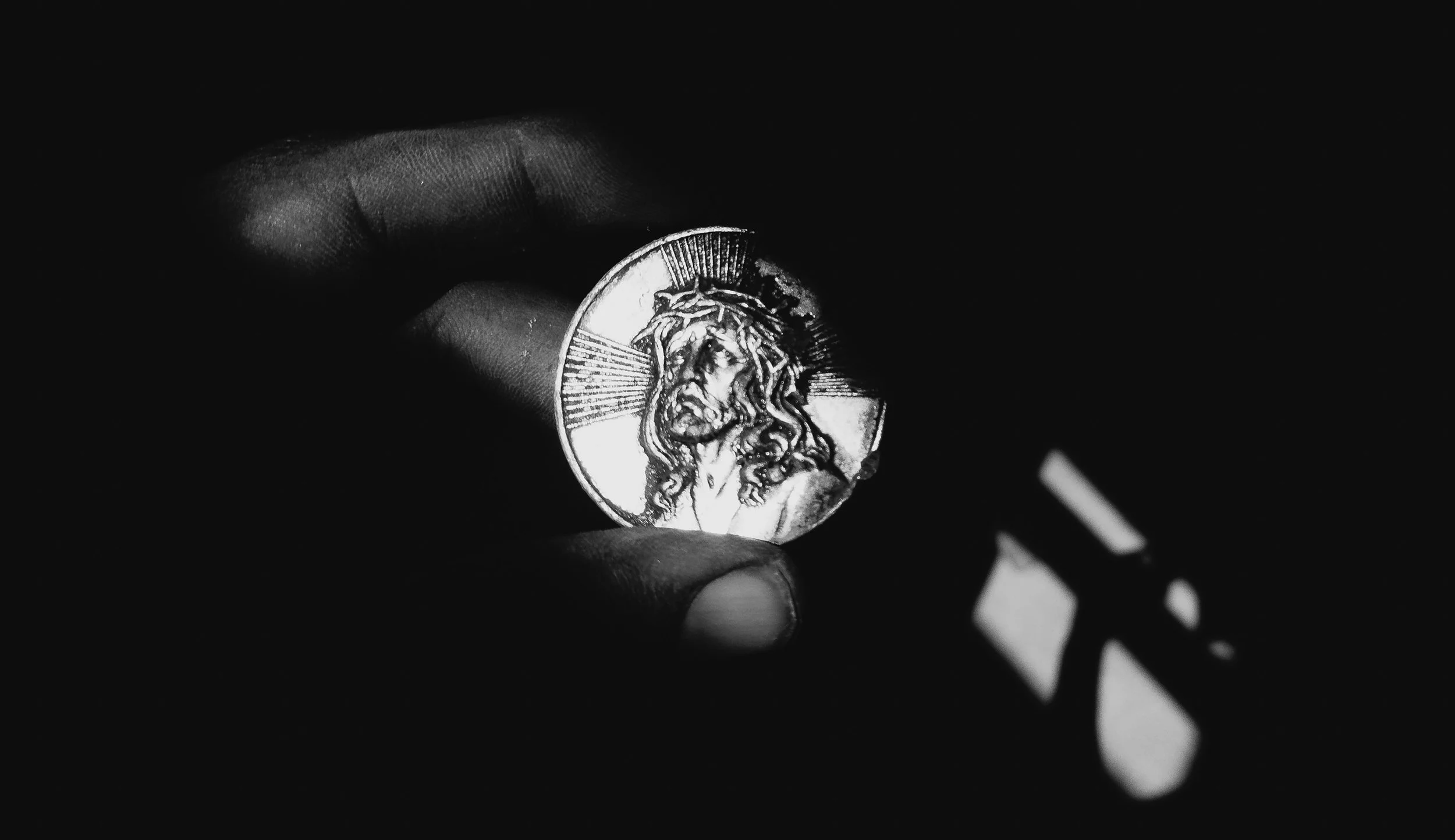
We are made in His image and likeness.
“Before we achieve anything, we are beloved creatures, called by name. Our dignity was given to us, and it doesn’t fade when we’re weak or when no one notices us.”
Julián Carrón - The coin bears Caesar’s image. We bear God’s, so no power can define us.
The first reading has a surprise in store. God entrusts a mission to Cyrus, a pagan king who doesn’t know Him. Israel is in exile, far from home, and its people might well think the Lord has forgotten them. Yet that is exactly when their liberation begins to take shape—through a man who is a stranger to Israel’s faith. God says to Cyrus: “I have called you by your name, giving you a title, though you knew me not.”
These words widen our horizons. We often assume God can act only through people and situations we recognize as “religious.” But the Lord goes before us, and He can open a path where we never expected one. He can reach us through someone who doesn’t share our faith, through an uncomfortable circumstance, or through an encounter that leaves us puzzled at first. His faithfulness is greater than our plans.
That doesn’t mean every event is good, or that everyone in power is doing God’s will. Isaiah gives us a precise criterion: God chose Cyrus “for the sake of Jacob, my servant, of Israel, my chosen one.” What marks Cyrus as chosen is what his choosing serves: the liberation of a people.
In the Gospel, Jesus faces a question that is both political and religious: “Is it lawful to pay the census tax to Caesar or not?” It sounds like a sincere request for clarity. It’s a trap. Answer yes, and He looks complicit in Roman rule; answer no, and He can be charged with rebellion. His questioners want to box Him into a choice they have already rigged.
Jesus asks for the coin and puts a question of His own: “Whose image is this and whose inscription?” “Caesar’s,” they answer. And He replies with words we all know: “Then repay to Caesar what belongs to Caesar and to God what belongs to God.” With this answer, Jesus affirms our responsibility for civic life—a responsibility we can’t walk away from. But He also sets a radical limit on all power: Caesar is not God. No human authority can claim to be absolute.
That is the point of the second half of His answer: “and to God what belongs to God.” But what does belong to God? The coin bears Caesar’s image. Human beings, according to the creation account, bear God’s. We are made in His image and likeness. And becoming aware of that sets us free from every power.
How often we let others decide what we’re worth! When we succeed, we feel important; when we fail, we feel worthless. When we’re approved of, we’re at peace; when we’re forgotten, we feel erased. But no amount of money or recognition can tell us who we are. Before we achieve anything, we are beloved creatures, called by name. Our dignity was given to us, and it doesn’t fade when we’re weak or when no one notices us.
Giving back to God what belongs to God, then, means recognizing this belonging and living it all the way. It isn’t about setting aside a small slice of the week for Him and shutting Him out of everything else. It means living all of life—our decisions, our affections, our time, our struggles, our circumstances—without ever losing sight of our true worth: we belong to Him, because we are made in His image and likeness. Belonging to the Lord frees us from needing a master to guarantee our worth. As St. Ambrose put it, “How many masters have those who do not belong to the one Lord!”
How can this liberation from every other power keep happening, in every moment of history? St. Paul’s answer in the second reading could hardly be more fitting: “Our gospel did not come to you in word alone, but also in power and in the Holy Spirit and with much conviction.”
Only Christianity happening anew as an event, full of power and attraction, can free us from every power—because then we will know to whom we belong and by whom we are loved. This freedom will let us love without fear and start over every day, in any circumstance, filled with this awareness and this hope.
Notes not reviewed by the author.
-
-
Domingo XXIX del Tiempo Ordinario (Ciclo A)
Apuntes de la homilía de don Julián Carrón
18 de octubre de 2026
(Primera lectura: Is 45,1.4-6; Salmo 95 [96]; Segunda lectura: 1 Ts 1,1-5b; Evangelio: Mt 22,15-21)
La primera lectura nos depara una sorpresa: Dios confía una misión a Ciro, un rey pagano que no lo conoce. El pueblo de Israel está en el exilio, lejos de su tierra, y podría pensar que el Señor lo ha olvidado. Sin embargo, es precisamente entonces cuando la liberación empieza a tomar forma, a través de un hombre ajeno a la fe de Israel. «Te he llamado por tu nombre —le dice Dios a Ciro—, aunque no me conocías».
Es una palabra que ensancha nuestros horizontes. A menudo pensamos que Dios solo puede actuar a través de personas y situaciones que reconocemos como «religiosas». Pero el Señor nos precede y puede abrirnos un camino por donde no lo esperábamos. Puede llegar a nosotros a través de alguien que no comparte nuestra fe, de una circunstancia incómoda o de un encuentro que, al principio, nos deja perplejos. Su fidelidad es mayor que nuestros esquemas.
Esto no significa que todo acontecimiento sea positivo ni que toda persona poderosa cumpla la voluntad de Dios. El profeta Isaías ofrece un criterio preciso: Dios eligió a Ciro «por amor a Jacob, mi siervo, y a Israel, mi elegido». La elección de Ciro se reconoce por su relación con la liberación de un pueblo.
En el Evangelio, Jesús se enfrenta a una cuestión a la vez política y religiosa: «¿Es lícito o no pagar el tributo al César?». La pregunta parece buscar una aclaración, pero en realidad, como hemos oído, le están tendiendo una trampa. Si hubiera respondido que sí, habría parecido cómplice del dominio romano; si hubiera respondido que no, lo habrían acusado de rebelión. Sus interlocutores quieren ponerlo entre la espada y la pared: obligarlo a elegir entre dos alternativas que ellos mismos han preparado de antemano.
Jesús les pide una moneda y les pregunta: «¿De quién son esta imagen y esta inscripción?». «Del César», responden. Entonces Él pronuncia las palabras que todos conocemos: «Dad, pues, al César lo que es del César y a Dios lo que es de Dios». Con esta respuesta, Jesús reconoce nuestra responsabilidad para con la vida civil, de la que no podemos desentendernos. Pero también establece un límite radical a todo poder: el César no es Dios. Ninguna autoridad humana puede pretender que le pertenezcamos de manera absoluta.
Esto es lo que expresa la segunda parte de la respuesta de Jesús: «y a Dios lo que es de Dios». Pero ¿qué es lo que pertenece a Dios? La moneda lleva la imagen del César, mientras que el ser humano, según el relato de la creación, lleva la imagen de Dios. Estamos hechos a imagen y semejanza de Dios. Por eso, tomar conciencia de que estamos hechos a su imagen nos libera de cualquier poder.
¡Cuántas veces, en cambio, permitimos que sean los demás quienes determinen nuestro valor! Si conseguimos un resultado, nos sentimos importantes; si fracasamos, nos parece que ya no valemos nada. Si recibimos aprobación, nos quedamos tranquilos; si nos olvidan, nos sentimos invisibles. Pero ninguna moneda ni ningún reconocimiento pueden definir del todo quiénes somos. Antes de cualquier logro, somos criaturas amadas, llamadas por nuestro nombre. Nuestra dignidad es un don que hemos recibido, y no desaparece cuando somos débiles o cuando nadie nos reconoce.
Devolver a Dios lo que es de Dios significa, por tanto, reconocer esta pertenencia y vivirla plenamente. No se trata de reservarle un rincón de la semana y excluir todo lo demás de la relación con Él. Significa más bien vivir la vida en su totalidad, con todas sus facetas —las decisiones, los afectos, el tiempo, los esfuerzos, las circunstancias—, sin perder nunca de vista nuestro verdadero valor: somos suyos, porque estamos hechos a imagen y semejanza de Dios. Pertenecer al Señor nos libera de la necesidad de buscar un amo que nos garantice ese valor. «¡Cuántos amos tienen —dice san Ambrosio— quienes no pertenecen al único Señor!».
¿Cómo puede seguir ocurriendo, en cada momento de la historia, esta liberación de cualquier otro poder? La respuesta de san Pablo, en la segunda lectura, no podría ser más pertinente: «Nuestro Evangelio no se difundió entre vosotros solo por medio de la palabra, sino también con el poder del Espíritu Santo y con profunda convicción».
Solo el renacer del cristianismo como acontecimiento lleno de fuerza y de atractivo podrá liberarnos de cualquier poder, porque entonces sabremos a quién pertenecemos y por quién somos amados. Esta libertad nos permitirá amar sin miedo y volver a empezar cada día, en cualquier circunstancia, llenos de esta conciencia y de esta esperanza.
Apuntes no revisados por el autor.
-
XXIXe dimanche du temps ordinaire – Année A
Notes tirées de l’homélie de don Julián Carrón
18 octobre 2026
(Première lecture : Is 45,1.4-6 ; Psaume 95 (96) ; Deuxième lecture : 1 Th 1,1-5b ; Évangile : Mt 22,15-21)
La première lecture nous réserve une surprise : Dieu confie une mission à Cyrus, un roi païen qui ne le connaît pas. Israël est en exil, loin de sa terre, et pourrait penser que le Seigneur l’a oublié. C’est précisément à ce moment-là, cependant, que la libération commence à prendre forme par l’intermédiaire d’un homme étranger à sa foi. « Je t’ai appelé par ton nom », dit Dieu à Cyrus, « même si tu ne me connais pas ».
C’est une parole qui élargit nos horizons. Nous pensons souvent que Dieu ne peut agir qu’à travers des personnes et des situations que nous reconnaissons comme « religieuses ». Or, le Seigneur nous précède et peut nous ouvrir une voie là où nous ne l’avions pas prévue. Il peut nous atteindre par l’intermédiaire de quelqu’un qui ne partage pas notre foi, à travers une circonstance dérangeante ou lors d’une rencontre qui, au premier abord, nous laisse perplexes. Sa fidélité dépasse nos schémas…
Cela ne signifie pas que chaque événement soit positif, ni que chaque personne puissante accomplisse la volonté de Dieu. Le prophète Isaïe fournit un critère précis : Dieu a choisi Cyrus « par amour pour Jacob, mon serviteur, et pour Israël, mon élu ». L’élection de Cyrus est reconnue en lien avec la libération d’un peuple.
Dans l’Évangile, Jésus est confronté à une question politique et religieuse. « Est-il permis, ou non, de payer l’impôt à César ? ». La question semble viser à obtenir une clarification, mais en réalité, elle cache un piège, comme nous l’avons entendu. S’il avait répondu oui, il aurait semblé complice de la domination romaine ; s’il avait répondu non, il aurait été accusé de rébellion. Ses interlocuteurs veulent le contraindre à choisir entre deux alternatives qu’ils ont déjà préparées.
Jésus leur demande une pièce et leur demande : « À qui appartiennent cette image et cette inscription ? ». « À César », répondent-ils. Alors il prononce les paroles que nous connaissons : « Rendez donc à César ce qui est à César, et à Dieu ce qui est à Dieu. » Par cette réponse, Jésus reconnaît notre responsabilité envers la vie civile, à laquelle nous ne pouvons pas rester indifférents. Mais il pose aussi une limite radicale à tout pouvoir : César n’est pas Dieu. Aucune autorité humaine ne peut prétendre à une appartenance absolue.
C’est ce qu’exprime la deuxième partie de la réponse de Jésus : « À Dieu ce qui est à Dieu ». Mais qu’est-ce qui appartient à Dieu ? La pièce porte l’effigie de César, tandis que l’être humain, selon le récit de la création, porte l’image de Dieu. Nous sommes faits à l’image et à la ressemblance de Dieu. Ainsi, prendre conscience d’être faits à l’image de Dieu nous rend libres de tout pouvoir.
Combien de fois, au contraire, laissons-nous les autres déterminer notre valeur ! Si nous obtenons un résultat, nous nous sentons importants ; si nous échouons, en revanche, nous avons l’impression de ne plus valoir rien. Si nous recevons de l’approbation, nous sommes sereins ; si nous sommes oubliés, nous nous sentons effacés. Mais aucune pièce de monnaie ni aucune reconnaissance ne peuvent définir pleinement qui nous sommes. Avant toute autre chose, nous sommes des créatures aimées et appelées par notre nom. Notre dignité nous a été donnée et elle ne disparaît pas lorsque nous sommes faibles ou que nous ne sommes pas reconnus.
Rendre à Dieu ce qui est à Dieu signifie donc reconnaître cette appartenance et la vivre pleinement. Il ne s’agit pas de lui réserver une petite partie de la semaine, en excluant tout le reste de notre relation avec Lui. Cela signifie plutôt vivre la vie dans son intégralité, avec toutes ses facettes – les décisions, les affections, le temps, les efforts, les circonstances –, sans jamais perdre de vue notre véritable valeur : nous sommes à Lui. Car nous sommes faits à l’image et à la ressemblance de Dieu. Appartenir au Seigneur nous libère de la nécessité de chercher un maître qui garantisse notre valeur. « Combien de maîtres ont – dit saint Ambroise – ceux qui n’appartiennent pas au seul Seigneur ».
Comment cette libération de tout autre pouvoir peut-elle continuer à se produire, à chaque instant de l’histoire ? La réponse de saint Paul, dans la deuxième lecture, ne saurait être plus pertinente : « Notre Évangile ne s’est pas répandu parmi vous par la parole seule, mais aussi par la puissance du Saint-Esprit et par une profonde conviction ».
Seule la réapparition du christianisme en tant qu’événement plein de puissance et d’attrait pourra nous libérer de tout pouvoir, car nous saurons à qui nous appartenons et par qui nous sommes aimés. Cette liberté nous permettra d’aimer sans crainte et de recommencer chaque jour, en toute circonstance, remplis de cette conscience et de cette espérance.
