Be Bored, and Stay There
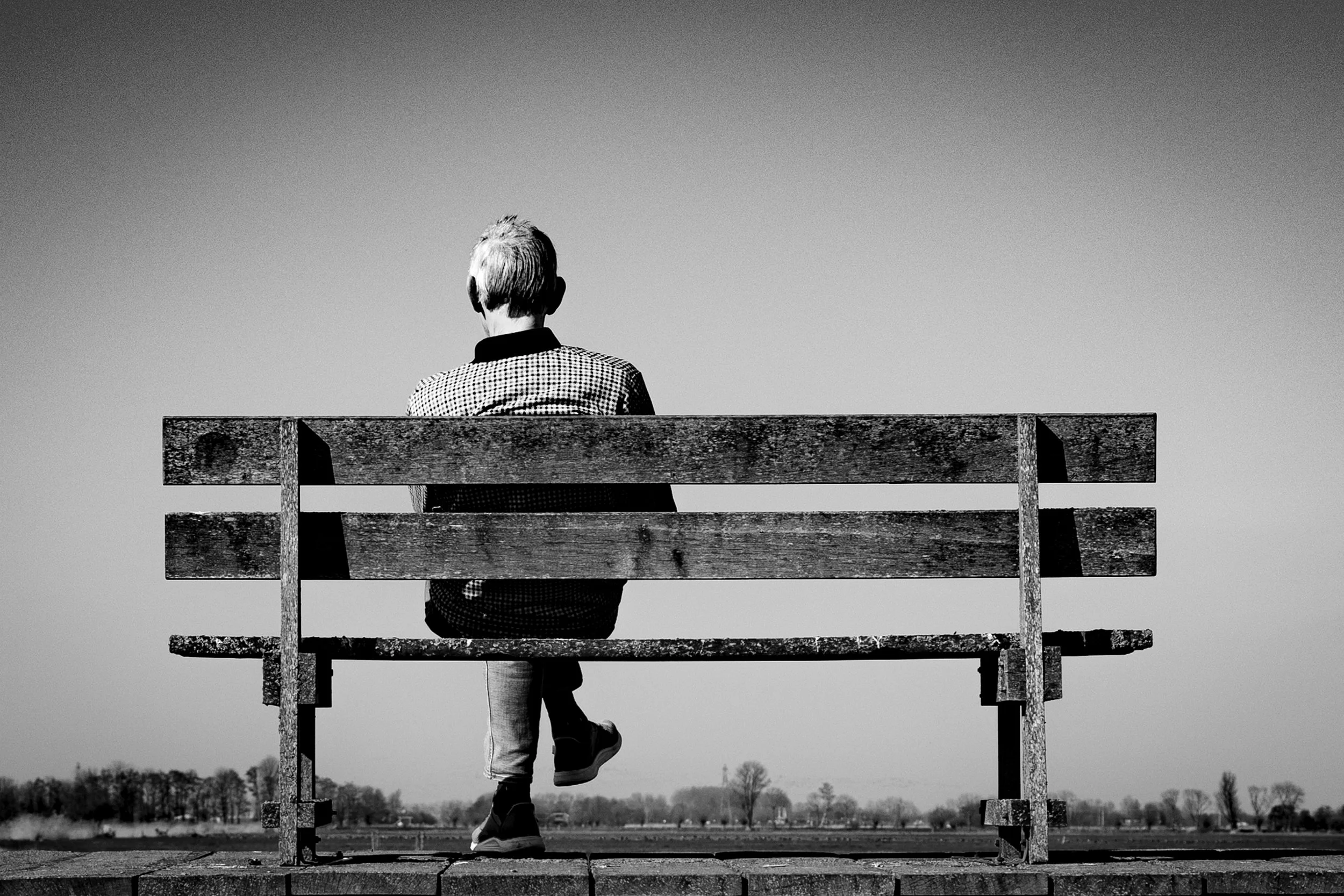
That bench isn't just a few planks nailed together." Giulio Zambon on why lingering over ordinary things opens an abyss — just a crack. Photo: Fer Troulik / Unsplash
“Boredom is the same condition children are in when they play. You do the same thing over and over until it stops being just that thing — and in the repetition, new worlds open up.”
Federico Giorgetti - Poet Giulio Zambon on childhood, grief, and why great writing is "disgustingly provincial"
A literature teacher and poet, Giulio Zambon has spent the past few years posting videos about the texts that move him. Today he speaks to more than 140,000 people in a conversation that starts with the giants of Italian literature and ends up in his own questions and wounds.
Giulio Zambon is twenty-eight, though you might guess a few years more. He teaches literature in Ferrara, and for some time now he has been sharing on social media whatever moves him—mostly poetry and literary prose. He has more than 140,000 followers, and this past February he published Le parole affilate ("Sharpened Words"): In the Footsteps of Dante and the Greats of Literature, Rediscovering Ourselves, billed as "the first book by the teacher-poet." Yes, because Giulio is a poet, too. His Instagram bio, in fact, reads "poet and little else." He flashes a smile after every question we ask. We talk about literature, poetry, salvation with a woman's face, his posts and what they're worth. Before the interview, he spends a good ten minutes asking about Páginas Digital—he wants to know more. He practically interviews us. In the end, he's the one who has to say, "All right, now I'll let you do your job." Let's begin.
Let's start with a post. Before this past Christmas break, you gave your students—and the rest of us—a single assignment: "Be bored, and don't go looking for a way out of it." Why does boredom matter?
It's fairly simple, really. I feel that we're constantly looking for an escape hatch from this condition that seems so hateful and hopeless—boredom, limbo, having nothing to do. And I've come to see that it's the same condition children are in when they play.
I once spent whole afternoons skipping stones on the river, and when the game ran out, something else would open up. That's productive boredom: the boredom in which you do the same thing over and over until that thing stops being just that thing, and in the repetition new worlds open up, a new kind of creativity.
There's a dimension in which it's as if you were suspended above things. In an essay on Leopardi, Pascoli tries to define the poet as someone who senses the tremors in the ether—the substance the void is made of. So perhaps in that state of boredom we actually become aware of those very tremors. When I watch children play, I notice how serious they are. A child's real play is profoundly serious. That dimension of play is the dimension of boredom we keep trying to escape—and I know I'm doing it when I catch my thumb going straight to where Instagram sits on the screen. We have to resist, quietly and fiercely. I have to, or I don't feel right.
Why is poetry your language? And is it still a universal language?
Poetry is my language because of my limitations. I lean on poetry the way you lean on a cane—it props up my own limp. It isn't a quality to be proud of, after all. It's my language because I'm not capable of seeing things any other way. It's a broken language, one that fixes on a single thing and shuts out everything else. I've been trying to write a novel for about a year, and I've discovered how hard it is to take up a looser, more conversational style. Poetry is a flaw. I see a park bench or hear an ABBA song and I feel like crying. That's the limp showing. In the end it's a way of being in the world, and often an unsustainable one. But I don't know whether poetry should have—or be—a universal language. Poetry isn't universal; it's tremendously provincial. That provincialism happens to speak a universal language is another matter. Universal poetry is bad poetry. The advice I give myself and other writers isn't to try to be universal, but to be disgustingly provincial.
It seems to me that during the day, when something catches your eye, you stop, almost in awe. I'd like to know what's happening in those moments when we stop, because I think they say a lot about who we are.
In those moments a bond of belonging forms between you and things. It's like running into a stranger you're sure you've seen somewhere before—and it turns out to be a kid who went to preschool or grade school with you. It's that act of recognition, which objectively has nothing to offer you. And what do all these things say to me? They always take me back to my childhood: something apparently lost that suddenly comes back, because there's an abyss inside everything. If we linger over something longer than we should—and this is the important part—that abyss opens just a crack. It's like taking a plain word and repeating it over and over: it empties out of meaning and fills up with something else. That bench isn't just a few planks nailed together. Maybe what comes back is all the melancholy and nostalgia we carry, that whole sense of the infinite reaching us from the past. I think childhood and youth are bottomless cauldrons; the whole point is to keep re-creating that one thing.
In another post you write: "If I'm not posting, it means I'm writing a lot and I'm doing well." So what is a post worth?
Given the kind of profile I have, I sometimes feel the responsibility and the weight of a post—of having to say something, or at least of not letting the silence take over. That's not a good thing, honestly, because I should feel free to do what I want, and the mechanics of social media often don't allow it. Sometimes I go a week without posting and tell myself I'm leaving a lot of opportunities on the table—but they're opportunities tied up with the world's trivial noise. I could pick up a little more visibility, I tell myself. And I do have to factor that in, because part of the reason my writing is being published at all is those same lousy social media mechanics. When a few of my videos went viral, I got dozens of offers from major publishing houses. All of it, unfortunately, came from there. I can't bite the hand that has fed me this long, but I'll admit it becomes a burden sometimes. So yes: if I'm not posting, I'm writing, because a video takes me at least three hours and I'd rather give that time to something else. And then there are days when I burn an hour on a single Instagram Story because I can't decide whether to put a white border around the text, or I don't like the framing, or the T-shirt I'm wearing looks wrong. Some days all of this carries an unbearable, outsized weight; other days it feels like nothing at all.
Maybe the only hope, Giulio, is to catch yourself doing it. It takes courage to make room for that discomfort.
You're right. First of all, you have to notice.
In the preface to your book you write: "Those we call the great ones have gone ahead of us, showing us that the path exists even when the darkness is thick and past understanding, even when the fear is real—but with the promise that at the end of the road there are words and their light, and everything words can name." Giulio, what does that path mean to you today?
Here's the point: the great ones who came before us went through a lot of shit. And it's beautiful to see how they came out of it through writing—not in any therapeutic sense; I just mean watching how writing kept them company on the way. For the past year and a half I've been trying to make sense of my father's death.
Writing won't tell me why—it can't—but it will give me very precise words for all of it. That's all we get: words that keep getting more precise. And for me, being able to find ever more precise words for the fine hair on the back of my father's neck when he was young—that is eternity. Because my father is reborn in that fine hair, the way so many things are reborn. That's my path.
Back to the book. In the chapter on Leopardi you ask the reader: "Do you ever feel shipwrecked, adrift? Tossed by waves bigger than you are, in a direction you didn't exactly choose?" Let me put the question to you.
I was a little dishonest there.
I ask the question, but I don't often find myself in that situation. I'm no superhero, but I've noticed that I stay almost indifferent to whatever happens to me. It isn't the indifference of not caring—I just rarely take things with regret or frustration. I'm a bit like one of those helicopter seeds off a maple, spinning down whichever way the air takes it. I can't tell when I'm being tossed around. What really comes to my rescue is a deep faith: I know that somehow I'll adjust. Even with my father's death, which obviously changed my life, I feel I've been able to change and reshape myself. That sense of being tossed around belongs much more to my younger years. There's a calm in me I can't explain.
In the book, when you talk about people who write for a living, you sometimes use "we." "We must." It stopped me, because as I was reading I asked myself, "Does he count me as a writer?"
I've run out of patience with people who won't take the responsibility—or don't have the nerve—to call themselves writers or poets. Is there a license for it? A professional registry? A Nobel Prize? If we write, we're writers, period. Let's stop letting ourselves into and out of some club. Maybe you've written a bad, shoddy poem, but it's still a poem. Being a poet doesn't raise you above anything; on the contrary, it's a shortcoming, as I said. Let's go ahead and consider ourselves writers and poets. The book means to talk back to the greats and turn the spotlight on the reader. We're the ones who make poetry, not the dead. Why shouldn't we imagine writing something that measures up to Leopardi or Petrarch—or gets past them? They're human beings, just like us. Sure, there's a certain sacredness about them, but at some point we have to roll up our sleeves and get our hands dirty; otherwise we're only scholars or critics. And I'm not a critic.
In the chapter on Dante you talk a great deal about being looked at. You write: "Salvation looks a lot like a passerby who looks at us and keeps looking at us, and who cares about our life." Have you found that salvation?
Yes, absolutely. That salvation has taken the form of a person: the love of my life. When that happens, you have everything. Not because another mortal, finite creature can be responsible for your salvation, but because that person points to something beyond herself.
She's a reflection. She's the one who let me discover who God is and what faith is. Someone who doesn't just see you but looks at you, and goes on looking—when you've done nothing to earn that kind of attention. When something good happens, we tell each other, "You deserve it." But it's easy to be handed what you've earned. The astonishing thing is when something beautiful happens and you haven't earned it at all. That's how it works in poetry: the word arrives when you least expect it, and then you have to take care of it. It's the same with people.
We love what we haven't earned. More than that, we love because we are loved—we can only love if someone loves us first. Ask any child.
-
Intervista a Giulio Zambon
La noia e l’infinito
Federico Giorgetti
Insegnante di Lettere e poeta, da qualche tempo pubblica video sui social parlando dei testi che lo colpiscono e oggi parla a più di 140.000 persone in un dialogo che parte dai grandi della letteratura italiana per rispondere alle proprie domande e ferite.
Giulio Zambon ha 28 anni ma non li dimostra, sembra un po’ più grande. Fa l’insegnante di Lettere a Ferrara e da qualche tempo condivide sui social ciò che lo appassiona e lo colpisce, perlopiù poesie e opere letterarie. Oggi conta più di 140.000 followers e a febbraio è uscito Le parole affilate: Sulle orme di Dante e dei grandi della letteratura alla riscoperta di noi stessi, definito come “il primo libro del prof-poeta”. Sì, perché Giulio è anche un poeta. Anzi, nella sua bio di Instagram c’è scritto “poeta e poco altro”. Dopo ogni domanda che gli poniamo, accenna sempre un sorriso. Parliamo di letteratura, di poesia, della salvezza impersonificata nel volto di una donna e dei suoi post e del valore che essi hanno. Prima dell’intervista chiede di Páginas Digital per almeno dieci minuti, vuole sapere. Praticamente ci intervista. Infatti è lui che deve dirci “va bene, ora vi lascio fare il vostro lavoro”. Iniziamo.
Partiamo da un post. Prima delle scorse vacanze di Natale, davi un solo compito ai tuoi studenti e a tutti noi: “Quello di annoiarvi e di non cercare soluzioni alla vostra noia”. Perché è importante la noia?
La questione è abbastanza semplice. Sento che si è in continua ricerca di metodi per sviare da questa condizione che pare tanto odiabile e disperata. Questo stato di noia e di sospensione in cui non si ha niente da fare. Mi sono reso conto che in realtà è lo stesso stato in cui giacciono i bambini quando giocano. Mi sono ritrovato alcuni pomeriggi a lanciare pietre sul fiume per farle rimbalzare, ma quando quel gioco finiva si apriva qualcos’altro: quella è la noia produttiva. Quella noia in cui tu svolgi la stessa cosa più volte e quella cosa smette di essere solo quella cosa; in quella reiterazione si aprono mondi nuovi, una creatività nuova.
C’è una dimensione in cui tu è come se fossi sospeso sulle cose. Pascoli, in un saggio dedicato a Leopardi, prova a definire il poeta come uno che avverte gli spostamenti dell’etere, la sostanza di cui è composto il vuoto. Allora forse in quello stato di noia noi ci accorgiamo proprio di questi spostamenti. Quando guardiamo i bambini giocare, io noto che sono molto seri. Il gioco vero dei bambini è profondamente serio. Quella dimensione del gioco è la dimensione della noia che cerchiamo di sfuggire, e io me ne accorgo quando vedo che il mio pollice sa perfettamente dove andare per aprire Instagram. Dobbiamo privatamente e ferocemente provare a resistere, io devo farlo per stare bene.
Perché la poesia è il tuo linguaggio? È ancora un linguaggio universale?
La poesia è il mio linguaggio per mia incapacità, io sento di frequentare la poesia come per sostenere il mio essere zoppo. In fondo non è una qualità di cui andarne fieri. Mi rendo conto che è il mio linguaggio perché non sono capace di vedere le cose in un altro modo. È un linguaggio spezzato, che si dedica a un oggetto specifico ed esclude tutto il resto. È da circa un anno che sto cercando di scrivere un romanzo e mi accorgo della difficoltà di avere un’andatura più discorsiva, più distesa. La poesia è un difetto, una mia incapacità di vedere le cose in un altro modo. Vedo una panchina o ascolto un brano degli Abba e mi viene da piangere. In quella cosa lì inciampa la poesia. È alla fine un modo per stare al mondo, spesso poco sostenibile. Ma sinceramente, non so se la poesia debba avere o essere un linguaggio universale. La poesia non è universale, è tremendamente provinciale. Il fatto che la provincialità parli un linguaggio universale è un altro discorso. La poesia universale è una poesia brutta. Il consiglio che do a me stesso e a chi scrive non è provare a essere universali, ma schifosamente provinciali.
A me sembra che durante la giornata, imbattendoti in qualche cosa, tu ti fermi, come stupito. A me interessa sapere cosa c’è in quegli istanti in cui ci fermiamo, credo dicano molto di chi siamo.
In quegli istanti si crea un legame d’appartenenza con le cose. È come quando incontri uno sconosciuto, ma l’hai già visto. Anzi, è un bambino che frequentava con te l’asilo o le elementari. È quel processo di riconoscimento che oggettivamente non avrebbe niente da darti. E cosa dicono tutte queste cose? A me ricordano sempre la mia infanzia, qualcosa di apparentemente perduto e che improvvisamente risorge, perché in ogni cosa c’è un abisso dentro. Se restiamo a guardare una cosa più del dovuto — questo è importante — si svela un pochino quell’abisso che c’è. È come quando prendi una parola semplice e la ripeti tante volte consecutivamente: perde di significato ma si riempie di altro. Quella panchina non rimane soltanto delle assi di legno inchiodate. Forse torna su tutta la malinconia e la nostalgia che abbiamo, tutto questo sentimento di infinito che sentiamo provenire dal passato. Io sento che l’infanzia e la giovinezza siano dei calderoni insaziabili, è tutto un continuare a riprodurre quella cosa lì.
In un altro post, scrivi: “Se non posto vuol dire che sto scrivendo molto e che sto bene”. Qual è, allora, il valore di un post?
Per il profilo che ho, a volte sento la responsabilità e il peso di un post, di dover dire qualcosa o semplicemente di non lasciar cadere il silenzio. Questa, in realtà, è una cosa brutta che mi succede perché dovrei sentirmi libero di fare ciò che voglio, eppure le dinamiche del social spesso non lo permettono. Capita che per una settimana non pubblico nulla e mi dico di star perdendo molte opportunità, però sono opportunità legate alle schifezzuole del mondo. Posso ottenere un po’ più di visibilità, mi dico. Però devo tener conto di queste cose, perché uno dei motivi per cui sto pubblicando ciò che scrivo è anche grazie a quelle dinamiche schifose dei social. Quando alcuni miei video sono andati virali ho ricevuto decine di proposte da case editrici molto importanti. Tutto questo, purtroppo, viene da lì. Non posso sputare nel piatto in cui ho mangiato per molto tempo, ma riconosco che a volte diventa una fatica. Quindi sì, se non posto vuol dire che sto scrivendo, perché per fare un video ci impiego almeno tre ore e sto dedicando tempo ad altro. Però ci sono giorni in cui io perdo tempo a mettere una semplice storia su Instagram perché non so se mettere il contorno bianco alla scritta o non mi piace l’inquadratura o la maglietta che ho indossato non va bene. Ci sono dei momenti in cui tutto questo assume un peso insostenibile e esagerato, in altri si svilisce.
L’unica speranza, Giulio, forse è accorgersene. Ci vuole coraggio per dar spazio a questo disagio.
Hai ragione, innanzitutto è importante accorgersene.
Nella prefazione del tuo libro, dici: “Quelli che chiamiamo grandi ci hanno aperto la strada dimostrandoci che il sentiero c’è anche se il buio è incomprensibile e fitto, anche se la paura è vera, ma con la promessa che in fondo, dopo il cammino, ci sono le parole e la loro luce e quanto da loro può essere nominato”. Giulio, qual è oggi per te questo sentiero?
La questione è questa: i grandi che ci hanno preceduto hanno passato tanta merda. Ed è bello vedere come loro sono usciti da tutto questo attraverso la scrittura, non in senso terapeutico, ma proprio guardare come la scrittura li abbia accompagnati in questo percorso. Io da un anno e mezzo a questa parte sto cercando di capire la morte di mio padre. La scrittura non arriverà a dirmi il perché, non può, ma arriverà a dare parole precisissime a tutto questo. È quanto possiamo avere: parole sempre più precise. E per me riuscire a trovare parole sempre più precise per descrivere la peluria del collo di mio padre quando era più giovane è l’eternità. Perché mio padre rinasce in quella peluria, come rinascono tantissime cose. Questa è la mia strada.
Ancora sul libro. Nel capitolo su Leopardi domandi al lettore: “Tu ti senti mai di naufragare, di andare alla deriva? Di andare sbattuto da onde più grandi di te, in una direzione che non sempre sei tu, volontariamente, a decidere?”. Te la rifaccio a te.
Sono stato un po’ disonesto. Io pongo questa domanda ma non mi trovo spesso in quella situazione lì. Non sono un supereroe, ma mi rendo conto di giacere quasi in uno stato di indifferenza nelle cose che mi capitano. Ma non un’indifferenza che non mi importa, nel senso che raramente vivo con dispiacere e frustrazione le cose che mi accadono. Sono un po’ come quelle foglie elicottero che girano di qua e di là. Non so riconoscere quando vengo sbattuto. In realtà, mi viene in soccorso una grande fede, so che in qualche modo mi adatto alle cose. Anche sulla morte di mio padre, che ovviamente ha cambiato la mia vita, io sento di essere riuscito a modificarmi e a plasmarmi. Quel sentimento di essere sbattuto appartiene molto di più alla mia giovinezza. C’è una calma dentro di me che non riesco a spiegare.
A volte, nel tuo libro, parlando di chi nella vita fa lo scrittore, usi il “noi”. “Noi dobbiamo”. Mi ha colpito perché leggendo mi domandavo: “Ma mi sta considerando uno scrittore?”.
Io mi sono stancato di chi non si prende la responsabilità e il coraggio di definirsi scrittore o poeta. C’è una patente per definirsi tale? Un albo? Un Nobel? Noi, se scriviamo, siamo scrittori, punto. Smettiamo di escluderci o includerci in questa sorta di club. Magari hai scritto una poesia brutta e scadente, ma è una poesia. Essere poeta non ti eleva a niente, anzi, è una incapacità, come ho detto. Consideriamoci scrittori e poeti. Il libro vuole prendere i grandi e puntare il libro verso chi legge. La poesia la facciamo noi, mica quelli morti. Perché non possiamo pensare di produrre qualcosa che stia al livello di Leopardi o di Petrarca o che lo superi? Sono uomini, come noi. Certo, hanno una sorta di sacralità, ma poi dobbiamo metterci le mani, sennò siamo degli studiosi o dei critici. Ma io non sono un critico.
Nel capitolo dedicato a Dante, parli molto di sguardi. Scrivi: “La salvezza somiglia molto a un passante che ci guarda e che continua a guardarci e a cui importa della nostra vita”. L’hai trovata questa salvezza?
Ma sì, assolutamente. Questa salvezza ha i contorni di una persona che è la donna della mia vita. Quando questo accade hai tutto. Non perché un altro essere mortale e finito possa avere la responsabilità della tua salvezza, ma perché quella persona rimanda ad altro. È un riflesso. Questa persona mi ha concesso di scoprire chi fosse Dio e cosa fosse la fede. È quella persona che non solo ti vede ma ti guarda e continua a farlo. Nonostante tu non meriteresti tutto quell’interesse. Quando accade qualcosa di bello ci diciamo “Te lo meriti”, ma è facile meritarsi qualcosa quando effettivamente lo meriti. La cosa grandiosa è quando accade qualcosa di bello e non te lo meriti. Questo accade nella poesia, perché la parola arriva quando non te l’aspetti e devi curarla. Così con le persone.
Si ama ciò che non si merita.
Più che altro si ama perché si viene amati. Perché solo se qualcuno ci ama possiamo amare; i bambini fanno così.
-
Entretien avec Giulio Zambon
L'ennui et l'infini
Federico Giorgetti
Professeur de lettres et poète, il publie depuis quelque temps des vidéos sur les réseaux sociaux dans lesquelles il évoque les textes qui le marquent. Aujourd’hui, il s’adresse à plus de 140 000 personnes dans un dialogue qui part des grands noms de la littérature italienne pour répondre à ses propres questions et apaiser ses blessures.
Giulio Zambon a 28 ans, mais il ne les fait pas : il semble un peu plus âgé. Il est professeur de lettres à Ferrare et, depuis quelque temps, il partage sur les réseaux sociaux ce qui le passionne et le touche, principalement des poèmes et des œuvres littéraires. Il compte aujourd’hui plus de 140 000 abonnés et, en février, est paru Le parole affilate : Sur les traces de Dante et des grands de la littérature à la redécouverte de nous-mêmes, présenté comme « le premier livre du prof-poète ». Oui, car Giulio est aussi poète. D’ailleurs, dans sa bio Instagram, on peut lire « poète et pas grand-chose d’autre ». Après chaque question que nous lui posons, il esquisse toujours un sourire. Nous parlons de littérature, de poésie, du salut incarné dans le visage d’une femme, ainsi que de ses publications et de la valeur qu’elles revêtent. Avant l’interview, il s’informe sur Páginas Digital pendant au moins dix minutes, il veut en savoir plus. En fait, c’est lui qui nous interviewe. C’est d’ailleurs lui qui doit nous dire : « Bon, maintenant je vous laisse faire votre travail ». Commençons.
Commençons par une publication. Avant les dernières vacances de Noël, tu n’as donné qu’un seul devoir à tes élèves et à nous tous : « Celui de vous ennuyer et de ne pas chercher de solutions à votre ennui ». Pourquoi l’ennui est-il important ?
La question est assez simple. J’ai l’impression qu’on est sans cesse à la recherche de moyens pour échapper à cet état qui semble si odieux et désespéré. Cet état d’ennui et de suspension où l’on n’a rien à faire. Je me suis rendu compte qu’en réalité, c’est le même état dans lequel se trouvent les enfants quand ils jouent. Il m’est arrivé, certains après-midis, de lancer des cailloux sur la rivière pour les faire rebondir, mais lorsque ce jeu prenait fin, quelque chose d’autre s’ouvrait : c’est cela, l’ennui productif. Cet ennui dans lequel on répète la même chose plusieurs fois et où cette chose cesse d’être seulement cette chose ; dans cette répétition s’ouvrent de nouveaux mondes, une nouvelle créativité.
Il existe une dimension où l’on a l’impression d’être suspendu au-dessus des choses. Pascoli, dans un essai consacré à Leopardi, tente de définir le poète comme quelqu’un qui perçoit les mouvements de l’éther, la substance dont est composé le vide. Alors peut-être que dans cet état d’ennui, nous percevons justement ces mouvements. Quand on regarde les enfants jouer, je remarque qu’ils sont très sérieux. Le vrai jeu des enfants est profondément sérieux. Cette dimension du jeu est celle de l’ennui auquel nous essayons d’échapper, et je m’en rends compte quand je vois que mon pouce sait parfaitement où aller pour ouvrir Instagram. Nous devons, en privé et farouchement, essayer de résister ; je dois le faire pour me sentir bien.
Pourquoi la poésie est-elle ton langage ? Est-ce encore un langage universel ?
La poésie est mon langage par incapacité ; j’ai l’impression de fréquenter la poésie comme pour soutenir mon être boiteux. Au fond, ce n’est pas une qualité dont on puisse être fier. Je me rends compte que c’est mon langage parce que je ne suis pas capable de voir les choses autrement. C’est un langage brisé, qui se consacre à un objet spécifique et exclut tout le reste. Cela fait environ un an que j’essaie d’écrire un roman et je me rends compte de la difficulté d’adopter un style plus discursif, plus détendu. La poésie est un défaut, mon incapacité à voir les choses autrement. Je vois un banc ou j’écoute une chanson d’ABBA et j’ai envie de pleurer. C’est là que la poésie trébuche. C’est finalement une façon d’être au monde, souvent peu viable. Mais sincèrement, je ne sais pas si la poésie doit avoir ou être un langage universel. La poésie n’est pas universelle, elle est terriblement provinciale. Le fait que la provincialité parle un langage universel est une autre histoire. La poésie universelle est une mauvaise poésie. Le conseil que je me donne à moi-même et à ceux qui écrivent n’est pas d’essayer d’être universels, mais affreusement provinciaux.
Il me semble que, au cours de la journée, lorsque tu tombes sur quelque chose, tu t’arrêtes, comme émerveillé. Ce qui m’intéresse, c’est de savoir ce qu’il y a dans ces instants où nous nous arrêtons ; je crois qu’ils en disent long sur qui nous sommes.
Dans ces instants-là, un lien d’appartenance se crée avec les choses. C’est comme quand on rencontre un inconnu, mais qu’on l’a déjà vu. Mieux encore, c’est un enfant qui fréquentait la maternelle ou l’école primaire avec toi. C’est ce processus de reconnaissance qui, objectivement, n’aurait rien à t’apporter. Et que disent toutes ces choses ? Pour moi, elles me rappellent toujours mon enfance, quelque chose d’apparemment perdu et qui ressurgit soudainement, car il y a un abîme au fond de chaque chose. Si l’on s’attarde à regarder une chose plus longtemps qu’il ne le faut — c’est important —, cet abîme se dévoile un peu. C’est comme quand on prend un mot simple et qu’on le répète plusieurs fois d’affilée : il perd son sens mais se remplit d’autre chose. Ce banc n’est pas seulement constitué de planches de bois clouées. Peut-être que toute la mélancolie et la nostalgie que nous éprouvons remontent à la surface, tout ce sentiment d’infini que nous sentons venir du passé. J’ai l’impression que l’enfance et la jeunesse sont des chaudrons insatiables, tout n’est qu’une reproduction incessante de cette chose-là.
Dans un autre post, tu écris : « Si je ne poste rien, ça veut dire que j’écris beaucoup et que je vais bien ». Quelle est donc la valeur d’un post ?
Avec le profil que j’ai, je ressens parfois la responsabilité et le poids d’un post, celui de devoir dire quelque chose ou simplement de ne pas laisser le silence s’installer. En réalité, c’est une mauvaise chose qui m’arrive, car je devrais me sentir libre de faire ce que je veux, mais les dynamiques des réseaux sociaux ne le permettent souvent pas. Il m’arrive de ne rien publier pendant une semaine et de me dire que je passe à côté de nombreuses opportunités, mais ce sont des opportunités liées aux futilités de ce monde. Je peux gagner un peu plus de visibilité, me dis-je. Mais je dois tenir compte de ces choses-là, car l’une des raisons pour lesquelles je publie ce que j’écris, c’est aussi grâce à ces dynamiques dégoûtantes des réseaux sociaux. Lorsque certaines de mes vidéos sont devenues virales, j’ai reçu des dizaines de propositions de la part de maisons d’édition très importantes. Tout cela, malheureusement, vient de là. Je ne peux pas cracher dans l’assiette dans laquelle j’ai mangé pendant longtemps, mais je reconnais que cela devient parfois pénible. Donc oui, si je ne poste rien, ça veut dire que je suis en train d’écrire, car pour réaliser une vidéo, ça me prend au moins trois heures et je consacre ce temps à autre chose. Mais il y a des jours où je perds du temps à publier une simple story sur Instagram parce que je ne sais pas si je dois mettre un contour blanc autour du texte, ou parce que je n’aime pas le cadrage, ou encore parce que le t-shirt que je porte ne va pas bien. Il y a des moments où tout cela prend une importance insoutenable et exagérée, d’autres où ça perd de son importance.
Le seul espoir, Giulio, c’est peut-être de s’en rendre compte. Il faut du courage pour laisser place à ce malaise.
Tu as raison, avant tout, il est important de s’en rendre compte.
Dans la préface de ton livre, tu dis : « Ceux que nous appelons les grands nous ont ouvert la voie en nous montrant que le chemin existe même si l’obscurité est incompréhensible et dense, même si la peur est réelle, mais avec la promesse qu’au bout du compte, après le parcours, il y a les mots et leur lumière, et tout ce qu’ils peuvent nommer. » Giulio, quel est aujourd’hui ce chemin pour toi ?
La question est la suivante : les grands qui nous ont précédés ont traversé des moments très difficiles. Et c’est beau de voir comment ils s’en sont sortis grâce à l’écriture, non pas dans un sens thérapeutique, mais en observant précisément comment l’écriture les a accompagnés dans ce parcours. Depuis un an et demi, j’essaie de comprendre la mort de mon père. L’écriture ne parviendra pas à me dire pourquoi, elle ne le peut pas, mais elle parviendra à donner des mots très précis à tout cela. C’est tout ce que nous pouvons avoir : des mots de plus en plus précis. Et pour moi, parvenir à trouver des mots de plus en plus précis pour décrire le duvet sur la nuque de mon père quand il était plus jeune, c’est l’éternité. Car mon père renaît dans ce duvet, comme renaissent tant de choses. Voilà mon chemin.
Encore à propos du livre. Dans le chapitre consacré à Leopardi, tu demandes au lecteur : « As-tu parfois l’impression de faire naufrage, de dériver ? D’être ballotté par des vagues plus grandes que toi, dans une direction que tu ne choisis pas toujours, volontairement ? ». Je te repose la question.
J’ai été un peu malhonnête. Je pose cette question, mais je ne me retrouve pas souvent dans cette situation-là. Je ne suis pas un super-héros, mais je me rends compte que je reste presque dans un état d’indifférence face aux événements qui m’arrivent. Mais ce n’est pas une indifférence qui signifie que je m’en fiche, dans le sens où je vis rarement avec chagrin et frustration ce qui m’arrive. Je suis un peu comme ces feuilles en hélicoptère qui tournent dans tous les sens. Je ne sais pas reconnaître quand je suis secoué. En réalité, une grande foi vient à mon secours, je sais que d’une manière ou d’une autre, je m’adapte aux choses. Même face à la mort de mon père, qui a évidemment changé ma vie, j’ai le sentiment d’avoir réussi à m’adapter et à me remodeler. Ce sentiment d’être secoué appartient bien davantage à ma jeunesse. Il y a en moi un calme que je ne parviens pas à expliquer.
Parfois, dans ton livre, quand tu parles de ceux qui, dans la vie, sont écrivains, tu utilises le « nous ». « Nous devons ». Ça m’a frappé parce qu’en lisant, je me demandais : « Mais est-ce qu’il me considère comme un écrivain ? ».
J’en ai assez de ceux qui n’ont ni la responsabilité ni le courage de se définir comme écrivain ou poète. Y a-t-il un permis pour se définir ainsi ? Un registre professionnel ? Un prix Nobel ? Nous, si nous écrivons, nous sommes des écrivains, point barre. Cessons de nous exclure ou de nous inclure dans cette sorte de club. Tu as peut-être écrit un mauvais poème, sans intérêt, mais c’est un poème. Être poète ne t’élève en rien, au contraire, c’est une incapacité, comme je l’ai dit. Considérons-nous comme des écrivains et des poètes. Le livre veut s’adresser aux grands noms et s’orienter vers ceux qui lisent. C’est nous qui faisons de la poésie, pas ceux qui sont morts. Pourquoi ne pourrions-nous pas imaginer produire quelque chose qui soit au niveau de Leopardi ou de Pétrarque, voire qui les surpasse ? Ce sont des hommes, comme nous. Bien sûr, ils ont une sorte de caractère sacré, mais ensuite, il faut qu’on s’y mette, sinon on n’est que des érudits ou des critiques. Or, je ne suis pas un critique.
Dans le chapitre consacré à Dante, tu parles beaucoup de regards. Tu écris : « Le salut ressemble beaucoup à un passant qui nous regarde, qui continue de nous regarder et qui se soucie de notre vie. » As-tu trouvé ce salut ?
Mais oui, absolument. Ce salut prend les traits d’une personne qui est la femme de ma vie. Quand cela arrive, tu as tout. Non pas parce qu’un autre être mortel et fini puisse avoir la responsabilité de ton salut, mais parce que cette personne renvoie à autre chose. C’est un reflet. Cette personne m’a permis de découvrir qui était Dieu et ce qu’était la foi. C’est cette personne qui non seulement te voit, mais te regarde et continue de le faire. Même si tu ne mérites pas tout cet intérêt. Quand quelque chose de beau arrive, on se dit « Tu le mérites », mais il est facile de mériter quelque chose quand on le mérite réellement. Ce qui est formidable, c’est quand quelque chose de beau arrive et que tu ne le mérites pas. C’est ce qui se passe dans la poésie, car le mot vient quand on ne s’y attend pas et il faut en prendre soin. Il en va de même avec les gens.
On aime ce qu’on ne mérite pas.
On aime surtout parce qu’on est aimé. Car ce n’est que si quelqu’un nous aime que nous pouvons aimer ; les enfants font ainsi.
-
Description text goes here