Touched by the Mystery
Allowing ourselves to be touched by the mystery in the quiet observations of daily life.
“Every individual is a unique, irreplaceable treasure, driven beyond human limits by an inherent longing for the infinite.”
Simone Riva - Allowing Ourselves to Be Touched by the Mystery
Each of us is one of a kind. We are a treasure unique in the world, for which God “even” became man. The one friend who fulfills our deepest longing
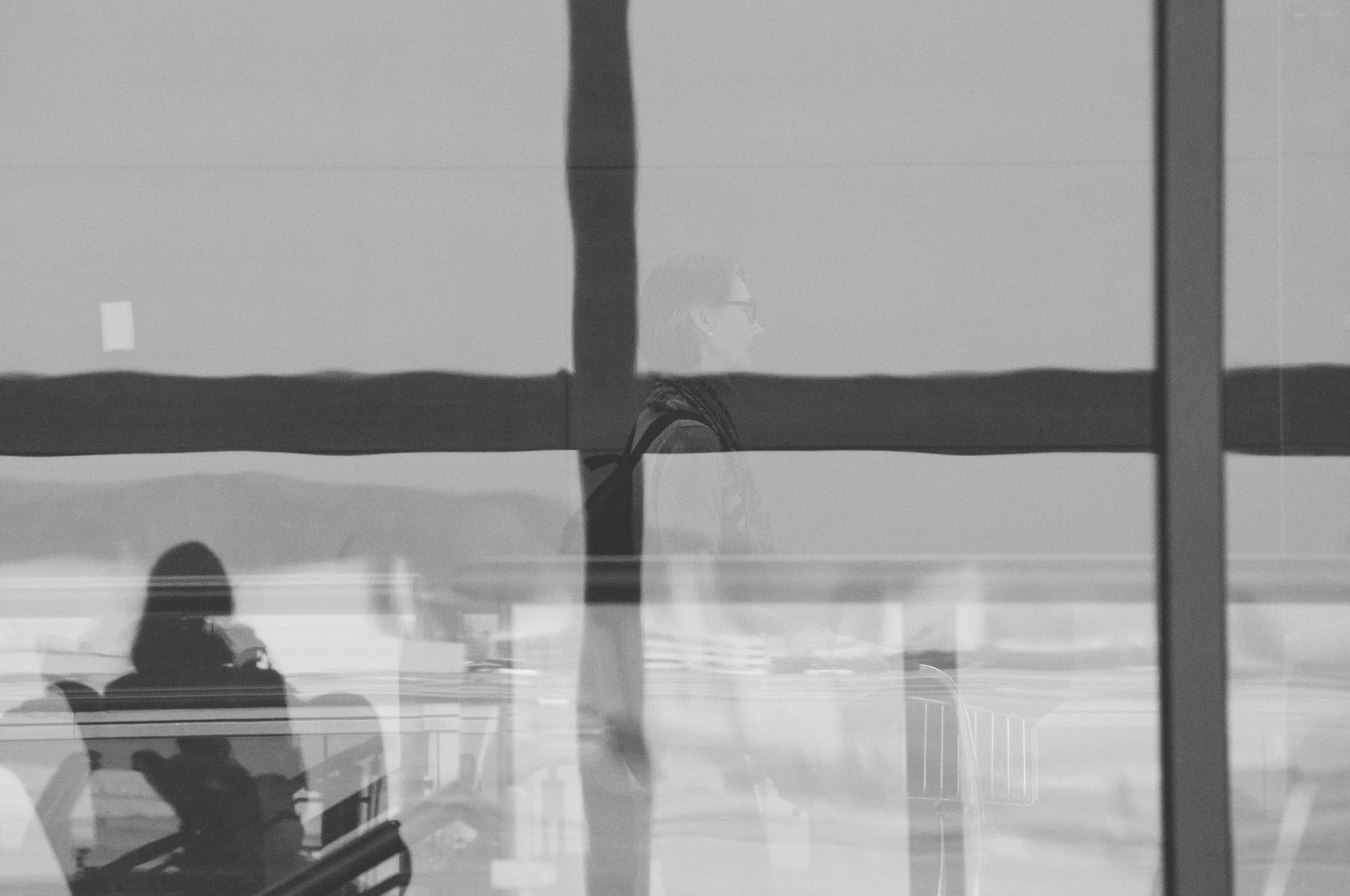
“The kingdom of heaven is like a treasure hidden in a field” (Mt 13:44). There are many things in life that resemble a hidden treasure and call for the boldness to seek and the joy of discovery. This week, for me, was precisely an opportunity to explore this “field.” I’m not much of a traveler, and as a true native of Brianza, I love my homeland, my habits, and my daily life, but every now and then, once I’ve overcome some resistance, I try to push myself further. So I arrive at the airport, and since I have some time to wait before boarding, I sit down to have some tea.
I start watching the faces of the people passing by, each with their own characteristics, background, story, and language.
They are all different—not one is exactly like another—unique and irreplaceable. A wave of emotion wells up in my heart as I think about the way God creates each person. Throughout all of history—past, present, and future—there has never been, there is not now, and there will never be two people who are identical.
Each of us is like a hidden treasure that longs to be discovered, recognized, and cherished—so much so that one would sell everything to avoid losing it. And, ultimately, we are that treasure for God, who did not hesitate to leave everything behind—even His omnipotence—in the face of our freedom, so as not to lose us.
I arrive at my destination and set foot in a town where I’ve never been before—a place that has lived its own life, a glorious one at that, and forged its own history without my knowledge. There are people who have built, loved, worked, studied, made mistakes, believed… even though I didn’t realize it. And they will continue to do so in the future, while I will be elsewhere, immersed in my own affairs, living with the same desire to discover if there is anything worth leaving everything behind for.
Yes, because the more time passes, the more you realize how many things you thought you’d left behind—and yet there they are, comfortably settled, in no way willing to give way. The journey risks becoming burdensome, but the Essential never fails to make us feel the need we have for it as our only friend.
We know full well, in fact, that it’s often as if we’re walking on ground without realizing what it might hold. We go about our way, oblivious to the value of each step, until—thanks to some unexpected turn of events—the grace of a pause occurs, prompting the decision to start digging and getting to the bottom of that restlessness that never lets us go for a moment.
The trip was an attempt to take a more serious approach to learning English.
During a class, I asked the teacher why the “i” in “io” always needs to be capitalized, even when it’s not at the beginning of a sentence. The teacher’s answer struck me deeply: “Because the person is at the center of everything.” There are probably other reasons of a purely linguistic and typographical nature dating back to the Middle Ages, but that answer fascinated me.
No matter where you are, no matter what you’re talking about, whether in questions or exclamations, when you write the word “I,” everything else must step aside and acknowledge its importance. We perceive this greatness in our experience—a greatness that has nothing to do with egocentrism, self-referentiality, or sentimentality, but is simply the truth of who we are.
As Don Giussani stated: “This is the nature of reason, this is the nature of the human heart, this is the nature of what constitutes man as man. That is to say, the fact that a person, in facing anything, perceives its limits and is always wounded by them in some way, in every case (to the extent, of course, that he is aware of what is happening, to the extent that he is not distracted); the fact that, therefore, in facing everything, one becomes aware of the limit and the disappointment, of the lack of correspondence, and that this does not stop one but exasperates one, demonstrates that one does not belong to the limit and to pain, and for this reason one is as if driven, pushed, drawn to try to grasp more, to know more, to penetrate more”
(What We Hold Most Dear, Bur, Milan 2011, pp. 491–492).
The greatest consolation is that, to discover this, there is no need to travel, but rather to allow oneself to be reached—wherever one may be—by the initiative of the One who, first and foremost, chose to create us with a capital “O.”
Notes are revised by the author. For a limited period of time, the translation in Italian, French and Spanish won't be available for limited staff until August 10, 2026