Come and See
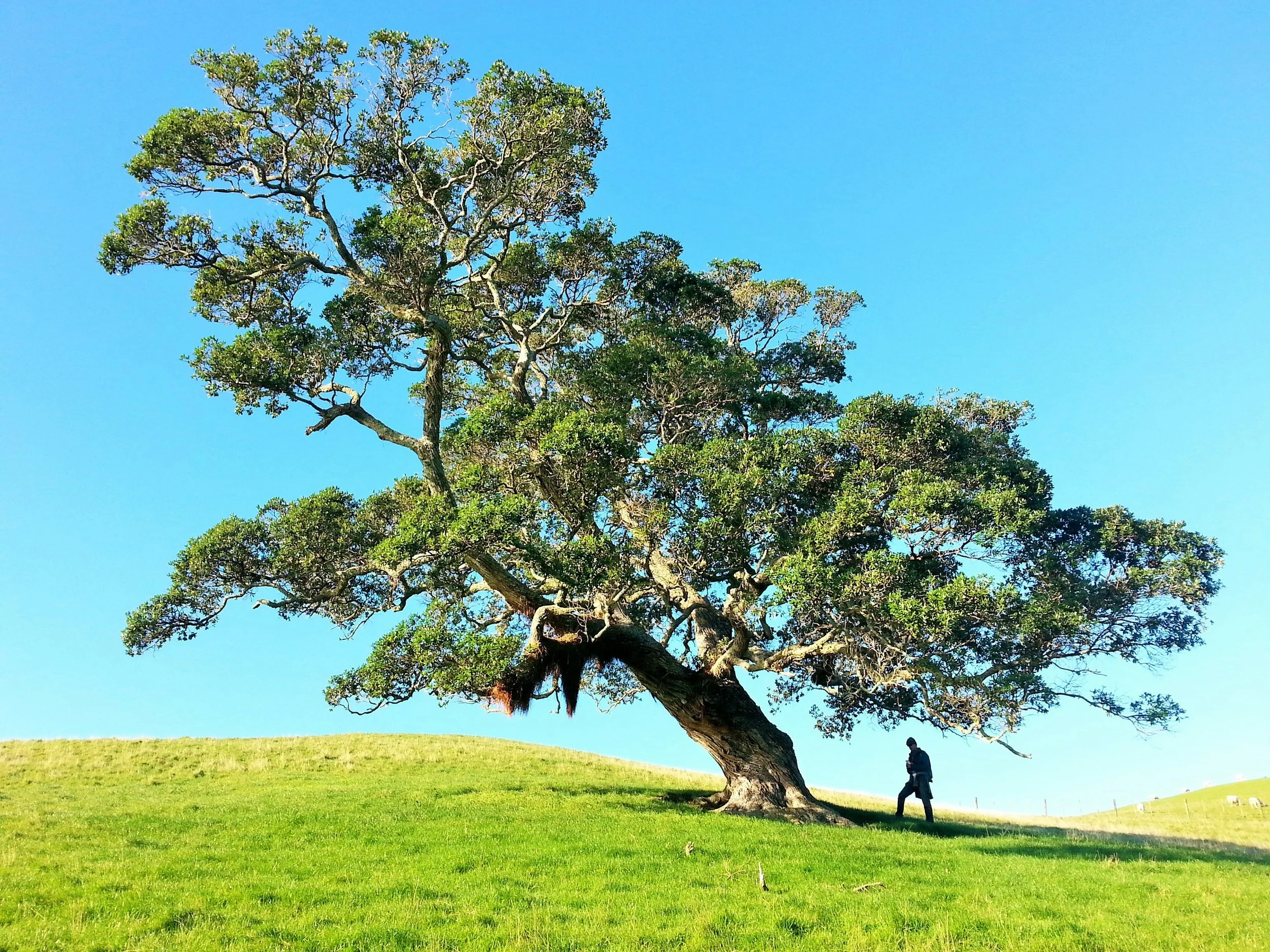
A solitary figure passes beneath a vast tree, evoking contemplation, presence, and humanity’s place within the larger landscape.
“Each of us has been touched by that same gaze, through the encounter, through the call the Mystery has addressed to us. But this gaze so often drops off our horizon the moment we face a new situation. If this newness is not constantly rekindled, if we do not go back to what happened to us, we lose the best of what has happened to us.”
Julián Carrón - Philip said, "Come and see." Nathanael saw. The question is whether that gaze fades.
Nathanael is introduced to the mystery of Christ in the simplest way. To his question—"Can anything good come from Nazareth?"—Philip answers, "Come and see." That is the only thing that ever convinces anyone, the only thing that ever wins anyone over.
But once Nathanael has seen, how can he ever forget that gaze? It is what led him to recognize Jesus and to say, "Rabbi, you are the Son of God; you are the King of Israel!" If the encounter he had—if the gaze Jesus cast on him—has no power to transform him, then sooner or later it will fade from his horizon.
Each of us has been touched by that same gaze, through the encounter, through the call the Mystery has addressed to us. But as we can see, this gaze so often drops off our horizon the moment we face a new situation. And so all the newness that entered our lives gets buried under everything else, as if it had been wiped off the face of our experience.
If this newness is not constantly rekindled, if we do not go back to what happened to us, then deep down we too may end up living as though what changed our lives were no longer present enough to let us face our circumstances with the newness it brings.
And so we lose the best of what has happened to us.
Notes not reviewed by the author.
Feast of St. Bartholomew the Apostle
Notes from the homily by Fr. Julián Carrón
August 24, 2026
(First Reading: Rev 21:9b–14; Responsorial Psalm: Ps 145 (144); Gospel: Jn 1:45–51)
-
San Bartolomeo Apostolo - Festa
Appunti dall'omelia di don Julián Carrón
24 agosto 2026
(Prima Lettura: Ap 21,9b-14; Salmo: 144 (145); Vangelo: Gv 1,45-51)
Natanaele è introdotto al mistero di Cristo in un modo molto semplice, come dice Filippo davanti alla sua domanda: «Da Nazaret può mai venire qualcosa di buono?». «Vieni e vedi». Questa è l'unica possibilità che l'uomo ha di essere convinto, di essere persuaso.
Ma, una volta che Natanele ha visto, come potrà dimenticarsi di quello sguardo che gli ha fatto riconoscere Gesù, fino al punto di dire: «Rabbi, tu sei il Figlio di Dio, tu sei il re d'Israele!». Se l'incontro che ha fatto, se lo sguardo che Gesù ha avuto su di lui, non ha una portata conoscitiva, dopo un po' sarà inevitabile che scompaia dal suo orizzonte.
Ciascuno di noi è stato investito da questo sguardo attraverso l'incontro, attraverso la chiamata che il Mistero ci ha rivolto. Ma, come vediamo, tante volte questo sguardo sparisce dal nostro orizzonte non appena affrontiamo una nuova situazione. E così, tutta la novità che è entrata nella vita è sepolta in mezzo al resto, come se fosse cancellata dalla faccia della nostra esperienza.
Se questa novità non viene costantemente riaccesa, se non torniamo a quello che ci è accaduto, in fondo potremmo anche noi vivere come se quello che ha cambiato la nostra vita non fosse così presente da consentirci di affrontare la circostanza con la novità che porta.
E allora perdiamo il meglio di quello che ci è successo.
Appunti non rivisti dall'autore
-
San Bartolomé, apóstol – Fiesta
Apuntes de la homilía de don Julián Carrón
24 de agosto de 2026
(Primera lectura: Ap 21,9b-14; Salmo responsorial: Sal 144 (145); Evangelio: Jn 1,45-51)Natanael es introducido en el misterio de Cristo de la manera más sencilla. A su pregunta —«¿De Nazaret puede salir algo bueno?»— Felipe le responde: «Ven y verás». Esta es la única posibilidad que tiene el hombre de convencerse, de dejarse persuadir.
Pero, una vez que Natanael ha visto, ¿cómo podrá olvidar esa mirada que le hizo reconocer a Jesús hasta el punto de decir: «Rabí, tú eres el Hijo de Dios; ¡tú eres el Rey de Israel!»? Si el encuentro que ha tenido —si la mirada que Jesús ha posado en él— no tiene un alcance cognitivo, tarde o temprano acabará desapareciendo de su horizonte.
Cada uno de nosotros ha sido alcanzado por esa misma mirada, a través del encuentro, a través de la llamada que el Misterio nos ha dirigido. Pero, como vemos, muchas veces esta mirada desaparece de nuestro horizonte en cuanto nos enfrentamos a una nueva situación. Y así, toda la novedad que ha entrado en nuestra vida queda sepultada bajo todo lo demás, como si se hubiera borrado de la faz de nuestra experiencia.
Si esta novedad no se reaviva constantemente, si no volvemos sobre lo que nos ha sucedido, en el fondo también nosotros acabaríamos viviendo como si lo que ha cambiado nuestra vida ya no estuviera lo bastante presente como para permitirnos afrontar la circunstancia con la novedad que trae consigo.
Y entonces perdemos lo mejor de lo que nos ha sucedido.
Apuntes no revisados por el autor.
-
Saint Barthélemy l’Apôtre - Fête
Notes tirées de l’homélie de don Julián Carrón
24 août 2026
(Première lecture : Ap 21,9b-14 ; Psaume : 144 (145) ; Évangile : Jn 1,45-51)
Nathanaël est initié au mystère du Christ d’une manière très simple, comme le dit Philippe en réponse à sa question : « Peut-il venir de Nazareth quelque chose de bon ? » « Viens et vois. » C’est la seule possibilité qu’a l’homme d’être convaincu, d’être persuadé.
Mais, une fois que Nathanaël a vu, comment pourrait-il oublier ce regard qui lui a fait reconnaître Jésus, au point de dire : « Rabbi, tu es le Fils de Dieu, tu es le roi d’Israël ! ». Si la rencontre qu’il a faite, si le regard que Jésus a posé sur lui, n’ont pas une portée cognitive, il sera inévitable, au bout d’un certain temps, qu’ils disparaissent de son horizon.
Chacun de nous a été touché par ce regard à travers la rencontre, à travers l’appel que le Mystère nous a adressé. Mais, comme nous le voyons, bien souvent ce regard disparaît de notre horizon dès que nous sommes confrontés à une nouvelle situation. Et ainsi, toute la nouveauté qui est entrée dans notre vie est ensevelie au milieu du reste, comme si elle avait été effacée de la surface de notre expérience.
Si cette nouveauté n’est pas constamment ravivée, si nous ne revenons pas sur ce qui nous est arrivé, au fond, nous pourrions bien vivre comme si ce qui a changé notre vie n’était pas suffisamment présent pour nous permettre d’affronter la situation avec la nouveauté qu’elle apporte.
Et alors, nous perdons le meilleur de ce qui nous est arrivé.
Notes non relues par l’auteur
