Francis, the Root of Humility.
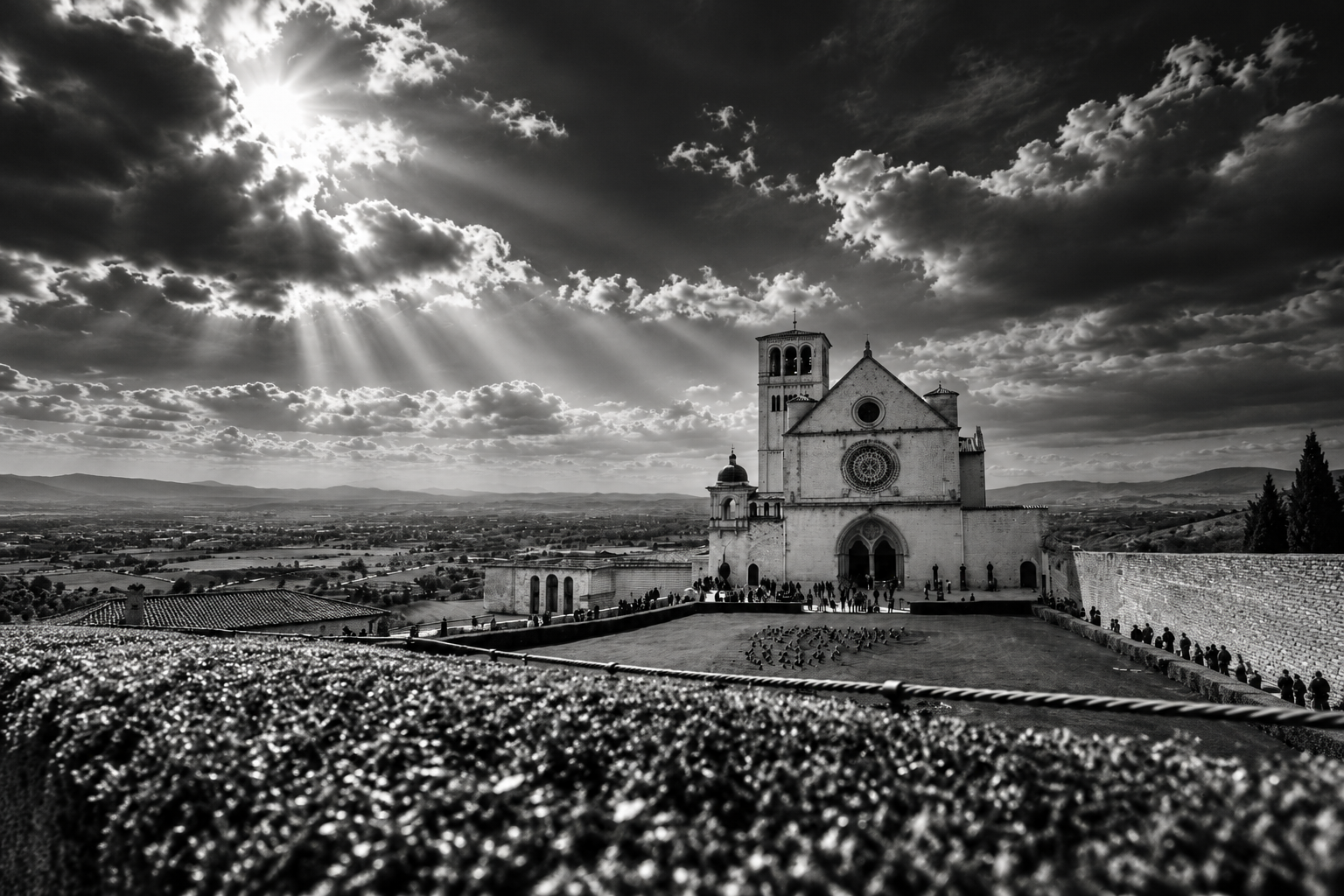
The Basilica of Saint Francis in Assisi, where the legacy of a life rooted in humility continues to speak to the world.
“The true root of humility lies precisely in this divine method, which calls for men and women who belong to Him alone.”
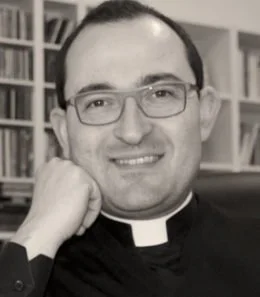
Simone Riva - Why You? St. Francis and the Hidden Root of Humility
Humility is a complex virtue because it must contend with the part of us that wants to assert itself. St. Francis was able to be humble because he imitated Christ.
Today the Church commemorates one of the most influential saints in its history. Much has been said—and continues to be said—about St. Francis, as is often the case with someone we never cease to discover. One of the traits for which he is still remembered today is, without a doubt, his humility. In this regard, the Franciscan Sources recount a telling episode:
"Once, while St. Francis was staying at the Porziuncola with Brother Masseo of Marignano […], one day, as St. Francis was coming out of the woods where he had been praying, Brother Masseo wanted to test whether he was truly humble; and approaching him, half in jest, he said: 'Why you? Why you? Why you?' St. Francis replied, 'What do you mean?' Brother Masseo said, 'I mean, why does the whole world follow you, and why does everyone seem to want to see you, hear you, and obey you? You are not a handsome man, you are not highly learned, you are not of noble birth—so why is it that the whole world follows you?' Hearing this, St. Francis, filled with great joy of spirit, raised his face to heaven and for a long time kept his mind lifted up to God; then, returning to himself, he knelt down and praised and thanked God. Then, with great fervor of spirit, he turned to Brother Masseo and said: 'Do you want to know why me? Do you want to know why me? Do you want to know why the whole world follows me? This I have received from the eyes of the Most High God, which behold the good and the wicked everywhere. For those most holy eyes have seen among sinners none lowlier, none more unworthy, and none a greater sinner than I; and to carry out the marvelous work He intends to do, He has found no lowlier creature on earth. Therefore He has chosen me to confound the nobility, greatness, strength, beauty, and wisdom of the world, so that it may be known that every virtue and every good comes from Him, and not from the creature, and that no one may boast in His presence; but whoever boasts, let him boast in the Lord, to whom be all honor and glory forever.' Then Brother Masseo, hearing so humble a reply, spoken with such fervor, was astonished and knew for certain that St. Francis was grounded in true humility" (The Little Flowers of St. Francis, ch. 10; Franciscan Sources [FF] 1838).
Humility is a truly complicated virtue because it must always contend with the part of us that cannot resist asserting itself. Even when we devote ourselves to the noblest causes and the most praiseworthy initiatives—even when we practice charity—the temptation to seek some kind of recognition keeps lurking in the background, ready to rear its head.
In today's Gospel, after casting Himself as the vineyard owner's son, whom the tenants kill to seize his inheritance, Jesus quotes Psalm 118 and unmistakably identifies Himself as "the stone the builders rejected" (Mt 21:42). In other words, no one could ever have said to Jesus what Brother Masseo says about Francis's life: that "the whole world follows" him. It almost seems as if God has granted His saints a success He did not grant even to Christ.
But perhaps the issue is more delicate, and it brings to light one of the most unsettling questions of all: Who is really there, and why? St. Francis, like all the saints, knew full well that having a following is not enough; in fact, his own friars would be the first to push him aside once the torch had been passed to them.
When God grants success, He does so "to confound the nobility, greatness, strength, beauty, and wisdom of the world." It is a kind of invitation to stay alert in the midst of the crowd, because one can be there for no good reason: simply because others are there, to fill a void, to silence a question, to avoid being alone, or to find a stage. This is why God stakes everything on the stone that the builders will sooner or later reject—the very stone He will choose as the "cornerstone," without which everything would collapse.
The true root of humility lies precisely in this divine method, which calls for men and women who belong to Him alone—who never agree to follow or to be followed without good reasons, the very reasons that, in the evening when it is all over, or the next morning when it all begins again, keep us from having already moved on.
Unrevised translation by the author.
-
Francesco, la radice dell’umiltà
Simone Riva
L'umiltà è una virtù complicata, perché deve fare i conti con quella parte di noi che vuole affermarsi. San Francesco seppe essere umile perché imitò Cristo
Oggi la Chiesa ricorda uno dei santi più decisivi della sua storia. Sono tante le cose che si sono dette e si dicono su san Francesco, come capita davanti a uno che non si finisce mai di scoprire. Una delle caratteristiche, per cui ancora oggi viene ricordato, è senz’altro la sua umiltà. A questo proposito le Fonti Francescane riportano un episodio emblematico:
“Stando una volta san Francesco al luogo della Porziuncola con frate Masseo da Marignano […] ed uscendo san Francesco un die della selva, dove era stato a orare, il detto frate Masseo volle provare se ‘n lui fosse umiltà, e facendoglisi incontro, quasi proverbiando disse: ‘Perché a te? Perché a te? Perché a te?’. San Francesco risponde: ‘Che è quello che tu vuoi dire?’. Disse frate Masseo: ‘Dico, perché a te tutto il mondo viene dirieto, e ogni persona pare che desideri di vederti e di udirti e d’ubbidirti? Tu non se’ bello uomo del corpo, tu non se’ di grande scienza, tu non se’ nobile: onde dunque a te che tutto ‘l mondo ti segua?’. Udendo questo san Francesco, di grande allegrezza di spirito, levò la faccia al cielo, e per grande spazio stette colla mente levata in Dio; e poi ritornato in sé, s’inginocchiò e lodò e ringraziò Iddio, e poi con grande fervore di spirito si rivolse a frate Masseo e disse: ‘Vuoi sapere perché a me? Vuoi sapere perché a me? Vuoi sapere perché a me tutto il mondo mi viene dirieto? Questo ho io dagli occhi dell’altissimo Iddio, li quali in ogni luogo contemplano i buoni e i rei: perciò che quelli occhi santissimi non hanno veduto tra li peccatori niuno più vile, né più insufficiente, né più grande peccatore di me; e a fare quella opera maravigliosa la quale egli intende di fare, non ha trovato più vile creatura in sulla terra; e perciò ha eletto me per confondere la nobiltà e la grandezza e la fortezza e la bellezza e la sapienza del mondo, acciò che si conosca che ogni virtù e ogni bene è da lui, e non dalla creatura, e niuna persona si possa gloriare nel cospetto suo; ma chi si gloria, si glorii nel Signore, al quale è ogni onore e gloria in eterno’. Allora frate Masseo a così umile risposta, detta con tanto fervore, si spaventò e conobbe certamente che san Francesco era fondato in vera umiltà” (I Fioretti di San Francesco dalle Fonti Francescane, cap. 1838 / Capitolo X).
L’umiltà è una virtù davvero complicata, perché deve sempre fare i conti con quella parte di noi che non sopporta di non affermarsi. Anche quando ci dedichiamo alle cose più nobili, alle iniziative più lodevoli, persino quando pratichiamo la carità, dalle retrovie fa insistentemente capolino la tentazione di dover portare a casa un qualche riconoscimento.
Nel vangelo di oggi Gesù, citando il salmo 118, senza mezzi termini descrive se stesso come la “pietra che i costruttori hanno scartato” (Mt 21,42) dopo essersi messo nei panni del figlio del padrone della vigna che viene ucciso dai contadini per impossessarsi dell’eredità. Insomma, nessuno avrebbe mai potuto rivolgere a Gesù le parole con cui frate Masseo descrive ciò che sta capitando alla vita di Francesco, per cui il santo stesso dice: “tutto il mondo mi viene dirieto”. Pare quasi di poter dire che Dio abbia concesso ai suoi santi un successo che non è stato riservato neppure a Cristo.
Ma forse la questione è più delicata e fa uscire dal nascondiglio una delle domande più insopportabili: chi c’è, perché c’è? San Francesco, come tutti i santi, sapeva bene che non basta avere un seguito, infatti i suoi stessi frati saranno i primi a metterlo alla porta una volta passato loro il testimone.
Dio, quando concede il successo, lo fa “per confondere la nobiltà e la grandezza e la fortezza e la bellezza e la sapienza del mondo”. È come un invito a vigilare davanti alle folle, perché uno potrebbe esserci senza ragioni, per il fatto che ci sono gli altri, per tappare un buco, per soffocare una domanda, per non rimanere da solo, per avere un palcoscenico. Per questo Dio investe tutto sulla pietra che, prima o poi scartata dai costruttori, eleggerà Lui a “pietra angolare”, senza la quale tutto cadrebbe.
La vera radice dell’umiltà è custodita proprio in questo metodo divino, che ha bisogno di uomini e donne solo suoi, che non accettino mai di seguire o di essere seguiti senza le ragioni adeguate, le stesse che, alla sera quando tutto è finito, o il giorno dopo quando tutto ricomincia, ci aiutano a non essere già altrove.
-
Francisco, la raíz de la humildad
Simone Riva
La humildad es una virtud complicada, porque debe lidiar con esa parte de nosotros que quiere imponerse. San Francisco supo ser humilde porque imitó a Cristo
Hoy la Iglesia conmemora a uno de los santos más importantes de su historia. Son muchas las cosas que se han dicho y se dicen sobre san Francisco, como suele ocurrir ante alguien a quien nunca se deja de descubrir. Una de las características por las que aún hoy se le recuerda es, sin duda, su humildad. A este respecto, las Fuentes Franciscanas recogen un episodio emblemático:
«Estando una vez San Francisco en el lugar de la Porciúncula con fray Masseo de Marignano […] y al salir San Francisco un día del bosque, donde había estado rezando, el mencionado fray Masseo quiso poner a prueba si había humildad en él, y al encontrarse con él, casi en tono de broma, le dijo: “¿Por qué a ti? ¿Por qué a ti? ¿Por qué a ti?”. San Francisco respondió: «¿Qué es lo que quieres decir?». Fray Masseo dijo: «Digo: ¿por qué todo el mundo te sigue, y parece que cada persona desea verte, oírte y obedecerte? No eres un hombre apuesto, no tienes gran erudición, no eres noble: ¿por qué, pues, te sigue todo el mundo?». Al oír esto, san Francisco, lleno de gran alegría espiritual, alzó el rostro al cielo y, durante un largo rato, permaneció con la mente elevada hacia Dios; y luego, volviendo en sí, se arrodilló y alabó y dio gracias a Dios, y después, con gran fervor espiritual, se dirigió a fray Masseo y le dijo: «¿Quieres saber por qué a mí? ¿Quieres saber por qué a mí? ¿Quieres saber por qué todo el mundo me sigue? Esto lo sé por los ojos del Altísimo Dios, que en todo lugar contemplan a los buenos y a los malos: porque esos ojos santísimos no han visto entre los pecadores a nadie más vil, ni más insuficiente, ni más gran pecador que yo; y para realizar esa obra maravillosa que Él pretende llevar a cabo, no ha encontrado criatura más vil en la tierra; y por eso me ha elegido a mí para confundir la nobleza, la grandeza, la fortaleza, la belleza y la sabiduría del mundo, para que se sepa que toda virtud y todo bien provienen de Él, y no de la criatura, y que nadie pueda gloriarse ante su presencia; pero quien se gloríe, que se gloríe en el Señor, a quien pertenecen todo honor y gloria por los siglos de los siglos». Entonces, fray Masseo, ante una respuesta tan humilde, pronunciada con tanto fervor, se asustó y comprendió sin lugar a dudas que san Francisco estaba arraigado en la verdadera humildad» (Las Florecillas de San Francisco, de las Fuentes Franciscanas, cap. 1838 / Capítulo X).
La humildad es una virtud realmente complicada, porque siempre debe lidiar con esa parte de nosotros que no soporta no destacar. Incluso cuando nos dedicamos a las cosas más nobles, a las iniciativas más loables, incluso cuando practicamos la caridad, desde la retaguardia asoma insistentemente la tentación de tener que llevarnos algún reconocimiento.
En el Evangelio de hoy, Jesús, citando el salmo 118, se describe sin rodeos a sí mismo como la «piedra que los constructores han rechazado» (Mt 21,42) tras ponerse en la piel del hijo del dueño de la viña que es asesinado por los labradores para apoderarse de la herencia. En definitiva, nadie habría podido dirigir a Jesús las palabras con las que fray Masseo describe lo que está sucediendo en la vida de Francisco, por lo que el propio santo dice: «Todo el mundo me sigue».
Casi parece que se pudiera decir que Dios ha concedido a sus santos un éxito que ni siquiera se le reservó a Cristo.
Pero quizá la cuestión sea más delicada y saque a la luz una de las preguntas más insoportables: ¿quién está ahí, por qué está ahí? San Francisco, como todos los santos, sabía bien que no basta con tener seguidores; de hecho, sus propios frailes serán los primeros en echarlo a la calle una vez que les haya pasado el testigo.
Dios, cuando concede el éxito, lo hace «para confundir la nobleza, la grandeza, la fortaleza, la belleza y la sabiduría del mundo». Es como una invitación a estar atentos ante las multitudes, porque uno podría estar allí sin razones, por el mero hecho de que están los demás, para tapar un hueco, para acallar una pregunta, para no quedarse solo, para tener un escenario. Por eso Dios lo apuesta todo por la piedra que, tarde o temprano, descartada por los constructores, Él elegirá como «piedra angular», sin la cual todo se derrumbaría.
La verdadera raíz de la humildad reside precisamente en este método divino, que necesita hombres y mujeres que sean solo suyos, que nunca acepten seguir o ser seguidos sin las razones adecuadas, las mismas que, al atardecer, cuando todo ha terminado, o al día siguiente, cuando todo vuelve a empezar, nos ayudan a no estar ya en otra parte.
-
François, la racine de l'humilité
Simone Riva
L'humilité est une vertu complexe, car elle doit composer avec cette partie de nous-mêmes qui cherche à s'affirmer. Saint François a su faire preuve d’humilité parce qu’il a imité le Christ
Aujourd’hui, l’Église commémore l’un des saints les plus marquants de son histoire. On a dit et on dit encore beaucoup de choses sur saint François, comme c’est souvent le cas face à un personnage que l’on ne cesse de découvrir. L’une des caractéristiques pour lesquelles on se souvient encore de lui aujourd’hui est sans aucun doute son humilité. À ce propos, les Sources franciscaines rapportent un épisode emblématique :
« Un jour, alors que saint François se trouvait à la Porziuncola avec frère Masseo de Marignano […] et qu’il sortait de la forêt où il était allé prier, ledit frère Masseo voulut vérifier s’il y avait de l’humilité en lui ; s’avançant à sa rencontre, il lui dit, comme pour le taquiner : « Pourquoi toi ? Pourquoi toi ? Pourquoi toi ? ». Saint François répondit : « Que veux-tu dire par là ? ». Frère Masseo dit : « Je veux dire : pourquoi tout le monde te suit-il, et pourquoi semble-t-il que chacun désire te voir, t’entendre et t’obéir ? Tu n’es pas beau de corps, tu n’es pas d’une grande érudition, tu n’es pas noble : pourquoi donc tout le monde te suit-il ? ». En entendant cela, saint François, l’esprit rempli d’une grande joie, leva les yeux vers le ciel et, pendant un long moment, garda son esprit tourné vers Dieu ; puis, revenant à lui-même, il s’agenouilla, loua et remercia Dieu, puis, avec une grande ferveur, il se tourna vers frère Masseo et dit : « Veux-tu savoir pourquoi moi ? Veux-tu savoir pourquoi moi ? Veux-tu savoir pourquoi tout le monde me suit ? Je tiens cela des yeux du Très-Haut, qui contemplent partout les bons et les méchants : car ces yeux très saints n’ont vu parmi les pécheurs personne de plus vil, ni de plus insuffisant, ni de plus grand pécheur que moi ; et pour accomplir cette œuvre merveilleuse qu’il entend réaliser, il n’a pas trouvé de créature plus vile sur la terre ; et c’est pourquoi il m’a choisi pour confondre la noblesse, la grandeur, la force, la beauté et la sagesse du monde, afin que l’on sache que toute vertu et tout bien viennent de lui, et non de la créature, et qu’aucune personne ne puisse se glorifier en sa présence ; mais que celui qui se glorifie, se glorifie dans le Seigneur, à qui appartiennent toute honneur et toute gloire pour l’éternité ». Alors, face à cette réponse si humble, prononcée avec tant de ferveur, frère Masseo fut émerveillé et comprit avec certitude que saint François était ancré dans la véritable humilité » (Les Fioretti de saint François tirés des Sources franciscaines, chap. 1838 / Chapitre X).
L’humilité est une vertu vraiment complexe, car elle doit toujours composer avec cette partie de nous-mêmes qui ne supporte pas de ne pas s’affirmer. Même lorsque nous nous consacrons aux causes les plus nobles, aux initiatives les plus louables, voire lorsque nous pratiquons la charité, la tentation de vouloir obtenir une quelconque reconnaissance surgit sans cesse en arrière-plan.
Dans l’Évangile d’aujourd’hui, Jésus, citant le psaume 118, se décrit sans détour comme la « pierre que les bâtisseurs ont rejetée » (Mt 21, 42) après s’être mis dans la peau du fils du maître de la vigne, tué par les vignerons pour s’emparer de l’héritage. En somme, personne n’aurait jamais pu adresser à Jésus les paroles par lesquelles frère Masseo décrit ce qui arrive dans la vie de François, à propos de quoi le saint lui-même dit : « Le monde entier me suit ».
On aurait presque envie de dire que Dieu a accordé à ses saints un succès qui n’a même pas été réservé au Christ.
Mais peut-être la question est-elle plus délicate et fait-elle surgir de l’ombre l’une des questions les plus insupportables : qui est là, pourquoi est-il là ? Saint François, comme tous les saints, savait bien qu’il ne suffit pas d’avoir des disciples ; en effet, ses propres frères seront les premiers à le mettre à la porte une fois qu’ils auront pris le relais.
Dieu, lorsqu’il accorde le succès, le fait « pour confondre la noblesse, la grandeur, la force, la beauté et la sagesse du monde ». C’est comme une invitation à rester vigilant face aux foules, car on pourrait s’y trouver sans raison, simplement parce que les autres sont là, pour combler un vide, pour étouffer une question, pour ne pas rester seul, pour avoir une tribune. C’est pourquoi Dieu mise tout sur la pierre qui, tôt ou tard rejetée par les bâtisseurs, sera choisie par Lui comme « pierre angulaire », sans laquelle tout s’écroulerait.
La véritable racine de l’humilité réside précisément dans cette méthode divine, qui a besoin d’hommes et de femmes qui n’appartiennent qu’à elle, qui n’acceptent jamais de suivre ou d’être suivis sans raisons valables, ces mêmes raisons qui, le soir quand tout est fini, ou le lendemain quand tout recommence, nous aident à ne pas être déjà ailleurs.