He Comes Down to Find Us
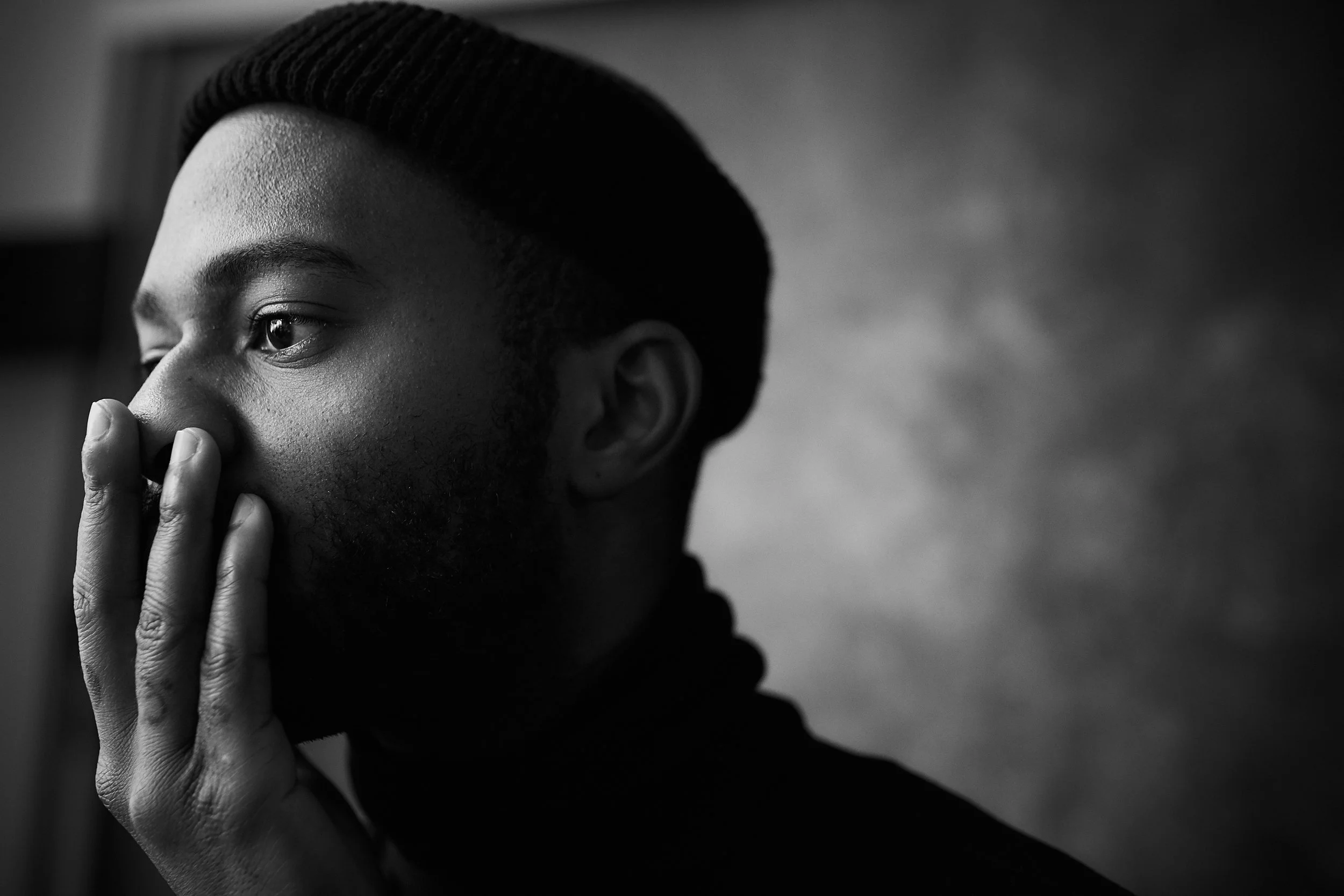
A quiet black-and-white portrait capturing a man in a moment of thought, silence, and inward reflection.
“We are not alone with our nothingness — we are embraced by God.”
Julián Carrón - On Trinity Sunday, God takes the initiative: He comes down to embrace our nothingness.
As Fr. Fabio said — and I thank him for his warm welcome, and for letting me celebrate the feast of the whole Pastoral Community with you — today is the Solemnity of the Most Holy Trinity. But how can we know what the mystery of the Trinity is? How did we ever arrive at this knowledge? By his own reason, man comes only so far. He reaches the inscription St. Paul finds in Athens — “To an unknown God” — and recognizes that the unknown exists, that The Mystery is real. Yet before it he can only fall silent and wait for a sign from The Mystery itself, in order to know it.
This is the disproportion built into the very structure of the I. Reason can press all the way to the threshold of The Mystery and confess that it is there; it cannot cross that threshold under its own power. We are made for an answer we cannot give ourselves. So whether we will ever know God hangs on an initiative that is not ours — on whether The Mystery will choose to step out of its silence and speak.
And this is exactly what the liturgy shows us today. Through the readings it tells us how we came to know that the unknown Mystery is Father, Son, and Holy Spirit. How do we know? Because God took the initiative. He stepped out of His own mystery and showed Himself to us. The first sign comes in the first reading: Moses sees the burning bush — a simple thing, a bush, yet one that is not consumed. Drawn to it, “Moses thought, ‘I must go over and look at this remarkable sight. Why does the bush not burn up?’ When the Lord saw that he had gone over to look, God” — who had set the bush ablaze precisely to draw Moses in — “called to him out of the bush, ‘Moses, Moses!’ … ‘Come no closer! Take off your sandals.’” There the great journey of The Mystery’s self-revelation begins: “I am the God of your father, the God of Abraham, the God of Isaac, the God of Jacob.” And “Moses hid his face” — as before something that towers over him — “because he was afraid to look at God.”
So the first move to unveil the unknown Mystery comes from The Mystery itself. It is not something we imagined — the way a person who does not know something fills the gap with his own invention. We have not stuffed our heads with our own ideas. Like Moses, like the people of Israel, we have simply begun to know The Mystery because we have seen it at work inside our lives, inside history. And this is only the start of an even more powerful initiative, because God turns to Moses and says: “I have observed the misery of my people in Egypt” — slaves, as we know — “and have heard their cry on account of their taskmasters. Indeed, I know their sufferings, and I have come down to deliver them from the power of Egypt.” We all know how the story goes from there.
God reveals Himself to His people by what He does. He takes pity on them and comes down to let them know who their God is — by setting them free. He enters history to save His people, and the whole story of Israel will keep unfolding this way. What Moses bears witness to — for all his fragility, his weakness, his being almost “nothing,” as he says himself — is this God who appeared to him, the God whose witness he becomes.
Notice what that “nothing” reveals. Moses calls himself almost nothing, and it is true; measured against The Mystery, what are any of us? Yet God does not address a nothing. He calls a name, and He calls it twice: “Moses, Moses!” Here is the irreducibility of the I. The I can be reduced to its own weakness in its own eyes and still not be dissolved, because it is held in being by Another who knows it, wants it, and calls it by name. Our nothingness is real. It is simply not the last word about us. The last word is that we are wanted.
But God wants to go on revealing His mystery, and at a certain point — as we heard in the Gospel — He takes an even more astonishing initiative. He does not send Moses or the prophets this time; He sends His own Son, so that we might know Him still more, so that we might be drawn deeper into the knowledge of this mystery that is God. Jesus tells us as much: it was not we who first loved God, but God who took the initiative to love us first. “He sent me unarmed,” as Fr. Fabio liked to say — not imposing Himself by the force of His power, but winning us by the attraction of His splendor. “We have never seen anything like this!” (Mk 2:12), said those who came into contact with Jesus and watched Him act. “He has done everything well” (Mk 7:37). What met them was not a theory about God but An Event: God in person, A Presence acting before their eyes — so exactly equal to what the human heart awaits that the only honest response is wonder. That astonishment is the sound of Correspondence.
In all of this He shows His passion for the Destiny of those men, and through them for the Destiny of every one of us. He shows it in His capacity to embrace our nothingness — to make plain that we are not left alone with our nothingness, but are held by God. In Jesus, He let us see that embrace, as the Gospels and the whole of Christian history record.
And yet all this may still feel “outside” each of us; it has to become our own. As Jesus Himself says: “I still have many things to say to you, but you cannot bear them now” — you cannot yet carry the weight of everything I have told you — “when the Spirit of truth comes, he will guide you into all the truth.” Or, in St. Paul’s words: “You have received a spirit of adoption, by which we cry, ‘Abba! Father!’” — so that we can enter into a real relationship with The Mystery, not as a stranger, but as a Father.
Today’s feast, then, gathers this whole story into one. We come to know the mystery of the Trinity through experience: first Moses, then the people of Israel, then the prophets, then those who met Jesus, and at last those who handed Him on to everyone else by the power of the Holy Spirit — a power that has reached all the way to us. So today we can celebrate with joy. We can look straight at our human nothingness and remember that we are embraced by God, that we are not alone, that we are held in this tenderness of The Mystery.
That is why, when someone welcomes Him, his whole life changes. Even the death of someone we love — the death of Anna, whose anniversary we keep today — can take on a new meaning and become a chance to live everything with the certainty that Anna already shares in the Mystery we are celebrating. And so we can celebrate even this with joy, because, looking at her, we can be sure that our Destiny is not the grave. Our Destiny is to share in this mystery of the Trinity — the mystery into which we have been brought through the very story today’s readings set before us again.
What gratitude, to be able to live with this awareness! When we repeat, sometimes absent-mindedly, “Glory be to the Father, and to the Son, and to the Holy Spirit,” how different it would be to say it conscious of this grace. The same goes for the sign of the cross — “In the name of the Father, and of the Son, and of the Holy Spirit” — so often a mechanical gesture, and yet able to become the moment that wakes us up to the gift we are.
So let us ask the Lord to send us His Spirit, so that we may say the Christian formulas handed down to us through His history not by rote, but in the full awareness that we are truly wanted — truly loved — by the Father, the Son, and the Holy Spirit.
-
Prima lettura: Es 3,1-15 · Salmo 67 (68) · Seconda lettura: Rm 8,14-17 · Vangelo: Gv 16,12-15
Come diceva don Fabio – che ringrazio per questa sua accoglienza e per avermi permesso di celebrare con voi la festa di tutta la Comunità Pastorale – oggi è la Solennità della Santissima Trinità. Ma come possiamo sapere qual è il mistero della Trinità? Come siamo giunti a questa conoscenza? L’uomo con la sua ragione – come documenta san Paolo quando va ad Atene e vede l’iscrizione: «Al Dio ignoto» – arriva a riconoscere l’esistenza dell’“ignoto”, del mistero, ma davanti ad esso può solo tacere, aspettando un cenno da parte del mistero stesso, per poterlo conoscere.
Per questo, oggi, attraverso le letture, la liturgia ci mostra come siamo arrivati a sapere che quel mistero “ignoto” è Padre, Figlio e Spirito Santo. Come lo sappiamo? Perché Dio ha preso l’iniziativa, uscendo dal Suo “mistero” e mostrandosi a noi. Il primo segno lo abbiamo incontrato nella prima lettura: Mosè vede il roveto ardente. Un segno semplice, un roveto, ma che non si consuma. Attratto da questo roveto, «Mosè pensò: “Voglio avvicinarmi a osservare questo grande spettacolo: perché il roveto non brucia?”. Il Signore vide che si era avvicinato per guardare; Dio [che aveva fatto ardere il roveto per attrarre Mosè] gridò a lui dal roveto: “Mosè, Mosè!”. […] “Non avvicinarti oltre! Togliti i sandali dai piedi”». E lì comincia il grande percorso del mistero per rivelare Sé stesso: «Io sono il Dio di tuo padre, il Dio di Abramo, il Dio di Isacco, il Dio di Giacobbe». E «Mosè allora si coprì il volto [come davanti a una cosa che lo sovrasta], perché aveva paura di guardare verso Dio».
Quindi, la prima iniziativa per svelarci questo mistero “ignoto” viene dal mistero stesso, non è un’immaginazione nostra, come quando uno non sa qualcosa e supplisce con l’immaginazione ciò che non sa. Noi non ci siamo riempiti la testa di pensieri nostri, ma, come Mosè, abbiamo semplicemente cominciato a conoscere il Mistero perché l’abbiamo visto agire, come il popolo d’Israele, dentro la vita, dentro la storia. Questo è solo l’inizio di un’iniziativa ancora più potente, perché Dio si rivolge a Mosè e dice: «Ho osservato la miseria del mio popolo in Egitto [come sappiamo, era schiavo] e ho udito il suo grido a causa dei suoi sovrintendenti: conosco le sue sofferenze. Sono sceso per liberarlo dal potere dell’Egitto». Tutti abbiamo presente come continua la storia.
Dio si rivela al popolo attraverso il Suo agire: avendone pietà, scende per fargli conoscere chi è il suo Dio, liberandolo! Dio entra nella storia per salvare il Suo popolo e tutta la vicenda degli Israeliti continuerà così. Quello che Mosè testimonia – malgrado la sua fragilità, la sua debolezza, il suo essere quasi “niente”, come lui stesso dice – è questo Dio che gli è apparso e di cui è testimone.
Ma Dio, volendo continuare a svelare il Suo mistero, a un certo punto, come abbiamo visto nel Vangelo, prende un’iniziativa ancora più sorprendente: non invia solo Mosè o i profeti, ma manda il suo stesso Figlio, perché noi potessimo conoscerLo ancora di più, per farci entrare ancor di più nella conoscenza di questo mistero che è Dio. Anche Gesù ci dice: “Non siete stati voi ad amare Dio, ma è stato Dio a prendere l’iniziativa per primo per amarvi. Mi ha mandato disarmato”, come diceva don Fabio. Non imponendosi con la potenza del Suo potere, ma attraendo con l’attrattiva del Suo splendore: «Non abbiamo mai visto nulla di simile!» (Mc 2,12), dicevano coloro che entravano in rapporto con Gesù e lo vedevano agire: «Ha fatto bene ogni cosa» (Mc 7,37).
Lui mostra tutta la Sua passione per il destino di quegli uomini e, attraverso di loro, per il destino di tutti noi, in questa capacità di abbracciare il nostro niente, mostrandoci che non siamo da soli con il nostro nulla, ma siamo abbracciati da Dio. In Gesù, Lui ci ha rivelato questo abbraccio, come documentano i Vangeli e tutta la storia cristiana.
Ma questo è forse ancora troppo “esterno” a ciascuno di noi, deve diventare nostro. Come dice lo stesso Gesù: «Per il momento non siete capaci di portarne il peso [non potete ancora capire tutte le cose che vi ho detto]. Quando verrà lui, lo Spirito della verità, vi guiderà a tutta la verità». O come dice san Paolo: «Avete ricevuto lo Spirito che rende figli adottivi, per mezzo del quale gridiamo: “Abbà, Padre!”». Per poter entrare davvero in rapporto con il Mistero, non come un ignoto ma come un Padre.
Quindi, la festa di oggi è come la sintesi di tutta questa storia. Possiamo conoscere il mistero della Trinità attraverso l’esperienza: prima Mosè, poi il popolo d’Israele, poi i profeti, poi quelli che hanno incontrato Gesù e, infine, quelli che Lo hanno comunicato a tutti gli altri con la forza dello Spirito Santo, che è arrivato fino a noi. Oggi possiamo quindi celebrare gioiosi, guardando al nostro nulla umano, e ricordare che siamo abbracciati da Dio, che non siamo soli, che siamo abbracciati da questa tenerezza del Mistero.
Per questo, quando uno Lo accoglie, tutta la sua vita cambia. Perfino la morte di una persona amata – come la morte di Anna, di cui oggi celebriamo l’anniversario – può cambiare di significato ed essere un’opportunità per vivere tutto con la certezza che Anna partecipa già del Mistero che oggi celebriamo. E per questo possiamo celebrarlo gioiosi, perché, guardando a lei, possiamo essere certi che il nostro destino non sarà la tomba. Il nostro destino è partecipare di questo mistero della Trinità, a cui siamo stati introdotti attraverso la storia che oggi le letture ci rioffrono.
Che gratitudine poter vivere con questa consapevolezza! Quando ripetiamo, a volte distrattamente: «Gloria al Padre, al Figlio e allo Spirito Santo», come sarebbe diverso poterlo dire coscienti di questa grazia! Così anche il segno della croce: «Nel nome del Padre, del Figlio e dello Spirito Santo», che tante volte è un gesto meccanico, può essere l’occasione di renderci consapevoli del dono che siamo.
Per questo motivo, chiediamo al Signore che ci mandi il suo Spirito, affinché possiamo pronunciare le formule cristiane, che ci sono state trasmesse attraverso la Sua storia, non in modo meccanico, ma con tutta la consapevolezza di essere veramente voluti dal Padre, dal Figlio e dallo Spirito Santo.
-
Julián Carrón
Como decía don Fabio —a quien agradezco esta acogida suya y el haberme permitido celebrar con vosotros la fiesta de toda la Comunidad Pastoral—, hoy es la Solemnidad de la Santísima Trinidad. Pero ¿cómo podemos saber cuál es el misterio de la Trinidad? ¿Cómo hemos llegado a este conocimiento? El hombre, con su razón —como documenta san Pablo cuando va a Atenas y ve la inscripción: «Al Dios desconocido»—, llega a reconocer la existencia de lo “desconocido”, del Misterio, pero ante Él solo puede callar, esperando una señal del Misterio mismo para poder conocerlo.Esta es la desproporción inscrita en la estructura misma del Yo. La razón puede llegar hasta el umbral del Misterio y reconocer que existe; no puede atravesar ese umbral con sus propias fuerzas. Estamos hechos para una respuesta que no podemos darnos a nosotros mismos. Por eso, que lleguemos alguna vez a conocer a Dios depende de una iniciativa que no es nuestra: de que el Misterio quiera salir de su silencio y hablar.
Y esto es justamente lo que hoy nos muestra la liturgia. A través de las lecturas nos dice cómo hemos llegado a saber que aquel misterio “desconocido” es Padre, Hijo y Espíritu Santo. ¿Cómo lo sabemos? Porque Dios tomó la iniciativa. Salió de su propio misterio y se mostró a nosotros. El primer signo lo encontramos en la primera lectura: Moisés ve la zarza ardiente, un signo sencillo, una zarza, pero que no se consume. Atraído por ella, «Moisés pensó: “Voy a acercarme para observar este gran espectáculo: ¿por qué no se quema la zarza?”. El Señor vio que se había acercado para mirar; Dios —que había hecho arder la zarza precisamente para atraer a Moisés— lo llamó desde la zarza: “¡Moisés, Moisés!”. […] “¡No te acerques más! Quítate las sandalias de los pies”». Y allí comienza el gran recorrido del Misterio para revelarse a sí mismo: «Yo soy el Dios de tu padre, el Dios de Abrahán, el Dios de Isaac, el Dios de Jacob». Y «Moisés entonces se cubrió el rostro —como ante algo que lo sobrepasa—, porque tenía miedo de mirar hacia Dios».
Así pues, la primera iniciativa para desvelarnos este misterio “desconocido” viene del Misterio mismo; no es una imaginación nuestra, como cuando uno no sabe algo y suple con la imaginación lo que ignora. No nos hemos llenado la cabeza de pensamientos propios, sino que, como Moisés, como el pueblo de Israel, hemos comenzado simplemente a conocer el Misterio porque lo hemos visto actuar dentro de la vida, dentro de la historia. Y esto es solo el comienzo de una iniciativa aún más potente, porque Dios se dirige a Moisés y dice: «He observado la miseria de mi pueblo en Egipto —que era esclavo, como sabemos— y he oído su clamor a causa de sus capataces: conozco sus sufrimientos. He bajado para librarlo del poder de Egipto». Todos sabemos cómo continúa la historia.
Dios se revela al pueblo a través de su obrar: compadeciéndose de él, baja para hacerle conocer quién es su Dios, ¡liberándolo! Dios entra en la historia para salvar a su pueblo, y toda la peripecia de los israelitas continuará así. Aquello de lo que Moisés da testimonio —a pesar de su fragilidad, de su debilidad, de su ser casi “nada”, como él mismo dice— es este Dios que se le apareció y del que es testigo.
Reparemos en lo que revela esa “nada”. Moisés se llama a sí mismo casi nada, y es verdad; medidos con el Misterio, ¿qué somos cada uno de nosotros? Y, sin embargo, Dios no se dirige a una nada. Llama por su nombre, y lo llama dos veces: «¡Moisés, Moisés!». He aquí la irreductibilidad del Yo. El Yo puede quedar reducido a su debilidad ante sus propios ojos sin por ello disolverse, porque está sostenido en el ser por Otro que lo conoce, lo quiere y lo llama por su nombre. Nuestra nada es real. Sencillamente, no es la última palabra sobre nosotros. La última palabra es que somos queridos.
Pero Dios, queriendo seguir desvelando su misterio, en un cierto momento —como hemos visto en el Evangelio— toma una iniciativa todavía más sorprendente: no envía solo a Moisés o a los profetas, sino que manda a su propio Hijo, para que lo conozcamos aún más, para hacernos entrar todavía más en el conocimiento de este misterio que es Dios. También Jesús nos lo dice: no fuimos nosotros quienes amamos a Dios, sino que fue Dios quien tomó la iniciativa de amarnos primero. «Me ha enviado desarmado», como decía don Fabio: no imponiéndose con la potencia de su poder, sino atrayendo con el atractivo de su esplendor. «¡Nunca hemos visto nada semejante!» (Mc 2,12), decían quienes entraban en relación con Jesús y lo veían actuar: «Todo lo ha hecho bien» (Mc 7,37). Lo que los alcanza no es una teoría sobre Dios, sino un Acontecimiento: Dios en persona, una Presencia que actúa ante sus ojos, tan exactamente a la medida de lo que el corazón del hombre espera que la única respuesta honesta es el asombro. Ese asombro es el sonido de la Correspondencia.
Él muestra toda su pasión por el Destino de aquellos hombres y, a través de ellos, por el Destino de todos nosotros, en esta capacidad de abrazar nuestra nada, mostrándonos que no estamos solos con nuestra nada, sino que somos abrazados por Dios. En Jesús nos ha revelado este abrazo, como documentan los Evangelios y toda la historia cristiana.
Y, sin embargo, esto es quizá todavía demasiado “externo” a cada uno de nosotros; debe llegar a ser nuestro. Como dice el propio Jesús: «Por el momento no sois capaces de llevar su peso —no podéis comprender aún todas las cosas que os he dicho—; cuando venga él, el Espíritu de la verdad, os guiará hasta la verdad plena». O, como dice san Pablo: «Habéis recibido el Espíritu que os hace hijos adoptivos, por el cual gritamos: “¡Abbá, Padre!”». Para poder entrar de veras en relación con el Misterio, no como con un desconocido, sino como con un Padre.
Así pues, la fiesta de hoy es como la síntesis de toda esta historia. Podemos conocer el misterio de la Trinidad a través de la experiencia: primero Moisés, luego el pueblo de Israel, después los profetas, luego quienes encontraron a Jesús y, por último, quienes lo comunicaron a todos los demás con la fuerza del Espíritu Santo, que ha llegado hasta nosotros. Hoy, por tanto, podemos celebrar gozosos, mirando nuestra nada humana, y recordar que somos abrazados por Dios, que no estamos solos, que somos abrazados por esta ternura del Misterio.
Por eso, cuando uno lo acoge, toda su vida cambia. Incluso la muerte de una persona amada —como la muerte de Anna, cuyo aniversario celebramos hoy— puede cambiar de significado y convertirse en una ocasión para vivirlo todo con la certeza de que Anna participa ya del Misterio que hoy celebramos. Y por eso podemos celebrarlo gozosos, porque, mirándola a ella, podemos estar ciertos de que nuestro Destino no será la tumba. Nuestro Destino es participar de este misterio de la Trinidad, en el que hemos sido introducidos a través de la historia que hoy las lecturas nos vuelven a ofrecer.
¡Qué gratitud poder vivir con esta conciencia! Cuando repetimos, a veces distraídamente: «Gloria al Padre, al Hijo y al Espíritu Santo», ¡qué distinto sería poder decirlo conscientes de esta gracia! Así también el signo de la cruz: «En el nombre del Padre, del Hijo y del Espíritu Santo», que tantas veces es un gesto mecánico, puede ser la ocasión de hacernos conscientes del don que somos.
Por este motivo, pidamos al Señor que nos envíe su Espíritu, para que podamos pronunciar las fórmulas cristianas que nos han sido transmitidas a través de su historia no de modo mecánico, sino con plena conciencia de ser verdaderamente queridos —verdaderamente amados— por el Padre, el Hijo y el Espíritu Santo.
-
Julián Carrón
Comme le disait don Fabio — que je remercie pour son accueil et pour m’avoir permis de célébrer avec vous la fête de toute la Communauté pastorale —, nous célébrons aujourd’hui la Solennité de la Très Sainte Trinité. Mais comment pouvons-nous savoir quel est le mystère de la Trinité ? Comment sommes-nous parvenus à cette connaissance ? Par sa raison, l’homme — comme l’atteste saint Paul lorsqu’il va à Athènes et voit l’inscription : « Au Dieu inconnu » — parvient à reconnaître l’existence de l’“inconnu”, du Mystère, mais devant Lui il ne peut que se taire, attendant un signe du Mystère lui-même pour pouvoir le connaître.
C’est là la disproportion inscrite dans la structure même du Moi. La raison peut s’avancer jusqu’au seuil du Mystère et reconnaître qu’il existe ; elle ne peut franchir ce seuil par ses propres forces. Nous sommes faits pour une réponse que nous ne pouvons nous donner à nous-mêmes. Aussi, que nous parvenions un jour à connaître Dieu dépend d’une initiative qui n’est pas la nôtre : que le Mystère veuille sortir de son silence et parler.
Et c’est exactement ce que la liturgie nous montre aujourd’hui. À travers les lectures, elle nous dit comment nous sommes parvenus à savoir que ce mystère “inconnu” est Père, Fils et Esprit Saint. Comment le savons-nous ? Parce que Dieu a pris l’initiative. Il est sorti de son propre mystère et s’est montré à nous. Le premier signe nous le rencontrons dans la première lecture : Moïse voit le buisson ardent, un signe simple, un buisson, mais qui ne se consume pas. Attiré par lui, « Moïse se dit : “Je vais faire un détour pour voir ce grand spectacle : pourquoi le buisson ne brûle-t-il pas ?” Le Seigneur vit qu’il avait fait un détour pour regarder ; Dieu — qui avait fait flamber le buisson précisément pour attirer Moïse — l’appela du milieu du buisson : “Moïse ! Moïse !” […] “N’approche pas d’ici ! Retire les sandales de tes pieds.” » Et là commence le grand parcours du Mystère pour se révéler lui-même : « Je suis le Dieu de ton père, le Dieu d’Abraham, le Dieu d’Isaac, le Dieu de Jacob. » Et « Moïse alors se voila le visage — comme devant une chose qui le dépasse —, car il avait peur de regarder vers Dieu ».
Ainsi, la première initiative pour nous dévoiler ce mystère “inconnu” vient du Mystère lui-même ; ce n’est pas une imagination de notre part, comme lorsqu’on ignore quelque chose et qu’on supplée par l’imagination à ce qu’on ne sait pas. Nous ne nous sommes pas rempli la tête de nos propres pensées : comme Moïse, comme le peuple d’Israël, nous avons simplement commencé à connaître le Mystère parce que nous l’avons vu à l’œuvre, dans la vie, dans l’histoire. Et ce n’est là que le commencement d’une initiative encore plus puissante, car Dieu s’adresse à Moïse et dit : « J’ai vu la misère de mon peuple en Égypte — qui était esclave, nous le savons — et j’ai entendu son cri à cause de ses surveillants : oui, je connais ses souffrances. Je suis descendu pour le délivrer de la main de l’Égypte. » Nous savons tous comment la suite se déroule.
Dieu se révèle à son peuple à travers son agir : par pitié pour lui, il descend pour lui faire connaître qui est son Dieu, en le libérant ! Dieu entre dans l’histoire pour sauver son peuple, et toute l’aventure des Israélites se poursuivra ainsi. Ce dont Moïse témoigne — malgré sa fragilité, sa faiblesse, son être presque “rien”, comme il le dit lui-même — c’est ce Dieu qui lui est apparu et dont il est le témoin.
Remarquons ce que ce “rien” révèle. Moïse se dit presque rien, et c’est vrai ; mesurés au Mystère, que sommes-nous, chacun de nous ? Et pourtant Dieu ne s’adresse pas à un rien. Il appelle un nom, et il l’appelle deux fois : « Moïse, Moïse ! » Voici l’irréductibilité du Moi. Le Moi peut être réduit à sa propre faiblesse à ses propres yeux sans pour autant se dissoudre, car il est tenu dans l’être par un Autre qui le connaît, le veut et l’appelle par son nom. Notre néant est réel. Il n’est tout simplement pas le dernier mot sur nous. Le dernier mot, c’est que nous sommes voulus.
Mais Dieu, voulant continuer à dévoiler son mystère, prend à un certain moment — comme nous l’avons vu dans l’Évangile — une initiative encore plus surprenante : il n’envoie pas seulement Moïse ou les prophètes, mais il envoie son propre Fils, pour que nous le connaissions davantage, pour nous faire entrer plus avant dans la connaissance de ce mystère qu’est Dieu. Jésus aussi nous le dit : ce n’est pas nous qui avons aimé Dieu, mais c’est Dieu qui a pris l’initiative de nous aimer le premier. « Il m’a envoyé désarmé », comme le disait don Fabio — non pas en s’imposant par la puissance de son pouvoir, mais en attirant par l’attrait de sa splendeur. « Nous n’avons jamais rien vu de pareil ! » (Mc 2,12), disaient ceux qui entraient en relation avec Jésus et le voyaient agir : « Il a bien fait toutes choses » (Mc 7,37). Ce qui les atteint n’est pas une théorie sur Dieu, mais un Événement : Dieu en personne, une Présence qui agit sous leurs yeux — si exactement à la mesure de ce que le cœur de l’homme attend que la seule réponse honnête est l’émerveillement. Cet étonnement est le son de la Correspondance.
Il montre toute sa passion pour le Destin de ces hommes et, à travers eux, pour le Destin de nous tous, dans cette capacité d’embrasser notre néant, en nous montrant que nous ne sommes pas seuls avec notre néant, mais que nous sommes embrassés par Dieu. En Jésus, il nous a révélé cet embrassement, comme l’attestent les Évangiles et toute l’histoire chrétienne.
Et pourtant cela est peut-être encore trop “extérieur” à chacun de nous ; cela doit devenir nôtre. Comme le dit Jésus lui-même : « Pour le moment, vous n’êtes pas capables d’en porter le poids — vous ne pouvez pas encore comprendre toutes les choses que je vous ai dites — ; quand viendra l’Esprit de vérité, il vous conduira dans la vérité tout entière. » Ou, comme le dit saint Paul : « Vous avez reçu l’Esprit qui fait de vous des fils adoptifs et par lequel nous crions : “Abba, Père !” » Afin de pouvoir entrer vraiment en relation avec le Mystère, non comme avec un inconnu, mais comme avec un Père.
La fête d’aujourd’hui est donc comme la synthèse de toute cette histoire. Nous pouvons connaître le mystère de la Trinité à travers l’expérience : d’abord Moïse, puis le peuple d’Israël, puis les prophètes, puis ceux qui ont rencontré Jésus et, enfin, ceux qui l’ont communiqué à tous les autres par la force de l’Esprit Saint, qui est parvenue jusqu’à nous. Aujourd’hui, nous pouvons donc célébrer dans la joie, en regardant notre néant humain, et nous rappeler que nous sommes embrassés par Dieu, que nous ne sommes pas seuls, que nous sommes embrassés par cette tendresse du Mystère.
C’est pourquoi, lorsqu’on l’accueille, toute sa vie change. Même la mort d’une personne aimée — comme la mort d’Anna, dont nous célébrons aujourd’hui l’anniversaire — peut changer de sens et devenir une occasion de tout vivre avec la certitude qu’Anna participe déjà du Mystère que nous célébrons aujourd’hui. Et c’est pourquoi nous pouvons le célébrer dans la joie, parce que, en la regardant, nous pouvons être certains que notre Destin ne sera pas la tombe. Notre Destin est de participer à ce mystère de la Trinité, auquel nous avons été introduits à travers l’histoire que les lectures nous offrent à nouveau aujourd’hui.
Quelle gratitude de pouvoir vivre avec cette conscience ! Lorsque nous répétons, parfois distraitement : « Gloire au Père, au Fils et au Saint-Esprit », comme il serait différent de le dire conscients de cette grâce ! De même le signe de la croix : « Au nom du Père, et du Fils, et du Saint-Esprit », qui n’est bien souvent qu’un geste mécanique, peut devenir l’occasion de nous rendre conscients du don que nous sommes.
C’est pourquoi, demandons au Seigneur de nous envoyer son Esprit, afin que nous puissions prononcer les formules chrétiennes qui nous ont été transmises à travers son histoire non de manière mécanique, mais en pleine conscience d’être vraiment voulus — vraiment aimés — par le Père, le Fils et le Saint-Esprit.
