God Is Not Alone, but Communion
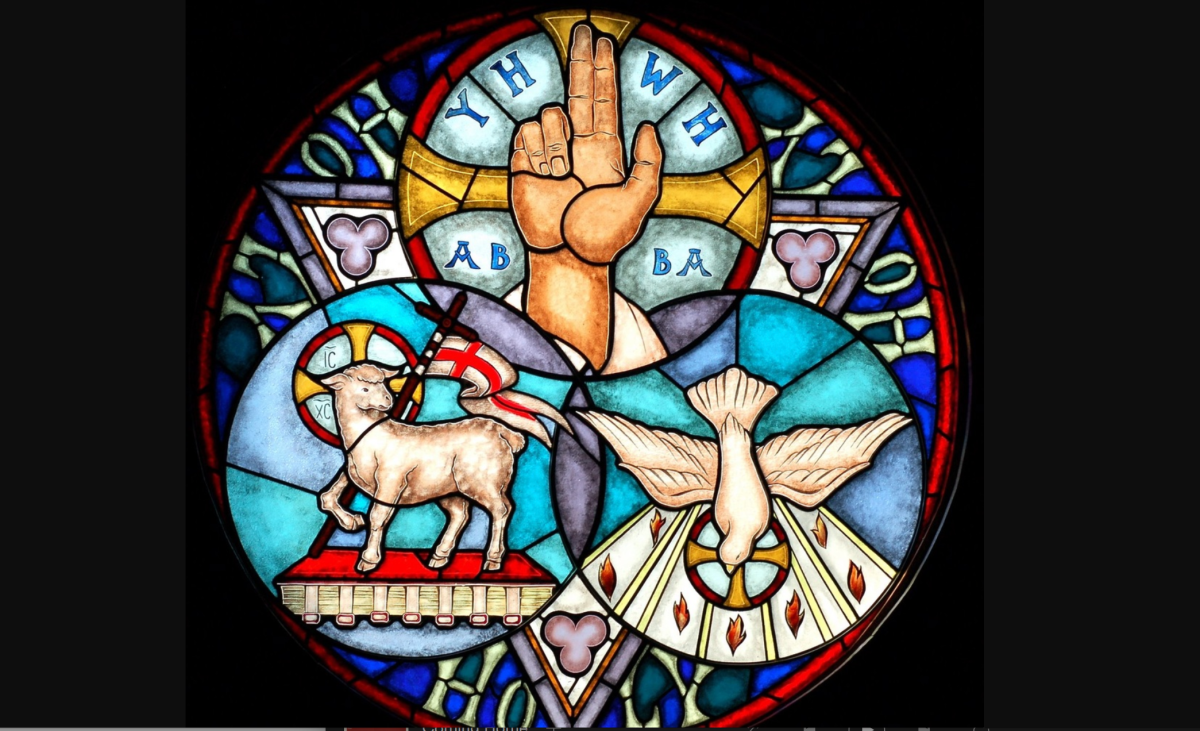
A stained-glass image of the Holy Trinity, showing the Father, Son, and Holy Spirit through traditional Christian symbols.
“On the Most Holy Trinity: the central Mystery of the faith is that the origin of everything is not solitude but communion—and we are invited in.”
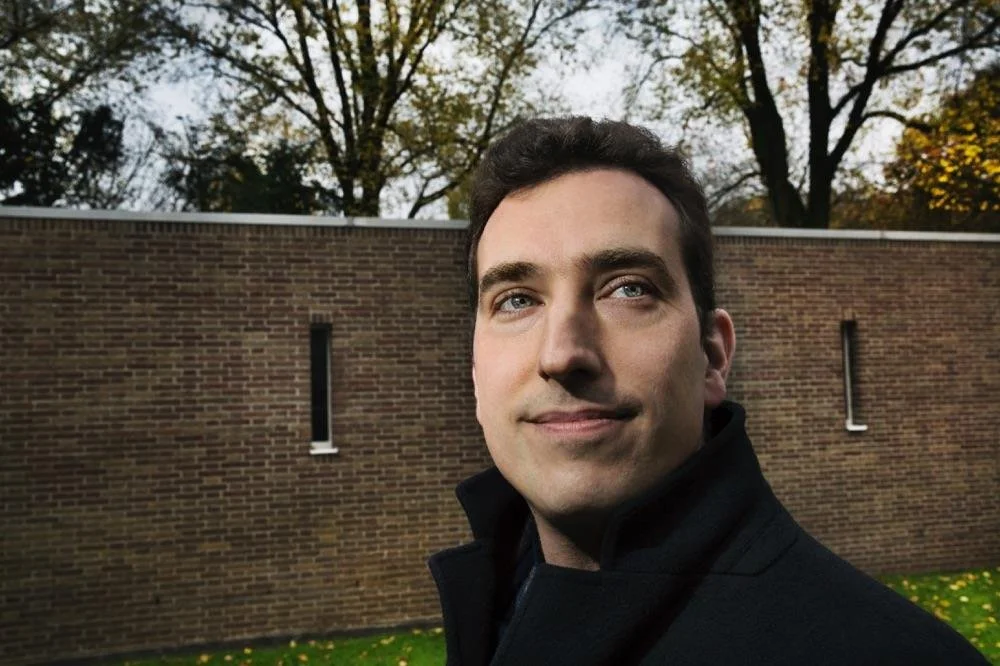
Michiel Peeters - On the Most Holy Trinity: the central Mystery of the faith is that the origin of everything is not solitude but communion—and we are invited in.
Today we celebrate the central Mystery of the Christian faith: that God is Trinity. There is one God—but he is not alone. In God there are three Persons. He is a communion, a friendship, a companionship. Into this we were baptized; in this Name we begin our prayers.
Pause on that, because everything else follows from it. If the origin of all that exists is not a solitary monad but a communion of Persons, then the human I—made in that image—is itself irreducible. The I is not a thing to be explained away or a function to be optimized; it is a person, and a person comes to be only in relationship. You cannot reduce the I, because at the root of reality there is already a “We.”
It’s not the kind of thing you make up. For me, the dogma of the Trinity is a proof of the divine nature of Christianity—people simply would not have come up with it.
God doesn’t reveal himself as Trinity all at once. His self-revelation unfolds in time; it respects our capacity to understand. In the Old Testament, Jahveh reveals himself as the one God. Among the many peoples and their many gods, the God of Israel presents himself not as the god of one nation but as the God of the universe—the “Maker of heaven and earth, of all things visible and invisible.”
In the New Testament we meet Jesus—and before the Trinity is ever a doctrine, it is An Event: a man who does what only God can do, like forgiving sins; who makes claims on us only God could make; who speaks of himself the way only God can. He calls God his “Father,” claiming a relationship with him unlike the one the rest of us have with the Mystery. In the end, when they put Jesus to death, it is because “he not only broke the sabbath but also called God his own Father, making himself equal to God.”
Jesus reveals the Holy Spirit, alluding to him little by little. When the hour of his glorification arrives, he promises the Apostles the Spirit of truth, the “other Comforter”—whom the Father will send in Jesus’s name, and whom Jesus himself will send from the Father’s side, since the Spirit comes from the Father. The Holy Spirit will teach us everything, remind us of all that Christ said, and lead us into all truth.
Finally, Christ commands the Apostles to “make disciples of all nations, baptizing them in the name of the Father, and of the Son, and of the Holy Spirit.”
Perhaps the most beautiful image of the Trinity is the one the Russian iconographer Andrei Rublev painted in the early fifteenth century—Father, Son, and Holy Spirit (the Father on the left, the Son in the middle, the Holy Spirit on the right). Their stature and their faces are identical: they are equal. But their vestments, the turn of their faces, their relationships—these differ. All three wear blue, which speaks of divine life. The Father, though, wears the pink-gold mantle of the Emperor, marking his power and glory, his being the origin of everything, even of the other two. The Son wears red, the color of sacrificed love, and the priestly stole: by becoming man he becomes the true priest, the one who in our name offers the perfect sacrifice to the Father. The Holy Spirit—the “Giver of Life”—wears green as well, the color of creation’s life. Everything receives its life from the Holy Spirit.
Their communion shows in this: they are seated together at a common meal, sharing a cup, a feast. “I have food to eat of which you do not know.” The Father gives the cup to the Son. “My food is to do the will of the one who sent me and to finish his work.” And the Holy Spirit looks out toward us—he makes it possible for us to enter the communion of God, to share his cup, his life, his love, of which, in the Eucharist, we already have a real foretaste.
And here something in us recognizes what it has always been waiting for. The heart’s desire is structurally out of all proportion to anything the world can hand it—no achievement, no possession, no love at our own scale is large enough to answer it. That structural disproportion is not a defect; it is the exact shape of an invitation, and what corresponds to it—its Correspondence—is the communion of God himself. The Trinity, then, is not finally an abstraction but A Presence that draws near, offering the one thing that matches the size of the human heart.
This is what the Mystery of the Trinity tells us: that we are invited to take part in a love, a communion, a friendship so profound that everything—everything—comes from it. It is where we come from, and it is our Destiny.
On the Most Holy Trinity: the central Mystery of the faith is that the origin of everything is not solitude but communion—and we are invited in.
Homily by Fr Michiel Peeters · Tilburg University Chaplaincy
Most Holy Trinity (Year A) — Exodus 34:4b–6, 8–9; 2 Corinthians 13:11–13; John 3:16–18
-
Dios no está solo
En la solemnidad de la Santísima Trinidad: el Misterio central de la fe es que el origen de todo no es la soledad, sino la comunión, y estamos invitados a entrar en ella.
Homilía del P. Michiel Peeters · Capellanía de la Universidad de Tilburg
Santísima Trinidad (Ciclo A) — Éxodo 34,4b-6.8-9; 2 Corintios 13,11-13; Juan 3,16-18
Hoy celebramos el Misterio central de la fe cristiana: que Dios es Trinidad. Hay un solo Dios, pero no está solo. En Dios hay tres Personas. Es comunión, amistad, compañía. En esto fuimos bautizados; en este Nombre comenzamos nuestras oraciones.
Detengámonos ahí, porque de ello se sigue todo lo demás. Si el origen de todo lo que existe no es una mónada solitaria, sino una comunión de Personas, entonces el Yo humano —hecho a esa imagen— es él mismo irreductible. El Yo no es una cosa que se pueda explicar y disolver, ni una función que optimizar: es una persona, y una persona llega a ser solo en la relación. No se puede reducir el Yo, porque en la raíz de la realidad hay ya un «Nosotros».
No es algo que uno se invente. Para mí, el dogma de la Trinidad es una prueba de la naturaleza divina del cristianismo: a nadie se le habría ocurrido.
Dios no se revela como Trinidad de golpe. Su autorrevelación se despliega en el tiempo; respeta nuestra capacidad de comprender. En el Antiguo Testamento, Yahvé se revela como el único Dios. Entre los muchos pueblos y sus muchos dioses, el Dios de Israel se presenta no como el dios de una nación, sino como el Dios del universo: el «Creador del cielo y de la tierra, de todo lo visible y lo invisible».
En el Nuevo Testamento nos encontramos con Jesús, y, antes de ser una doctrina, la Trinidad es un Acontecimiento: un hombre que hace lo que solo Dios puede hacer, como perdonar los pecados; que reclama de nosotros lo que solo Dios podría reclamar; que habla de sí mismo como solo Dios puede hacerlo. Llama a Dios su «Padre», reivindicando con Él una relación distinta de la que los demás tenemos con el Misterio. Al final, cuando dan muerte a Jesús, es porque «no solo quebrantaba el sábado, sino que llamaba a Dios su propio Padre, haciéndose igual a Dios».
Jesús revela al Espíritu Santo, aludiendo a Él poco a poco. Cuando llega la hora de su glorificación, promete a los Apóstoles el Espíritu de verdad, el «otro Defensor»: el Padre lo enviará en nombre de Jesús, y Jesús mismo lo enviará desde el lado del Padre, pues el Espíritu procede del Padre. El Espíritu Santo nos enseñará todo, nos recordará todo lo que Cristo dijo y nos guiará hasta la verdad plena.
Finalmente, Cristo manda a los Apóstoles: «haced discípulos de todos los pueblos, bautizándolos en el nombre del Padre, y del Hijo, y del Espíritu Santo».
Quizá la imagen más hermosa de la Trinidad sea la que el iconógrafo ruso Andréi Rubliov pintó a comienzos del siglo XV: Padre, Hijo y Espíritu Santo (el Padre a la izquierda, el Hijo en el centro, el Espíritu Santo a la derecha). Su estatura y sus rostros son idénticos: son iguales. Pero sus vestiduras, la orientación de sus rostros, sus relaciones, difieren. Los tres visten de azul, que habla de la vida divina. El Padre, sin embargo, lleva el manto rosa dorado del Emperador, que marca su poder y su gloria, su ser el origen de todo, incluso de los otros dos. El Hijo viste de rojo, el color del amor sacrificado, y lleva la estola sacerdotal: al hacerse hombre se hace el verdadero sacerdote, el que en nombre nuestro ofrece al Padre el sacrificio perfecto. El Espíritu Santo —el «Dador de Vida»— viste también de verde, el color de la vida de la creación. Todo recibe su vida del Espíritu Santo.
Su comunión se muestra en esto: están sentados juntos en una comida común, compartiendo una copa, un banquete. «Tengo un alimento que vosotros no conocéis». El Padre da la copa al Hijo. «Mi alimento es hacer la voluntad del que me envió y llevar a término su obra». Y el Espíritu Santo mira hacia nosotros: hace posible que entremos en la comunión de Dios, que compartamos su copa, su vida, su amor, del que, en la Eucaristía, ya tenemos un anticipo real.
Y aquí algo en nosotros reconoce lo que siempre había estado esperando. El deseo del corazón guarda una desproporción estructural con todo lo que el mundo puede ponerle en las manos: ningún logro, ninguna posesión, ningún amor a nuestra escala es lo bastante grande para colmarlo. Esa desproporción estructural no es un defecto: es la forma exacta de una invitación, y aquello que le corresponde —su Correspondencia— es la comunión de Dios mismo. La Trinidad, entonces, no es al final una abstracción, sino una Presencia que se acerca y ofrece lo único que está a la medida del corazón humano.
Esto es lo que nos dice el Misterio de la Trinidad: que estamos invitados a tomar parte en un amor, una comunión, una amistad tan profundos que todo —todo— proviene de ahí. Es de donde venimos, y es nuestro Destino.
-
Dieu n’est pas seul
Pour la solennité de la Très Sainte Trinité : le Mystère central de la foi, c’est que l’origine de tout n’est pas la solitude mais la communion — et nous sommes invités à y entrer.
Homélie du P. Michiel Peeters · Aumônerie de l’Université de Tilbourg
Très Sainte Trinité (année A) — Exode 34,4b-6.8-9 ; 2 Corinthiens 13,11-13 ; Jean 3,16-18
Aujourd’hui nous célébrons le Mystère central de la foi chrétienne : que Dieu est Trinité. Il y a un seul Dieu, mais il n’est pas seul. En Dieu, il y a trois Personnes. Il est communion, amitié, compagnie. C’est en cela que nous avons été baptisés ; c’est en ce Nom que nous commençons nos prières.
Arrêtons-nous là, car tout le reste en découle. Si l’origine de tout ce qui existe n’est pas une monade solitaire mais une communion de Personnes, alors le Moi humain — fait à cette image — est lui-même irréductible. Le Moi n’est pas une chose qu’on puisse expliquer et dissoudre, ni une fonction à optimiser : c’est une personne, et une personne ne vient à l’être que dans la relation. On ne peut pas réduire le Moi, car à la racine du réel il y a déjà un « Nous ».
Ce n’est pas le genre de chose qu’on invente. Pour moi, le dogme de la Trinité est une preuve de la nature divine du christianisme : personne n’y aurait pensé tout seul.
Dieu ne se révèle pas comme Trinité d’un seul coup. Son autorévélation se déploie dans le temps ; elle respecte notre capacité de comprendre. Dans l’Ancien Testament, Yahvé se révèle comme le Dieu unique. Parmi les nombreux peuples et leurs nombreux dieux, le Dieu d’Israël se présente non comme le dieu d’une seule nation, mais comme le Dieu de l’univers : le « Créateur du ciel et de la terre, de toutes les choses visibles et invisibles ».
Dans le Nouveau Testament, nous rencontrons Jésus — et, avant d’être une doctrine, la Trinité est un Événement : un homme qui fait ce que seul Dieu peut faire, comme pardonner les péchés ; qui exige de nous ce que seul Dieu pourrait exiger ; qui parle de lui-même comme seul Dieu le peut. Il appelle Dieu son « Père », revendiquant avec lui une relation différente de celle que nous autres avons avec le Mystère. À la fin, si l’on met Jésus à mort, c’est parce qu’« il ne violait pas seulement le sabbat, mais il appelait encore Dieu son propre Père, se faisant l’égal de Dieu ».
Jésus révèle l’Esprit Saint, y faisant allusion peu à peu. Quand vient l’heure de sa glorification, il promet aux Apôtres l’Esprit de vérité, l’« autre Défenseur » : le Père l’enverra au nom de Jésus, et Jésus lui-même l’enverra d’auprès du Père, puisque l’Esprit vient du Père. L’Esprit Saint nous enseignera tout, nous rappellera tout ce que le Christ a dit, et nous conduira vers la vérité tout entière.
Enfin, le Christ ordonne aux Apôtres de « faire des disciples de toutes les nations, en les baptisant au nom du Père, et du Fils, et du Saint-Esprit ».
Peut-être la plus belle image de la Trinité est-elle celle que l’iconographe russe Andreï Roublev a peinte au début du XVe siècle : le Père, le Fils et l’Esprit Saint (le Père à gauche, le Fils au centre, l’Esprit Saint à droite). Leur stature et leurs visages sont identiques : ils sont égaux. Mais leurs vêtements, l’orientation de leurs visages, leurs relations diffèrent. Tous trois sont vêtus de bleu, qui dit la vie divine. Le Père, pourtant, porte le manteau rose-or de l’Empereur, qui marque sa puissance et sa gloire, son être l’origine de tout, même des deux autres. Le Fils est vêtu de rouge, la couleur de l’amour sacrifié, et porte l’étole sacerdotale : en se faisant homme, il devient le vrai prêtre, celui qui, en notre nom, offre au Père le sacrifice parfait. L’Esprit Saint — le « Donateur de vie » — est vêtu aussi de vert, la couleur de la vie de la création. Tout reçoit sa vie de l’Esprit Saint.
Leur communion se montre en ceci : ils sont assis ensemble à un repas commun, partageant une coupe, un festin. « J’ai à manger une nourriture que vous ne connaissez pas. » Le Père donne la coupe au Fils. « Ma nourriture est de faire la volonté de celui qui m’a envoyé et d’achever son œuvre. » Et l’Esprit Saint regarde vers nous : il rend possible que nous entrions dans la communion de Dieu, que nous partagions sa coupe, sa vie, son amour, dont, dans l’Eucharistie, nous avons déjà un avant-goût réel.
Et ici, quelque chose en nous reconnaît ce qu’il attendait depuis toujours. Le désir du cœur est en disproportion structurelle avec tout ce que le monde peut lui mettre entre les mains : aucune réussite, aucune possession, aucun amour à notre échelle n’est assez grand pour le combler. Cette disproportion structurelle n’est pas un défaut : elle est la forme exacte d’une invitation, et ce qui lui correspond — sa Correspondance — est la communion de Dieu lui-même. La Trinité, dès lors, n’est pas finalement une abstraction, mais une Présence qui s’approche et qui offre la seule chose à la mesure du cœur humain.
Voici ce que nous dit le Mystère de la Trinité : que nous sommes invités à prendre part à un amour, une communion, une amitié si profonds que tout — tout — en provient. C’est d’où nous venons, et c’est notre Destin.
-
Dio non è solo
Nella solennità della Santissima Trinità: il Mistero centrale della fede è che l’origine di tutto non è la solitudine ma la comunione — e siamo invitati a entrarvi.
Omelia di P. Michiel Peeters · Cappellania dell’Università di Tilburg
Santissima Trinità (anno A) — Esodo 34,4b-6.8-9; 2 Corinzi 13,11-13; Giovanni 3,16-18
Oggi celebriamo il Mistero centrale della fede cristiana: che Dio è Trinità. C’è un solo Dio, ma non è solo. In Dio ci sono tre Persone. È comunione, amicizia, compagnia. In questo siamo stati battezzati; in questo Nome cominciamo le nostre preghiere.
Fermiamoci qui, perché da questo discende tutto il resto. Se l’origine di tutto ciò che esiste non è una monade solitaria ma una comunione di Persone, allora l’Io umano — fatto a quell’immagine — è esso stesso irriducibile. L’Io non è una cosa da spiegare e dissolvere, né una funzione da ottimizzare: è una persona, e una persona viene all’essere soltanto nella relazione. Non si può ridurre l’Io, perché alla radice del reale c’è già un «Noi».
Non è il genere di cosa che ci si inventa. Per me, il dogma della Trinità è una prova della natura divina del cristianesimo: nessuno l’avrebbe mai ideato da sé.
Dio non si rivela come Trinità tutto in una volta. La sua autorivelazione si dispiega nel tempo; rispetta la nostra capacità di comprendere. Nell’Antico Testamento, Jahvè si rivela come l’unico Dio. Tra i molti popoli e i loro molti dèi, il Dio d’Israele si presenta non come il dio di una sola nazione, ma come il Dio dell’universo: il «Creatore del cielo e della terra, di tutte le cose visibili e invisibili».
Nel Nuovo Testamento incontriamo Gesù — e, prima di essere una dottrina, la Trinità è un Avvenimento: un uomo che fa ciò che solo Dio può fare, come perdonare i peccati; che avanza nei nostri confronti pretese che solo Dio potrebbe avere; che parla di sé come solo Dio può. Chiama Dio suo «Padre», rivendicando con Lui una relazione diversa da quella che noi altri abbiamo con il Mistero. Alla fine, quando mettono a morte Gesù, è perché «non soltanto violava il sabato, ma chiamava Dio suo Padre, facendosi uguale a Dio».
Gesù rivela lo Spirito Santo, alludendovi a poco a poco. Quando giunge l’ora della sua glorificazione, promette agli Apostoli lo Spirito di verità, l’«altro Consolatore»: il Padre lo manderà nel nome di Gesù, e Gesù stesso lo manderà dal fianco del Padre, poiché lo Spirito viene dal Padre. Lo Spirito Santo ci insegnerà ogni cosa, ci ricorderà tutto ciò che Cristo ha detto e ci guiderà alla verità tutta intera.
Infine, Cristo comanda agli Apostoli di «fare discepoli tutti i popoli, battezzandoli nel nome del Padre e del Figlio e dello Spirito Santo».
Forse l’immagine più bella della Trinità è quella che l’iconografo russo Andrej Rublëv dipinse all’inizio del XV secolo: il Padre, il Figlio e lo Spirito Santo (il Padre a sinistra, il Figlio al centro, lo Spirito Santo a destra). La loro statura e i loro volti sono identici: sono uguali. Ma le loro vesti, l’orientamento dei loro volti, le loro relazioni, differiscono. Tutti e tre sono vestiti di azzurro, che dice la vita divina. Il Padre, però, porta il manto rosa-oro dell’Imperatore, che ne segna la potenza e la gloria, il suo essere l’origine di tutto, anche degli altri due. Il Figlio è vestito di rosso, il colore dell’amore sacrificato, e porta la stola sacerdotale: facendosi uomo, diventa il vero sacerdote, colui che in nome nostro offre al Padre il sacrificio perfetto. Lo Spirito Santo — il «Datore di vita» — è vestito anche di verde, il colore della vita del creato. Tutto riceve la sua vita dallo Spirito Santo.
La loro comunione si mostra in questo: sono seduti insieme a un pasto comune, condividendo una coppa, una festa. «Ho da mangiare un cibo che voi non conoscete». Il Padre dà la coppa al Figlio. «Mio cibo è fare la volontà di colui che mi ha mandato e compiere la sua opera». E lo Spirito Santo guarda verso di noi: rende possibile che entriamo nella comunione di Dio, che condividiamo la sua coppa, la sua vita, il suo amore, di cui, nell’Eucaristia, abbiamo già un anticipo reale.
E qui qualcosa in noi riconosce ciò che ha sempre atteso. Il desiderio del cuore è in sproporzione strutturale con tutto ciò che il mondo può mettergli tra le mani: nessun risultato, nessun possesso, nessun amore alla nostra misura è abbastanza grande da colmarlo. Questa sproporzione strutturale non è un difetto: è la forma esatta di un invito, e ciò che le corrisponde — la sua Corrispondenza — è la comunione di Dio stesso. La Trinità, allora, non è in fondo un’astrazione, ma una Presenza che si avvicina e offre l’unica cosa che è alla misura del cuore umano.
È questo che ci dice il Mistero della Trinità: che siamo invitati a prendere parte a un amore, una comunione, un’amicizia così profondi che tutto — tutto — ne proviene. È da dove veniamo, ed è il nostro Destino.