Someone Who Cheers Us On
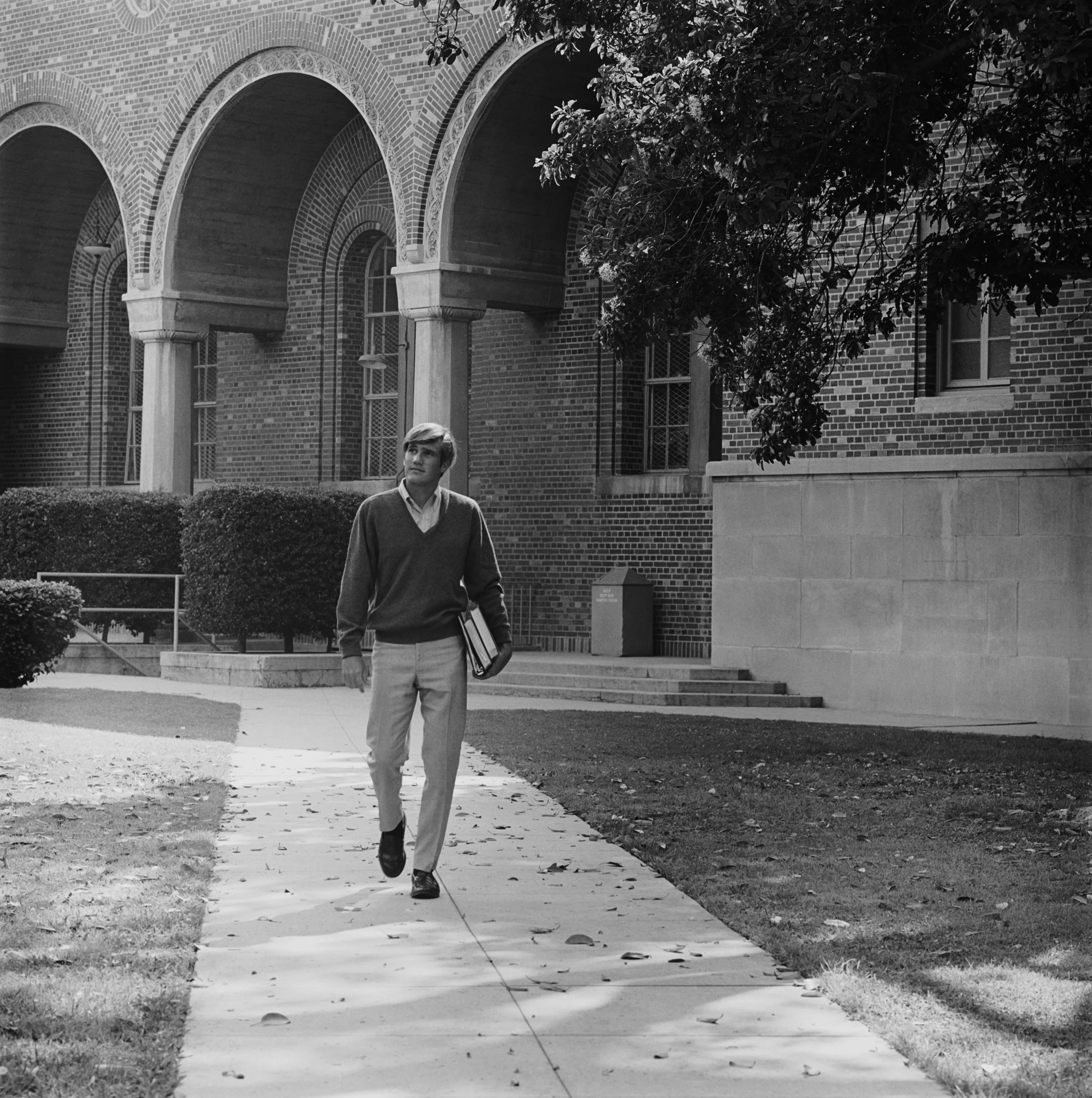
A student walks through a quiet university campus, carrying books and stepping toward the future.
“There is no greater joy than to watch a human being come awake—and to be a channel for that larger work. In giving His Son, the Father is cheering us on.”
Simone Riva - There is no greater joy than to watch a human being come awake—and to be a channel for that larger work. In giving His Son, the Father is cheering us on.
What is it that stirs a kind of nostalgia when you walk into the last class of the year with your seniors? Where does the question come from—what will be left of all this: the conversations, the provocations, the way they linger outside the classroom waiting for you, never quite calmly, with that funny self-consciousness of kids who don’t want to be caught caring and yet plainly relish the wait? It is as if a quiet hope surfaces: that somewhere in the twists and turns of life we might stay in touch, even though, in all likelihood, we will never see one another again.
For them it is time to set out toward whatever they are going to become—toward their Destiny. They have tried to picture it already—how many times have we talked it through?—but the road ahead will be full of the unforeseen and the unplanned, of sudden bursts of enthusiasm and of letdowns.
Just the other day, one of them wrote to me:
“Moments of fragility are necessary for growth, because we learn most of all from our mistakes. If someone wants to teach you something and you’re not interested in it, you’ll never learn it. But when you make a mistake, it means you cared about the thing in the first place, and you grasp for yourself what went wrong—nobody has to point it out from the outside. That’s why I think the strongest people are the ones who were weak at some point. I’ve learned, from my own fragility, to pay closer attention to what actually happens, and so I’ve grown more confident in what I live.”
Without quite having the words for it, my student had put his finger on something irreducible. The I that learns “from within”—through its own mistakes, its own caring, its own slow growth in confidence—cannot be delegated or simulated. It is not a function to be optimized but a person coming into being.
There is no greater gift than to be among those who have helped these young men discover what my student managed to put into words. It is like a race in which we adults stand along the route, cheering them on as they run. And God himself chose to reveal himself, quietly, in faces along that same road—as today’s Gospel reminds us—so that every man and woman might recognize the one Presence that, while utterly singular, embraces all: “God so loved the world that he gave his only Son, so that everyone who believes in him might not perish but might have eternal life” (Jn 3:16).
The Father “gave his Son” so that we might feel, concretely and within history, his cheering for us. When the openness to take an interest in everything around us slowly comes alive, when our gaze lifts and our reason swings wide open, we come into a face-to-face encounter with that Presence who loves to move among us—confident that sooner or later our eyes will meet His, the very source of every opening.
Don Giussani, in one of his most decisive writings, described the dynamics of this encounter exactly:
“This encounter of the person with human diversity is something very simple, absolutely elementary, that comes before everything else, before any catechesis, reflection, or development: it is something that does not need to be explained, but only to be seen, encountered, which arouses wonder, stirs an emotion, constitutes a call, moves one to follow, by virtue of its correspondence to the heart’s structural longing” (Something That Comes First. Notes from Luigi Giussani’s address to the Assembly of Leaders, January 1993).
Notice the phrase: the heart’s structural longing. The desire that stirs in us at such an encounter is no passing mood; it is built into us, and it is structurally out of all proportion to anything we manage to grasp. Nothing we produce, achieve, or possess is large enough to answer it. This structural disproportion is not a flaw to be engineered away—it is the very opening through which the Mystery reaches us as a Presence, and the measure of our Correspondence to what we are made for. The encounter, then, is never something we manufacture; it is An Event that happens to us.
We can picture the Trinity’s ceaseless work precisely here, in the effort to reawaken the human within us—a humanity that cannot be simulated, as Pope Leo stressed in a passage from his first Encyclical, locating in lived experience what sets the human person apart from artificial intelligence:
“It is not possible to give a single, complete definition of AI. What we can affirm is that we must avoid the misunderstanding of equating this ‘intelligence’ with human intelligence. These systems mimic certain functions of human intelligence. In doing so, they often surpass it in speed and computational power, offering concrete benefits in numerous fields. And yet this power remains tied exclusively to data processing: so-called artificial intelligences do not experience life, do not possess a body, do not feel joy and pain, do not mature through relationships, and do not know from within what love, work, friendship, and responsibility mean. They do not even possess a moral conscience: they do not judge good and evil, do not grasp the ultimate meaning of situations, and do not bear the weight of consequences. They can imitate language, behavior, and judgments; they can simulate empathy or understanding, but they do not understand what they produce, because they do not inhabit the affective, relational, and spiritual realm in which human beings become wise. Even when such tools are presented as capable of ‘learning,’ their way of doing so is different from that of the human person. It is not the experience of one who lets oneself be shaped by life and grows over time through choices, mistakes, forgiveness, and fidelity; it is, rather, a statistical adaptation based on data and feedback—one that can be highly effective, but that involves no inner growth” (Magnifica humanitas, 99).
The contrast could not be sharper. Where the machine adapts, the person matures; where the machine processes, the I grows—through choices, mistakes, forgiveness, fidelity. This is the very thing my student described from the inside, and the very thing the Father cheers on.
So the question that remains is really an invitation: may the challenge of these new technological frontiers become an occasion to rediscover the gift that our humanity is. And then even our longing for certain faces will turn into the certainty of their enduring presence.
-
Uno che fa il tifo per noi
A Cura di Simone Riva
Non c’è gioia più grande che vedere l’umanità ridestarsi, ed essere tramite di questa opera più grande. Dando suo Figlio, il Padre fa il tifo per noi
Cosa accende la nostalgia quando arrivi all’ultima ora di lezione con i ragazzi di quinta superiore? Cosa muove la domanda su cosa resterà dei dialoghi, delle provocazioni, del loro attendere fuori dalla classe il tuo arrivo, non proprio compostamente, generando quello strano imbarazzo tipico di chi non vuole dare nell’occhio e, al tempo stesso, di chi gode di quel loro attendere? È come se emergesse una segreta speranza che, nelle variegate pieghe del vivere, si possa in qualche modo rimanere in contatto anche se, probabilmente, non ci si vedrà più.
Per loro è tempo di intraprendere la strada di ciò che diventeranno. Hanno già provato a immaginarla, e quante volte ne abbiamo parlato, ma resterà comunque affollata di imprevisti e fuori programma, di slanci e delusioni.
Proprio su questo, nei giorni scorsi, uno di loro mi ha scritto: “I momenti di fragilità servono per crescere, perché si impara soprattutto dagli errori. Infatti, se qualcuno ti vuole insegnare qualcosa, e tu non sei interessato a quella cosa, non imparerai mai. Invece, se si commettono degli errori, questo implica il fatto che hai interesse per quella cosa, e capisci sulla tua pelle cosa hai sbagliato, senza che nessuno te lo dica dall’esterno. Per questo, secondo me, le persone più forti sono quelle che nel loro passato sono state deboli. Anch’io ho imparato, dalle mie fragilità, a essere più attento ai fatti e così sono diventato più sicuro di quello che vivo”.
Non c’è dono più grande che poter essere tra quelle persone che hanno aiutato questi giovani uomini a scoprire quello che ha scritto il mio studente. È come una gara, durante la quale noi adulti stiamo ai lati facendo il tifo per il loro percorso. Dio stesso ha voluto inserirsi delicatamente in questi volti a bordo strada, come ricorda il Vangelo di oggi, per dare la possibilità a ogni uomo e donna di riconoscere quella presenza che, unica, tutte abbraccia: “Dio ha tanto amato il mondo da dare il Figlio, unigenito, perché chiunque crede in lui non vada perduto, ma abbia la vita eterna” (Gv 3,16).
Il Padre ha “dato il Figlio” perché si potesse toccare con mano e sentire, nella storia, il suo “tifo” per noi. Quando, lentamente, in noi si apre la disponibilità all’interesse per tutto ciò che ci circonda, quando lo sguardo si solleva e la ragione si spalanca, allora si giunge a un “corpo a corpo” con quella Presenza che ama mescolarsi tra le altre, certa che, prima o poi, i nostri occhi intercetteranno i suoi, origine stessa di ogni apertura.
Don Giussani, in uno dei suoi interventi più decisivi, ebbe a descrivere efficacemente la dinamica dell’incontro: “Quest’imbattersi della persona in una diversità umana è qualcosa di semplicissimo, di assolutamente elementare, che viene prima di tutto, di ogni catechesi, riflessione e sviluppo: è qualcosa che non ha bisogno di essere spiegato, ma solo di essere visto, intercettato, che suscita uno stupore, desta una emozione, costituisce un richiamo, muove a seguire, in forza della sua corrispondenza all’attesa strutturale del cuore” (Qualcosa che viene prima. Appunti dall’intervento di Luigi Giussani all’Assemblea responsabili, gennaio 1993).
Possiamo immaginarci il diuturno lavorio della Trinità proprio nell’impresa di ridestare l’umano che è in noi. Un umano che non può essere simulato, come ha ribadito Papa Leone in un passaggio della sua prima Enciclica, individuando nell’esperienza ciò che differenzia l’uomo dall’intelligenza artificiale:
“Non è possibile dare una definizione univoca e completa dell’IA. Ciò che possiamo affermare è che occorre evitare l’equivoco di equiparare questa ‘intelligenza’ a quella umana. Questi sistemi imitano alcune funzioni dell’intelligenza umana. Nel farlo, spesso la superano per velocità e ampiezza di calcolo, offrendo benefici concreti in numerosi campi. E tuttavia, questa potenza resta legata esclusivamente al trattamento dei dati: le cosiddette intelligenze artificiali non vivono una esperienza, non possiedono un corpo, non attraversano la gioia e il dolore, non maturano nella relazione, non conoscono dall’interno ciò che significa amore, lavoro, amicizia, responsabilità. Non hanno neppure una coscienza morale: non giudicano il bene e il male, non colgono il senso ultimo delle situazioni, non assumono su di sé il peso delle conseguenze. Possono imitare linguaggi, comportamenti, valutazioni, possono simulare empatia o comprensione, ma non capiscono ciò che producono, perché non abitano l’orizzonte affettivo, relazionale e spirituale in cui l’umano diventa sapiente. Anche quando tali strumenti vengono presentati come capaci di ‘apprendere’, il loro modo di farlo è diverso da quello della persona umana. Non è l’esperienza di chi si lascia plasmare dalla vita e cresce nel tempo attraverso scelte, errori, perdono, fedeltà; è piuttosto un adattamento statistico a partire da dati e riscontri, che può essere molto efficace, ma non implica una crescita interiore” (Magnifica humanitas, 99).
Che la sfida con le nuove frontiere dello sviluppo tecnologico sia l’occasione per riscoprire il dono che è il nostro umano? Allora anche la nostalgia di certi volti diventerà certezza del loro permanere.
-
Alguien que nos anima
Editado por Simone Riva
No hay alegría mayor que ver despertar a un ser humano, y ser cauce de esa obra más grande. Al entregar a su Hijo, el Padre nos anima.
¿Qué es lo que despierta una cierta nostalgia cuando entras a la última clase del año con los alumnos que se gradúan? ¿De dónde viene la pregunta por lo que quedará de todo esto: las conversaciones, las provocaciones, ese modo suyo de quedarse esperándote fuera del aula, nunca del todo tranquilos, con esa graciosa vergüenza de quienes no quieren que se note que les importa y, al mismo tiempo, disfrutan visiblemente de la espera? Es como si aflorara una esperanza callada: que, en algún recodo de la vida, sigamos en contacto, aunque lo más probable es que no volvamos a vernos nunca.
Para ellos ha llegado el momento de ponerse en camino hacia aquello que van a ser—hacia su Destino. Ya han intentado imaginarlo—¿cuántas veces lo hemos hablado?—, pero el camino estará lleno de lo imprevisto y lo no planeado, de arrebatos de entusiasmo y de decepciones.
Hace apenas unos días, uno de ellos me escribió:
“Los momentos de fragilidad son necesarios para crecer, porque aprendemos sobre todo de nuestros errores. Si alguien quiere enseñarte algo y a ti no te interesa, no lo aprenderás nunca. En cambio, cuando te equivocas, significa que esa cosa te importaba, y comprendes por ti mismo qué hiciste mal, sin que nadie te lo diga desde fuera. Por eso, en mi opinión, las personas más fuertes son las que en algún momento fueron débiles. Yo también he aprendido, de mi propia fragilidad, a prestar más atención a lo que de verdad sucede, y así me he vuelto más seguro en lo que vivo.”
Sin tener del todo las palabras para decirlo, mi alumno había puesto el dedo en algo irreductible. El Yo que aprende “desde dentro”—a través de sus propios errores, de su propio cuidado, de su lento crecer en confianza—no puede delegarse ni simularse. No es una función que optimizar, sino una persona que viene a la existencia.
No hay don mayor que estar entre quienes han ayudado a estos jóvenes a descubrir lo que mi alumno logró poner en palabras. Es como una carrera en la que los adultos nos quedamos al borde del recorrido, animándolos mientras corren. Y Dios mismo quiso revelarse, en silencio, en los rostros que están al borde del camino—como nos recuerda el Evangelio de hoy—, para que todo hombre y toda mujer pueda reconocer la única Presencia que, siendo del todo singular, abraza a todos: “Tanto amó Dios al mundo que entregó a su Hijo único, para que todo el que crea en él no perezca, sino que tenga vida eterna” (Jn 3,16).
El Padre “entregó a su Hijo” para que pudiéramos sentir, concretamente y dentro de la historia, su aliento a favor nuestro. Cuando, poco a poco, despierta en nosotros la apertura a interesarnos por todo lo que nos rodea, cuando la mirada se levanta y la razón se abre de par en par, llegamos a un encuentro cara a cara con esa Presencia a la que le gusta moverse entre nosotros—seguros de que, tarde o temprano, nuestros ojos se cruzarán con los suyos, la fuente misma de toda apertura.
Don Giussani, en uno de sus escritos más decisivos, describió exactamente la dinámica de este encuentro:
“Este encuentro de la persona con la diversidad humana es algo muy sencillo, absolutamente elemental, que precede a todo lo demás, antes de cualquier catequesis, reflexión o desarrollo: es algo que no necesita ser explicado, sino solo visto, encontrado, que suscita asombro, mueve una emoción, constituye una llamada, impulsa a seguir, en virtud de su correspondencia con la espera estructural del corazón” (Algo que viene primero. Apuntes de la intervención de Luigi Giussani ante la Asamblea de Responsables, enero de 1993).
Fijémonos en la expresión: la espera estructural del corazón. El deseo que se enciende en nosotros ante un encuentro así no es un estado de ánimo pasajero; está inscrito en nosotros y guarda una desproporción estructural con todo lo que logramos asir. Nada de lo que producimos, conseguimos o poseemos es lo bastante grande para colmarlo. Esta desproporción estructural no es un defecto que haya que corregir por ingeniería: es la abertura misma por la que el Misterio nos alcanza como una Presencia, y la medida de nuestra Correspondencia con aquello para lo que fuimos hechos. El encuentro, entonces, nunca es algo que fabriquemos: es un Acontecimiento que nos sucede.
Podemos imaginar la obra incesante de la Trinidad precisamente aquí, en el empeño por volver a despertar lo humano en nosotros—una humanidad que no se puede simular, como subrayó el Papa León en un pasaje de su primera Encíclica, situando en la experiencia vivida lo que distingue a la persona humana de la inteligencia artificial:
“No es posible dar una definición única y completa de la IA. Lo que sí podemos afirmar es que hemos de evitar el malentendido de equiparar esta ‘inteligencia’ con la inteligencia humana. Estos sistemas imitan ciertas funciones de la inteligencia humana. Al hacerlo, a menudo la superan en velocidad y capacidad de cálculo, ofreciendo beneficios concretos en numerosos campos. Y sin embargo, ese poder permanece ligado exclusivamente al procesamiento de datos: las llamadas inteligencias artificiales no viven una experiencia, no poseen un cuerpo, no sienten alegría ni dolor, no maduran a través de las relaciones y no saben desde dentro qué significan el amor, el trabajo, la amistad y la responsabilidad. Ni siquiera poseen una conciencia moral: no juzgan el bien y el mal, no captan el sentido último de las situaciones y no cargan con el peso de las consecuencias. Pueden imitar el lenguaje, el comportamiento y los juicios; pueden simular empatía o comprensión, pero no entienden lo que producen, porque no habitan el ámbito afectivo, relacional y espiritual en el que los seres humanos se hacen sabios. Incluso cuando se presentan tales herramientas como capaces de ‘aprender’, su modo de hacerlo es distinto del de la persona humana. No es la experiencia de quien se deja plasmar por la vida y crece con el tiempo a través de decisiones, errores, perdón y fidelidad; es, más bien, una adaptación estadística basada en datos y retroalimentación—que puede ser muy eficaz, pero que no implica crecimiento interior” (Magnifica humanitas, 99).
El contraste no podría ser más nítido. Donde la máquina se adapta, la persona madura; donde la máquina procesa, el Yo crece—a través de decisiones, errores, perdón, fidelidad. Es exactamente lo que mi alumno describía desde dentro, y exactamente aquello que el Padre alienta.
Por eso la pregunta que queda es, en realidad, una invitación: que el desafío de estas nuevas fronteras tecnológicas se convierta en ocasión para redescubrir el don que es nuestra humanidad. Y entonces incluso la añoranza de ciertos rostros se transformará en la certeza de su presencia perdurable.
-
Quelqu’un qui nous encourage
Édité par Simone Riva
Il n’y a pas de joie plus grande que de voir un être humain s’éveiller, et d’être un canal de cette œuvre plus vaste. En donnant son Fils, le Père nous encourage.
Qu’est-ce qui éveille une certaine nostalgie lorsqu’on entre dans le dernier cours de l’année avec les élèves de terminale ? D’où vient la question de ce qui restera de tout cela : les conversations, les provocations, leur manière d’attendre dehors, devant la salle, jamais tout à fait tranquilles, avec cette drôle de gêne de ceux qui ne veulent pas qu’on voie qu’ils tiennent à vous et qui, en même temps, savourent visiblement l’attente ? C’est comme si une espérance discrète affleurait : qu’au détour de la vie nous restions en contact, même si, très probablement, nous ne nous reverrons jamais.
Pour eux, le moment est venu de se mettre en route vers ce qu’ils vont devenir—vers leur Destin. Ils ont déjà essayé de l’imaginer—combien de fois en avons-nous parlé ?—, mais la route sera pleine d’imprévu et d’inattendu, d’élans d’enthousiasme et de déceptions.
Il y a quelques jours à peine, l’un d’eux m’a écrit :
« Les moments de fragilité sont nécessaires pour grandir, car nous apprenons surtout de nos erreurs. Si quelqu’un veut t’enseigner quelque chose et que cela ne t’intéresse pas, tu ne l’apprendras jamais. En revanche, quand tu te trompes, cela veut dire que la chose te tenait à cœur, et tu comprends par toi-même ce que tu as mal fait, sans que personne te le dise de l’extérieur. C’est pourquoi, à mon avis, les personnes les plus fortes sont celles qui ont été faibles à un moment donné. Moi aussi, j’ai appris, à partir de ma propre fragilité, à prêter davantage attention à ce qui arrive vraiment, et je suis ainsi devenu plus sûr de ce que je vis. »
Sans en avoir tout à fait les mots, mon élève avait mis le doigt sur quelque chose d’irréductible. Le Moi qui apprend « du dedans »—à travers ses propres erreurs, son propre attachement, sa lente croissance en assurance—ne peut être ni délégué ni simulé. Ce n’est pas une fonction à optimiser, mais une personne qui vient à l’existence.
Il n’y a pas de don plus grand que d’être parmi ceux qui ont aidé ces jeunes à découvrir ce que mon élève a su mettre en mots. C’est comme une course où, nous les adultes, nous nous tenons au bord du parcours, les encourageant tandis qu’ils courent. Et Dieu lui-même a voulu se révéler, en silence, dans des visages au bord de la route—comme nous le rappelle l’Évangile d’aujourd’hui—, afin que tout homme et toute femme puisse reconnaître l’unique Présence qui, tout en étant absolument singulière, embrasse tous : « Dieu a tant aimé le monde qu’il a donné son Fils unique, afin que quiconque croit en lui ne périsse pas, mais ait la vie éternelle » (Jn 3,16).
Le Père « a donné son Fils » afin que nous puissions sentir, concrètement et dans l’histoire, son encouragement pour nous. Lorsque, peu à peu, s’éveille en nous l’ouverture à nous intéresser à tout ce qui nous entoure, lorsque le regard se lève et que la raison s’ouvre grand, nous parvenons à une rencontre face à face avec cette Présence qui aime se mêler à nous—certains que, tôt ou tard, nos yeux croiseront les siens, la source même de toute ouverture.
Don Giussani, dans l’un de ses écrits les plus décisifs, a décrit exactement la dynamique de cette rencontre :
« Cette rencontre de la personne avec la diversité humaine est quelque chose de très simple, absolument élémentaire, qui précède tout le reste, avant toute catéchèse, réflexion ou développement : c’est quelque chose qui n’a pas besoin d’être expliqué, mais seulement d’être vu, rencontré, qui suscite l’émerveillement, émeut, constitue un appel, pousse à suivre, en vertu de sa correspondance à l’attente structurelle du cœur » (Quelque chose qui vient d’abord. Notes de l’intervention de Luigi Giussani devant l’Assemblée des Responsables, janvier 1993).
Remarquons l’expression : l’attente structurelle du cœur. Le désir qui s’allume en nous lors d’une telle rencontre n’est pas une humeur passagère ; il est inscrit en nous, et il est en disproportion structurelle avec tout ce que nous parvenons à saisir. Rien de ce que nous produisons, obtenons ou possédons n’est assez grand pour le combler. Cette disproportion structurelle n’est pas un défaut à corriger par l’ingénierie : elle est l’ouverture même par laquelle le Mystère nous rejoint comme une Présence, et la mesure de notre Correspondance à ce pour quoi nous sommes faits. La rencontre, dès lors, n’est jamais quelque chose que nous fabriquons : c’est un Événement qui nous arrive.
Nous pouvons imaginer l’œuvre incessante de la Trinité précisément ici, dans l’effort pour réveiller l’humain en nous—une humanité qui ne peut être simulée, comme l’a souligné le pape Léon dans un passage de sa première Encyclique, situant dans l’expérience vécue ce qui distingue la personne humaine de l’intelligence artificielle :
« Il n’est pas possible de donner une définition unique et complète de l’IA. Ce que nous pouvons affirmer, c’est qu’il faut éviter le malentendu qui consiste à assimiler cette ‘intelligence’ à l’intelligence humaine. Ces systèmes imitent certaines fonctions de l’intelligence humaine. Ce faisant, ils la dépassent souvent en vitesse et en puissance de calcul, offrant des bénéfices concrets dans de nombreux domaines. Et pourtant, cette puissance reste liée exclusivement au traitement des données : les soi-disant intelligences artificielles ne vivent pas une expérience, ne possèdent pas de corps, n’éprouvent ni joie ni douleur, ne mûrissent pas à travers les relations et ne savent pas du dedans ce que signifient l’amour, le travail, l’amitié et la responsabilité. Elles ne possèdent même pas de conscience morale : elles ne jugent pas le bien et le mal, ne saisissent pas le sens ultime des situations et ne portent pas le poids des conséquences. Elles peuvent imiter le langage, le comportement et les jugements ; elles peuvent simuler l’empathie ou la compréhension, mais elles ne comprennent pas ce qu’elles produisent, car elles n’habitent pas le domaine affectif, relationnel et spirituel dans lequel les êtres humains deviennent sages. Même lorsque de tels outils sont présentés comme capables d’‘apprendre’, leur manière de le faire diffère de celle de la personne humaine. Ce n’est pas l’expérience de celui qui se laisse façonner par la vie et grandit avec le temps à travers des choix, des erreurs, le pardon et la fidélité ; c’est plutôt une adaptation statistique fondée sur des données et des retours—qui peut être très efficace, mais qui n’implique aucune croissance intérieure » (Magnifica humanitas, 99).
Le contraste ne pourrait être plus net. Là où la machine s’adapte, la personne mûrit ; là où la machine traite des données, le Moi grandit—à travers des choix, des erreurs, le pardon, la fidélité. C’est exactement ce que mon élève décrivait du dedans, et exactement ce que le Père encourage.
C’est pourquoi la question qui demeure est, en réalité, une invitation : que le défi de ces nouvelles frontières technologiques devienne l’occasion de redécouvrir le don qu’est notre humanité. Et alors, même la nostalgie de certains visages se changera en certitude de leur présence durable.