God Enters Our Hiding Places
“The Spirit comes precisely into the hiding place. Our fragility cannot be used as an alibi.”
Simone Riva - We are forever trying to bend reality to fit ourselves. The Spirit of God works the other way: He shapes us. This is the mystery of Pentecost.
It’s the season for a deep clean at home — the serious kind, the meticulous kind, the kind that goes after even the neglected corners that usually slip past us. And when we’re finished, when we’re sure everything is finally in order, all it takes is one sunny day. The light comes in and picks out every flaw that survived our tidying. The glass, the countertops — there they are, documenting the limits of our work, and all because of one impertinent ray of sunlight doing exactly what it was made to do: bringing things to light.
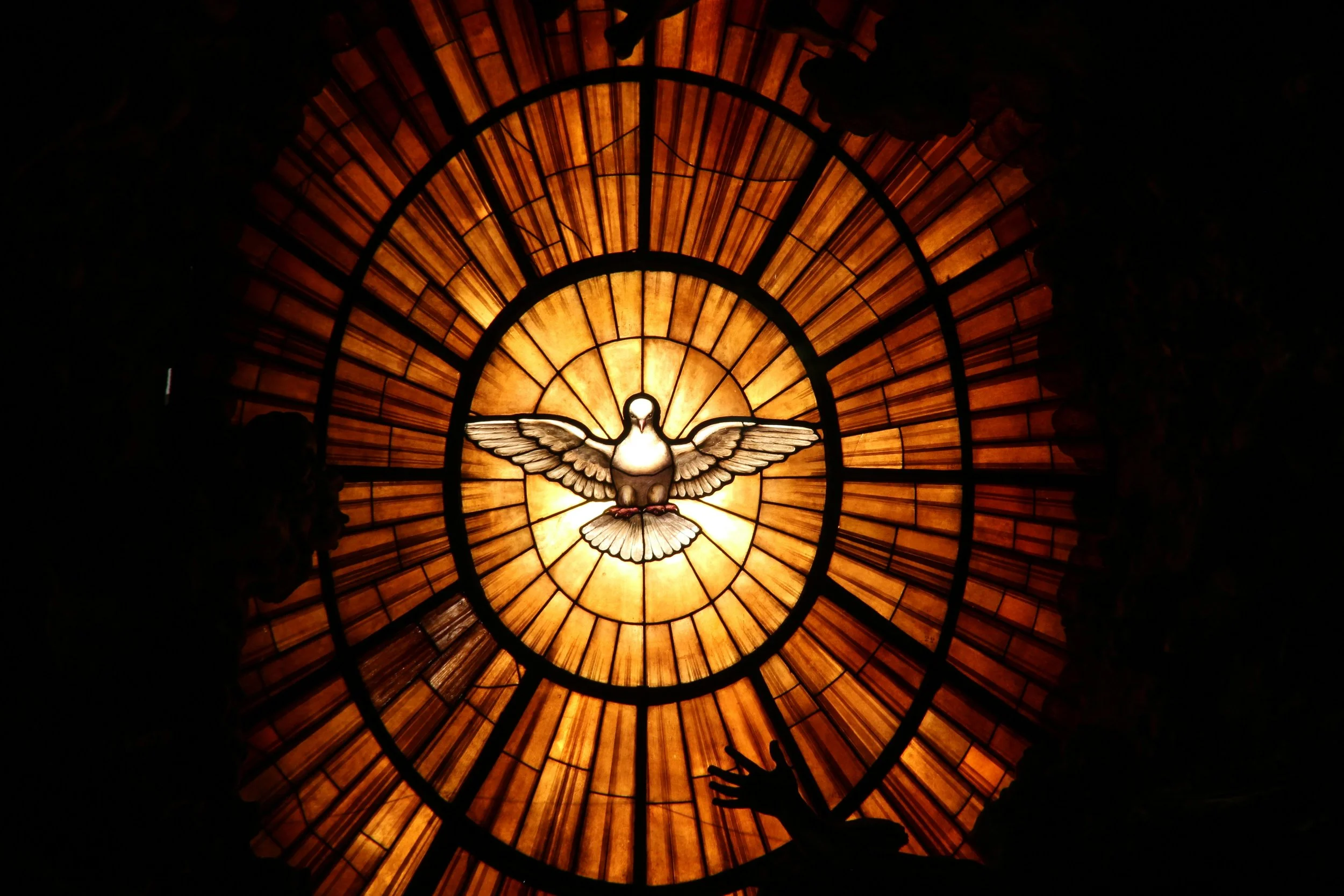
This household scene helps us catch the provocation of the feast we celebrate today. The window of history, and of our own humanity, is crossed by a final blade of light: the Holy Spirit. It can expose our whole incapacity to build an order that is, in truth, closer to a fiction — and at the same time it can heighten the desire for some light that would really catch hold of us.
St. Basil reached for exactly this image to describe what the Spirit does:
“Just as the sun shines for everyone, and each person enjoys it as though it were shining for him alone, so the Holy Spirit pours out his grace upon everyone in such a way that each receives it whole, as if it were given to him alone, while remaining whole for all the rest” (On the Holy Spirit, ch. 9, 22).
The trap in our way of putting things in order is this: we take an initiative meant to cover everyone and everything without distinction, multiplying events and meetings, driven by the foolish hope that we can be together while sparing ourselves the risk of a real relationship.
The Spirit of God does the opposite. Present for everyone, He still works in each one, starting from the exact place where the person stands. He works so that what another Father of the Church, St. Gregory, said in one of his Pentecost homilies might actually happen:
“Today the Holy Spirit, with a sudden roar, descended upon the apostles, transformed their carnal minds into His love, and, while tongues of fire appeared without, their hearts caught flame within; for, welcoming God who showed Himself in the fire, they burned sweetly with love. That is why John says: ‘God is love’ (1 Jn 4:8). And so whoever desires God with all their soul already possesses the One they love. For no one could love God without already possessing the One they love.”
The indispensable condition for this transformation is the capacity of those “carnal minds” to make room for the gift of the Spirit. And if we take seriously what St. Gregory means by that phrase, we can press the point further: a person in their most distant, most distracted state — hidden in the deepest recesses of the house to dodge every ray of light — can still be reached and transformed.
This is the heart of the matter, and it overturns a quiet assumption we tend to carry. We imagine that the Mystery can only meet us once we have made ourselves presentable — once the house is in order. The opposite is true. The Spirit comes precisely into the hiding place. Which means our fragility, our incapacity, cannot be used as an alibi.
Since fragility is no excuse, the only thing left is to go to the bottom of the method by which the Spirit means to act in us — to check not so much “whether” He works, but “how” He works. And here the challenge of Experience opens up. Every time we take the road of escape, we notice almost at once that it is not the road we need, because it shrinks our desire down to a daydream.
Every time we pour our energy into engineering the outcome we are sure will complete us, we are caught off guard: the numbers never add up. Our best-executed projects are often the very ones that disappoint us most. Every time we settle for the crumbs of power — the ones that turn us into ridiculous “yes men” — we catch in ourselves an unbearable sense of being used, because that way of living has nothing to do with what we feel when we say “yes” for real.
Each of these experiences is a small verification. None of them is a defeat to be hidden; each one quietly documents the same thing the sunlight documented on the clean glass — the gap between the order we manufacture and the Reality we are made for. That gap is not an accusation. It is the space where An Event can happen.
In short, deep inside us there is a desire for light — and it is born from the fact that the light is already there, already possessed. Pentecost sets into motion a gift the apostles had already encountered in their own human story. But it took the exuberant, unforeseeable initiative of God for that gift not to stay in the dark, crushed under our human way of filing events and circumstances into place. The question, then, is one of passion: what passion do we need for what we are, so as not to waste our time building the present out of our usual attempts?
-
Pentecoste, Dio entra nei nostri nascondigli
Simone Riva
Noi tendiamo sempre a conformare la realtà a noi stessi, invece lo spirito di Dio agisce in modo opposto: ci plasma. È il mistero della Pentecoste
È tempo di pulizie nelle nostre case, quelle serie, di fino, che vanno a disturbare anche i meandri più trascurati che solitamente sfuggono al nostro sguardo. E quando abbiamo finito, quando crediamo che finalmente tutto sia in ordine e pulito, basta una giornata di sole perché i suoi raggi mettano in luce tutte le magagne sopravvissute al nostro ordine. Vetri e superfici sono lì a documentare il limite della nostra opera, e tutto grazie a un impertinente raggio di sole, che fa semplicemente ciò per cui è stato pensato: mettere in luce.
Questa dinamica casalinga ci aiuta a cogliere la provocazione della festa che celebriamo oggi. La finestra della storia, e del nostro umano, è attraversata da una lama di luce definitiva, lo Spirito Santo, in grado di far emergere tutta la nostra incapacità di creare un ordine che in realtà ha tutte le caratteristiche di una finzione, e al tempo stesso di esaltare il desiderio che una qualche luce ci intercetti davvero.
San Basilio utilizzò proprio questa immagine per descrivere l’azione dello Spirito: “Come il sole brilla per tutti e ciascuno ne gode come se risplendesse per lui solo, così lo Spirito Santo effonde la sua grazia su tutti in modo tale che ciascuno la riceve intera, come se fosse data a lui solo, pur restando intera per tutti gli altri” (Sullo Spirito Santo, cap. 9, 22).
Il tranello del nostro modo di far ordine, in effetti, consiste nel prendere un’iniziativa che riguardi tutti e tutto senza distinzione, moltiplicando eventi e incontri con la dissennata intenzione di stare insieme risparmiandosi il rischio di rapporti veri.
Lo Spirito di Dio, invece, pur essendo presente per tutti, agisce in ciascuno, partendo dal punto in cui si trova la persona, perché possa accadere ciò che affermava un altro padre della Chiesa, san Gregorio, in una delle sue omelie tenuta in occasione della festa di Pentecoste: “Oggi lo Spirito Santo, con un rombo improvviso, si posò sugli apostoli, trasformò nel suo amore le loro menti carnali, e, mentre fuori apparvero lingue di fuoco, dentro i cuori si infiammarono; perché accogliendo Dio che si manifestava nel fuoco, arsero soavemente di amore. Ecco perché Giovanni dice: ‘Dio è amore’ (1Gv 4,8). Quindi chi desidera Dio con tutta l’anima, possiede già colui che ama. Nessuno infatti potrebbe amare Dio se non possedesse colui che ama”.
Condizione indispensabile per questa trasformazione è la capacità delle “menti carnali” di ospitare il dono dello Spirito. Considerando ciò che intende san Gregorio con questa espressione, possiamo addirittura spingerci ad affermare che l’uomo, nella sua condizione più lontana e distratta da Dio, nascosto nei luoghi più reconditi della casa per sfuggire a qualsiasi raggio di luce, può comunque essere ripreso e trasformato.
Non potendo, dunque, usare come alibi la nostra fragilità o incapacità, non ci resta che andare a fondo del metodo con cui lo Spirito intende agire in noi, verificando non tanto “se” opera, ma “come” opera. Si apre così la sfida dell’esperienza. Ogni volta che prendiamo la via della fuga ci accorgiamo subito, o quasi, che non è la strada di cui abbiamo bisogno, perché riduce il nostro desiderio a sogno.
Ogni volta che investiamo le nostre energie nella realizzazione della modalità che secondo noi dovrebbe compierci, siamo spiazzati dal fatto che i conti non tornano mai, perché i nostri progetti meglio riusciti spesso sono proprio quelli che deludono di più. Ogni volta che confidiamo nelle briciole del potere, che ci trasformano in ridicoli “yes man”, sorprendiamo in noi un’insopportabile sensazione di essere usati, perché è un modo di vivere che non ha nulla a che vedere con ciò che proviamo quando diciamo “sì” davvero.
Insomma, nel nostro intimo c’è un desiderio di luce che nasce dal fatto che essa è già presente, è già posseduta. La Pentecoste attiva un dono che la vicenda umana degli apostoli aveva incontrato, ma c’era bisogno dell’esuberante e imprevedibile iniziativa di Dio perché quel dono non rimanesse al buio, schiacciato dal modo umano di mettere in ordine avvenimenti e circostanze. Ma che passione occorre per ciò che siamo, per non perdere tempo a realizzare il presente con i nostri soliti tentativi?
— — — —
-
Pentecostés: Dios entra en nuestros escondites
Simone Riva
Siempre intentamos doblegar la realidad para que encaje con nosotros. El Espíritu de Dios actúa al revés: nos plasma a nosotros. Este es el misterio de Pentecostés.
Es la temporada de la limpieza a fondo en casa — la seria, la minuciosa, la que va a remover hasta los rincones más descuidados, esos que normalmente se nos escapan. Y cuando hemos terminado, cuando estamos seguros de que por fin todo está en orden, basta un día de sol. La luz entra y saca a relucir todos los defectos que sobrevivieron a nuestro arreglo. Los cristales, las superficies — ahí están, documentando los límites de nuestra obra, y todo por un impertinente rayo de sol que hace exactamente aquello para lo que fue pensado: sacar a la luz.
Esta escena doméstica nos ayuda a captar la provocación de la fiesta que hoy celebramos. La ventana de la historia, y de nuestra propia humanidad, está atravesada por una hoja de luz definitiva: el Espíritu Santo. Es capaz de sacar a la luz toda nuestra incapacidad de crear un orden que en realidad tiene todas las características de una ficción — y al mismo tiempo de exaltar el deseo de que alguna luz nos intercepte de veras.
San Basilio recurrió precisamente a esta imagen para describir la acción del Espíritu:
“Así como el sol brilla para todos y cada uno goza de él como si resplandeciera solo para él, así el Espíritu Santo derrama su gracia sobre todos de tal modo que cada uno la recibe entera, como si le fuera dada a él solo, permaneciendo entera para todos los demás” (Sobre el Espíritu Santo, cap. 9, 22).
La trampa de nuestro modo de poner orden consiste en esto: tomamos una iniciativa que abarca a todos y a todo sin distinción, multiplicando eventos y encuentros, movidos por la insensata intención de estar juntos ahorrándonos el riesgo de una relación verdadera.
El Espíritu de Dios hace lo contrario. Aun estando presente para todos, actúa en cada uno, partiendo del punto exacto en que la persona se encuentra. Actúa para que pueda suceder lo que otro Padre de la Iglesia, san Gregorio, afirmó en una de sus homilías de Pentecostés:
“Hoy el Espíritu Santo, con un estruendo repentino, descendió sobre los apóstoles, transformó en su amor sus mentes carnales y, mientras fuera aparecían lenguas de fuego, dentro los corazones se inflamaron; porque, acogiendo a Dios que se manifestaba en el fuego, ardieron suavemente de amor. Por eso Juan dice: ‘Dios es amor’ (1 Jn 4,8). Así pues, quien desea a Dios con toda el alma posee ya a Aquel a quien ama. Pues nadie podría amar a Dios sin poseer ya a Aquel a quien ama.”
La condición indispensable de esta transformación es la capacidad de esas “mentes carnales” de hacer sitio al don del Espíritu. Y si tomamos en serio lo que san Gregorio entiende por esa expresión, podemos llegar a afirmar algo más: la persona, en su estado más lejano y distraído — escondida en los rincones más recónditos de la casa para esquivar cualquier rayo de luz — puede aún ser alcanzada y transformada.
Aquí está el núcleo de la cuestión, y derriba una suposición callada que solemos llevar dentro. Imaginamos que el Misterio solo puede encontrarnos una vez que nos hemos hecho presentables — una vez que la casa está en orden. Lo cierto es lo contrario. El Espíritu entra precisamente en el escondite. Lo cual significa que nuestra fragilidad, nuestra incapacidad, no pueden usarse como coartada.
Puesto que la fragilidad no es excusa, no nos queda sino ir al fondo del método con que el Espíritu quiere actuar en nosotros — verificando no tanto “si” obra, sino “cómo” obra. Y aquí se abre el desafío de la Experiencia. Cada vez que tomamos la vía de la huida, nos damos cuenta casi de inmediato de que no es el camino que necesitamos, porque reduce nuestro deseo a un sueño.
Cada vez que volcamos nuestras energías en construir el resultado que estamos seguros que debería cumplirnos, nos quedamos desconcertados: las cuentas nunca cuadran. Nuestros proyectos mejor logrados son a menudo los que más nos decepcionan. Cada vez que nos conformamos con las migajas del poder — esas que nos convierten en ridículos “yes men” — sorprendemos en nosotros una insoportable sensación de ser usados, porque es un modo de vivir que nada tiene que ver con lo que sentimos cuando decimos “sí” de verdad.
Cada una de estas experiencias es una pequeña verificación. Ninguna de ellas es una derrota que haya que esconder; cada una documenta en silencio lo mismo que la luz del sol documentaba sobre el cristal limpio — la distancia entre el orden que fabricamos y la Realidad para la que estamos hechos. Esa distancia no es una acusación. Es el espacio donde puede suceder un Acontecimiento.
En definitiva, en lo más íntimo de nosotros hay un deseo de luz — y nace del hecho de que la luz ya está presente, ya es poseída. Pentecostés pone en marcha un don que los apóstoles ya habían encontrado en su propia historia humana. Pero hizo falta la exuberante e imprevisible iniciativa de Dios para que ese don no quedara a oscuras, aplastado por nuestro modo humano de archivar acontecimientos y circunstancias. La pregunta, entonces, es de pasión: ¿qué pasión necesitamos por lo que somos, para no perder el tiempo construyendo el presente con nuestros tentativos de siempre?
-
Pentecôte : Dieu entre dans nos cachettes
Simone Riva
Nous cherchons sans cesse à plier la réalité à nous-mêmes. L’Esprit de Dieu agit à l’inverse : c’est lui qui nous façonne. Tel est le mystère de la Pentecôte.
C’est la saison du grand ménage à la maison — le sérieux, le minutieux, celui qui va déranger jusqu’aux recoins les plus négligés, ceux qui d’ordinaire échappent à notre regard. Et lorsque nous avons fini, lorsque nous croyons que tout est enfin en ordre, il suffit d’une journée de soleil. La lumière entre et met en évidence tous les défauts qui ont survécu à notre rangement. Les vitres, les surfaces — les voilà qui documentent les limites de notre ouvrage, et tout cela à cause d’un impertinent rayon de soleil qui fait exactement ce pour quoi il a été pensé : mettre en lumière.
Cette scène domestique nous aide à saisir la provocation de la fête que nous célébrons aujourd’hui. La fenêtre de l’histoire, et de notre propre humanité, est traversée par une lame de lumière définitive : l’Esprit Saint. Il est capable de faire émerger toute notre incapacité à créer un ordre qui, en réalité, a tous les traits d’une fiction — et en même temps d’exalter le désir qu’une lumière nous intercepte vraiment.
Saint Basile a eu recours à cette image même pour décrire l’action de l’Esprit :
« De même que le soleil brille pour tous, et que chacun en jouit comme s’il resplendissait pour lui seul, de même l’Esprit Saint répand sa grâce sur tous de telle sorte que chacun la reçoit tout entière, comme si elle lui était donnée à lui seul, tout en demeurant entière pour tous les autres » (Sur l’Esprit Saint, ch. 9, 22).
Le piège de notre manière de mettre de l’ordre consiste en ceci : nous prenons une initiative qui concerne tous et tout sans distinction, multipliant événements et rencontres, mus par l’intention insensée d’être ensemble en nous épargnant le risque d’une relation véritable.
L’Esprit de Dieu fait le contraire. Tout en étant présent pour tous, il agit en chacun, partant du point exact où la personne se trouve. Il agit pour que puisse advenir ce qu’un autre Père de l’Église, saint Grégoire, a affirmé dans l’une de ses homélies de Pentecôte :
« Aujourd’hui l’Esprit Saint, dans un fracas soudain, descendit sur les apôtres, transforma en son amour leurs esprits charnels et, tandis qu’au-dehors apparaissaient des langues de feu, au-dedans les cœurs s’enflammèrent ; car, accueillant Dieu qui se manifestait dans le feu, ils brûlèrent doucement d’amour. Voilà pourquoi Jean dit : ‘Dieu est amour’ (1 Jn 4, 8). Ainsi, celui qui désire Dieu de toute son âme possède déjà Celui qu’il aime. Car nul ne pourrait aimer Dieu sans posséder déjà Celui qu’il aime. »
La condition indispensable de cette transformation est la capacité de ces « esprits charnels » à faire place au don de l’Esprit. Et si nous prenons au sérieux ce que saint Grégoire entend par cette expression, nous pouvons aller jusqu’à affirmer davantage : la personne, dans son état le plus lointain et le plus distrait — cachée dans les recoins les plus secrets de la maison pour esquiver tout rayon de lumière — peut encore être rejointe et transformée.
C’est là le cœur de la question, et cela renverse une supposition silencieuse que nous portons souvent en nous. Nous imaginons que le Mystère ne peut nous rejoindre qu’une fois que nous nous sommes rendus présentables — une fois la maison en ordre. C’est le contraire qui est vrai. L’Esprit entre précisément dans la cachette. Ce qui signifie que notre fragilité, notre incapacité, ne peuvent servir d’alibi.
Puisque la fragilité n’est pas une excuse, il ne nous reste qu’à aller au fond de la méthode par laquelle l’Esprit entend agir en nous — en vérifiant non pas tant « s’il » œuvre, mais « comment » il œuvre. Et ici s’ouvre le défi de l’Expérience. Chaque fois que nous prenons la voie de la fuite, nous nous apercevons presque aussitôt que ce n’est pas le chemin dont nous avons besoin, car il réduit notre désir à un rêve.
Chaque fois que nous investissons nos énergies à construire le résultat dont nous sommes sûrs qu’il devrait nous accomplir, nous sommes pris au dépourvu : les comptes ne tombent jamais juste. Nos projets les mieux réussis sont souvent ceux qui nous déçoivent le plus. Chaque fois que nous nous contentons des miettes du pouvoir — celles qui nous transforment en ridícules « yes men » — nous surprenons en nous une insupportable sensation d’être utilisés, car c’est une manière de vivre qui n’a rien à voir avec ce que nous éprouvons quand nous disons « oui » pour de vrai.
Chacune de ces expériences est une petite vérification. Aucune n’est une défaite à cacher ; chacune documente en silence ce que la lumière du soleil documentait sur la vitre propre — l’écart entre l’ordre que nous fabriquons et la Réalité pour laquelle nous sommes faits. Cet écart n’est pas une accusation. C’est l’espace où un Événement peut advenir.
En somme, au plus intime de nous-mêmes il y a un désir de lumière — et il naît du fait que la lumière est déjà présente, déjà possédée. La Pentecôte met en mouvement un don que les apôtres avaient déjà rencontré dans leur propre histoire humaine. Mais il a fallu l’initiative exubérante et imprévisible de Dieu pour que ce don ne reste pas dans l’obscurité, écrasé par notre manière humaine de classer événements et circonstances. La question, alors, est une question de passion : quelle passion nous faut-il pour ce que nous sommes, afin de ne pas perdre notre temps à construire le présent avec nos tentatives habituelles ?