Not Settling for Less
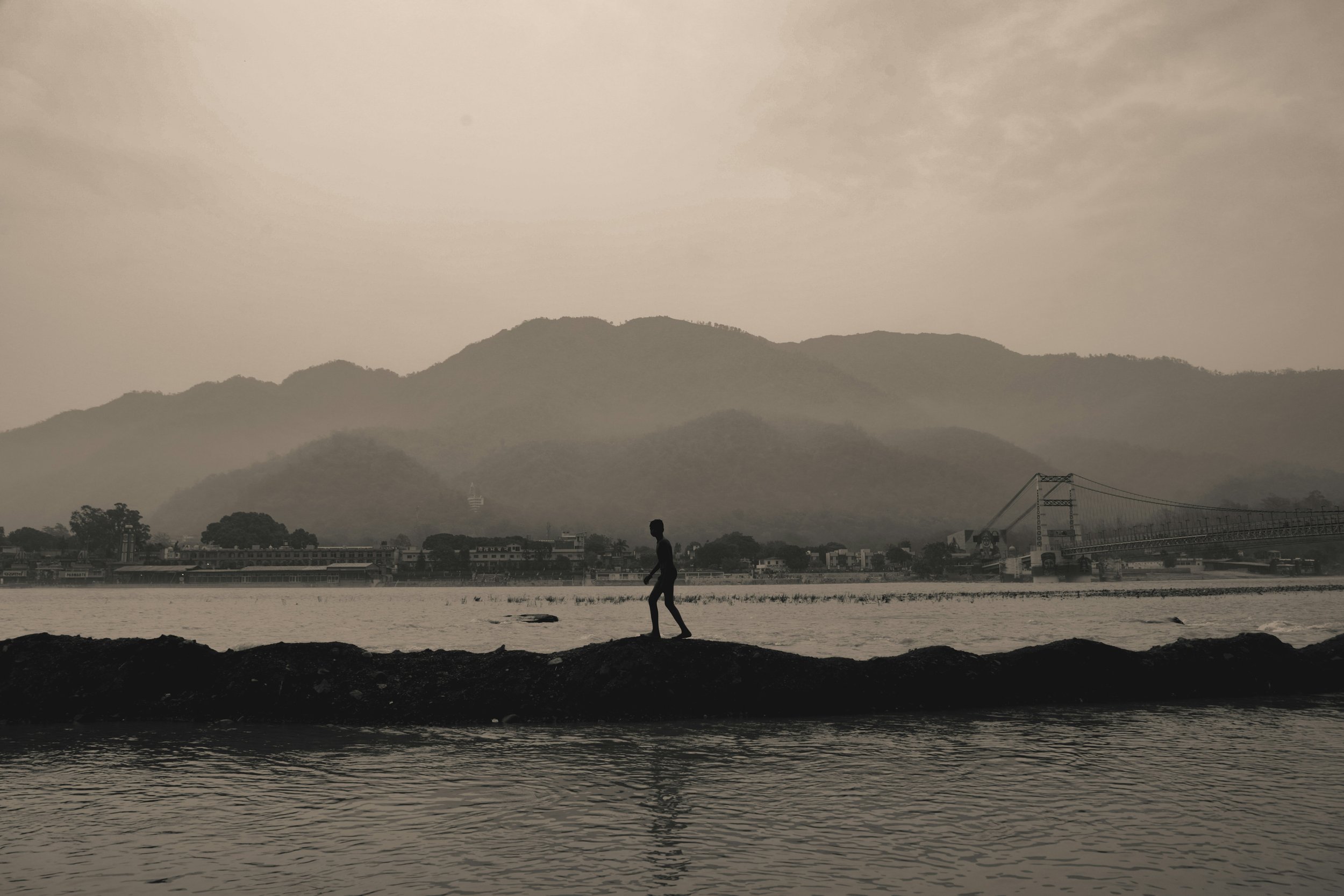
A Young Man at the Water's Edge - "What did he see, what did he experience, to be so free, so fulfilled, that he could give everything?" — Fr. Julián Carrón
“Only such fullness can draw us in so deeply that we don’t want to lose it. Not because we have to sacrifice something, but because the real sacrifice would be to lose it!”
Julián Carrón - A young monk gives his entire life to Christ. What could he have seen?
It is truly wonderful to take part in a gesture like the one we are celebrating, where we see a person—a young man—so "captivated" that he can decide to give his life, his entire life, to Christ. What did he see, what did he experience, to be so free, so fulfilled, that he could give everything? Everything. Everything. It's one thing to read about it in texts, which, as we often see, leave us unmoved. It's quite another to see someone in the flesh making this total gesture of life. Without a reasonable explanation, such a gesture can't be understood unless we assume he's a madman. And he isn't. Something has happened.
Today's readings help us understand what can happen in a life to leave someone totally "captivated." The disciples had fished all night. They were seasoned fishermen, and still they had caught nothing. The Gospel shows how this powerlessness, in their trade and in their lives, weighs on them. When Jesus says, "Put out into deep water and lower your nets for a catch," Peter answers, "Master, we have worked hard all night and have caught nothing." What had happened to Peter that, skilled fisherman that he was, he would open himself to a possibility other than the one his expertise told him to expect? Quite simply, he had already seen that man do certain things, so he could not close himself off to another possibility. It didn't seem reasonable to him. How many things Peter had already seen! The experience he had of Him helped him. "But at your command I will lower the nets," precisely because it is You. Then the unexpected happens, and it fills everyone, Peter above all, with amazement. So much so that he can't help feeling the sheer disproportion between himself (his powerlessness, his fragility, his weakness) and that Presence emerging before his very eyes. On the one hand, he feels the complete closeness of the man standing in front of him. This is not the mysterious figure Jacob wrestled with; this is a man. At the same time, he perceives the sheer disproportion, the boundless "distance," until he feels himself a sinner: "Depart from me, Lord, for I am a sinful man." As the Gospel says, "astonishment at the catch of fish they had made seized him and all those with him." It is the astonishment of the crowd in Mark: "We have never seen anything like this" (Mk 2:12).
Simply having witnessed this extraordinary event makes it reasonable, fully reasonable, for them to accept what they will soon be ready to embrace, when Jesus tells Peter, "Do not be afraid; from now on you will be catching men." And "when they brought their boats to the shore, they left everything and followed him." Only an event like this can make it reasonable to follow Him and leave everything behind: an event that takes hold of their whole life, whose sheer magnitude they feel, and which they can no longer erase from their sight.
That is why the more aware we are of our own fragility and powerlessness, the better we can grasp the significance of that Presence. The more at home the disciples were in their trade, and the more helpless they found themselves to bring in a catch, the more aware they became of the disproportion. And the more that attraction, which filled life with wonder, stood out before their eyes.
Nothing is more reasonable than for someone like Francesco, who has seen this with his own eyes, to decide that the truest, most human, most fitting thing is to yield to that attraction, without which life is not life. This is why St. Paul says, in a beautiful phrase, that Christianity is not a matter of circumcision or uncircumcision (in the sense of religious practices), "but only a new creation" (cf. Gal 6:15). That new creation is born only from this Presence that fills life.
Only such fullness can draw us in so deeply that we don't want to lose it. Not because we have to sacrifice something, but because the real sacrifice would be to lose it! So today his life stands before us as a witness to the "new creation." The life that wells up in Francesco is first of all for him (it has taken hold of him), but it is for all of us too! We so often settle for less, care about nothing, and grow used to "nothingness." For us, his life raises the question: Is it possible to live differently? Can life reach this fullness? Not settling for less is the great challenge, the great struggle that Christ has introduced into history: not letting our lives be lost in nothingness.
That is why this is a celebration for all of us. We are challenged not by a memory of the past (two thousand years is a long time ago), nor by readings we can recite by heart, but by something so present that it can truly take hold of Francesco's life. So it becomes a promise to each of us that we are not condemned to settle for less. A sense of triviality often wins out, as though one thing were as good as another, as though we could decide for ourselves what fills life, what really makes it life!
Taking part in this celebration today is a precious gift for anyone who doesn't want to miss the fullness of life, because Francesco shows us how not to lose it. There is only one way: to recognize the Presence that fills it and to choose to follow that Presence. So we thank him for his "yes," and we ask the Lord to keep drawing him ever closer throughout his life. Then we will have before us people who don't just repeat words to us but bear witness to this life, this superabundance, this fullness. For Christ came to bring life, and life in abundance (cf. Jn 10:10)!
Nothing is more urgent in today's world than people who, whatever form their vocation takes, are presences: witnesses to the possibility of life's fulfillment that Jesus brought into the world. What people today are waiting for, sometimes groping in the dark, sometimes confused, is exactly this: to see what they desire come true in a life. Not as mere words, which interest no one, but as life itself, a life that draws people in, a life that captivates, so that it may stir in them the hope it stirs in him. That is why we thank Francesco for his "yes," and ask that we too may support him with ours.
Perpetual Profession of Francesco Stoppa - Notes from the homily by Fr. Julián Carrón
Benedictine Monastery of Saints Peter and Paul, La Cascinazza – Buccinasco (Milan), Italy
September 19, 2026
(First Reading: Gen 32:23–32; Psalm 27; Second Reading: Gal 6:14–18; Gospel: Lk 5:1–11)
Notes not reviewed by the author
-
-
Profesión perpetua de Francesco Stoppa
Apuntes de la homilía de don Julián Carrón
Monasterio benedictino de San Pedro y San Pablo, La Cascinazza – Buccinasco (Milán, Italia)
19 de septiembre de 2026
(Primera lectura: Gn 32,23-32; Salmo 26 (27); Segunda lectura: Gál 6,14-18; Evangelio: Lc 5,1-11)Es maravilloso poder participar en un gesto como el que estamos celebrando, en el que vemos a una persona, a un joven, tan «conquistado» que es capaz de decidir entregar su vida, toda su vida, a Cristo. ¿Qué ha visto, qué ha percibido en la vida para sentirse tan libre, tan pleno, como para poder entregarlo todo? Todo, todo. Una cosa es leerlo en los textos, que muchas veces, como vemos, no nos producen ningún efecto, y otra muy distinta es ver a alguien de carne y hueso realizar este gesto total de entrega de la vida. Porque, sin una explicación razonable, un gesto así no se puede entender, a no ser que pensemos que es un loco. Y no lo es. Algo ha sucedido.
Las lecturas de hoy nos ayudan a comprender qué puede suceder en la vida para quedar totalmente «conquistados». Los discípulos habían intentado pescar toda la noche; eran pescadores experimentados y, sin embargo, no habían pescado nada. Y esta sensación de impotencia en su oficio, en su vida, los domina, como vemos en el Evangelio. En cuanto Jesús dice: «Rema mar adentro, y echad vuestras redes para la pesca», Pedro responde: «Maestro, hemos estado bregando toda la noche y no hemos recogido nada». Pero ¿qué le había pasado a Pedro para que, siendo un pescador tan hábil, se abriera a una posibilidad distinta de la que le sugería su propia pericia? Sencillamente, ya había visto a aquel hombre hacer ciertas cosas, por lo que no podía —no le parecía razonable— cerrarse a otra posibilidad. ¡Cuántas cosas había visto ya Pedro! Le resultaba más fácil gracias a la experiencia que tenía de Él. «Pero, por tu palabra, echaré las redes»: precisamente porque eres Tú. Y entonces ocurre lo imprevisto, que llena de asombro a todos, sobre todo a Pedro. Tanto es así que no puede evitar sentir toda la desproporción entre él mismo —su propia impotencia, su propia fragilidad, su propia debilidad— y esa Presencia, el surgir de esa Presencia ante sus ojos. Siente, por un lado, toda la cercanía de aquel hombre que tiene delante: no es el misterioso personaje con el que lucha Jacob; es un hombre. Y, al mismo tiempo, percibe toda la desproporción, la «distancia» infinita, hasta el punto de sentirse pecador: «Señor, apártate de mí, que soy un hombre pecador». Y, como dice el Evangelio, «el estupor se había apoderado de él y de los que estaban con él» (Lc 5,9). Es el mismo asombro de quienes, en otra ocasión, exclaman: «¡Nunca hemos visto una cosa igual!» (Mc 2,12).
El mero hecho de haber presenciado esta excepcionalidad hace razonable —plenamente razonable— lo que luego estarán dispuestos a acoger, cuando Jesús le dice a Pedro: «“No temas; desde ahora serás pescador de hombres”. Y, sacando las barcas a tierra, lo dejaron todo y lo siguieron». Solo un hecho así, que invade toda su vida, en el que sienten toda la desproporción y que ya no pueden borrar de su mirada, puede hacer razonable seguirlo dejándolo todo.
Por eso, cuanto más consciente es uno de su propia fragilidad e impotencia, más capaz es de captar el alcance de esa Presencia. Cuanto más avezados estaban los discípulos en su oficio y más incapaces se veían de llevar pescado a casa, más conscientes eran de la desproporción y más se manifestaba ante sus ojos ese atractivo que llenaba la vida de asombro.
Nada es más razonable que el hecho de que alguien como Francesco, que ha visto esto con sus propios ojos, haya decidido que lo más verdadero, lo más humano, lo más acertado es dejarse llevar por ese atractivo, sin el cual la vida no es vida. Por eso san Pablo dice, con una expresión preciosa, que el cristianismo no es una cuestión de circuncisión o incircuncisión (en el sentido de «prácticas religiosas»), sino que la verdadera cuestión es la «nueva criatura» (cf. Gál 6,15): la nueva criatura que nace únicamente de esta Presencia que llena la vida.
Solo una plenitud así es capaz de atraernos tanto que no queramos perderla: no porque uno tenga que sacrificar algo, sino porque el verdadero sacrificio sería perderla. Por eso, hoy su vida es ante nosotros el testimonio de la «nueva criatura»: la vida que bulle en Francesco es, ante todo, para él —se apodera de él—, ¡pero es para todos nosotros! Porque a nosotros, que tantas veces nos conformamos con poco, no nos importa nada y nos acostumbramos a la «nada», su vida nos hace decir: ¡¿Pero es posible vivir de otra manera?! ¡¿Es posible que la vida alcance esta plenitud?! No conformarnos con menos es el gran desafío, la gran lucha que Cristo ha introducido en la historia: no dejar que nuestra vida se pierda en la nada.
Es, pues, una fiesta para todos nosotros: ser desafiados no por un recuerdo del pasado —dos mil años quedan muy lejos—, ni por ciertas lecturas que podemos repetir de memoria, sino por algo tan presente que puede apoderarse realmente de la vida de Francesco y, por tanto, ser para cada uno de nosotros una promesa de que no estamos condenados a conformarnos. A menudo prevalece la superficialidad, para la que da lo mismo una cosa que otra, como si pudiéramos decidir nosotros qué es lo que llena la vida, qué es lo que la convierte verdaderamente en vida.
Participar hoy en esta celebración es, por tanto, un don verdaderamente precioso para quien no quiere perderse la plenitud de la vida, porque Francesco nos muestra cómo no perderla. Solo de una manera: habiendo reconocido esa Presencia que la llena y queriendo seguirla. Por eso le damos las gracias por su «sí» y pedimos al Señor que siga atrayéndolo cada vez más a lo largo de toda su vida, para que podamos tener ante nosotros presencias que no se limiten a repetirnos discursos, sino que nos den testimonio de esta vida, de esta sobreabundancia, de esta plenitud. Porque Cristo vino a traer vida, ¡y vida en abundancia! (cf. Jn 10,10).
Nada hace tanta falta hoy, en este mundo, como personas que —sea cual sea la forma en que estén llamadas a vivir— sean presencias, testigos de esta posibilidad de plenitud de vida que Jesús trajo al mundo. Lo que los hombres de nuestro tiempo están esperando —a veces a tientas, a veces confundidos— es precisamente esto: ver cómo se hace realidad en la vida lo que ellos desean; no como un discurso, que no interesa a nadie, sino como vida, como vida que atrae, como vida que cautiva, de modo que pueda suscitar en ellos la esperanza que suscita en él. Por eso damos las gracias a Francesco por su «sí» y pedimos poder secundarlo también nosotros con el nuestro.
Apuntes no revisados por el autor
-
Julián Carrón
C’est magnifique de pouvoir prendre part à un geste comme celui que nous célébrons aujourd’hui, où nous voyons une personne, un jeune, tellement « saisi » qu’il en vient à décider de donner sa vie, toute sa vie, au Christ. Qu’a-t-il vu, qu’a-t-il perçu dans la vie pour être si libre, si comblé, au point de pouvoir tout donner ? Tout, absolument tout. C’est une chose de le lire dans les textes, qui, comme on le voit souvent, n’ont aucun effet sur nous ; c’en est une autre de voir quelqu’un, en chair et en os, accomplir ce geste total de la vie. Car, sans explication raisonnable, un tel geste ne peut être compris, si ce n’est en considérant qu’il s’agit d’un fou, mais ce n’est pas le cas. Quelque chose s’est produit.
Les lectures d’aujourd’hui nous aident à comprendre ce qui peut se passer dans la vie au point d’être totalement « pris ». Les disciples avaient essayé de pêcher toute la nuit, c’étaient des pêcheurs aguerris, mais malgré cela, ils n’avaient rien pris. Et ce sentiment d’impuissance face à leur métier, face à leur vie, les domine, comme nous le voyons dans l’Évangile. Dès que Jésus dit : «Avancez au large et jetez vos filets », Pierre répond : «Maître, nous avons peiné toute la nuit sans rien prendre». Mais que s’était-il passé chez Pierre pour qu’un pêcheur aussi habile que lui s’ouvre à une possibilité différente de celle vers laquelle le conduisait son expérience ? Tout simplement, il avait déjà vu cet homme accomplir certaines choses ; il ne pouvait donc pas, cela ne lui semblait pas raisonnable, se fermer à une autre possibilité. Combien de choses Pierre avait-il déjà vues ! L’expérience qu’il avait de Lui lui facilitait les choses. «Mais sur Ta parole [précisément parce que c’est Toi] je jetterai les filets». Et alors, survient l’imprévu qui remplit tout le monde d’émerveillement, surtout Pierre. À tel point qu’il ne peut s’empêcher de ressentir toute la disproportion entre lui-même – entre sa propre impuissance, sa propre fragilité, sa propre faiblesse – et cette Présence, l’émergence de cette Présence devant ses yeux. Il ressent, d’une part, toute la proximité de cet homme qu’il a en face de lui : ce n’est pas le personnage mystérieux contre lequel Jacob lutte, c’est un homme. Et, en même temps, il perçoit tout le décalage, cette « distance » infinie, au point de se sentir pécheur : «Seigneur, éloigne-toi de moi, car je suis un pécheur». Et, comme le dit l’Évangile, «un grand étonnement s’empara de lui et de tous ceux qui étaient avec lui», car «nous n’avons jamais rien vu de pareil !» (Mc 2, 12).
Le simple fait d’avoir vu cette exception rend raisonnable – pleinement raisonnable – ce qu’ils seront ensuite prêts à accueillir, lorsque Jésus dit à Pierre : «“Ne crains rien ; désormais, tu seras pêcheur d’hommes”. Après avoir tiré leurs barques à terre, ils laissèrent tout et le suivirent ». Seul un tel événement, qui envahit toute leur vie, dans lequel ils ressentent toute la disproportion, et qu’ils ne peuvent plus effacer de leur mémoire, peut rendre raisonnable le fait de Le suivre en tout abandonnant.
C’est pourquoi, plus on est conscient de sa propre fragilité et de son impuissance, plus on est capable de saisir la portée de cette Présence. Plus les disciples étaient habitués à pêcher, plus ils étaient incapables de ramener du poisson à la maison, plus ils étaient conscients de la disproportion, et plus s’imposait à leurs yeux cet attrait qui remplissait la vie d’émerveillement.
Rien n’est plus raisonnable que le fait qu’un homme, comme François, qui a vu cela de ses propres yeux, ait décidé que la chose la plus vraie, la plus humaine, la plus juste, soit de céder à cet attrait, sans lequel la vie n’est pas vie. C’est pourquoi saint Paul dira, dans une formule magnifique, que le christianisme n’est pas une question de circoncision ou de non-circoncision [au sens des « habitudes religieuses »], mais que la véritable question, c’est la « créature nouvelle » ! La créature nouvelle qui ne naît que de cette Présence qui comble la vie (cf. Ga 6, 15).
Ainsi, seule une telle plénitude est capable de nous attirer au point de ne pas vouloir la perdre : non pas parce qu’il faudrait sacrifier quelque chose, mais parce que le véritable sacrifice serait de la perdre ! C’est pourquoi, aujourd’hui, sa vie est le témoignage de la « créature nouvelle » devant nous : la vie qui bouillonne en François est d’abord pour lui, elle s’empare de lui, mais elle est pour nous tous ! Car pour nous – qui, si souvent, nous nous contentons de peu, ne nous soucions de rien, nous habituons au « rien » –, sa vie nous fait dire : mais est-il possible de vivre autrement ?! Est-il possible que la vie puisse acquérir cette plénitude ?! Ne pas se contenter de moins, voilà le grand défi, la grande lutte que le Christ a introduite dans l’histoire : ne pas laisser notre vie se perdre dans le néant.
C’est pourquoi c’est une fête pour nous tous : être interpellés non pas par un souvenir du passé – 2 000 ans, c’est très lointain –, ni par certaines lectures que nous pouvons réciter par cœur, mais par quelque chose de si présent qu’il peut véritablement s’emparer de la vie de François et, par là même, être une promesse pour chacun d’entre nous, à savoir que nous ne sommes pas condamnés à nous contenter de peu. Souvent, c’est l’uniformisation qui prévaut, selon laquelle une chose en vaut une autre, comme si nous pouvions décider nous-mêmes de ce qui remplit la vie, de ce qui en fait véritablement la vie !
Ainsi, participer aujourd’hui à cette célébration est véritablement un don précieux pour ceux qui ne veulent pas passer à côté de la plénitude de la vie ! Car François nous dit comment ne pas la perdre. D’une seule manière : en ayant reconnu cette Présence qui la comble et en voulant y adhérer. C’est pourquoi nous le remercions pour son « oui » et nous demandons au Seigneur de continuer, tout au long de sa vie, à l’attirer toujours davantage, afin que nous puissions avoir devant nous des présences qui ne se contentent pas de nous répéter des discours, mais qui nous témoignent de cette vie, de cette surabondance, de cette plénitude ! Car le Christ est venu pour apporter la vie, et la vie en abondance !
Rien n’est plus urgent aujourd’hui, dans ce monde, que des personnes qui – quelle que soit la forme sous laquelle elles sont appelées à vivre – soient des présences, des témoins de cette possibilité d’épanouissement de la vie que Jésus a apportée au monde ! Ce que les hommes de notre temps attendent – tantôt à tâtons, tantôt dans la confusion – c’est précisément cela : voir se réaliser dans la vie ce qu’ils désirent, non pas sous forme de discours – cela n’intéresse personne –, mais comme une vie, comme une vie qui attire, comme une vie qui captive, afin qu’elle puisse susciter en eux l’espérance qu’elle suscite en lui. C’est pourquoi nous remercions François pour son « oui » et nous demandons de pouvoir, nous aussi, l’accompagner par le nôtre.
Notes non relues par l’auteur
Profession perpétuelle
par Francesco Stoppa
Notes tirées de l’homélie de don Julián Carrón
Monastère bénédictin des Saints Pierre et Paul – La Cascinazza
19 septembre 2026 – Buccinasco (MI)
(Première lecture : Gn 32, 23-32 ; Psaume 27 (26) ; Deuxième lecture : Ga 6, 14-18 ; Évangile : Lc 5, 1-11)
