Recognizing the Shepherd's Voice
“The Good Shepherd does not force the heart. He does not strong-arm the will. He is patient. He calls by name and waits for the I to be ready, working through the questions His friends are actually carrying.”
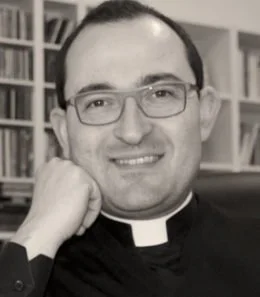
Simone Riva - The criterion for telling the shepherd from the thief lies inside us - inside our own questions.
“Whoever does not enter the sheepfold by the gate but climbs in by another way is a thief and a robber. But whoever enters by the gate is the shepherd of the sheep” (Jn 10:1–2). In a single line, Jesus hands us the criterion for telling a thief from a Shepherd: how he comes in. The thief is an intruder. He treats the sheepfold as the only thing standing between him and what he wants to take. The sheep, however, have a different defense. They recognize the Shepherd’s voice. Climbing the fence and getting inside is not enough to make a man a Shepherd.
The voice of the thief, the voice of the hired hand—the sheep do not recognize it. Sooner or later, the intruder is left to feed only himself.
Don Bruno Maggioni opens up the scene Jesus is drawing on: “The parable of the shepherd unfolds against a backdrop very familiar to Palestinian life. In the evening, the shepherds lead the flock into a pen for the night. A common pen generally serves several flocks. In the morning, each shepherd calls out his own call, and the sheep—his sheep, who know his voice—follow him” (Avvenire, April 17, 2005).
There is something in the Shepherd’s voice that is unmistakable—even when it is not the only voice in the air.
There is something in the Shepherd’s tone that the sheep cannot mistake, even when his is not the only voice in the air. So what does it actually mean to climb into the pen another way instead of walking through the gate?
The Easter Gospels answer the question by showing us Christ’s method—the true and only Shepherd, who waits for the time each person needs to recognize Him. The Good Shepherd, the One who comes through the main gate, does not force the heart. He does not strong-arm the will. He is patient.
The Apostle Thomas and the two disciples on the road to Emmaus both bear witness to this. Each of them documents Jesus’s pedagogy in revealing Himself: He waits for The I to be ready, and He works through the questions His friends are actually carrying. He does not bypass them. He meets them inside The Event of their own searching.
Don Giussani names the educational meaning of this divine waiting with great precision: “The best education is one structured so that development occurs without the person undergoing the process even realizing it. The less conflict there is, the more natural the development. … What is not attained through evolution is not assimilated. And even a definition must express an achievement that has already taken place; otherwise, it would amount to the imposition of a schema” (Luigi Giussani, All’origine della pretesa cristiana, Rizzoli, Milan 2011, p. 73).
What is not attained through evolution is not assimilated.
The Shepherd’s voice, then, is recognized by a heart that has been given the time to recognize it. He does not impose a schema. He does not climb the fence of our freedom. He calls—by name—and waits for us to answer. The thief shouts and grabs. The Shepherd speaks and abides.
The criterion is, in the end, an interior one. It belongs to The I and to nowhere else. The sheep know the Shepherd because something in them was made for His voice—a Correspondence so deep it predates every argument. This is the structural disproportion the Christian event answers: a heart aching for an infinite Presence it could never construct on its own, and a Voice that, finally, calls it by its true name.
To recognize Him is not the conclusion of a calculation. It is the moment a question, long carried, finds the One it was always asking for.
-
Riconoscere la voce del Pastore
Il criterio per distinguere il Pastore dal ladro risiede dentro di noi — nelle nostre domande. Di Simone Riva
«In verità, in verità io vi dico: chi non entra nel recinto delle pecore per la porta, ma vi sale da un’altra parte, è un ladro e un brigante. Chi invece entra per la porta, è pastore delle pecore» (Gv 10,1–2). In una sola riga, Gesù ci consegna il criterio: il modo in cui entra. Il ladro è un intruso; considera il recinto solo come un ostacolo tra sé e ciò che vuole prendere. Le pecore, però, hanno una difesa diversa: riconoscono la voce del Pastore. Arrampicarsi sulla recinzione non basta per essere un Pastore.
La voce del ladro, quella del mercenario — le pecore non la riconoscono. Prima o poi, l’intruso rimane a nutrire solo se stesso.
Don Bruno Maggioni descrive la scena: «La parabola del pastore si svolge su uno sfondo familiare alla vita palestinese. Alla sera i pastori riconducono i greggi in un recinto per la notte. Un recinto comune serve generalmente per più greggi. Al mattino ogni pastore lancia il suo grido, e le pecore — le sue, che ne conoscono la voce — lo seguono» (Avvenire, 17 aprile 2005).
C’è qualcosa nel tono del Pastore che è inconfondibile, anche quando non è l’unica voce nell'aria. Cosa significa, allora, salire nel recinto da un’altra parte invece di passare per la porta?
I Vangeli di Pasqua rispondono mostrando il metodo di Cristo: l’unico vero Pastore, che aspetta il tempo necessario a ciascuno per riconoscerLo. Il Buon Pastore non forza il cuore, non violenta la volontà. È paziente.
L’apostolo Tommaso e i due discepoli sulla strada di Emmaus ne sono testimoni. Gesù attende che l’Io sia pronto e lavora attraverso le domande che i Suoi amici portano davvero. Non le scavalca; li incontra dentro l’evento della loro ricerca.
Don Giussani definisce con precisione il significato educativo di questa attesa divina: «L’educazione migliore è quella strutturata in modo che lo sviluppo avvenga senza che la persona sottoposta al processo neppure se ne accorga... Ciò che non è raggiunto per evoluzione non è assimilato. E anche una definizione deve esprimere una conquista già avvenuta; altrimenti sarebbe l’imposizione di uno schema» (Luigi Giussani, All’origine della pretesa cristiana, Rizzoli, Milano 2011, p. 73).
La voce del Pastore, dunque, è riconosciuta da un cuore a cui è stato dato il tempo di riconoscerla. Egli non impone schemi. Non scavalca il recinto della nostra libertà. Chiama — per nome — e aspetta la nostra risposta. Il ladro urla e afferra; il Pastore parla e rimane.
Il criterio è, in fondo, interiore. Appartiene all’Io. Le pecore conoscono il Pastore perché qualcosa in esse è stato fatto per la Sua voce — una Corrispondenza così profonda che precede ogni argomento. È la sproporzione strutturale a cui risponde l’avvenimento cristiano: un cuore che anela a una Presenza infinita che non potrebbe mai costruirsi da solo, e una Voce che, finalmente, lo chiama con il suo vero nome.
RiconoscerLo non è la conclusione di un calcolo. È il momento in cui una domanda, portata a lungo, incontra Colui che ha sempre cercato.
-
Reconocer la voz del Pastor
El criterio para distinguir al Pastor del ladrón reside en nuestro interior—en nuestras propias preguntas.
Por Simone Riva
“El que no entra por la puerta en el redil de las ovejas, sino que sube por otra parte, ese es ladrón y salteador. Pero el que entra por la puerta, es el pastor de las ovejas” (Jn 10,1–2). En una sola frase, Jesús nos entrega el criterio: cómo entra. El ladrón es un intruso; para él, el redil es solo un obstáculo para obtener lo que quiere. Las ovejas, sin embargo, tienen otra defensa: reconocen la voz del Pastor. Saltar la cerca no convierte a un hombre en Pastor.
Las ovejas no reconocen la voz del ladrón ni la del asalariado. Tarde o temprano, el intruso termina alimentándose solo a sí mismo.
Don Bruno Maggioni describe el contexto: “La parábola se desarrolla en un escenario familiar de la vida palestina. Al atardecer, los pastores llevan sus rebaños a un redil común para pasar la noche. Por la mañana, cada pastor lanza su propio grito, y sus ovejas —que conocen su voz— lo siguen” (Avvenire, 17 de abril de 2005).
Hay algo inconfundible en el tono del Pastor, incluso cuando no es la única voz en el aire. ¿Qué significa, entonces, entrar por otra parte en lugar de cruzar la puerta?
Los Evangelios de Pascua responden mostrando el método de Cristo, el verdadero Pastor, que espera el tiempo que cada persona necesita para reconocerlo. El Buen Pastor no fuerza el corazón ni violenta la voluntad. Es paciente.
El apóstol Tomás y los discípulos de Emaús son testigos de esto. Jesús espera a que el “Yo” esté listo y trabaja a través de las preguntas reales de sus amigos. No las ignora; se encuentra con ellos dentro de su propia búsqueda.
Don Giussani define esta espera divina con precisión: “La mejor educación es aquella estructurada para que el desarrollo ocurra sin que la persona se dé cuenta... Lo que no se alcanza por evolución no se asimila. Incluso una definición debe expresar un logro ya realizado; de lo contrario, sería la imposición de un esquema” (Luigi Giussani, El origen de la pretensión cristiana).
La voz del Pastor es reconocida por un corazón al que se le ha dado tiempo. Él no impone esquemas ni salta la valla de nuestra libertad. Llama por nombre y espera. El ladrón grita y arrebata; el Pastor habla y permanece.
El criterio es, finalmente, interior. Pertenece al “Yo”. Las ovejas conocen al Pastor porque algo en ellas fue hecho para su voz: una correspondencia tan profunda que precede a cualquier argumento. Es la respuesta a la desproporción del corazón: el anhelo de una Presencia infinita que no podemos construir solos, y una Voz que nos llama por nuestro verdadero nombre.
Reconocerlo no es el resultado de un cálculo. Es el momento en que una pregunta, cargada por mucho tiempo, encuentra a Aquel a quien siempre estuvo buscando.
-
Reconnaître la voix du Berger
Le critère pour distinguer le Berger du voleur réside en nous — dans nos propres questions.
Par Simone Riva
« Celui qui n’entre pas par la porte dans l’enclos des brebis, mais qui y grimpe par un autre côté, est un voleur et un brigand. Mais celui qui entre par la porte est le berger des brebis » (Jn 10, 1-2). En une seule phrase, Jésus nous livre le critère : sa manière d’entrer. Le voleur est un intrus. Pour lui, l'enclos n'est qu'un obstacle entre lui et ce qu'il veut prendre. Les brebis, pourtant, ont une autre défense : elles reconnaissent la voix du Berger. Escalader la clôture ne suffit pas pour faire d’un homme un Berger.
Les brebis ne reconnaissent pas la voix du voleur, ni celle du mercenaire. Tôt ou tard, l’intrus finit par ne nourrir que lui-même.
Don Bruno Maggioni décrit la scène : « La parabole du berger se déroule dans un décor familier de la vie palestinienne. Le soir, les bergers ramènent les troupeaux dans un enclos pour la nuit. Un enclos commun sert généralement à plusieurs troupeaux. Le matin, chaque berger lance son propre appel, et les brebis — ses brebis, qui connaissent sa voix — le suivent » (Avvenire, 17 avril 2005).
Il y a quelque chose d’immanquable dans le ton du Berger, même lorsqu'il n'est pas la seule voix dans l'air. Que signifie alors entrer par un autre côté au lieu de passer par la porte ?
Les Évangiles de Pâques répondent en montrant la méthode du Christ : le seul vrai Berger, qui attend le temps dont chaque personne a besoin pour Le reconnaître. Le Bon Berger ne force pas le cœur. Il ne violente pas la volonté. Il est patient.
L'apôtre Thomas et les deux disciples sur le chemin d'Emmaüs en témoignent. Jésus attend que le « Moi » soit prêt et travaille à travers les questions que ses amis portent réellement. Il ne les contourne pas. Il les rejoint au cœur de l'événement de leur propre recherche.
Don Giussani définit cette attente divine avec précision : « La meilleure éducation est celle qui est structurée de telle sorte que le développement se produise sans que la personne ne s'en rende compte... Ce qui n'est pas atteint par évolution n'est pas assimilé. Même une définition doit exprimer un accomplissement déjà réalisé ; sinon, elle ne serait que l'imposition d'un schéma » (Luigi Giussani, L’origine de la prétention chrétienne).
La voix du Berger est donc reconnue par un cœur à qui l'on a laissé le temps. Il n'impose pas de schéma. Il n'escalade pas la barrière de notre liberté. Il appelle par notre nom et attend notre réponse. Le voleur crie et s'empare ; le Berger parle et demeure.
Le critère est, au final, intérieur. Il appartient au « Moi ». Les brebis connaissent le Berger parce que quelque chose en elles a été fait pour sa voix : une correspondance si profonde qu'elle précède tout argument. C'est la réponse à la disproportion du cœur : un désir de Présence infinie qu'il ne pourrait construire seul, et une Voix qui, enfin, l'appelle par son vrai nom.
Le reconnaître n'est pas la conclusion d'un calcul. C'est le moment où une question, portée depuis longtemps, trouve Celui qu'elle a toujours cherché.