The Freedom to Change Course
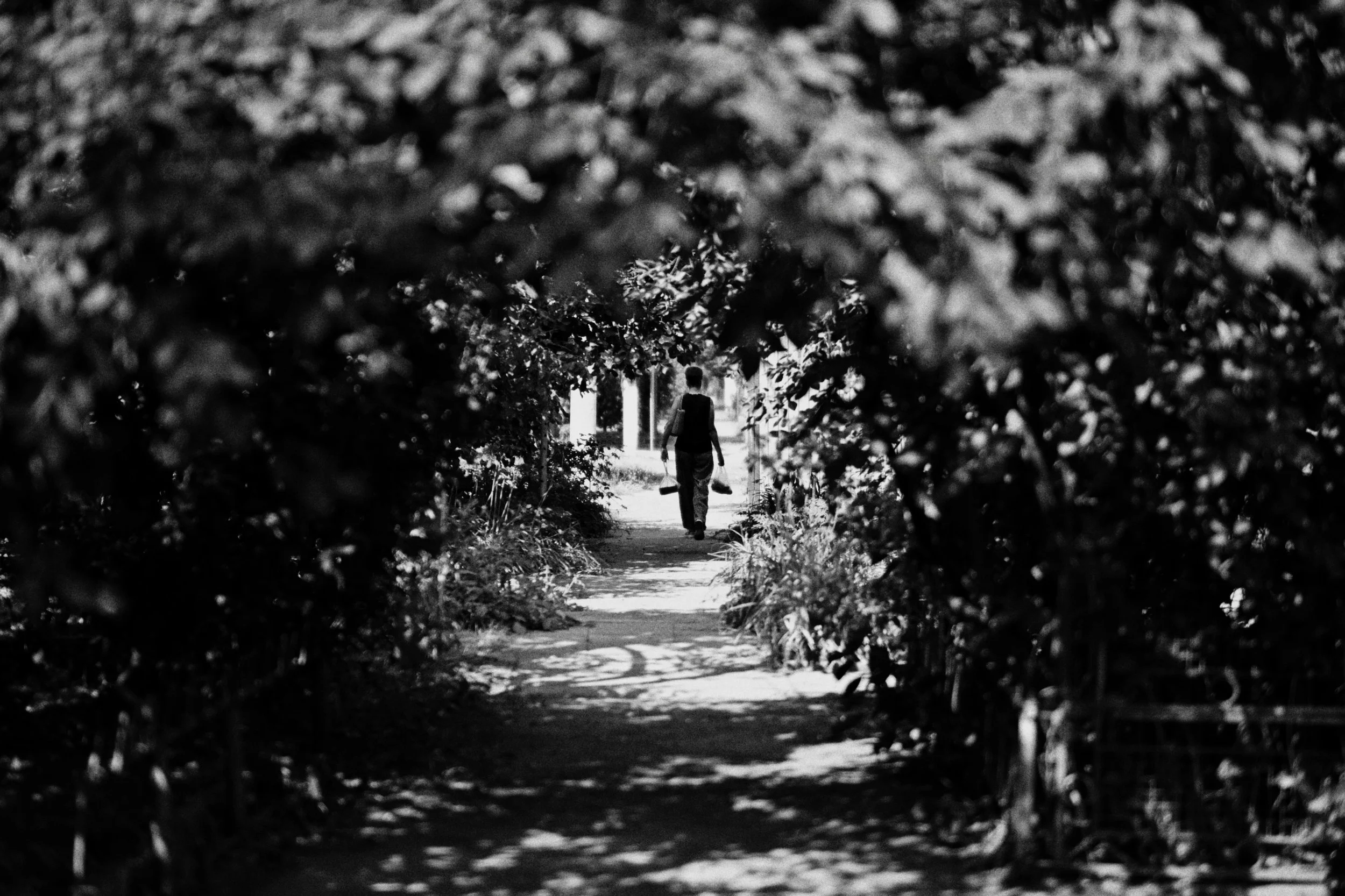
The Freedom to Change Course: a figure walking toward the light.
“God does not enter our lives unless we freely allow Him to. He willed that His omnipotence yield before our freedom.”
Julián Carrón - God will not force His way in; the vineyard still waits on our freedom.
There is a question as old as faith itself, one that perhaps we, too, have asked ourselves at times: If God is good and all-powerful, why does He allow things to happen that shake us to our core? The people of Israel asked this question during the darkest moment of their history: Jerusalem had been destroyed, the Temple lay in ruins, and the people had been exiled to Babylon. The catastrophe had shaken the exiles’ faith to its very foundations. Had God been unable to save them from a disaster of such proportions?
The prophet Ezekiel gives voice to this lament: “You say, ‘The LORD’s way is not fair!’” But he immediately turns the perspective around: “Is it my way that is unfair, or rather, are not your ways unfair?” He points the way: “When someone virtuous turns away from virtue to commit iniquity, and dies, it is because of the iniquity he committed that he must die. But if he turns from the wickedness he has committed, and does what is right and just, he shall preserve his life.”
God created us free. We can choose whether to live according to His plan or to turn away from it. Yet we would like Him to spare us the consequences of our choices. But if He did, what kind of freedom would it be?
In the Gospel, through a simple and disarming parable, Jesus shows that this freedom is never taken away from us: the possibility of changing course always remains open.
A father asks his two sons to go work in the vineyard. The first replies, “I will not.” But then he changes his mind and goes. The second replies promptly, “Yes, sir.” But then he doesn’t go. “Which of the two did his father’s will?” The listeners have no doubt: “The first.”
But to whom is Jesus addressing this parable? In the two sons, He portrays the two reactions that His presence evoked among His contemporaries. On the one hand, the chief priests and the elders of the people, to whom He is speaking, are like the son who says “yes” but then does not go. On the other hand, the tax collectors and the prostitutes are like the son who at first refuses, but then changes his mind and goes to work in the vineyard. Jesus’ presence left no one indifferent. The newness He brought was so earth-shattering that it put everyone’s freedom into play—both those who seemed to have accepted God’s plan, such as the priests, scribes, and Pharisees, and those who had rejected it, such as the tax collectors and prostitutes.
Who, then, fulfilled the Father’s will? Those who ultimately said “yes.” Those who believed they were doing God’s will but rejected His initiative in sending John the Baptist and Jesus did not, in reality, fulfill it. Those, on the other hand, who had initially said “no” but were converted in the face of that very initiative—they are the ones who truly did the Father’s will.
This helps us understand Jesus’ shocking conclusion: “Tax collectors and prostitutes are entering the kingdom of God before you,” He says to the chief priests’ faces. They are the first to enter the kingdom of God, which Jesus inaugurates, while those who reject Him remain outside as long as they persist in their rejection.
This parable does not pertain only to Jesus’ time; it is relevant in every age, including our own. The priests, the scribes, and the Pharisees were content with a routine faith, made up of practices and rules. Meanwhile, right before their eyes, something extraordinary was happening, to the point that people said, “We have never seen anything like this” (Mk 2:12).
They did not feel the urgency to accept the invitation Jesus extended to them through His presence, and they preferred to go on suffocating under the weight of rules rather than allow themselves to be drawn into something new. Those, on the other hand, who were driven by a desire for fulfillment—so intense that they sought it even down the wrong paths without ever finding a satisfactory answer—allowed themselves to be won over by the attraction that Jesus exerted. For He had not come for the healthy, but for the sick, for those in need. That is why they sought Him out and ate with Him. They could no longer live without Him. The new life was “being with Him.”
Today, each of us faces the same choice. This is why God created us free—so that each of us might use our freedom for the purpose for which it is intended: to embrace what corresponds to our own desire for happiness. Those who do not embrace this, and do not see their lives overflowing with joy as the tax collectors did, cannot blame God for an empty existence. God does not enter our lives unless we freely allow Him to. He willed that His omnipotence should yield before our freedom.
Only those who make room for His presence will experience the power of Christ. The invitation is extended to everyone, and to those who follow Him, Jesus promises a hundredfold return even now, in this present time. Only those who follow Him freely have the joy of seeing everything multiplied a hundredfold.
This is what happened to Saint Paul. When he encountered Christ, he realized that everything he had previously considered a gain—even his impeccable observance of the law and all the rules—was now “rubbish” (cf. Phil 3:8) in the face of the new life that Christ had brought into his existence. From then on, for Paul, “life is Christ” (Phil 1:21). The choice, even today, is in our hands.
Notes not reviewed by the author
26th Sunday in Ordinary Time – Year A - September 27, 2026
(First Reading: Ezekiel 18:25–28; Psalm 25; Second Reading: Philippians 2:1–5; Gospel: Matthew 21:28–32)
-
-
XXVI Domingo del Tiempo Ordinario – Ciclo A
Apuntes de la homilía de don Julián Carrón
27 de septiembre de 2026
(Primera lectura: Ez 18,25-28; Salmo 24 (25); Segunda lectura: Flp 2,1-5; Evangelio: Mt 21,28-32)
Hay una pregunta, tan antigua como la fe, que quizá también nosotros nos hayamos planteado alguna vez: si Dios es bueno y todopoderoso, ¿por qué permite que sucedan cosas que nos conmocionan? El pueblo de Israel se la planteó en el momento más oscuro de su historia: Jerusalén había sido destruida, el templo yacía en ruinas, el pueblo había sido deportado a Babilonia. La catástrofe había sacudido hasta los cimientos la fe de los exiliados. ¿Acaso Dios no había sido capaz de salvarlos de un desastre de tales proporciones?
El profeta Ezequiel da voz a este lamento: «Vosotros decís: “No es justo el modo de actuar del Señor”». Pero enseguida invierte la perspectiva: «¿No es justa mi conducta o, más bien, no es justa la vuestra?». Y nos señala el camino: «Si el justo se aparta de la justicia y comete el mal […], muere precisamente por el mal que ha cometido. Y si el malvado se aparta de la maldad que ha cometido y hace lo que es recto y justo, se salva a sí mismo».
Dios nos ha creado libres. Podemos elegir vivir según su designio o alejarnos de él. Sin embargo, nos gustaría que nos librara de las consecuencias de nuestras decisiones. Pero, si fuera así, ¿qué libertad sería esa?
En el Evangelio, con una parábola sencilla y cautivadora, Jesús muestra que nunca se nos quita esta libertad: la posibilidad de cambiar de camino permanece siempre abierta.
Un padre pide a sus dos hijos que vayan a trabajar a la viña. El primero responde: «No me apetece». Pero luego se arrepiente y va. El segundo responde de inmediato: «Sí, señor». Pero luego no va. «¿Cuál de los dos ha cumplido la voluntad del padre?». Los oyentes no tienen dudas: «El primero».
Pero ¿a quién se dirige Jesús con esta parábola? En los dos hijos retrata las dos reacciones que su presencia suscitaba entre sus contemporáneos: por un lado, los sumos sacerdotes y los ancianos del pueblo, a quienes se dirige, son el hijo que dice «sí», pero luego no va; por otro, los publicanos y las prostitutas son el hijo que al principio se niega, pero luego se arrepiente y va a trabajar a la viña. La presencia de Jesús no dejaba indiferente a nadie. La novedad que traía era tan impactante que provocaba la libertad de todos, tanto de quienes parecían haber acogido el designio de Dios —como los sacerdotes, los escribas y los fariseos— como de quienes lo habían rechazado —como los publicanos y las prostitutas—.
¿Quiénes, pues, cumplieron la voluntad del Padre? Aquellos que al final dijeron «sí». Los que creían estar haciendo la voluntad de Dios, pero rechazaron su iniciativa de enviar a Juan el Bautista y a Jesús, en realidad no la cumplieron. En cambio, aquellos que al principio habían dicho «no» se convirtieron ante esa misma iniciativa. Son ellos quienes realmente hicieron la voluntad del Padre.
Así se comprende la desconcertante conclusión de Jesús: «Los publicanos y las prostitutas os adelantan en el reino de Dios», les dice a la cara a los sumos sacerdotes. Ellos son los primeros en entrar en el reino de Dios, que Jesús inaugura, mientras que quien lo rechaza se queda fuera en tanto se obstine en su rechazo.
Esta parábola no se refiere solo a la época de Jesús, sino que es actual en todas las épocas, también en la nuestra. Los sacerdotes, los escribas y los fariseos se conformaban con una fe rutinaria, hecha de prácticas y normas. Sin embargo, ante sus propios ojos estaba ocurriendo algo excepcional, hasta tal punto que la gente decía: «¡Nunca habíamos visto nada semejante!» (Mc 2,12).
No percibieron la urgencia de aceptar la invitación que Jesús les dirigía con su presencia, y prefirieron seguir ahogándose bajo el peso de las normas antes que dejarse llevar por la novedad. Quienes, en cambio, estaban movidos por un deseo de plenitud —tan intenso que la buscaban incluso por caminos equivocados, sin encontrar nunca una respuesta adecuada— se dejaron conquistar por el atractivo que ejercía Jesús. Porque Él no había venido para los sanos, sino para los enfermos, para los necesitados. Por eso lo buscaban y comían con Él. Ya no podían vivir sin Él. La vida nueva consistía en «estar con Él».
Hoy cada uno de nosotros se enfrenta a la misma elección. Por eso Dios nos ha creado libres: para que cada uno pueda emplear la libertad para el fin al que está destinada, que es adherirse a lo que corresponde a su propio deseo de felicidad. Quien no se adhiera a ello y no vea rebosar de alegría su vida —como la experimentaban los publicanos— no puede culpar a Dios de una existencia vacía. Dios no entra en nuestra vida si no se lo permitimos libremente. Él quiso que su omnipotencia se detuviera ante nuestra libertad.
Solo quien deje espacio a su presencia podrá experimentar el poder de Cristo. La invitación va dirigida a todos, y a quienes lo siguen Jesús les promete el ciento por uno ya ahora, en este tiempo. Solo quien lo sigue libremente tiene la alegría de ver cómo todo se multiplica por cien.
Es lo que le sucedió a san Pablo. Cuando se encontró con Cristo, comprendió que todo lo que antes consideraba una ganancia, incluso su irreprochable observancia de la ley y de todas las normas, era ya «basura» (cf. Flp 3,8) frente a la vida nueva que Cristo había introducido en su existencia. Desde entonces, para Pablo, «vivir es Cristo». La elección, también hoy, está en nuestras manos.
Apuntes no revisados por el autor
-
XXVIe dimanche du temps ordinaire - Année A
Notes tirées de l’homélie de don Julián Carrón
27 septembre 2026
(Première lecture : Ez 18, 25-28 ; Psaume 24 (25) ; Deuxième lecture : Ph 2, 1-5 ; Évangile : Mt 21, 28-32)
Il y a une question, aussi ancienne que la foi, que nous nous sommes peut-être parfois posée nous aussi : si Dieu est bon et tout-puissant, pourquoi permet-il que se produisent des choses qui nous bouleversent ? Le peuple d’Israël se l’est posée au moment le plus sombre de son histoire : Jérusalem avait été détruite, le temple gisait en ruines, le peuple avait été déporté à Babylone. La catastrophe avait ébranlé la foi des exilés jusqu’à ses fondements. Dieu n’avait-il pas été capable de les sauver d’un désastre d’une telle ampleur ?
Le prophète Ézéchiel se fait l’écho de cette plainte : « Vous dites : “La manière d’agir du Seigneur n’est pas juste” ». Mais aussitôt, il renverse la perspective : « Est-ce ma conduite qui n’est pas juste, ou bien est-ce la vôtre ? ». Il montre la voie : « Si le juste s’écarte de la justice et commet le mal […], il meurt précisément à cause du mal qu’il a commis. Et si le méchant se détourne de la méchanceté qu’il a commise et accomplit ce qui est droit et juste, il se donne la vie ».
Dieu nous a créés libres. Nous pouvons choisir de vivre selon son dessein, ou de nous en éloigner. Et pourtant, nous aimerions qu’il nous épargne les conséquences de nos choix. Mais si tel était le cas, quelle liberté serait-ce là ?
Dans l’Évangile, à travers une parabole simple et désarmante, Jésus montre que cette liberté ne nous est jamais retirée : la possibilité de changer de voie reste toujours ouverte.
Un père demande à ses deux fils d’aller travailler dans la vigne. Le premier répond : « Je n’en ai pas envie ». Mais ensuite, il se repent et y va. Le second répond aussitôt : « Oui, Seigneur ». Mais ensuite, il n’y va pas. « Lequel des deux a accompli la volonté du père ? ». Les auditeurs n’ont aucun doute : « Le premier ».
Mais à qui Jésus s’adresse-t-il avec cette parabole ? À travers ces deux fils, il dépeint les deux réactions que sa présence suscitait chez ses contemporains : d’une part, les chefs des prêtres et les anciens du peuple, à qui il s’adresse, qui sont le fils qui dit « oui » mais qui n’y va pas. D’autre part, les publicains et les prostituées sont le fils qui, d’abord, refuse, mais qui ensuite se repent et va travailler dans la vigne. La présence de Jésus, en effet, ne laissait personne indifférent. La nouveauté qu’il apportait était si bouleversante qu’elle libérait tout le monde, tant ceux qui semblaient avoir accueilli le dessein de Dieu, comme les prêtres, les scribes et les pharisiens, que ceux qui l’avaient rejeté, comme les publicains et les prostituées.
Qui a donc accompli la volonté du Père ? Ceux qui, en fin de compte, ont dit « oui ». Ceux qui croyaient faire la volonté de Dieu, mais qui ont rejeté Son initiative d’envoyer Jean-Baptiste et Jésus, ne l’ont en réalité pas accomplie. Ceux, en revanche, qui avaient d’abord dit « non », se sont convertis face à cette même initiative. Ce sont eux qui ont véritablement accompli la volonté du Père.
On comprend ainsi la conclusion bouleversante de Jésus : « Les publicains et les prostituées vous devancent dans le royaume de Dieu », dit-il en face des grands prêtres. Ce sont eux qui entrent les premiers dans le royaume de Dieu, que Jésus inaugure, tandis que ceux qui le rejettent en restent exclus tant qu’ils s’obstinent dans leur refus.
Cette parabole ne concerne pas seulement l’époque de Jésus, elle est d’actualité à toutes les époques, y compris la nôtre. Les prêtres, les scribes, les pharisiens se contentaient d’une foi routinière, faite de pratiques et de règles. Or, sous leurs yeux, il se passait quelque chose d’exceptionnel, au point que les gens disaient : « Nous n’avons jamais rien vu de pareil ! » (Mc 2, 12).
Ils n’ont pas ressenti l’urgence d’accueillir l’invitation que Jésus leur adressait par sa présence, et ont préféré continuer à étouffer sous le poids des règles, plutôt que de se laisser entraîner par la nouveauté. Ceux, en revanche, qui étaient animés d’un désir de plénitude – si intense qu’ils le cherchaient même sur de mauvaises voies sans jamais trouver de réponse adéquate – se laissèrent conquérir par l’attrait qu’exerçait Jésus. En effet, il n’était pas venu pour les bien portants, mais pour les malades, pour les nécessiteux. C’est pourquoi ils le cherchaient et mangeaient avec lui. Ils ne pouvaient plus vivre sans lui. La vie nouvelle consistait à « rester avec Lui ».
Aujourd’hui, chacun de nous se trouve face au même choix. C’est pour cela que Dieu nous a créés libres, afin que chacun puisse utiliser sa liberté à la fin à laquelle elle est destinée : adhérer à ce qui correspond à son désir de bonheur. Celui qui n’y adhère pas et ne voit pas sa vie déborder de joie – comme les publicains en faisaient l’expérience – ne peut imputer à Dieu la faute d’une existence vide. Dieu n’entre pas dans notre vie si nous ne le lui permettons pas librement. Il a voulu que sa toute-puissance s’arrête devant notre liberté.
Seul celui qui fait de la place à sa présence pourra faire l’expérience de la puissance du Christ. L’invitation s’adresse à tous, et à ceux qui Le suivent, Jésus promet le centuple dès maintenant, en ce temps-ci. Seuls ceux qui Le suivent librement ont la joie de voir tout se multiplier par cent.
C’est ce qui est arrivé à saint Paul. Lorsqu’il a rencontré le Christ, il a compris que tout ce qu’il considérait auparavant comme un gain, même son observance irréprochable de la loi et de toutes les règles, n’était désormais que « des ordures » (cf. Ph 3, 8) face à la vie nouvelle que le Christ avait introduite dans son existence. Depuis lors, pour Paul, « vivre, c’est le Christ ». Le choix, aujourd’hui encore, est entre nos mains.
Notes non révisées par l’auteur
