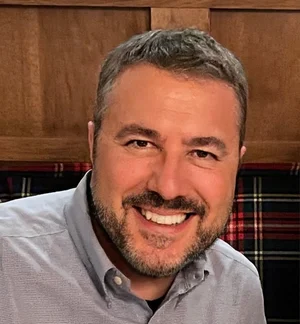
The Gift of Being Preferred
“Preference was the way to help the other see that God is like this—every person a masterpiece of God.”
Ennio Apeciti - The Gift of Being Preferred.
Ennio Apeciti on Luigi Giussani: Testimony of a Passionate Educator
On May 14, 2026, Archbishop of Milan Mario Delpini will preside over the Mass closing the diocesan phase of the inquiry for the beatification and canonization of Don Giussani. Joining us today is Monsignor Ennio Apeciti, diocesan director for the causes of the saints in the Archdiocese of Milan and the archbishop’s delegate for the cause of beatification of the founder of Communion and Liberation.
Welcome to Extraordinary Stories. Thank you for being here with us.
Thank you.
Don Giussani often spoke of the centrality of the living Christ. What does that really mean in the concrete life of a person today?
If Christ is who Christ says he is, then the Angelus already tells us the answer—he came to dwell among us; he dwells with us still. I think the real novelty is exactly this: Christ is not only someone who came two thousand years ago and taught two thousand years ago. He is a real, daily presence, a presence that walks with us. That is what centrality means. He is here today, right beside us, and he accompanies me in every moment of my day, of my life. Today he is here with me; today he walks with me. I don’t know whether I’ve answered fully—I leave it there for you to think about.
You knew Father Giussani personally. Is there a moment, a human detail, that conveys who he was better than any other—even to someone who never met him? Who was Father Giussani?
I met him face to face twice, in connection with the beatification causes of Giuseppe Lazzati and Paul VI. For me those were personal encounters, because I had to question him about both causes. What struck me most—I was still a young man, standing in front of a figure like Giussani—was his warmth. He gave me the feeling he already knew me, that he had always known me. His kindness, and his eyes. His eyes struck me. Eyes of such depth, such presence, such openness that they pulled you in.
Then there was his way of speaking about Paul VI—which the research later confirmed: a real intimacy, a real friendship, real affection. He was almost moved as he talked about him. As for Giuseppe Lazzati, we know they did not share the same ideas or positions. But the respect, the esteem, the approval he had for Lazzati came through clearly. He recalled their meeting; they had wanted to meet, and afterward he insisted on walking him home because it was late. As he said goodbye he remarked, “A great and important man. I’m glad we met—he is a great man and deserves respect in any case.”
That has always stayed with me. We live in an age so quick to criticize, and what came back to me from him was kindness, goodwill toward me, and the inner peace that came through his eyes.
It is said that Father Giussani anticipated certain aspects of the contemporary Church. In what sense was his experience so relevant—I would almost say prophetic—in some respects?
This comes through in the judgment of the theological censors as well. As you know, his writings had to be submitted for review, and one of the two censors made a striking observation: Giussani was formed in the school of his own time—the school of Venegono, with the limits of that period. And yet his thought already anticipates the Second Vatican Council, especially at the ecclesiological level. The Church as communion: think of Lumen Gentium, and then the importance of our own commitment to the Church’s presence in the world.
He anticipated Apostolicam Actuositatem as well—the commitment of the laity is not the exclusive domain of the clergy; the laity matter as such. And at the center, the foundation of it all, the Eucharist. The celebration. The liturgy he loved. Think of the care he took with the hymns. He would get upset if he saw a sloppy celebration. Listening to the witnesses on this point was beautiful. Why? Because the liturgy is the expression of the encounter with God, of God’s presence among us.
And then there was his deep capacity for dialogue. After all, everything began because he had the courage to enter into conversation. I wouldn’t compare him to a Saint Aloysius Gonzaga so much as to a Saint Jerome—someone who spoke with passion and did not back away. The dialogue is genuinely beautiful. One witness even mentioned that there were occasional flare-ups, but it was Giussani who would come back and say, quietly, “Let’s try to understand each other now that we’re both calmer, because what matters is that we had the courage to talk to each other.” That is the dialogue Paul VI would later set out in Ecclesiam Suam. That is how prophetic he was.
As you have followed his path toward beatification so closely, what is emerging today that is new—and most surprising—about his figure? What is coming out of the acts and the testimonies?
From the records, I would say: the care he took in his relationship with authority. You sometimes hear it said that he ultimately acted on his own. What actually emerges is something different—a genuine, cordial, priestly obedience to the bishop as such. His relationship with Giovanni Colombo is beautiful. His relationship with Carlo Maria Martini is beautiful; they held each other in high esteem, and each knew he could count on the other’s attention and obedience. And especially his relationship with Montini, who understood him. It is beautiful to read Montini saying, in effect, “I don’t fully grasp all of his reasons,” because Giussani really was a renewal of pastoral life—but I keep going back to it, because the beauty of this reality is exactly that: a deep relationship, a truly ecclesial obedience, which came through in full from the interrogations and the documentation.
I would also dare to add something about what he called “preference.” Many witnesses said, “I felt preferred.” A third witness drily asked, “Well, how many favorites does he have?” It was beautiful to dig into this. What looked like uneven preference was actually his way of helping the other person see that God is like this. He himself gave a beautiful description: God chose the people of Israel as his preferred ones, not as a privilege but as a sign of how much God loves everyone. So preference becomes a gift, an attention I give you so that you can pass on to others what the truth of my relationship is. Giussani acted in ways that made you feel your own importance. You are precious in God’s eyes the way you are precious in mine—but I want you to carry this to everyone, because every person is a masterpiece of God. The care, the attention to make you feel chosen, was the attention itself. To make you feel loved. That discovery was very beautiful, because there is always the risk of playing favorites—and what came through, in fact, was that preference was election. Preference was witness.
If you were to speak to a young person today—maybe someone far from the faith, including young people in Student Youth—what aspect of Don Giussani would you feel most urgent to communicate?
I think he would tell them: you can bring real happiness into your life, because that is the true, deep value of your existence. Have you asked yourself why you exist? What is your destiny? What is your purpose? What richness do you have to offer? He would challenge you to look inside, to go down into yourself. Who are you? Have you ever asked yourself who you are? Why do you exist? Why do you exist today, in this moment, in this place?
These are questions people seem to dodge. You can’t keep going like that. Giussani began exactly there. Others didn’t follow him on it, but he would say: “Guys, let’s try to talk.” When it was someone’s turn, the person might say, “I’m not interested in any of this.” “Fine—then tell me why you’re not interested,” and that would push them to look inside, to find the courage to ask themselves the questions.
My impression is that young people today almost never ask themselves these questions. They look away from what is inside; they try to flee even from silence by drowning it in noise. Think of their love for classical music, the kind that lets them enter into themselves—not to numb themselves but to go inward. Who are you? Why do you exist? What meaning can your life carry? What meaning can beauty carry? A young person today needs to ask those questions. The question is whether they have the courage to aim high, to look past the so-called great things to what is actually great. Claudel comes to mind: “Aim, or do not aim.” The importance of being great.
Giussani always pushed us not to settle for mediocrity. To aim high, because God wants us to aim high. To value our own qualities, not to be lukewarm. As Don Carlo Gnocchi put it: “I urge you.”
Thank you. Thank you very much, Monsignor Apeciti, for your time with us—time we don’t take for granted—and best wishes for the other causes you are carrying forward. Thank you.
“Thank you. My best to you. Thank you from the bottom of my heart.”
Source: https://youtu.be/ZmyNnlqljOE?si=rXaNcmiUwnrde3Yv
Author’s notes and interview, not revised by the author.
-
Ennio Apeciti racconta Luigi Giussani: testimonianza di un educatore appassionato
In vista dell'importante appuntamento del 14 maggio 2026, quando l'Arcivescovo di Milano Mario Delpini presiederà la celebrazione per la chiusura della fase diocesana della causa di beatificazione e canonizzazione di don Luigi Giussani, abbiamo incontrato Monsignor Ennio Apeciti. Responsabile del Servizio per le Cause dei Santi dell’Arcidiocesi di Milano e Delegato arcivescovile per la causa del fondatore di Comunione e Liberazione, Mons. Apeciti ci aiuta a riscoprire la figura di un uomo che ha segnato la storia della Chiesa contemporanea.
Monsignor Apeciti, benvenuto su Storie Straordinarie. Don Giussani parlava spesso della centralità del "Cristo vivente". Cosa significa questo, concretamente, nella vita di una persona oggi?
Grazie a lei; speriamo di essere buoni messaggeri di questo annuncio. Credo che Giussani abbia profondamente rinnovato la nostra percezione dell'Angelus: il Verbo non solo "venne" ad abitare in mezzo a noi duemila anni fa, ma "viene" e abita con noi oggi. La vera novità è che Cristo non è un personaggio del passato o un semplice maestro di morale, ma una presenza autentica e quotidiana che ci accompagna. Questa è la centralità: Egli è accanto a noi in ogni istante della giornata. È una realtà su cui meditare profondamente.
Lei ha conosciuto don Giussani da vicino. C’è un dettaglio umano che, secondo lei, ne descrive l'essenza anche a chi non l'ha mai incontrato?
Amo ricordare i nostri incontri durante i processi di beatificazione di Giuseppe Lazzati e di Paolo VI. Nonostante fossi un giovane sacerdote di fronte a un "gigante" come lui, la sua cordialità mi fece sentire subito accolto, come se mi conoscesse da sempre. Mi colpì la sua gentilezza e la profondità magnetica dei suoi occhi; uno sguardo di una disponibilità assoluta.
Ricordo anche la sua commozione quando parlava di Paolo VI: durante le ricerche emerse una stima e un affetto profondissimi tra loro. Allo stesso modo, pur avendo visioni diverse da Lazzati, nutriva per lui un rispetto immenso. Raccontava spesso di quando, dopo un incontro, volle accompagnarlo a casa perché era tardi, dicendo: «È un grande uomo, è importante che ci siamo incontrati e va rispettato comunque». In un'epoca incline alla critica, la sua benevolenza e la pace interiore che emanava erano tratti straordinari.
Si dice che don Giussani abbia anticipato alcuni tratti della Chiesa contemporanea. In che senso la sua esperienza è stata profetica?
Questo emerge chiaramente dai giudizi dei censori teologi. Uno di loro ha notato come Giussani, pur essendosi formato nella scuola del suo tempo (quella di Venegono), portasse in sé un'anticipazione profetica del Vaticano II. Penso all’ecclesiologia di comunione della Lumen Gentium o all’importanza dell'impegno dei laici, che lui ha vissuto ben prima dell’Apostolicam Actuositatem.
E poi la liturgia: la amava profondamente e non tollerava la trascuratezza nelle celebrazioni, perché per lui erano l'espressione dell'incontro vivo con Dio. Infine, la capacità di dialogo. Tutto è nato dal suo coraggio di dialogare con chiunque. Non era un "santo di gesso", aveva un temperamento vivace, ma era sempre pronto a cercare il chiarimento e la comprensione, anticipando quello spirito che Paolo VI avrebbe poi codificato nell’enciclica Ecclesiam Suam.
Seguendo da vicino il processo di beatificazione, cosa sta emergendo di più sorprendente dalle testimonianze?
Emerge un'obbedienza cordiale e profondamente sacerdotale verso l'autorità. Si tende a pensare che abbia fatto tutto da solo, ma gli atti mostrano un legame bellissimo con i vescovi, come Giovanni Colombo e Carlo Maria Martini. Anche il rapporto con Montini fu speciale: il futuro Papa, pur ammettendo di non comprendere subito ogni sfumatura del suo metodo così innovativo, lo incoraggiò dicendo: «Vada avanti, perché colgo la bellezza di questa realtà».
Un altro aspetto centrale è quella che lui chiamava "la preferenza". Molti testimoni dicono: «Io mi sentivo il suo preferito». Non era un privilegio esclusivo, ma un modo per far capire che Dio ama ognuno di noi in modo unico. Come Dio scelse Israele per mostrare il Suo amore a tutti i popoli, così Giussani ti faceva sentire prezioso affinché tu potessi trasmettere quella stessa dignità agli altri. Per lui, ogni persona era un capolavoro di Dio.
Se dovesse parlare a un giovane di oggi, magari lontano dalla fede, quale aspetto di don Giussani comunicherebbe con più urgenza?
Gli direbbe: «Vuoi dare una felicità vera alla tua vita?». Lo provocherebbe a non sfuggire alle domande fondamentali: Chi sei? Perché esisti in questo tempo e in questo luogo? Oggi i giovani spesso fuggono da se stessi attraverso il rumore; Giussani, invece, amava la musica classica proprio perché permette di interiorizzare e di guardarsi dentro.
Egli esorterebbe i giovani ad avere il coraggio di puntare in alto, di non accontentarsi della mediocrità. Mi viene in mente Claudel e l'importanza della grandezza d'animo. Giussani ha sempre spronato a valorizzare le proprie qualità, a non essere uomini "a bagnomaria" — per usare una frase di don Carlo Gnocchi — ma a vivere con passione e intensità.
Grazie mille, Monsignor Apeciti, per questo tempo prezioso e auguri per il suo lavoro nelle altre cause che sta seguendo.
Grazie a voi, auguri di cuore.
-
Ennio Apeciti sobre Luigi Giussani: Testimonio de un educador apasionado
El 14 de mayo de 2026, el arzobispo de Milán, Mario Delpini, presidirá la misa de clausura de la fase diocesana de la investigación para la beatificación y canonización de don Giussani. Hoy nos acompaña monseñor Ennio Apeciti, director diocesano de las causas de los santos de la Arquidiócesis de Milán y delegado del arzobispo para la causa de beatificación del fundador de Comunión y Liberación.
Bienvenidos a Extraordinary Stories. Gracias por estar aquí con nosotros.
«Gracias.
Don Giussani hablaba a menudo de la centralidad de Cristo vivo. ¿Qué significa eso realmente en la vida concreta de una persona hoy?
Si Cristo es quien dice ser, entonces el Ángelus ya nos da la respuesta: vino a morar entre nosotros; sigue morando con nosotros. Creo que la verdadera novedad es precisamente esta: Cristo no es solo alguien que vino hace dos mil años y enseñó hace dos mil años. Es una presencia real y cotidiana, una presencia que camina con nosotros. Eso es lo que significa la centralidad. Él está aquí hoy, justo a nuestro lado, y me acompaña en cada momento de mi día, de mi vida. Hoy está aquí conmigo; hoy camina conmigo. No sé si he respondido plenamente; lo dejo ahí para que lo pienses.
Tú conociste personalmente al padre Giussani. ¿Hay algún momento, algún detalle humano, que transmita quién era él mejor que cualquier otro —incluso a alguien que nunca lo conoció? ¿Quién era el padre Giussani?
Lo vi en persona dos veces, en relación con las causas de beatificación de Giuseppe Lazzati y Pablo VI. Para mí fueron encuentros personales, porque tuve que preguntarle sobre ambas causas. Lo que más me impactó —yo era aún joven, frente a una figura como Giussani— fue su calidez. Me dio la sensación de que ya me conocía, de que siempre me había conocido. Su amabilidad y sus ojos. Sus ojos me impactaron. Ojos de tal profundidad, tal presencia, tal apertura que te atraían hacia sí.
Luego estaba su forma de hablar de Pablo VI —lo que la investigación confirmó más tarde: una verdadera intimidad, una verdadera amistad, un verdadero afecto. Se emocionaba casi al hablar de él. En cuanto a Giuseppe Lazzati, sabemos que no compartían las mismas ideas ni posiciones. Pero el respeto, la estima y la aprobación que sentía por Lazzati se percibían claramente. Recordó su encuentro; habían querido verse y, después, él insistió en acompañarlo a casa porque era tarde. Al despedirse, comentó: «Un hombre grande e importante. Me alegro de que nos hayamos conocido; es un gran hombre y merece respeto en cualquier caso».
Eso siempre se me ha quedado grabado. Vivimos en una época tan dada a la crítica, y lo que me llegó de él fue amabilidad, buena voluntad hacia mí y la paz interior que se reflejaba en sus ojos.
Se dice que el padre Giussani anticipó ciertos aspectos de la Iglesia contemporánea. ¿En qué sentido fue su experiencia tan relevante —casi diría profética— en algunos aspectos?
Esto se refleja también en el juicio de los censores teológicos. Como sabes, sus escritos tuvieron que someterse a revisión, y uno de los dos censores hizo una observación llamativa: Giussani se formó en la escuela de su propio tiempo —la escuela de Venegono, con los límites de aquel período—. Y, sin embargo, su pensamiento ya anticipa el Concilio Vaticano II, especialmente a nivel eclesiológico. La Iglesia como comunión: pensad en Lumen Gentium, y luego en la importancia de nuestro propio compromiso con la presencia de la Iglesia en el mundo.
También anticipó Apostolicam Actuositatem: el compromiso de los laicos no es dominio exclusivo del clero; los laicos importan por sí mismos. Y en el centro, el fundamento de todo, la Eucaristía. La celebración. La liturgia que él amaba. Pensemos en el cuidado que ponía en los himnos. Se enfadaba si veía una celebración descuidada. Fue hermoso escuchar a los testigos sobre este punto. ¿Por qué? Porque la liturgia es la expresión del encuentro con Dios, de la presencia de Dios entre nosotros.
Y luego estaba su profunda capacidad para el diálogo. Al fin y al cabo, todo comenzó porque tuvo el valor de entablar una conversación. No lo compararía tanto con un san Luis Gonzaga como con un san Jerónimo: alguien que hablaba con pasión y no se echaba atrás. El diálogo es genuinamente hermoso. Un testigo incluso mencionó que había ocasionales altercados, pero era Giussani quien volvía y decía, tranquilamente: « Intentemos entendernos ahora que ambos estamos más tranquilos, porque lo que importa es que tuvimos el valor de hablarnos». Ese es el diálogo que Pablo VI expondría más tarde en Ecclesiam Suam. Así de profético era.
Habiendo seguido tan de cerca su camino hacia la beatificación, ¿qué es lo que hoy surge de nuevo —y lo más sorprendente— sobre su figura? ¿Qué se desprende de las actas y los testimonios?
A partir de los documentos, diría: el cuidado que ponía en su relación con la autoridad. A veces se oye decir que, en última instancia, actuaba por su cuenta. Lo que realmente se desprende es algo diferente: una obediencia genuina, cordial y sacerdotal al obispo como tal. Su relación con Giovanni Colombo es hermosa. Su relación con Carlo Maria Martini es hermosa; se tenían en gran estima mutuamente, y cada uno sabía que podía contar con la atención y la obediencia del otro. Y especialmente su relación con Montini, que lo entendía. Es hermoso leer a Montini diciendo, en efecto: «No comprendo del todo todas sus razones», porque Giussani era realmente una renovación de la vida pastoral; pero sigo volviendo a ello, porque la belleza de esta realidad es precisamente esa: una relación profunda, una obediencia verdaderamente eclesial, que se desprendió plenamente de los interrogatorios y la documentación.
Me atrevería también a añadir algo sobre lo que él llamaba «preferencia». Muchos testigos dijeron: «Me sentí preferido». Un tercer testigo preguntó secamente: «Bueno, ¿cuántos favoritos tiene?». Fue hermoso profundizar en esto. Lo que parecía una preferencia desigual era en realidad su manera de ayudar a la otra persona a ver que Dios es así. Él mismo dio una hermosa descripción: Dios eligió al pueblo de Israel como sus preferidos, no como un privilegio, sino como una señal de cuánto ama Dios a todos. Así, la preferencia se convierte en un don, una atención que te doy para que puedas transmitir a los demás cuál es la verdad de mi relación. Giussani actuaba de manera que te hiciera sentir tu propia importancia. Eres precioso a los ojos de Dios, igual que lo eres a los míos, pero quiero que lleves esto a todos, porque cada persona es una obra maestra de Dios. El cuidado, la atención para hacerte sentir elegido, era la atención en sí misma. Para hacerte sentir amado. Ese descubrimiento fue muy hermoso, porque siempre existe el riesgo de tener favoritos, y lo que se percibía, de hecho, era que la preferencia era elección. La preferencia era testimonio.
Si tuvieras que hablar hoy a un joven —quizá a alguien alejado de la fe, incluidos los jóvenes de la Juventud Estudiantil—, ¿qué aspecto de don Giussani sentirías más urgente comunicar?
Creo que les diría: puedes traer la verdadera felicidad a tu vida, porque ese es el valor verdadero y profundo de tu existencia. ¿Te has preguntado por qué existes? ¿Cuál es tu destino? ¿Cuál es tu propósito? ¿Qué riqueza tienes que ofrecer? Te desafiaría a mirar dentro de ti, a profundizar en ti mismo. ¿Quién eres? ¿Te has preguntado alguna vez quién eres? ¿Por qué existes? ¿Por qué existes hoy, en este momento, en este lugar?
Estas son preguntas que la gente parece eludir. No puedes seguir así. Giussani comenzó precisamente ahí. Otros no le seguían en eso, pero él decía: «Chicos, intentemos hablar». Cuando le tocaba a alguien, la persona podía decir: «No me interesa nada de esto». «Bien, entonces dime por qué no te interesa», y eso les empujaba a mirar dentro de sí mismos, a encontrar el valor para hacerse las preguntas.
Mi impresión es que los jóvenes de hoy casi nunca se hacen estas preguntas. Desvían la mirada de lo que hay en su interior; intentan huir incluso del silencio ahogándolo en ruido. Piensa en su amor por la música clásica, esa que les permite entrar en sí mismos —no para adormecerse, sino para ir hacia dentro—. ¿Quién eres? ¿Por qué existes? ¿Qué sentido puede tener tu vida? ¿Qué sentido puede tener la belleza? Un joven de hoy necesita hacerse esas preguntas. La cuestión es si tienen el valor de apuntar alto, de mirar más allá de las llamadas grandes cosas hacia lo que es realmente grande. Me viene a la mente Claudel: «Apunta, o no apuntes». La importancia de ser grande.
Giussani siempre nos empujaba a no conformarnos con la mediocridad. A apuntar alto, porque Dios quiere que apuntemos alto. A valorar nuestras propias cualidades, a no ser tibios. Como decía don Carlo Gnocchi: «Os exhorto».
Gracias. Muchas gracias, monseñor Apeciti, por el tiempo que nos ha dedicado —tiempo que no damos por sentado— y mis mejores deseos para las otras causas que está llevando adelante. Gracias.
«Gracias. Mis mejores deseos para ustedes. Gracias desde lo más profundo de mi corazón».
-
Ennio Apeciti sur Luigi Giussani : témoignage d’un éducateur passionné
Le 14 mai 2026, l’archevêque de Milan, Mgr Mario Delpini, présidera la messe de clôture de la phase diocésaine de l’enquête en vue de la béatification et de la canonisation de Don Giussani. Nous accueillons aujourd’hui Mgr Ennio Apeciti, directeur diocésain de la Congrégation pour les causes des saints de l’archidiocèse de Milan et délégué de l’archevêque pour la cause de béatification du fondateur de Communion et Libération.
Bienvenue à Extraordinary Stories. Merci d’être avec nous.
« Merci.
Don Giussani parlait souvent de la centralité du Christ vivant. Qu’est-ce que cela signifie réellement dans la vie concrète d’une personne aujourd’hui ?
Si le Christ est celui qu’il dit être, alors l’Angélus nous donne déjà la réponse : il est venu habiter parmi nous ; il habite encore avec nous. Je pense que la véritable nouveauté réside précisément là : le Christ n’est pas seulement quelqu’un qui est venu il y a deux mille ans et qui a enseigné il y a deux mille ans. Il est une présence réelle et quotidienne, une présence qui marche avec nous. C’est cela, la centralité. Il est ici aujourd’hui, juste à côté de nous, et il m’accompagne à chaque instant de ma journée, de ma vie. Aujourd’hui, il est ici avec moi ; aujourd’hui, il marche avec moi. Je ne sais pas si j’ai répondu pleinement — je vous laisse y réfléchir.
Vous avez connu personnellement le père Giussani. Y a-t-il un moment, un détail humain, qui traduise mieux que tout autre qui il était — même pour quelqu’un qui ne l’a jamais rencontré ? Qui était le père Giussani ?
Je l’ai rencontré en personne à deux reprises, dans le cadre des causes de béatification de Giuseppe Lazzati et de Paul VI. Pour moi, ce furent des rencontres personnelles, car je devais l’interroger sur ces deux causes. Ce qui m’a le plus frappé – j’étais encore un jeune homme, face à une figure comme Giussani – c’était sa chaleur. Il me donnait l’impression de déjà me connaître, de m’avoir toujours connu. Sa gentillesse, et ses yeux. Ses yeux m’ont frappé. Des yeux d’une telle profondeur, d’une telle présence, d’une telle ouverture qu’ils vous attiraient.
Puis il y avait sa façon de parler de Paul VI – ce que les recherches ont confirmé par la suite : une véritable intimité, une véritable amitié, une véritable affection. Il était presque ému lorsqu’il parlait de lui. Quant à Giuseppe Lazzati, nous savons qu’ils ne partageaient pas les mêmes idées ni les mêmes positions. Mais le respect, l’estime et l’approbation qu’il avait pour Lazzati transparaissaient clairement. Il se souvenait de leur rencontre ; ils avaient voulu se voir, et après, il avait insisté pour le raccompagner chez lui car il était tard. En prenant congé, il avait fait remarquer : « Un homme grand et important. Je suis heureux que nous nous soyons rencontrés — c’est un grand homme et il mérite le respect en tout cas. »
Cela m’est toujours resté. Nous vivons à une époque si prompt à critiquer, et ce qui m’est revenu de lui, c’était la gentillesse, la bienveillance à mon égard et la paix intérieure qui transparaissait dans ses yeux.
On dit que le père Giussani avait anticipé certains aspects de l’Église contemporaine. En quel sens son expérience était-elle si pertinente – je dirais presque prophétique – à certains égards ?
Cela transparaît également dans le jugement des censeurs théologiques. Comme vous le savez, ses écrits devaient être soumis à examen, et l’un des deux censeurs a fait une observation frappante : Giussani s’était formé à l’école de son temps – l’école de Venegono, avec les limites de cette période. Et pourtant, sa pensée anticipe déjà le Concile Vatican II, surtout sur le plan ecclésiologique. L’Église comme communion : pensez à Lumen Gentium, puis à l’importance de notre propre engagement envers la présence de l’Église dans le monde.
Il a également anticipé Apostolicam Actuositatem : l’engagement des laïcs n’est pas l’apanage exclusif du clergé ; les laïcs comptent en tant que tels. Et au centre, le fondement de tout cela, l’Eucharistie. La célébration. La liturgie qu’il aimait. Pensez au soin qu’il apportait aux hymnes. Il s’énervait s’il voyait une célébration bâclée. Écouter les témoignages sur ce point était magnifique. Pourquoi ? Parce que la liturgie est l’expression de la rencontre avec Dieu, de la présence de Dieu parmi nous.
Et puis il y avait sa profonde capacité de dialogue. Après tout, tout a commencé parce qu’il a eu le courage d’engager la conversation. Je ne le comparerais pas tant à un saint Aloysius Gonzaga qu’à un saint Jérôme – quelqu’un qui parlait avec passion et ne reculait pas. Le dialogue est véritablement beau. Un témoin a même mentionné qu’il y avait parfois des éclats, mais c’était Giussani qui revenait et disait, calmement : « Essayons de nous comprendre maintenant que nous sommes tous les deux plus calmes, car ce qui compte, c’est que nous ayons eu le courage de nous parler. » C’est le dialogue que Paul VI allait plus tard exposer dans Ecclesiam Suam. Voilà à quel point il était prophétique.
Ayant suivi de si près son chemin vers la béatification, qu’est-ce qui ressort aujourd’hui de nouveau – et de plus surprenant – à propos de sa figure ? Que révèlent les actes et les témoignages ?
D’après les archives, je dirais : le soin qu’il apportait à sa relation avec l’autorité. On entend parfois dire qu’il a fini par agir de son propre chef. Ce qui ressort en réalité est tout autre : une obéissance authentique, cordiale et sacerdotale envers l’évêque en tant que tel. Sa relation avec Giovanni Colombo est magnifique. Sa relation avec Carlo Maria Martini est magnifique ; ils se tenaient en haute estime l’un l’autre, et chacun savait qu’il pouvait compter sur l’attention et l’obéissance de l’autre. Et surtout sa relation avec Montini, qui le comprenait. C’est beau de lire Montini dire, en substance : « Je ne saisis pas pleinement toutes ses raisons », car Giussani était vraiment un renouveau de la vie pastorale – mais j’y reviens sans cesse, car la beauté de cette réalité réside précisément là : une relation profonde, une obéissance véritablement ecclésiale, qui ressort pleinement des interrogatoires et de la documentation.
J’oserais aussi ajouter quelque chose sur ce qu’il appelait la « préférence ». De nombreux témoins ont dit : « Je me sentais préféré ». Un troisième témoin a demandé avec ironie : « Eh bien, combien de favoris a-t-il ? » C’était beau d’approfondir cela. Ce qui semblait être une préférence inégale était en fait sa manière d’aider l’autre à voir que Dieu est ainsi. Lui-même en a donné une belle description : Dieu a choisi le peuple d’Israël comme ses préférés, non pas comme un privilège, mais comme un signe de l’amour immense que Dieu porte à chacun. Ainsi, la préférence devient un don, une attention que je t’accorde afin que tu puisses transmettre aux autres la vérité de ma relation. Giussani agissait de manière à te faire sentir ton importance. Tu es précieux aux yeux de Dieu comme tu es précieux aux miens — mais je veux que tu transmettes cela à tout le monde, car chaque personne est un chef-d’œuvre de Dieu. Le soin, l’attention pour te faire sentir choisi, c’était l’attention elle-même. Pour te faire sentir aimé. Cette découverte était très belle, car il y a toujours le risque de faire du favoritisme — et ce qui ressortait, en fait, c’est que la préférence était une élection. La préférence était un témoignage.
Si vous deviez vous adresser à un jeune aujourd’hui — peut-être quelqu’un loin de la foi, y compris des jeunes de la Jeunesse étudiante — quel aspect de Don Giussani vous semblerait le plus urgent à communiquer ?
Je pense qu’il leur dirait : vous pouvez apporter un vrai bonheur dans votre vie, car c’est là la valeur véritable et profonde de votre existence. Vous êtes-vous déjà demandé pourquoi vous existez ? Quelle est votre destinée ? Quel est votre but ? Quelle richesse avez-vous à offrir ? Il vous mettrait au défi de regarder en vous-même, de plonger au plus profond de vous-même. Qui êtes-vous ? Vous êtes-vous déjà demandé qui vous êtes ? Pourquoi existez-vous ? Pourquoi existez-vous aujourd’hui, en cet instant, en ce lieu ?
Ce sont des questions que les gens semblent éluder. Vous ne pouvez pas continuer ainsi. Giussani a commencé exactement là. D’autres ne l’ont pas suivi sur ce chemin, mais il disait : « Les gars, essayons de parler. » Quand venait le tour de quelqu’un, la personne pouvait répondre : « Tout ça ne m’intéresse pas. » « Très bien, alors dis-moi pourquoi ça ne t’intéresse pas », et cela les poussait à regarder en eux-mêmes, à trouver le courage de se poser ces questions.
J’ai l’impression que les jeunes d’aujourd’hui ne se posent presque jamais ces questions. Ils détournent le regard de ce qu’il y a en eux ; ils essaient de fuir même le silence en le noyant dans le bruit. Pensez à leur amour pour la musique classique, celle qui leur permet d’entrer en eux-mêmes – non pas pour s’engourdir, mais pour aller vers l’intérieur. Qui es-tu ? Pourquoi existes-tu ? Quel sens ta vie peut-elle avoir ? Quel sens la beauté peut-elle avoir ? Un jeune d’aujourd’hui a besoin de se poser ces questions. La question est de savoir s’ils ont le courage de viser haut, de regarder au-delà des soi-disant grandes choses pour voir ce qui est réellement grand. Claudel me vient à l’esprit : « Visez haut, ou ne visez pas du tout. » L’importance d’être grand.
Giussani nous a toujours poussés à ne pas nous contenter de la médiocrité. À viser haut, parce que Dieu veut que nous visions haut. À valoriser nos propres qualités, à ne pas être tièdes. Comme le disait Don Carlo Gnocchi : « Je vous exhorte. »
Merci. Merci beaucoup, Monseigneur Apeciti, pour le temps que vous nous avez consacré — un temps que nous ne tenons pas pour acquis — et tous mes vœux de réussite pour les autres causes que vous portez. Merci.
« Merci. Mes meilleurs vœux à vous. Merci du fond du cœur. »