The Moment After
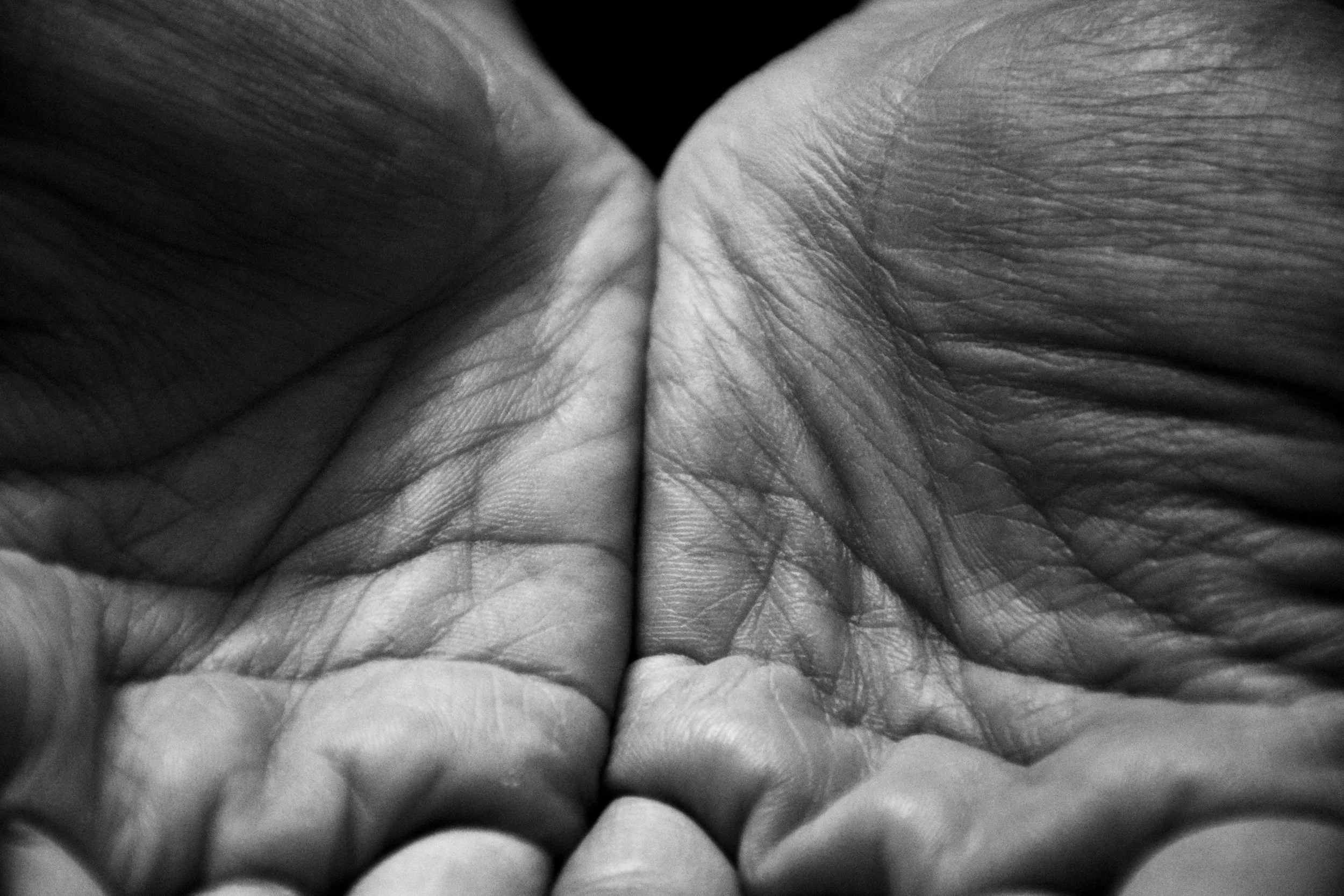
Close-up grayscale shot of two cupped, textured hands, evoking the themes of reaching out, human frailty, and receiving grace.
“The moment after” is the instant that follows a real encounter with God — the surprise, the recognition, the grace — when our first instinct is to take control of what we have just received. Scripture shows it in Peter: minutes after confessing Christ, he rebukes Him. The moment after exposes whether we will stay dependent on the Mystery or manage it ourselves.”
Simone Riva - The Moment After: When We Reach Out to Take Grace Into Our Own Hands
In an instant, reality exposes our presumption: that we can control Grace. Usually we notice only the moment after. And that, too, is a gift — if we let ourselves be wounded.
The account of the moment after the profession of faith — and the commission that follows it — is merciless. It confirms that "flesh and blood" had not revealed to Peter what had just burst out of his mouth. The evangelist does not gloss over what may be the most embarrassing episode in the life of the first of the apostles, or over Peter's reaction to Jesus' announcement of the passion awaiting him: "Then Peter took him aside and began to rebuke him, 'God forbid, Lord! No such thing shall ever happen to you.' He turned and said to Peter, 'Get behind me, Satan! You are an obstacle to me. You are thinking not as God does, but as human beings do'" (Mt 16:21–23).
The moment after, Peter's real position comes to light — a position with nothing at all to do with what he had been given the grace to recognize an instant earlier. The Gospel, like our own lives, is full of these "moments after." The exceptional character of an event, the surprise of an encounter, the beauty of an experience, even the discovery of something new about ourselves: all of it can collapse, swept away by our urge to take the thing in hand, as if to say, "I've got it from here."
Anyone who got to see the beautiful exhibit the Rimini Meeting devoted to the life of Sister Clare Crockett will have noticed the same dynamic at work. This very young Irish woman, converted to Christ in an instant despite all her resistance, found herself a moment later living a life even more disordered than before.
The abyss of desire that the Lord's presence reopens in our hearts cannot be tamed, and our first instinct is to fill it with whatever is at hand — good or bad. We stand in front of God as though He had come to answer our questions, instead of recognizing Him as the answer already present inside the question.
This is how the "festival of the great short circuit" begins, the one Fr. Giussani described so well many years ago: "The power of the question lies in the other who is present, not in you. This is the difference between all the greatness of spirit found in man — whether Epicurean or Stoic, depending on the various interpretations — and the Christian. For the ordinary man, what matters is what he is capable of doing, capable of overcoming in himself (whether Stoic or Epicurean). And for the Christian… it is like a child: he is entirely drawn to the presence of his mother, his father, the other. It is the power of God" (Luigi Giussani, Una presenza che cambia, BUR, Milan 2004, p. 122).
The moment after pulls no punches. It reveals whether we are really willing to reckon with the change that what happens outside us works inside us — or whether we would rather have everything go on as before, in a balanced, moderate, neutral life, playing the part of respectable people who can take the hardest blows on the chin and always say the right thing.
The life of those who let themselves be wounded, though — those who delight in their dependence on the Mystery — speaks for itself. It needs no billboards. Another exhibit at the Meeting showed as much, the one on Madeleine Delbrêl (1904–1964), who describes her conversion this way: "[…] A fact: my encounter with a few young Christians — no older, no more foolish, no more 'idealistic' than I was — who lived the same life I did, argued as much as I did, and danced as much as I did. […] They talked about everything, but also about God, who seemed to them as indispensable as the air. After spending several months in their company, I could no longer honestly turn away — in the face of the absurd — not from their God, but from God. […] I chose what seemed to me to correspond best to my change of perspective: I decided to pray. I prayed on my knees from the very first time. I did it that day and on many days after, without looking at my watch. By reading and reflecting I found God; by praying I came to see that He had found me" (in Città marxista terra di missione, 1957).
The moment after, the question breaks wide open: for which of us is Christ, in order to live, "as indispensable as the air"? Everything else belongs to calculation — and calculation does not hold up over time.
-
L’istante dopo
Simone Riva
In un attimo la realtà smaschera la nostra pretesa: gestire la Grazia. Spesso ce ne accorgiamo un istante dopo. E anche questo è un dono: lasciarsi ferire
Arriva impietoso il racconto dell’istante dopo la professione di fede, e il conseguente mandato, a riprova del fatto che “né carne né sangue” avevano rivelato a Pietro quanto era uscito di getto dalla sua bocca. L’evangelista non tace l’episodio forse più imbarazzante della vita del primo degli apostoli, e la sua reazione all’annuncio che Gesù fa del destino di passione che lo attende: “Pietro lo [Gesù] prese in disparte e si mise a rimproverarlo dicendo: ‘Dio non voglia, Signore; questo non ti accadrà mai’. Ma egli, voltandosi, disse a Pietro: ‘Va’ dietro a me, Satana! Tu mi sei di scandalo, perché non pensi secondo Dio, ma secondo gli uomini!'” (Mt 16, 21-23).
Un istante dopo è smascherata la sua vera posizione, che non poggiava per nulla su quanto aveva avuto la grazia di riconoscere un attimo prima. Il vangelo, come la nostra vita del resto, è pieno di questi “istanti dopo”. Davanti all’eccezionalità di un fatto, alla sorpresa per un incontro, alla bellezza di un evento, e persino alla scoperta di una novità per sé, tutto può decadere e essere travolto dalla nostra pretesa di mettergli le mani addosso, della serie: “Adesso lo gestisco io”.
Chi ha potuto vedere la bellissima mostra che il Meeting ha proposto sulla vita di suor Clare Crockett, si sarà accorto della stessa dinamica. Questa giovanissima ragazza irlandese, convertita in un istante a Cristo dentro tutte le sue resistenze, un attimo dopo si è ritrovata in mezzo a una vita più sregolata di prima.
La voragine di desiderio che la presenza del Signore riaccende nel cuore è indomabile e, come prima mossa, spesso può venirci quella di tamponarla con qualsiasi cosa, bella o brutta che sia. Stiamo davanti a Dio come a uno che è venuto per rispondere alle nostre domande, anziché riconoscerlo come la risposta già presente nella domanda stessa.
Santa Messa Rai 1 oggi 6 settembre 2026 | Diretta video dal Santuario della Madonna Liberatrice di Viterbo
Si apre così il festival del grande cortocircuito, che don Giussani aveva descritto in modo geniale molti anni fa: “La forza della domanda è l’altro che è presente, non tu. È questa la differenza tra tutta la grandezza d’animo dell’uomo – sia epicureo che stoico, secondo le varie versioni – e il cristiano. Per l’uomo normale quello che è importante è ciò che è capace di fare, capace di superare lui (stoico o epicureo). E per il cristiano… è come un bambino: è tutto teso alla presenza della madre, del padre, dell’altro. È la forza di Dio” (Luigi Giussani, Una presenza che cambia, Bur, Milano 2004, p. 122).
L’istante dopo documenta, senza troppi giri di parole, se siamo disposti realmente a mettere nel conto il cambiamento di noi, provocati da ciò che accade fuori di noi, o se è meglio che tutto continui come prima in una vita equilibrata, moderata, neutrale, recitando la parte delle persone perbene che sanno accomodare anche i colpi più duri e che dicono sempre le cose più giuste.
Invece, la vita di chi si lascia ferire, di chi si gode la dipendenza dal Mistero, parla da sé, senza bisogno di manifesti, come racconta un’altra mostra del Meeting, quella su Madeleine Delbrêl (1904-1964), che così descrive la sua conversione: “…Un fatto: l’incontro con parecchi giovani cristiani né più vecchi, né più insensati, né più ‘idealisti’ di me – cioè vivevano la mia stessa vita, discutevano quanto me, ballavano quanto me. (…) Parlavano di tutto, ma anche di Dio, che pareva loro indispensabile come l’aria. Incontrandoli spesso per parecchi mesi, non potevo più lasciare onestamente non il loro Dio, ma Dio nell’assurdo. (…) Scelsi ciò che mi sembrava tradurre meglio il mio cambiamento di prospettiva: decisi di pregare. Fin dalla prima volta pregai in ginocchio. L’ho fatto quel giorno e molti altri giorni e senza guardare l’orologio. Leggendo, riflettendo, ho trovato Dio, ma pregando ho capito che Lui mi aveva trovata” (in Città marxista terra di missione, 1957).
L’istante dopo spalanca così la domanda: per chi di noi Cristo è, per la vita, “indispensabile come l’aria”? Tutto il resto fa parte dei calcoli e, nel tempo, non dura.
-
El instante después
Simone Riva
En un instante, la realidad desenmascara nuestra pretensión: la de controlar la Gracia. Casi siempre nos damos cuenta un instante después. Y eso también es un don: dejarnos herir.
El relato del instante posterior a la profesión de fe —y al mandato que la sigue— llega implacable, como prueba de que «ni la carne ni la sangre» le habían revelado a Pedro lo que acababa de brotarle de la boca. El evangelista no calla el episodio quizá más embarazoso de la vida del primero de los apóstoles, ni su reacción ante el anuncio que Jesús hace de la pasión que le espera: «Pedro se lo llevó aparte y se puso a reprenderlo: “¡Dios no lo quiera, Señor! Eso no te sucederá jamás”. Pero él se volvió y dijo a Pedro: “¡Apártate de mí, Satanás! Eres para mí piedra de tropiezo, porque no piensas como Dios, sino como los hombres”» (Mt 16, 21-23).
Un instante después queda al descubierto su verdadera postura, una postura que nada tenía que ver con lo que había tenido la gracia de reconocer un momento antes. El Evangelio, como por lo demás nuestra propia vida, está lleno de estos «instantes después». Ante lo excepcional de un hecho, ante la sorpresa de un encuentro, ante la belleza de una experiencia, incluso ante el descubrimiento de algo nuevo sobre uno mismo, todo puede desmoronarse, arrollado por nuestra pretensión de tomar las riendas, como diciendo: «Ya me encargo yo».
Quien haya podido ver la preciosa exposición que el Meeting de Rímini dedicó a la vida de sor Clare Crockett habrá reconocido la misma dinámica. Esta jovencísima irlandesa, convertida a Cristo en un instante a pesar de todas sus resistencias, se encontró un instante después viviendo una vida aún más desordenada que antes.
El abismo de deseo que la presencia del Señor reaviva en el corazón es indomable, y nuestro primer impulso suele ser el de colmarlo con cualquier cosa, buena o mala. Nos presentamos ante Dios como ante alguien que ha venido a responder a nuestras preguntas, en lugar de reconocer en Él la respuesta que ya está presente en la pregunta misma.
Así comienza el «festival del gran cortocircuito» que don Giussani describió de forma brillante hace muchos años: «La fuerza de la pregunta es el otro que está presente, no tú. Esta es la diferencia entre toda la grandeza de ánimo del hombre —ya sea epicúreo o estoico, según las distintas interpretaciones— y el cristiano. Para el hombre común, lo importante es lo que es capaz de hacer, capaz de superarse a sí mismo (ya sea estoico o epicúreo). Y para el cristiano… es como un niño: todo en él se orienta hacia la presencia de la madre, del padre, del otro. Es la fuerza de Dios» (Luigi Giussani, Una presencia que cambia, BUR, Milán 2004, p. 122).
El instante siguiente no se anda con rodeos: pone el dedo en la llaga. Muestra si estamos realmente dispuestos a tener en cuenta el cambio provocado en nosotros por lo que ocurre fuera de nosotros, o si preferimos que todo siga como antes, en una vida equilibrada, moderada, neutral, representando el papel de personas respetables que encajan incluso los golpes más duros y que siempre dicen lo que hay que decir.
En cambio, la vida de quien se deja herir, de quien goza de su dependencia del Misterio, habla por sí misma, sin necesidad de propaganda. Así lo cuenta otra exposición del Meeting, la dedicada a Madeleine Delbrêl (1904-1964), que describe así su conversión: «[…] Un hecho: el encuentro con varios jóvenes cristianos, ni mayores, ni más insensatos, ni más “idealistas” que yo; es decir, vivían la misma vida que yo, discutían tanto como yo, bailaban tanto como yo. […] Hablaban de todo, pero también de Dios, que les parecía tan indispensable como el aire. Después de frecuentarlos durante varios meses, ya no podía, honestamente, ante lo absurdo, apartarme no de su Dios, sino de Dios. […] Elegí lo que me parecía responder mejor a mi cambio de perspectiva: decidí rezar. Desde la primera vez recé de rodillas. Lo hice aquel día y muchos otros, sin mirar el reloj. Leyendo y reflexionando encontré a Dios; rezando comprendí que era Él quien me había encontrado a mí» (en Ciudad marxista, tierra de misión, 1957).
Al instante siguiente la pregunta se abre de par en par: ¿para cuál de nosotros es Cristo, para vivir, «indispensable como el aire»? Todo lo demás entra en el terreno del cálculo y, a la larga, no se sostiene.
-
L’instant d’après
Simone Riva
En un instant, la réalité démasque notre prétention : celle de vouloir gérer la Grâce. Souvent, nous nous en rendons compte un instant après. Et cela aussi est un don : se laisser blesser
Le récit de l’instant qui suit la profession de foi, et de la mission qui en découle, nous est livré sans concession, confirmant ainsi que « ni la chair ni le sang » n’avaient révélé à Pierre ce qui avait jailli de sa bouche. L’évangéliste ne passe pas sous silence l’épisode peut-être le plus embarrassant de la vie du premier des apôtres, ni sa réaction à l’annonce que Jésus fait du destin de passion qui l’attend : « Pierre le [Jésus] prit à part et se mit à le réprimander en disant : “Loin de là, Seigneur ; cela ne t’arrivera jamais.” Mais lui, se retournant, dit à Pierre : “Arrière, Satan ! Tu es pour moi une pierre d’achoppement, car tu ne penses pas selon Dieu, mais selon les hommes !” » (Mt 16, 21-23).
Un instant plus tard, sa véritable position est démasquée, celle-ci ne reposant en rien sur ce qu’il avait eu la grâce de reconnaître un instant auparavant. L’Évangile, tout comme notre vie d’ailleurs, est rempli de ces « instants après ». Face à l’exceptionnalité d’un fait, à la surprise d’une rencontre, à la beauté d’un événement, et même à la découverte d’une nouveauté pour soi-même, tout peut s’effondrer et être balayé par notre prétention à vouloir prendre les choses en main, du genre : « Maintenant, je m’en charge. »
Ceux qui ont pu voir la très belle exposition que le Meeting a proposée sur la vie de sœur Clare Crockett auront remarqué la même dynamique. Cette très jeune Irlandaise, convertie en un instant au Christ malgré toutes ses résistances, s’est retrouvée l’instant d’après au cœur d’une vie encore plus désordonnée qu’auparavant.
Le gouffre de désir que la présence du Seigneur ravive dans le cœur est indomptable et, dans un premier temps, notre première réaction est souvent de vouloir le combler avec n’importe quoi, que ce soit beau ou laid. Nous nous tenons devant Dieu comme devant quelqu’un qui est venu répondre à nos questions, au lieu de le reconnaître comme la réponse déjà présente dans la question elle-même.
Messe sur Rai 1 aujourd’hui, 6 septembre 2026 | Retransmission vidéo en direct depuis le sanctuaire de la Vierge Libératrice de Viterbe
C’est ainsi que s’ouvre le festival du grand court-circuit, que don Giussani avait décrit avec génie il y a de nombreuses années : « La force de la question, c’est l’autre qui est présent, pas toi. C’est là la différence entre toute la grandeur d’âme de l’homme – qu’il soit épicurien ou stoïcien, selon les différentes versions – et le chrétien. Pour l’homme ordinaire, ce qui importe, c’est ce qu’il est capable de faire, ce qu’il est capable de surmonter (qu’il soit stoïcien ou épicurien). Et pour le chrétien… c’est comme un enfant : il est tout entier tourné vers la présence de la mère, du père, de l’autre. C’est la force de Dieu » (Luigi Giussani, Une présence qui change, Bur, Milan 2004, p. 122).
L’instant d’après, cela montre, sans détours, si nous sommes réellement disposés à prendre en compte le changement en nous, provoqué par ce qui se passe en dehors de nous, ou s’il vaut mieux que tout continue comme avant, dans une vie équilibrée, modérée, neutre, en jouant le rôle des gens bien qui savent encaisser même les coups les plus durs et qui disent toujours ce qu’il faut.
En revanche, la vie de ceux qui se laissent blesser, de ceux qui savourent leur dépendance au Mystère, parle d’elle-même, sans avoir besoin de manifestes, comme le raconte une autre exposition du Meeting, celle consacrée à Madeleine Delbrêl (1904-1964), qui décrit ainsi sa conversion : « … Un fait : la rencontre avec plusieurs jeunes chrétiens ni plus âgés, ni plus insensés, ni plus « idéalistes » que moi – c’est-à-dire qu’ils menaient la même vie que moi, discutaient autant que moi, dansaient autant que moi. (…) Ils parlaient de tout, mais aussi de Dieu, qui leur semblait aussi indispensable que l’air. En les côtoyant souvent pendant plusieurs mois, je ne pouvais plus, en toute honnêteté, abandonner non pas leur Dieu, mais Dieu dans l’absurde. (…) J’ai choisi ce qui me semblait traduire au mieux mon changement de perspective : j’ai décidé de prier. Dès la première fois, j’ai prié à genoux. Je l’ai fait ce jour-là et bien d’autres jours encore, sans regarder ma montre. En lisant, en réfléchissant, j’ai trouvé Dieu, mais c’est en priant que j’ai compris qu’Il m’avait trouvée » (dans Città marxista terra di missione, 1957).
L’instant d’après, la question s’impose ainsi : pour qui d’entre nous le Christ est-il, pour la vie, « aussi indispensable que l’air » ? Tout le reste relève du calcul et, avec le temps, ne dure pas.