Truth is Encountered Only in Freedom
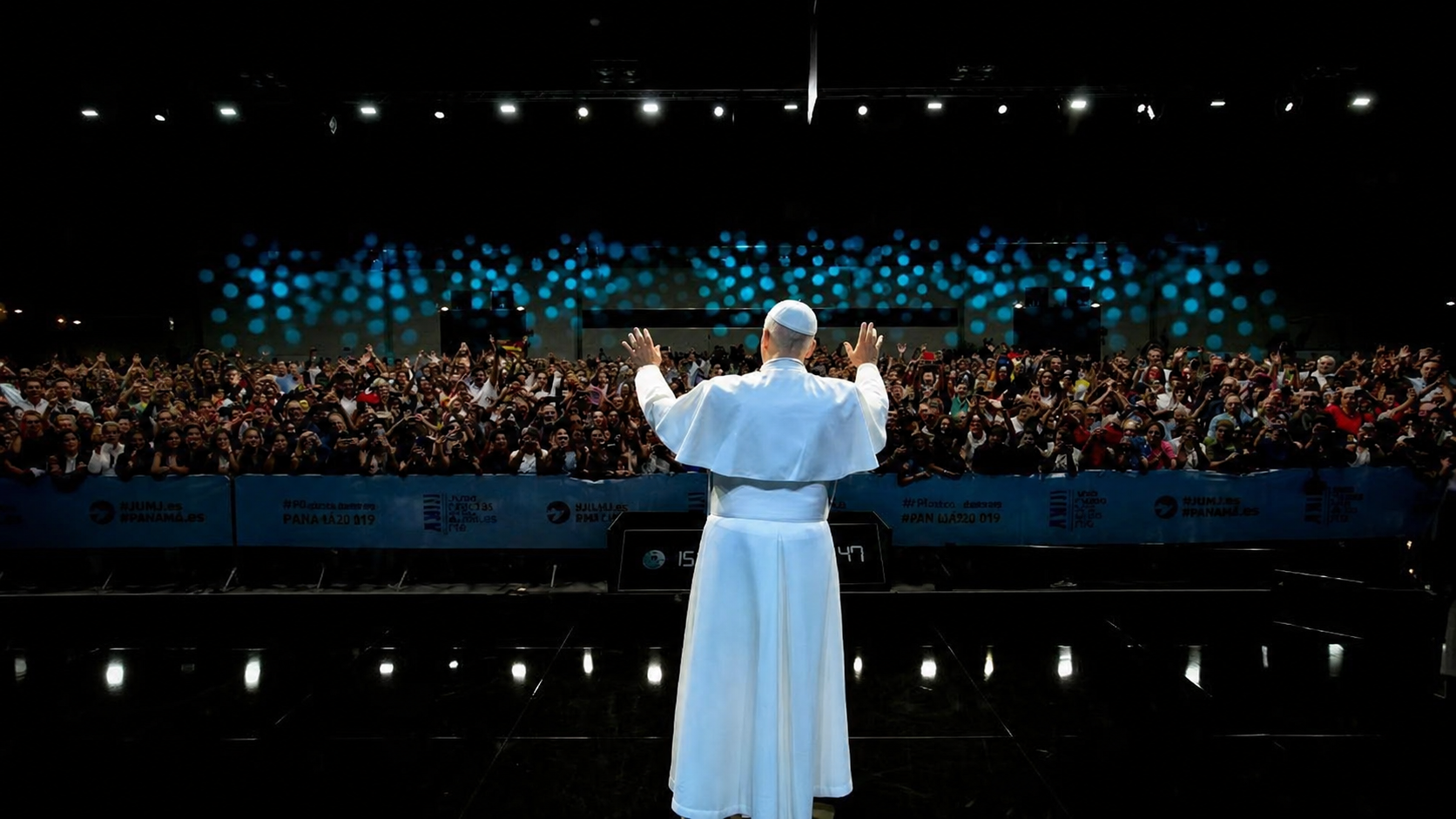
Pope Leo XIV at the Rimini meeting 2026
“It is not a matter of numbers […] It is a matter of freedom: truth is encountered only in freedom.”
Elia Carrai - Speaking to participants in the 47th Meeting for Friendship Among Peoples, Pope Leo XIV rekindled—to use his own words—"dreams and visions." What he said matters for the whole Church: it can stretch our horizons to the size of the epochal change we are living through.
Truth Is Encountered Only in Freedom
Without glossing over the tragedies and challenges that shake our present, the Pope had the courage to name the unexpected opportunity this "dramatic and wonderful" era holds. Secular society, then, is not an enemy to be fought but a space to be understood, inhabited, and lived in: a society that does not need one more round of abstract appeals, but rather for spaces of authentic humanity and full freedom to open wide within it. Pope Leo made the decisive point plain: for the Church today it "is not a matter of numbers [...] It is a matter of freedom: truth is encountered only in freedom."
That judgment is anything but a given within the Church herself—including her movements—and it commits us to an exercise in understanding the present that leaves no room for presumption, for fear, or for paradigms recent history has already shown to be false. The Pope went on: within "the historical circumstances that rekindle the most human questions and an infinite desire for meaning, justice, and peace," we are grasping ever more clearly how necessary this passionate esteem for the freedom of each person is to the truth itself.
Reading the Signs of the Times Differently
For the Church, this means a shift in the way we have grown used to reading the signs of the times. As the Pope put it: "A certain loss of influence—which we adults may have feared and fought against—was meant to reveal to us that we can hold in higher esteem the power of the Gospel, the bonds it forges, the logic it ignites, and the life it brings forth."
What looks like a dramatic loss of the Church's influence on society—a trend that has picked up striking speed since the turn of this century—is not something to fear. It is precisely what frees us to recognize what can truly touch our lives, and so genuinely shape and transform them.
Reawakening Human Depth
Leo goes deeper still, widening the horizon his predecessors had already pointed to: "'The Church does not proselytize. Rather, she grows by attraction.' It is the attraction of a way of inhabiting the world, about which Don Giussani provocatively asked: 'Is it possible to live this way?'" Our own complex present—so hard to decipher—is exactly what can reawaken that human depth made up of needs, urgencies, and questions, the only depth that lets us grasp the newness and beauty of a life that attracts: the life of Christ, which even to the world of the second century appeared "wonderful and undoubtedly paradoxical."
The human heart, as the Pope also recalled in Magnifica humanitas, "feels the need to discover a different plan" (no. 230)—a plan other than maneuvering for spheres of influence or the seduction of ideological constructs. It needs the mercy of a different plan, the grace of a different logic, a new breath of life: as unexpected as it is longed for by every man and woman.
To Move and to Touch
Only in this loyalty to one's own authentic need does it become possible to recognize and embrace the Mystery of the Incarnation, of Emmanuel: the infinite mercy of God-with-us. A Mystery that does not constrain but sets us free and makes us able to take risks. "The disarming beauty of this Mystery," Pope Leo continued, "calls for taking 'the educational risk' of which Don Giussani spoke to you."
Only this possible contemporaneity with the very life of God in Christ—renewed in the men and women who down the centuries have allowed themselves to be drawn to Him and indwelt by His Spirit—only this presence of the divine in the human is the true newness that moves history and saves it, opening up a possibility of life, of love and freedom, that we would never have dreamed of.
Echoing the title of the Meeting—The love that moves the sun and the other stars (Dante, Paradiso XXXIII)—the Pope pointed to God's method: a God "who willingly remains silent," and who in just this way shows his real effectiveness. A presence able to move and touch the human heart and its freedom: "Yes, love moves!"
Recognizing That We Belong to Love
Following in Augustine's footsteps, Leo reminded us that the very form of God's mercy toward humanity is His reaching out to us, taking the risk and staking everything on the unquenchable desire for Him that dwells indomitably in every man and woman.
When the heart lets itself be drawn anew by the life and love of Christ, the awareness of the one true belonging arises—and from that awareness spring the communion and synodality to which the Pope has called us. We must not confuse them with the outcome of human constructs or of strategies bent on making everyone alike. They are the recognition of "belonging to God alone": the belonging of love, the only belonging that truly sets us free, because "in love there is never coercion, indoctrination; never seduction, deception, or recruitment."
Conversion as Service
"There is love only in freedom, in living encounter, in the generous gift of self." Unity is always a gift of grace, for it comes to full flower only through the attraction of Christ, who draws near to men and women of every age. For this reason, the Pope recalled, every authority in the Church is called to be converted "into service, which honors diversity and fosters harmony." What that authority is asked to administer is never a product of its own skill at governing or strategizing; it is always the fruit of an "impossible" unity—one that only Christ, present among us, makes possible and renews time and again: "It is the Lord who always lifts us up, as individuals and as a community!"
Experiencing God Who Comes to Meet Us
Leo XIV's message to the Meeting deserves the whole Church's careful attention. The point is to let his words challenge us, rather than to shrink them or water them down into a confirmation of what we already feel we are living. Breaking into a landscape of tired and repetitive ecclesial analysis, the Pope's message rekindles, with its bold vision, the desire to experience "God who comes to meet us—as an event, a gaze, an experience—awakening in each of us the desire to be loved and to love."
-
Il Papa al Meeting, parole da non anestetizzare che sfidano a spalancare l’orizzonte
Un commento al discorso di Leone XIV a Rimini
di Elia Carrai
Parlando ai partecipanti alla quarantasettesima edizione del Meeting dell’amicizia fra i popoli, Papa Leone XIV ha riacceso – per riprendere le sue parole – «sogni e visioni», con parole che hanno valore per la Chiesa tutta, capaci di spalancare un orizzonte all’altezza del cambiamento d’epoca in cui siamo immersi.
Il Papa al Meeting: opporre la misericordia al falso realismo che riarma menti e nazioni
Leone XIV parla alla platea della 47ª edizione della kermesse di Rimini ed esorta a “invertire la rotta” e "riaccendere sogni e visioni" non soffiando solo sul "fuoco della ...
La verità si incontra nella libertà
Senza censurare i drammi e le sfide che scuotono il nostro presente, il Papa ha avuto l’audacia di indicare l’inaspettata opportunità che questa epoca «drammatica e meravigliosa» costituisce. La società secolarizzata concepita, quindi, non come nemico da combattere ma come spazio da comprendere, abitare, vivere: una società che non ha bisogno di continui richiami astratti quanto che si spalanchino al suo interno spazi di autentica umanità e piena libertà. Infatti, ha chiarito papa Leone, per la Chiesa, oggi, il punto decisivo non «non è una questione di numeri […] È una questione di libertà: la verità si incontra solo nella libertà». Un giudizio tutt’altro che scontato nella Chiesa stessa, movimenti compresi, e che impegna a un esercizio di comprensione del presente che non lascia spazio a rivendicazioni, paure e paradigmi giudicati già fallaci dalla storia recente. Infatti, prosegue il pontefice, quanto sia necessaria alla verità questa stima appassionata per la libertà di ciascuno «lo stiamo comprendendo sempre meglio entro le circostanze storiche che riattivano le domande più umane e un desiderio infinito di senso, di giustizia e di pace».
Leggere diversamente i segni dei tempi
A livello ecclesiale significa un cambio di paradigma nel modo con cui ci siamo abituati a leggere i segni dei tempi, infatti, prosegue il Papa: «una certa perdita di influenza, che noi adulti abbiamo forse temuto e combattuto, doveva rivelarci che possiamo stimare di più la potenza del Vangelo, dei legami che genera, della logica che accende, della vita che fa sorgere». Proprio quella che sembrerebbe una clamorosa perdita di incidenza della Chiesa sulla società, peraltro acceleratasi in modo vistoso in questo inizio di secolo, non è qualcosa da temere ma ciò che ci consente di riconoscere, piuttosto, ciò che veramente può intimamente toccare le nostre esistenze e con ciò realmente influenzarle, trasformarle.
Riattivare la profondità umana
Leone approfondisce ulteriormente e dilata l’orizzonte già indicato dai suoi predecessori: «”La Chiesa non fa proselitismo. Essa si sviluppa piuttosto per attrazione”. È l’attrazione per un modo di abitare il mondo, a proposito del quale don Giussani provocatoriamente domandava: “Si può vivere così?”». Proprio il nostro presente complesso, così difficile da decifrare, può favorire il riattivarsi di quella profondità umana fatta di bisogni, urgenze, domande che sole consentono di intercettare la novità e la bellezza di una vita attrattiva, quella vita di Cristo che già per il mondo del II secolo appariva «meravigliosa e indubbiamente paradossale». Il cuore umano, infatti, come ha ricordato il Papa anche in Magnifica humanitas «avverte il bisogno di scoprire un disegno diverso» (n. 230), diverso delle manovre che puntano a conquistare spazi di influenza o delle seducenti costruzioni ideologiche: ha bisogno della misericordia di un disegno diverso, della grazia di una logica diversa, di un respiro nuovo per la vita, imprevisto quanto, tuttavia, atteso da ogni uomo.
L’ora della responsabilità
Le parole di Leone XIV al Meeting di Rimini e il richiamo al realismo autentico della misericordia contro il realismo falso che vorrebbe riarmarci
Muovere e commuovere
È in questa lealtà con il proprio bisogno autentico che è possibile riconoscere e accogliere il mistero dell’Incarnazione, dell’Emmanuele: la misericordia infinita del Dio-con-noi. Un mistero che non misura ma che libera e permette di rischiare. Infatti, proprio «la bellezza disarmata di questo Mistero – ha affermato ancora Papa Leone – domanda di correre “il rischio educativo” di cui vi parlò don Giussani». Solo questa contemporaneità possibile con la vita stessa di Dio in Cristo, che si rinnova negli uomini e donne che lungo i secoli si sono lasciati attrarre da Lui e abitare dal suo Spirito; solo questa presenza del divino nell’umano è la vera novità che muove la storia e la salva, dischiudendo una possibilità di vita – di amore e libertà – che non ci saremmo mai sognati. Riecheggiando il titolo del Meeting – L’amor che muove il sole e l’altre stelle (Dante, Paradiso, XXXIII) – il Papa ci ricorda così il metodo di Dio, «che rimane volentieri silenzioso» e che manifesta così la sua vera efficacia: una presenza reale in grado di muovere, commuovere il cuore e la libertà dell’uomo: «Si, l’amore muove!».
Riconoscere l'appartenenza dell'amore
Nel solco di Agostino, Leone ci ricorda che la forma stessa della misericordia di Dio per l’uomo, è proprio il farsi incontro, rischiando e puntando tutto su questo desiderio inestinguibile di Lui che irriducibile abita in ogni uomo e donna. Da questo lasciarsi attrarre del cuore dalla vita e dall’amore di Cristo sempre nuovamente sorge la coscienza dell’unica vera appartenenza, di cui vivono quella comunione e quella sinodalità cui il Papa ha richiamato e che non possiamo confondere quali esito di costruzioni o strategie umane dalle pretese uniformanti: è il riconoscimento di «appartenere a Dio solo», l’appartenenza dell’amore, l’unica che realmente libera perché «Nell’amore non c’è mai costrizione, indottrinamento; mai seduzione, inganno, arruolamento.
L’ora della responsabilità
Le parole di Leone XIV al Meeting di Rimini e il richiamo al realismo autentico della misericordia contro il realismo falso che vorrebbe riarmarci
Convertirsi in servizio
«C’è amore solo nella libertà, nel confronto vivo, nel dono generoso di sé». L’unità è sempre dono di grazia, poiché scaturisce in pienezza solo per l’attrattiva di Cristo che si fa prossimo agli uomini e alle donne di ogni tempo. Per questo, ha ricordato il Papa, ogni autorità nella Chiesa è chiamata a convertirsi «in servizio, che onora le diversità e ne facilita l’armonia», poiché quanto è chiamata ad amministrare non è mai l’espressione di una propria capacità di governance o strategia, ma è sempre frutto di un’unità “impossibile” e che solo Cristo presente rende sempre nuovamente possibile e rinnova: «è il Signore che ci rialza sempre, come singoli e come comunità!».
Sperimentare il Dio che si fa incontro
Il messaggio di Leone XIV al Meeting merita di esser soppesato ecclesialmente da tutti: è importante lasciarsi interrogare dalle sue parole, senza correre il rischio di ridurle o smussarle, per sottolineare soltanto ciò che ci sembra di vivere già. Il messaggio del Papa, irrompendo in un panorama di diagnosi ecclesiali stanco e ripetitivo, riaccende con il suo respiro audace il desiderio di sperimentare «Dio che si fa incontro, avvenimento, sguardo, esperienza, risvegliando in ciascuno il desiderio di essere amato e di amare».
-
El Papa en el Meeting: palabras que no deben pasarse por alto y que nos desafían a abrir de par en par el horizonte
Un comentario sobre el discurso de León XIV en Rímini
por Elia Carrai
Al dirigirse a los participantes en la 47.ª edición del Meeting de la Amistad entre los Pueblos, el Papa León XIV ha reavivado —por retomar sus propias palabras— «sueños y visiones», con palabras que tienen valor para toda la Iglesia, capaces de abrir de par en par un horizonte a la altura del cambio de época en el que estamos inmersos.
El Papa en el Meeting: oponer la misericordia al falso realismo que rearma mentes y naciones
León XIV se dirige al público de la 47.ª edición del encuentro de Rímini y exhorta a «cambiar de rumbo» y a «reavivar sueños y visiones», sin limitarse a soplar sobre el «fuego de la...
La verdad se encuentra en la libertad
Sin pasar por alto los dramas y los retos que sacuden nuestro presente, el Papa ha tenido la audacia de señalar la inesperada oportunidad que representa esta época «dramática y maravillosa». La sociedad secularizada concebida, por tanto, no como un enemigo al que combatir, sino como un espacio que hay que comprender, habitar y vivir: una sociedad que no necesita continuas referencias abstractas, sino que en su seno se abran espacios de auténtica humanidad y plena libertad. De hecho, ha aclarado el papa León, para la Iglesia, hoy en día, el punto decisivo «no es una cuestión de números […] Es una cuestión de libertad: la verdad solo se encuentra en la libertad». Un juicio que dista mucho de ser evidente en la propia Iglesia, movimientos incluidos, y que nos compromete a un ejercicio de comprensión del presente que no deja espacio a reivindicaciones, miedos y paradigmas que la historia reciente ya ha juzgado falaces. De hecho, prosigue el pontífice, «cada vez comprendemos mejor, en el contexto de las circunstancias históricas que reavivan las preguntas más humanas y un deseo infinito de sentido, de justicia y de paz, hasta qué punto esta apasionada estima por la libertad de cada uno es necesaria para la verdad».
Leer de otra manera los signos de los tiempos
A nivel eclesial, esto supone un cambio de paradigma en la forma en que nos hemos acostumbrado a leer los signos de los tiempos; de hecho, prosigue el Papa: «una cierta pérdida de influencia, que nosotros, los adultos, quizá hayamos temido y combatido, debía revelarnos que podemos valorar más el poder del Evangelio, los vínculos que genera, la lógica que enciende, la vida que hace surgir». Precisamente lo que parecería una pérdida clamorosa de influencia de la Iglesia en la sociedad —que, por otra parte, se ha acelerado de forma notable en este comienzo de siglo— no es algo que debamos temer, sino lo que nos permite reconocer, más bien, aquello que verdaderamente puede tocar íntimamente nuestras vidas y, con ello, influir realmente en ellas y transformarlas.
Reactivar la profundidad humana
León profundiza aún más y amplía el horizonte ya señalado por sus predecesores: «“La Iglesia no hace proselitismo. Más bien se desarrolla por atracción”. Es la atracción por una forma de habitar el mundo, sobre la que don Giussani preguntaba provocativamente: “¿Se puede vivir así?”». Precisamente nuestro complejo presente, tan difícil de descifrar, puede favorecer la reactivación de esa profundidad humana hecha de necesidades, urgencias y preguntas que son las únicas que permiten captar la novedad y la belleza de una vida atractiva, esa vida de Cristo que ya para el mundo del siglo II se presentaba como «maravillosa e indudablemente paradójica». El corazón humano, de hecho, como ha recordado el Papa también en Magnifica humanitas «siente la necesidad de descubrir un designio diferente» (n.º 230), distinto de las maniobras que pretenden conquistar espacios de influencia o de las seductoras construcciones ideológicas: necesita la misericordia de un designio diferente, la gracia de una lógica diferente, un nuevo aliento para la vida, tan imprevisto como, sin embargo, esperado por todo hombre.
Las palabras de León XIV en el Meeting de Rímini y la llamada al realismo auténtico de la misericordia frente al falso realismo que querría rearmarnos
Conmover y conmoverse
Es en esta fidelidad a la propia necesidad auténtica donde es posible reconocer y acoger el misterio de la Encarnación, del Emanuel: la misericordia infinita del Dios-con-nosotros. Un misterio que no limita, sino que libera y permite arriesgarse. De hecho, precisamente «la belleza desarmada de este Misterio —afirmó de nuevo el papa León— exige correr “el riesgo educativo” del que os habló don Giussani». Solo esta contemporaneidad posible con la vida misma de Dios en Cristo, que se renueva en los hombres y mujeres que a lo largo de los siglos se han dejado atraer por Él y habitar por su Espíritu; solo esta presencia de lo divino en lo humano es la verdadera novedad que mueve la historia y la salva, abriendo una posibilidad de vida —de amor y libertad— que nunca hubiéramos soñado. Haciéndose eco del título del Meeting —El amor que mueve el sol y las demás estrellas (Dante, Paraíso, XXXIII)—, el Papa nos recuerda así el método de Dios, «que permanece voluntariamente en silencio» y que manifiesta así su verdadera eficacia: una presencia real capaz de mover y conmover el corazón y la libertad del hombre: «¡Sí, el amor mueve!».
Reconocer la pertenencia al amor
Siguiendo los pasos de Agustín, León nos recuerda que la forma misma de la misericordia de Dios hacia el hombre es precisamente el ir al encuentro, arriesgándose y apostándolo todo por ese deseo inextinguible de Él que, irreductible, habita en cada hombre y cada mujer. De este dejarse atraer por el corazón hacia la vida y el amor de Cristo surge, siempre de nuevo, la conciencia de la única y verdadera pertenencia, de la que viven esa comunión y esa sinodalidad a las que ha hecho referencia el Papa y que no podemos confundir con el resultado de construcciones o estrategias humanas con pretensiones uniformizadoras: es el reconocimiento de «pertenecer solo a Dios», la pertenencia del amor, la única que realmente libera porque «En el amor nunca hay coacción, adoctrinamiento; nunca seducción, engaño, reclutamiento.
Las palabras de León XIV en el Meeting de Rímini y la llamada al realismo auténtico de la misericordia frente al falso realismo que querría rearmarnos
Convertirse en servicio
«Solo hay amor en la libertad, en el encuentro vivo, en el don generoso de sí mismo». La unidad es siempre un don de gracia, pues brota en plenitud únicamente por el atractivo de Cristo, que se hace cercano a los hombres y mujeres de todos los tiempos. Por eso, recordó el Papa, toda autoridad en la Iglesia está llamada a convertirse «en servicio, que honra las diversidades y facilita su armonía», pues lo que está llamada a administrar nunca es la expresión de una capacidad propia de gobierno o estrategia, sino que es siempre fruto de una unidad «imposible» y que solo Cristo presente hace posible una y otra vez y renueva: «¡Es el Señor quien siempre nos levanta, como individuos y como comunidad!».
Experimentar al Dios que sale al encuentro
El mensaje de León XIV al Meeting merece ser sopesado eclesialmente por todos: es importante dejarse interpelar por sus palabras, sin correr el riesgo de reducirlas o suavizarlas, para subrayar únicamente lo que nos parece que ya vivimos. El mensaje del Papa, irrumpiendo en un panorama de diagnósticos eclesiales cansados y repetitivos, reaviva con su audaz visión el deseo de experimentar «a Dios que sale al encuentro, como acontecimiento, mirada, experiencia, despertando en cada uno el deseo de ser amado y de amar».
-
Le Pape au Meeting : des paroles qui ne doivent pas être édulcorées et qui nous invitent à élargir notre horizon
Un commentaire sur le discours de Léon XIV à Rimini
par Elia Carrai
S’adressant aux participants à la quarante-septième édition du Meeting de l’amitié entre les peuples, le pape Léon XIV a ravivé – pour reprendre ses propres termes – « des rêves et des visions », avec des paroles qui ont une valeur pour toute l’Église, capables d’ouvrir grand un horizon à la hauteur du changement d’époque dans lequel nous sommes plongés.
Le pape au Meeting : opposer la miséricorde au faux réalisme qui réarme les esprits et les nations
Léon XIV s'adresse à l'auditoire de la 47e édition du Meeting de Rimini et exhorte à « changer de cap » et à « raviver les rêves et les visions » sans se contenter d'attiser le « feu de la...
La vérité se rencontre dans la liberté
Sans occulter les drames et les défis qui secouent notre présent, le Pape a eu l’audace de mettre en avant l’opportunité inattendue que représente cette époque « dramatique et merveilleuse ». La société sécularisée n’est donc pas conçue comme un ennemi à combattre, mais comme un espace à comprendre, à habiter, à vivre : une société qui n’a pas besoin de rappels abstraits incessants, mais plutôt que s’ouvrent en son sein des espaces d’humanité authentique et de pleine liberté. En effet, a précisé le pape Léon, pour l’Église d’aujourd’hui, le point décisif « n’est pas une question de chiffres […] C’est une question de liberté : la vérité ne se rencontre que dans la liberté ». Un jugement loin d’être évident au sein même de l’Église, mouvements compris, et qui engage à un exercice de compréhension du présent qui ne laisse aucune place aux revendications, aux peurs et aux paradigmes déjà jugés fallacieux par l’histoire récente. En effet, poursuit le Souverain Pontife, nous comprenons de mieux en mieux à quel point cette estime passionnée pour la liberté de chacun est nécessaire à la vérité « dans les circonstances historiques qui ravivent les questions les plus humaines et un désir infini de sens, de justice et de paix ».
Lire différemment les signes des temps
Au niveau ecclésial, cela signifie un changement de paradigme dans la manière dont nous avons pris l’habitude de lire les signes des temps ; en effet, poursuit le Pape : « une certaine perte d’influence, que nous, les adultes, avons peut-être redoutée et combattue, devait nous révéler que nous pouvons davantage apprécier la puissance de l’Évangile, les liens qu’il engendre, la logique qu’il suscite, la vie qu’il fait naître ». C’est précisément ce qui semblerait être une perte retentissante de l’influence de l’Église sur la société, qui s’est d’ailleurs accélérée de manière flagrante en ce début de siècle, qui n’est pas quelque chose à craindre, mais ce qui nous permet plutôt de reconnaître ce qui peut véritablement toucher intimement nos existences et, ce faisant, les influencer réellement, les transformer.
Réactiver la profondeur humaine
Léon approfondit encore et élargit l’horizon déjà tracé par ses prédécesseurs : « “L’Église ne fait pas de prosélytisme. Elle se développe plutôt par attraction”. C’est l’attraction pour une manière d’habiter le monde, à propos de laquelle don Giussani demandait de manière provocante : “Peut-on vivre ainsi ?” ». C’est précisément notre présent complexe, si difficile à déchiffrer, qui peut favoriser la réactivation de cette profondeur humaine faite de besoins, d’urgences, de questions qui seules permettent d’intercepter la nouveauté et la beauté d’une vie attrayante, cette vie du Christ qui, déjà pour le monde du IIe siècle, apparaissait « merveilleuse et indubitablement paradoxale ». Le cœur humain, en effet, comme l’a rappelé le Pape notamment dans Magnifica humanitas« ressent le besoin de découvrir un dessein différent » (n° 230), différent des manœuvres visant à conquérir des sphères d’influence ou des constructions idéologiques séduisantes : il a besoin de la miséricorde d’un dessein différent, de la grâce d’une logique différente, d’un souffle nouveau pour la vie, aussi inattendu qu’attendu par chaque homme.
Les paroles de Léon XIV au Meeting de Rimini et l’appel à un réalisme authentique de la miséricorde contre le faux réalisme qui voudrait nous réarmer
Émouvoir et toucher
C’est dans cette loyauté envers son besoin authentique qu’il est possible de reconnaître et d’accueillir le mystère de l’Incarnation, de l’Emmanuel : la miséricorde infinie du Dieu-avec-nous. Un mystère qui ne mesure pas, mais qui libère et permet de prendre des risques. En effet, c’est précisément « la beauté désarmée de ce Mystère – a encore affirmé le pape Léon – qui exige de courir “le risque éducatif” dont vous a parlé don Giussani ». Seule cette contemporanéité possible avec la vie même de Dieu en Christ, qui se renouvelle chez les hommes et les femmes qui, au fil des siècles, se sont laissés attirer par Lui et habiter par son Esprit ; seule cette présence du divin dans l’humain est la véritable nouveauté qui anime l’histoire et la sauve, ouvrant une possibilité de vie – d’amour et de liberté – que nous n’aurions jamais imaginée. Faisant écho au titre du Meeting – L’amour qui meut le soleil et les autres étoiles (Dante, Paradis, XXXIII) – le Pape nous rappelle ainsi la méthode de Dieu, « qui se tait volontiers » et qui manifeste ainsi sa véritable efficacité : une présence réelle capable de mouvoir, d’émouvoir le cœur et la liberté de l’homme : « Oui, l’amour fait bouger ! ».
Reconnaître l’appartenance à l’amour
Dans la lignée d’Augustin, Léon nous rappelle que la forme même de la miséricorde de Dieu envers l’homme consiste précisément à aller à sa rencontre, en prenant des risques et en misant tout sur ce désir inextinguible de Lui qui habite irréductiblement chaque homme et chaque femme. C’est de ce fait de se laisser attirer par le cœur par la vie et l’amour du Christ que naît sans cesse la conscience de la seule véritable appartenance, dont vivent cette communion et cette synodalité auxquelles le Pape a fait appel et que nous ne pouvons confondre avec le résultat de constructions ou de stratégies humaines aux prétentions uniformisantes : c’est la reconnaissance d’« appartenir à Dieu seul », l’appartenance de l’amour, la seule qui libère réellement car « Dans l’amour, il n’y a jamais de contrainte, d’endoctrinement ; jamais de séduction, de tromperie, de recrutement.
Les paroles de Léon XIV au Meeting de Rimini et l’appel à un réalisme authentique de la miséricorde contre le faux réalisme qui voudrait nous réarmer
Se convertir au service
« Il n’y a d’amour que dans la liberté, dans la confrontation vivante, dans le don généreux de soi ». L’unité est toujours un don de grâce, car elle jaillit pleinement uniquement grâce à l’attrait du Christ qui se fait proche des hommes et des femmes de tous les temps. C’est pourquoi, a rappelé le Pape, toute autorité dans l’Église est appelée à se convertir « au service, qui honore les diversités et en facilite l’harmonie », car ce qu’elle est appelée à administrer n’est jamais l’expression de sa propre capacité de gouvernance ou de sa stratégie, mais est toujours le fruit d’une unité « impossible » que seul le Christ présent rend sans cesse possible et renouvelle : « c’est le Seigneur qui nous relève toujours, en tant qu’individus et en tant que communauté ! ».
Faire l’expérience du Dieu qui vient à notre rencontre
Le message de Léon XIV au Meeting mérite d’être pris en compte par tous au niveau ecclésial : il est important de se laisser interpeller par ses paroles, sans courir le risque de les réduire ou de les édulcorer, pour ne souligner que ce que nous avons l’impression de vivre déjà. Le message du Pape, faisant irruption dans un paysage de diagnostics ecclésiaux lassants et répétitifs, ravive par son élan audacieux le désir de faire l’expérience de « Dieu qui vient à notre rencontre, événement, regard, expérience, réveillant en chacun le désir d’être aimé et d’aimer ».