What Gives Us Life
“There are people and places that stir the same fire in our hearts that Peter felt during the Transfiguration. We must follow them; they reveal the truth about who we are.”
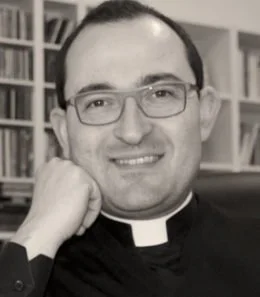
Simone Riva - What Gives Us Life.
"Peter said to Jesus, 'Lord, it is good for us to be here! If you wish, I will make three tents here: one for you, one for Moses, and one for Elijah'" (Mt 17:4). The apostle’s reaction to the Transfiguration is curious. It seems out of place, almost delusional, yet it holds a truth he may not fully grasp: Christ, by revealing his divine splendor, intends to spark a profound shift in them—a new way of seeing reality.
Peter isn't seeing ghosts; for a fleeting moment, he is granted the gift of understanding what it truly means to be present. This discovery proves vital later, when Jesus appears "absent" on the cross. We see this same dynamic in our own lives. There are people and places that allow us to breathe again, stirring that same impulse Peter felt: "It is good for us to be here!"
This "breathing" has a clear purpose: it allows us to be free and embraced in our most authentic selves. It fosters a tenderness toward our own humanity that keeps us grounded in the present. Don Giussani captured this with striking clarity: "It would not be possible to fully realize what Jesus Christ means if we did not first fully realize the nature of the dynamism that makes us human.
Christ presents himself as the answer to what 'I' am. Only a careful, tender, and passionate awareness of myself can open me to recognize, admire, and live in Christ. Without this awareness, even 'Jesus Christ' becomes just a name" (Luigi Giussani, At the Origin of the Christian Claim, Rizzoli, 2011).
At the Transfiguration, the apostles experienced a radical truth: their humanity, exactly as it was, could stand before God without masks or censorship. Though that specific Gospel moment was unique, it was enough. It only needs to happen once to establish a permanent way of engaging with reality. This is likely why Peter, unlike Judas, chose repentance over pride when his own failings were exposed.
The light of Mount Tabor became his lifelong companion. It gave him the courage to take the most decisive step in history when all seemed lost: "He is not here; He has risen. Remember how he told you, while he was still in Galilee, that the Son of Man must be delivered into the hands of sinners, be crucified, and on the third day rise again."
They remembered his words, and returning from the tomb, they told all these things to the Eleven and to all the rest. But these words seemed to them like an idle tale, and they did not believe them. Peter, however, got up and ran to the tomb; stooping and looking in, he saw the linen cloths by themselves; and he went home marveling at what had happened (Lk 24:6-12).
That "however" is one of the most important words ever written. It describes the relentless drive of those who—even if only once—have encountered what truly gives them life. They are no longer confused or satisfied with "good enough." They are no longer swayed by the crowd. They see for themselves, certain that this isn't a delusion, but the only true way to be alive.
-
Lo que nos hace respirar - Simone Riva
Hay personas y lugares que mueven en nuestro corazón el mismo impulso que Pedro durante la transfiguración. Hay que seguirlos: nos dicen la verdad sobre nosotros mismos
«Pedro dijo a Jesús: «Señor, qué bien estamos aquí. Si quieres, haré aquí tres tiendas, una para ti, otra para Moisés y otra para Elías»» (Mt 17, 4). Es curiosa la reacción del apóstol ante la transfiguración de Jesús. Parece fuera de contexto, casi delirante, y sin embargo encierra una verdad de la que él mismo quizá no es plenamente consciente, a saber, que Cristo, mostrándose en el esplendor de su divinidad, desea operar en ellos un verdadero cambio, una nueva forma de mirar la realidad.
Pedro no es que vea personas que no están allí, Moisés y Elías, pero por un momento tiene el don de darse cuenta de lo que significa estar presente. Este descubrimiento será muy valioso cuando, en la cruz, Jesús sea juzgado como el ausente. Esta dinámica se repite muchas veces también en nuestra vida. Hay personas y lugares que nos hacen respirar, que mueven en nuestro corazón el mismo impulso que en Pedro: «¡Qué bien estamos aquí!».
Y este respirar, lo sabemos bien, tiene sus razones: podemos ser libres, abrazados en lo más auténtico de nosotros mismos, sin renunciar a esa ternura hacia nuestra humanidad que nos permite vivir presentes a todo. Don Giussani lo escribió con singular eficacia: «No sería posible darse cuenta plenamente de lo que significa Jesucristo si antes no nos diéramos cuenta bien de la naturaleza de ese dinamismo que hace al hombre hombre. Cristo, de hecho, se presenta como respuesta a lo que soy «yo» y solo una toma de conciencia atenta y también tierna y apasionada de mí mismo puede abrirme y disponerme a reconocer, admirar, agradecer y vivir a Cristo. Sin esta conciencia, incluso Jesucristo se convierte en un mero nombre» (Luigi Giussani, All’origine della pretesa cristiana, Rizzoli, Milán, 2011, p. 3).
Los apóstoles, en el momento de la transfiguración de Cristo, experimentaron que su humanidad, tal y como era, podía estar ante Dios sin precauciones ni censuras de ningún tipo. El episodio narrado por los Evangelios es único, no volverá a repetirse en los años siguientes, pero es suficiente. Basta con que ocurra una vez para que introduzca un método definitivo en la forma de estar en la realidad. Quizás por eso Pedro, a diferencia de Judas, preferirá las lágrimas a la obstinación, cuando su miseria salga dramáticamente a la luz ante todos.
El resplandor del Tabor será la verdadera compañía de su vida, hasta el punto de llevarlo a tomar la iniciativa más decisiva de toda la historia cuando todo parecía destinado al fin: «No está aquí, ha resucitado. Recordad cómo os habló cuando aún estaba en Galilea y decía: «Es necesario que el Hijo del hombre sea entregado en manos de los pecadores, sea crucificado y resucite al tercer día». Y ellas recordaron sus palabras y, volviendo del sepulcro, anunciaron todo esto a los Once y a todos los demás. Eran María Magdalena, Juana y María, madre de Santiago. También las otras, que estaban con ellas, contaban estas cosas a los apóstoles. A ellos les parecieron palabras sin sentido y no les creyeron. Pero Pedro se levantó, corrió al sepulcro y, al inclinarse, solo vio los lienzos. Y volvió, lleno de asombro por lo sucedido» (Lc 24, 6-12).
Ese «pero» es una de las palabras más importantes que se han escrito jamás.
Describe el movimiento inexorable de quien, aunque solo sea una vez en la vida, ha encontrado lo que le hace respirar de verdad. Ya no se confunde, ya no se conforma, ya no se deja engañar por otros relatos o por las reacciones de la mayoría, lo comprueba por sí mismo, cueste lo que cueste, seguro de que no se trata de un delirio o un desvarío, sino de la verdadera forma de estar presente.
-
Ciò che ci fa respirare - Simone Riva
Ci sono persone e luoghi che muovono nel nostro cuore lo stesso impeto di Pietro durante la trasfigurazione. Vanno seguiti: ci dicono la verità di noi
“Pietro disse a Gesù: ‘Signore, è bello per noi essere qui! Se vuoi, farò qui tre capanne, una per te, una per Mosè e una per Elia’” (Mt 17, 4). È curiosa la reazione dell’apostolo alla trasfigurazione di Gesù. Sembra fuori contesto, quasi delirante, eppure custodisce una verità di cui lui stesso forse non ha piena consapevolezza e cioè che Cristo, mostrandosi nello splendore della sua divinità, desidera operare in loro un vero cambiamento, un modo nuovo di guardare la realtà.
Pietro non è che veda persone che non ci sono, Mosè e Elia, ma per un attimo ha il dono di accorgersi di cosa voglia dire essere presenti. Sarà preziosa, questa scoperta, quando in croce Gesù sarà giudicato come l’assente. Questa dinamica accade molte volte anche nella nostra vita. Ci sono persone e luoghi che ci fanno respirare, che muovono nel nostro cuore lo stesso impeto di Pietro: “È bello per noi essere qui!”.
E questo respirare, lo sappiamo bene, ha delle ragioni: possiamo essere liberi, abbracciati nel punto più vero di noi stessi, senza rinunciare a quella tenerezza verso la nostra umanità che consente di vivere presenti a tutto. Lo scrisse don Giussani con singolare efficacia: “Non sarebbe possibile rendersi conto pienamente di che cosa voglia dire Gesù Cristo se prima non ci si rendesse ben conto della natura di quel dinamismo che rende uomo l’uomo. Cristo, infatti, si pone come risposta a ciò che sono ‘io’ e solo una presa di coscienza attenta e anche tenera e appassionata di me stesso mi può spalancare e disporre a riconoscere, ad ammirare, a ringraziare, a vivere Cristo. Senza questa coscienza anche quello di Gesù Cristo diviene un puro nome” (Luigi Giussani, All’origine della pretesa cristiana, Rizzoli, Milano, 2011, p. 3).
Gli apostoli, nell’istante della trasfigurazione di Cristo, hanno fatto esperienza del fatto che la loro umanità, così com’era, poteva stare davanti a Dio senza precauzioni o censure di sorta. L’episodio narrato dai Vangeli è unico, non riaccadrà più negli anni seguenti, ma è sufficiente. Basta che capiti una volta perché possa introdurre un metodo definitivo nel modo di stare nel reale. È per questo, forse, che Pietro, a differenza di Giuda, preferirà le lacrime al posto dell’ostinazione, quando la sua miseria emergerà drammaticamente davanti a tutti.
Il bagliore del Tabor sarà la vera compagnia della sua vita, tanto da fargli prendere l’iniziativa più decisiva di tutta la storia quando tutto sembrava destinato alla fine: “Non è qui, è risorto. Ricordatevi come vi parlò quando era ancora in Galilea e diceva: ‘Bisogna che il Figlio dell’uomo sia consegnato in mano ai peccatori, sia crocifisso e risorga il terzo giorno’. Ed esse si ricordarono delle sue parole e, tornate dal sepolcro, annunciarono tutto questo agli Undici e a tutti gli altri. Erano Maria Maddalena, Giovanna e Maria madre di Giacomo. Anche le altre, che erano con loro, raccontavano queste cose agli apostoli. Quelle parole parvero a loro come un vaneggiamento e non credevano ad esse. Pietro tuttavia si alzò, corse al sepolcro e, chinatosi, vide soltanto i teli. E tornò indietro, pieno di stupore per l’accaduto” (Lc 24, 6-12).
Quel “tuttavia” è tra le parole più importanti che siano mai state scritte. Descrive l’inesorabile mossa di chi, anche solo una volta nella vita, ha incontrato ciò che lo fa respirare davvero. Non si confonde più, non si accontenta più, non si lascia ingannare da altri racconti o dalle reazioni dei più, verifica di persona, costi quel che costi, certo che non si tratti di delirio o di vaneggiamento, ma del vero modo di essere presenti.
-
Ce qui nous fait respirer - Simone Riva
Il y a des personnes et des lieux qui suscitent dans notre cœur le même élan que celui de Pierre lors de la transfiguration. Il faut les suivre : ils nous disent la vérité sur nous-mêmes
« Pierre dit à Jésus : « Seigneur, il est bon que nous soyons ici ! Si tu le veux, je vais dresser ici trois tentes, une pour toi, une pour Moïse et une pour Élie » (Mt 17, 4). La réaction de l'apôtre à la transfiguration de Jésus est curieuse. Elle semble hors de propos, presque délirante, et pourtant elle recèle une vérité dont lui-même n'a peut-être pas pleinement conscience, à savoir que le Christ, en se montrant dans la splendeur de sa divinité, désire opérer en eux un véritable changement, une nouvelle façon de regarder la réalité.
Pierre ne voit pas des personnes qui ne sont pas là, Moïse et Élie, mais pendant un instant, il a le don de comprendre ce que signifie être présent. Cette découverte sera précieuse lorsque, sur la croix, Jésus sera jugé comme absent. Cette dynamique se produit souvent dans notre vie. Il y a des personnes et des lieux qui nous font respirer, qui suscitent dans notre cœur le même élan que celui de Pierre : « Il est bon que nous soyons ici ! ».
Et cette respiration, nous le savons bien, a ses raisons : nous pouvons être libres, embrassés au plus profond de nous-mêmes, sans renoncer à cette tendresse envers notre humanité qui nous permet de vivre présents à tout. Don Giussani l'a écrit avec une efficacité singulière : « Il ne serait pas possible de comprendre pleinement ce que signifie Jésus-Christ si l'on ne comprenait pas d'abord la nature de ce dynamisme qui fait l'homme. Le Christ, en effet, se présente comme la réponse à ce que je suis, et seule une prise de conscience attentive, tendre et passionnée de moi-même peut m'ouvrir et me disposer à reconnaître, à admirer, à remercier, à vivre le Christ. Sans cette conscience, même Jésus-Christ devient un simple nom » (Luigi Giussani, All’origine della pretesa cristiana, Rizzoli, Milan, 2011, p. 3).
Au moment de la transfiguration du Christ, les apôtres ont fait l'expérience que leur humanité, telle qu'elle était, pouvait se présenter devant Dieu sans précautions ni censure d'aucune sorte. L'épisode raconté dans les Évangiles est unique, il ne se reproduira plus dans les années suivantes, mais il suffit. Il suffit qu'il se produise une fois pour introduire une méthode définitive dans la manière d'être dans le réel. C'est peut-être pour cela que Pierre, contrairement à Judas, préférera les larmes à l'obstination, lorsque sa misère apparaîtra dramatiquement devant tous.
La lumière du Thabor sera la véritable compagnie de sa vie, au point de lui faire prendre l'initiative la plus décisive de toute l'histoire alors que tout semblait voué à la fin : « Il n'est pas ici, il est ressuscité. Souvenez-vous de ce qu'il vous a dit quand il était encore en Galilée et disait : « Il faut que le Fils de l'homme soit livré aux mains des pécheurs, qu'il soit crucifié et qu'il ressuscite le troisième jour ». Elles se souvinrent alors de ses paroles et, revenant du tombeau, elles annoncèrent tout cela aux Onze et à tous les autres. C'étaient Marie Madeleine, Jeanne et Marie, mère de Jacques. Les autres, qui étaient avec elles, racontèrent aussi ces choses aux apôtres. Ces paroles leur semblaient un délire et ils ne les croyaient pas. Pierre cependant se leva, courut au tombeau et, se penchant, il ne vit que les linges. Et il s'en retourna, stupéfait de ce qui s'était passé » (Lc 24, 6-12).
Ce « cependant » est l'un des mots les plus importants qui aient jamais été écrits.
Il décrit le geste inexorable de celui qui, ne serait-ce qu'une fois dans sa vie, a rencontré ce qui lui permet de respirer vraiment. Il ne se trompe plus, ne se contente plus, ne se laisse plus tromper par d'autres récits ou par les réactions de la plupart des gens, il vérifie par lui-même, quoi qu'il en coûte, certain qu'il ne s'agit pas d'un délire ou d'un délire, mais de la véritable façon d'être présent.
-
Was uns atmen lässt – Simone Riva
Es gibt Menschen und Orte, die in unserem Herzen dieselbe Begeisterung hervorrufen wie Petrus während der Verklärung. Ihnen sollten wir folgen: Sie sagen uns die Wahrheit über uns selbst
„Petrus sagte zu Jesus: ‚Herr, es ist schön, dass wir hier sind! Wenn du willst, werde ich hier drei Hütten bauen, eine für dich, eine für Mose und eine für Elija‘“ (Mt 17,4). Die Reaktion des Apostels auf die Verklärung Jesu ist merkwürdig. Sie scheint aus dem Zusammenhang gerissen, fast wahnsinnig, doch sie birgt eine Wahrheit, derer er sich selbst vielleicht nicht voll bewusst ist, nämlich dass Christus, indem er sich in der Herrlichkeit seiner Göttlichkeit zeigt, in ihnen eine echte Veränderung bewirken möchte, eine neue Sichtweise auf die Realität.
Petrus sieht zwar keine Personen, die nicht da sind, nämlich Moses und Elija, aber für einen Moment hat er die Gabe zu erkennen, was es bedeutet, gegenwärtig zu sein. Diese Entdeckung wird wertvoll sein, wenn Jesus am Kreuz als der Abwesende verurteilt wird. Diese Dynamik kommt auch in unserem Leben oft vor. Es gibt Menschen und Orte, die uns atmen lassen, die in unserem Herzen denselben Impuls wie bei Petrus auslösen: „Es ist schön, dass wir hier sind!“
Und dieses Atmen hat, wie wir gut wissen, seine Gründe: Wir können frei sein, umarmt an dem wahrhaftigsten Punkt unseres Selbst, ohne auf jene Zärtlichkeit gegenüber unserer Menschlichkeit zu verzichten, die es uns ermöglicht, in allem präsent zu leben. Don Giussani schrieb dies mit einzigartiger Wirksamkeit: „Es wäre nicht möglich, sich voll und ganz bewusst zu werden, was Jesus Christus bedeutet, wenn man sich nicht zuvor der Natur jener Dynamik bewusst würde, die den Menschen zum Menschen macht. Christus stellt sich nämlich als Antwort auf das, was „ich“ bin, und nur ein aufmerksames, zärtliches und leidenschaftliches Bewusstsein meiner selbst kann mich öffnen und bereit machen, Christus anzuerkennen, zu bewundern, ihm zu danken und ihn zu leben. Ohne dieses Bewusstsein wird auch Jesus Christus zu einem bloßen Namen” (Luigi Giussani, All’origine della pretesa cristiana, Rizzoli, Mailand, 2011, S. 3).
Die Apostel haben im Moment der Verklärung Christi die Erfahrung gemacht, dass ihre Menschlichkeit, so wie sie war, ohne Vorbehalte oder Zensur vor Gott stehen konnte. Die in den Evangelien erzählte Begebenheit ist einzigartig, sie wird sich in den folgenden Jahren nicht wiederholen, aber sie reicht aus. Es reicht, dass sie einmal geschieht, um eine endgültige Methode für die Art und Weise, in der Realität zu stehen, einzuführen. Vielleicht ist das der Grund, warum Petrus im Gegensatz zu Judas Tränen statt Hartnäckigkeit vorzieht, als sein Elend vor allen dramatisch zutage tritt.
Der Glanz des Tabor wird die wahre Begleitung seines Lebens sein, so sehr, dass er die entscheidendste Initiative der gesamten Geschichte ergreift, als alles dem Ende geweiht zu sein scheint: „Er ist nicht hier, er ist auferstanden. Erinnert euch, wie er zu euch sprach, als er noch in Galiläa war, und sagte: ‚Der Menschensohn muss den Sündern ausgeliefert werden, gekreuzigt werden und am dritten Tag auferstehen. Da erinnerten sie sich an seine Worte und kehrten vom Grab zurück und verkündeten dies den Elf und allen anderen. Es waren Maria Magdalena, Johanna und Maria, die Mutter des Jakobus. Auch die anderen, die bei ihnen waren, erzählten dies den Aposteln. Diese Worte erschienen ihnen wie Geschwätz, und sie glaubten ihnen nicht. Petrus aber stand auf, lief zum Grab, beugte sich vor und sah nur die Tücher. Und er kehrte zurück, voller Staunen über das Geschehene“ (Lk 24,6-12).
Dieses „aber“ gehört zu den wichtigsten Worten, die je geschrieben wurden.
Es beschreibt die unerbittliche Entscheidung dessen, der, wenn auch nur einmal im Leben, das gefunden hat, was ihn wirklich atmen lässt. Er lässt sich nicht mehr verwirren, gibt sich nicht mehr zufrieden, lässt sich nicht mehr von anderen Erzählungen oder den Reaktionen der meisten täuschen, sondern überprüft selbst, was es auch kosten mag, sicher, dass es sich nicht um Wahnvorstellungen oder Hirngespinste handelt, sondern um die wahre Art, präsent zu sein.